


Filter Cartridge Jumbo
In industrial filtration, the demand for higher throughput and reduced downtime has led to the widespread adoption of large-diameter filtration elements. A filter cartridge jumbo—typically defined by its increased diameter compared to standard 2.5-inch models—represents a critical component in high-flow systems where efficiency and footprint are primary engineering concerns. For technical professionals and procurement teams, selecting the right jumbo cartridge involves more than just matching dimensions; it requires a deep understanding of material science, fluid dynamics, and the specific rigors of the application environment.
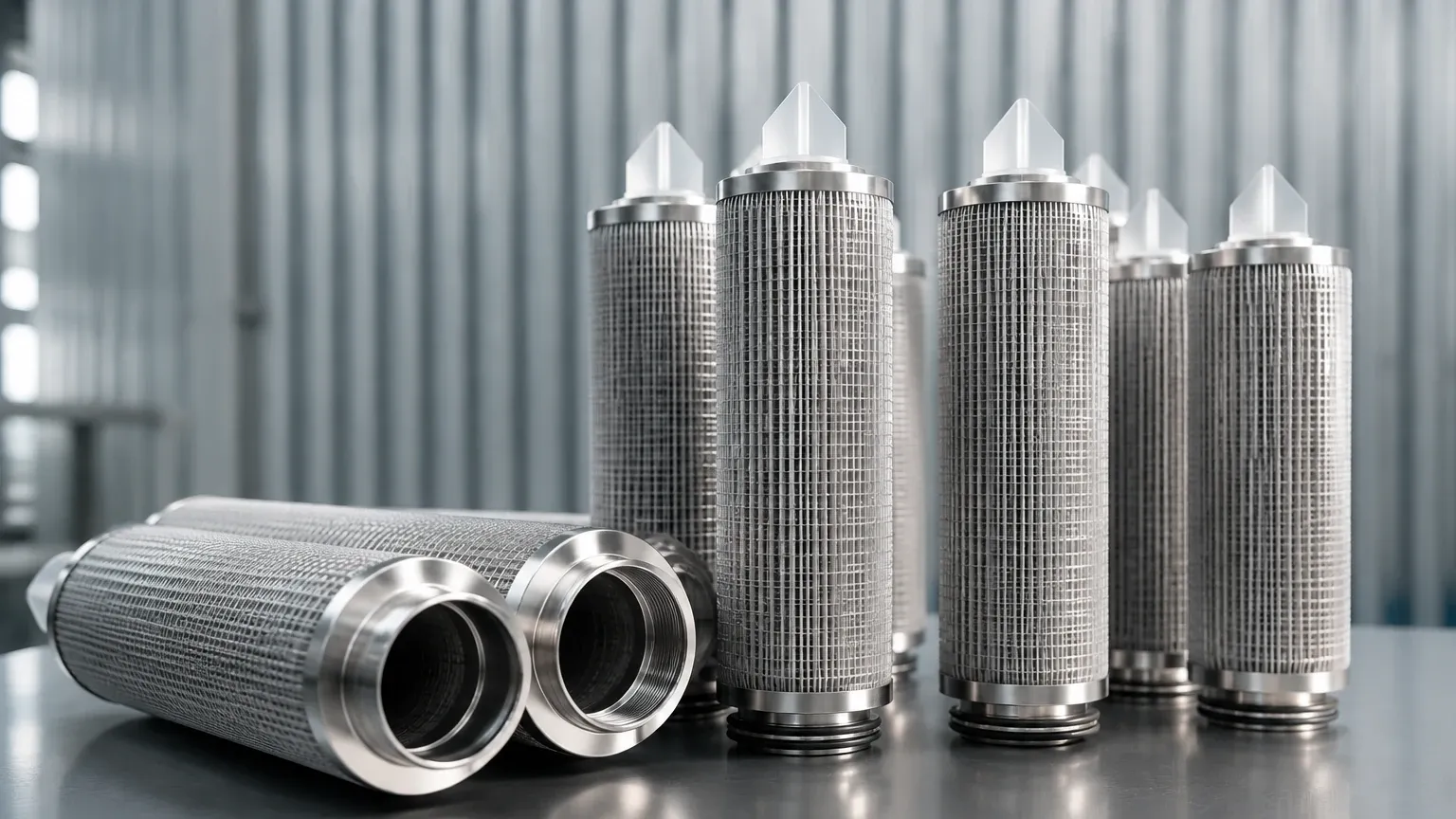
At Kaifil, we specialize in the manufacturing of high-performance stainless steel Filter Cartridges designed to meet these demanding industrial requirements. By utilizing advanced wire mesh and pleated metal technologies, we provide jumbo-sized solutions that offer superior durability and chemical resistance compared to conventional polymer-based alternatives.
Understanding the Engineering of Jumbo Filter Cartridges
The primary distinction of a filter cartridge jumbo lies in its physical geometry. While standard cartridges often feature a 2.5-inch outer diameter (OD), jumbo variants typically range from 4.5 inches to over 6 inches in diameter. This increase in size is not merely for volume; it fundamentally changes the performance profile of the filtration system.
Surface Area and Flow Capacity
By increasing the diameter, the effective filtration area (EFA) is significantly expanded. In a pleated configuration, a jumbo cartridge can house substantially more filter media than multiple standard cartridges combined. For engineers, this means a single jumbo housing can often replace a multi-round housing that would otherwise require five or more standard elements. This consolidation reduces the number of seals and potential bypass points, simplifying the overall system design.
Pressure Drop (ΔP) Considerations
One of the most critical metrics in filtration is the initial pressure drop. A larger surface area allows for a lower flux (flow rate per unit area), which directly correlates to a lower initial pressure drop. This characteristic is particularly beneficial in viscous fluid applications or systems where pump energy consumption must be minimized. By utilizing a filter cartridge jumbo, operators can maintain high flow rates without reaching the terminal pressure drop prematurely.
Material Selection for Industrial Jumbo Filtration
While jumbo cartridges are available in various materials, including melt-blown polypropylene and string-wound fibers, industrial applications involving high temperatures, aggressive chemicals, or high pressures necessitate the use of metallic media. Stainless steel is the industry standard for these environments due to its structural integrity and longevity.
Stainless Steel 304 vs. 316L
Material selection begins with the chemical compatibility of the process fluid. Stainless steel 304 is suitable for many general industrial applications, providing excellent strength and basic corrosion resistance. However, for applications involving chlorides, organic acids, or pharmaceutical-grade requirements, 316L stainless steel is preferred. The addition of molybdenum in 316L enhances its resistance to pitting and crevice corrosion, ensuring the filter cartridge jumbo maintains its integrity over years of service.
Wire Mesh and Sintered Media
Kaifil utilizes various types of metal media to achieve specific filtration goals:
- Woven Wire Mesh: Ideal for surface filtration and precise micron ratings. It is easily cleaned and offers high mechanical strength.
- Pleated Metal Mesh: By pleating the wire mesh, we maximize the surface area within the jumbo format, allowing for extremely high flow rates and high dirt-holding capacity.
- Sintered Metal Fiber: For applications requiring depth filtration or extremely fine particulate removal, sintered fibers provide a porous structure that traps contaminants throughout the media thickness.
Performance Advantages in High-Flow Applications
The transition to jumbo-sized filtration elements offers several operational advantages that contribute to the overall efficiency of a facility.
Reduced Change-Out Frequency
The increased dirt-holding capacity of a filter cartridge jumbo means that the time between filter replacements is extended. In continuous process industries, such as chemical manufacturing or large-scale water treatment, reducing the frequency of maintenance shutdowns is a direct contributor to profitability.
Lower Total Cost of Ownership (TCO)
While the initial cost of a stainless steel jumbo cartridge may be higher than a standard-sized polymer filter, the TCO is often lower. Stainless steel elements are cleanable and reusable. Instead of disposing of spent cartridges, operators can utilize ultrasonic cleaning, chemical baths, or backwashing to restore the filter’s performance. When combined with the reduced labor costs associated with fewer cartridge changes, the economic case for jumbo metal filtration becomes clear.
Customization and Design Considerations for Engineers
Every industrial process has unique constraints, and a "one-size-fits-all" approach rarely yields optimal results. When specifying a filter cartridge jumbo, engineers must consider several customization options to ensure seamless integration into existing systems.
End Cap Configurations
The sealing mechanism is vital for preventing bypass. Common configurations include:
- Double Open End (DOE): Utilizes gaskets on both ends; common in many legacy jumbo housings.
- Code 7 (226 O-Rings/Fin): Features a locking tab and double O-rings to ensure a high-pressure seal, often used in critical pharmaceutical or food applications.
- 222 O-Rings: A common plug-in style seal for quick installation.
Structural Reinforcement
In high-viscosity or high-differential pressure applications, the jumbo cartridge may require an internal support core or an outer protective cage. These components prevent the pleats from collapsing or the media from deforming under stress. Kaifil’s engineering team works closely with clients to determine the necessary wall thickness and reinforcement patterns based on the specific flow dynamics of the application.
Application-Specific Implementation
The versatility of the filter cartridge jumbo allows it to be deployed across a wide spectrum of industries, each with its own set of technical requirements.
Chemical and Petrochemical Processing
In these sectors, filters must withstand aggressive solvents and high temperatures. Stainless steel jumbo cartridges are used to remove catalysts, protect downstream sensitive equipment, and ensure the purity of final products. The ability to withstand thermal shock is a key advantage of metal media in these environments.
Food and Beverage Production
Sanitary design is paramount in food and beverage applications. Jumbo filters used here must be constructed from FDA-compliant materials and often require polished surfaces to prevent bacterial growth. They are commonly used for the filtration of syrups, edible oils, and process water, where high flow rates must be maintained without compromising safety.
Hydraulic and Lube Oil Systems
Large-scale hydraulic systems generate significant amounts of particulate matter that can damage pumps and valves. A jumbo cartridge provides the necessary surface area to handle high-viscosity oils while maintaining fine filtration levels (often down to 5-10 microns) to protect expensive machinery.
Maintenance and Cleaning of Stainless Steel Jumbo Filters
To maximize the lifespan of a stainless steel filter cartridge jumbo, a proper maintenance protocol must be established. Unlike disposable filters, metal cartridges are designed to be restored to near-original condition.
1. Monitoring Differential Pressure: Operators should track the pressure drop across the filter. Once it reaches a predetermined limit (often 20-30 psi depending on the media), the cleaning cycle should begin.
2. Cleaning Methods: Depending on the contaminant, cleaning may involve backflushing with clean fluid, soaking in caustic or acidic solutions, or utilizing ultrasonic tanks to dislodge fine particles trapped within the mesh pores.
3. Inspection: After cleaning, the cartridge should be inspected for any signs of mechanical damage or media migration. Integrity testing can be performed to ensure the micron rating remains accurate.
Selecting the Right Filter Cartridge Jumbo for Your System
When preparing to purchase or upgrade to jumbo filtration, engineers should confirm the following technical details with their manufacturer:
- Fluid Characteristics: Viscosity, temperature, and pH levels.
- Contaminant Profile: Particle size distribution and the nature of the solids (deformable vs. hard particles).
- Flow Requirements: Minimum and maximum flow rates (GPM or m³/h).
- Housing Dimensions: Inside diameter of the housing and the available length (typically 10, 20, 30, or 40 inches).
- Required Micron Rating: Absolute vs. nominal filtration requirements.
By addressing these factors, procurement teams can ensure they receive a filtration solution that optimizes performance and reduces operational risks. Kaifil’s expertise in custom stainless steel fabrication allows us to produce jumbo cartridges that are tailored to the specific challenges of your facility, ensuring long-term reliability in the most demanding industrial environments.
For more detailed technical specifications and to explore our full range of industrial filtration components, you can Review product options and application support to find the ideal configuration for your high-flow requirements.
