


Filter Cartridge Karcher
In the realm of industrial maintenance and fluid processing, the efficiency of high-pressure cleaning and filtration systems is fundamentally dependent on the integrity of the filtration media. While many commercial operators are familiar with the standard filter cartridge karcher components used in professional cleaning equipment, industrial engineers often face challenges that exceed the capabilities of standard consumer-grade or light-commercial filters. For demanding applications in chemical processing, hydraulic systems, and large-scale water treatment, the transition from standard synthetic media to high-performance stainless steel Filter Cartridges is often a technical necessity.
Industrial filtration requires a deep understanding of fluid dynamics, material compatibility, and the physical stresses placed upon filter elements. This article examines the technical considerations for selecting and upgrading filtration components, focusing on how industrial-grade solutions provide the durability and precision required for high-stakes B2B environments.
The Critical Role of Filtration in Industrial Cleaning Systems
High-pressure cleaning systems, such as those utilized in industrial degreasing or surface preparation, rely on a consistent supply of clean fluid to protect sensitive pump components and precision nozzles. A filter cartridge karcher unit in a commercial setting typically manages particulates to prevent nozzle clogging. However, in an industrial context, the filtration requirements are significantly more complex.
Contaminants in industrial fluids can range from fine metallic shavings and chemical precipitates to organic biofilms. If these particles bypass the primary filtration stage, they can cause catastrophic failure in high-pressure pumps through abrasive wear. Furthermore, the nozzles used in industrial cleaning are often engineered to specific spray patterns; even minor erosion or partial blockage from insufficient filtration can lead to uneven application and reduced process efficiency. Therefore, selecting the appropriate filter cartridge is not merely a maintenance task but a critical engineering decision to ensure system uptime.
Comparing Material Integrity: Stainless Steel vs. Polymer Media
Standard filtration elements, including many variations of the filter cartridge karcher, often utilize pleated paper, polyester, or polypropylene media. While these materials are cost-effective for general-purpose applications, they possess inherent limitations in industrial environments.
Thermal and Chemical Resistance
Industrial processes frequently involve high-temperature fluids or aggressive chemical solvents that would degrade or dissolve synthetic polymers. Stainless steel filter cartridges, typically manufactured from 304 or 316L grades, offer exceptional resistance to thermal shock and chemical corrosion. This allows for the filtration of hot caustic solutions or acidic process streams that would cause a standard filter cartridge karcher to fail structurally.
Mechanical Strength and Pressure Differential
Under high-pressure conditions, the pressure differential (delta P) across a filter element can become substantial. Synthetic media may suffer from "media migration" or collapse if the pressure exceeds its structural limits. In contrast, stainless steel wire mesh and sintered metal components provide the mechanical rigidity necessary to withstand high differential pressures without deforming. This structural stability ensures that the pore size remains constant, maintaining the specified filtration accuracy throughout the service cycle.
Technical Parameters for Selecting Industrial Filter Cartridges
When engineers evaluate replacements or upgrades for a filter cartridge karcher system, several technical metrics must be prioritized to ensure the new component meets the application's demands.
Micron Rating: Absolute vs. Nominal
It is essential to distinguish between nominal and absolute micron ratings. A nominal rating refers to the filter's ability to retain a major percentage of particles of a certain size, whereas an absolute rating indicates that 99.9% of particles above that size will be captured. For precision industrial cleaning, absolute-rated Filter Cartridges are often preferred to ensure that no damaging particulates reach the high-pressure pump or the final nozzle assembly.
Flow Rate and Dirt-Holding Capacity
The geometry of the filter—whether it is a simple cylindrical mesh or a pleated design—directly impacts the surface area available for filtration. Increased surface area leads to a higher dirt-holding capacity and a lower initial pressure drop. For systems originally designed around a filter cartridge karcher, upgrading to a pleated stainless steel element can significantly extend the intervals between cleaning or replacement, thereby reducing labor costs and system downtime.
Addressing the "Filter Cartridge Karcher" Requirement in B2B Contexts
In many B2B scenarios, a facility may use Karcher industrial-line equipment for site-wide maintenance or specialized cleaning tasks. While the manufacturer provides standard replacement parts, technical professionals often seek OEM-equivalent or superior alternatives that offer better longevity in harsh environments.
Sourcing a filter cartridge karcher alternative that utilizes stainless steel mesh allows for a "cleanable" solution. Unlike disposable paper filters that must be discarded once saturated, metal filter cartridges can be backwashed, ultrasonically cleaned, or chemically treated to restore their original flow characteristics. This is particularly advantageous in industries like food and beverage or pharmaceuticals, where waste reduction and material traceability are paramount.
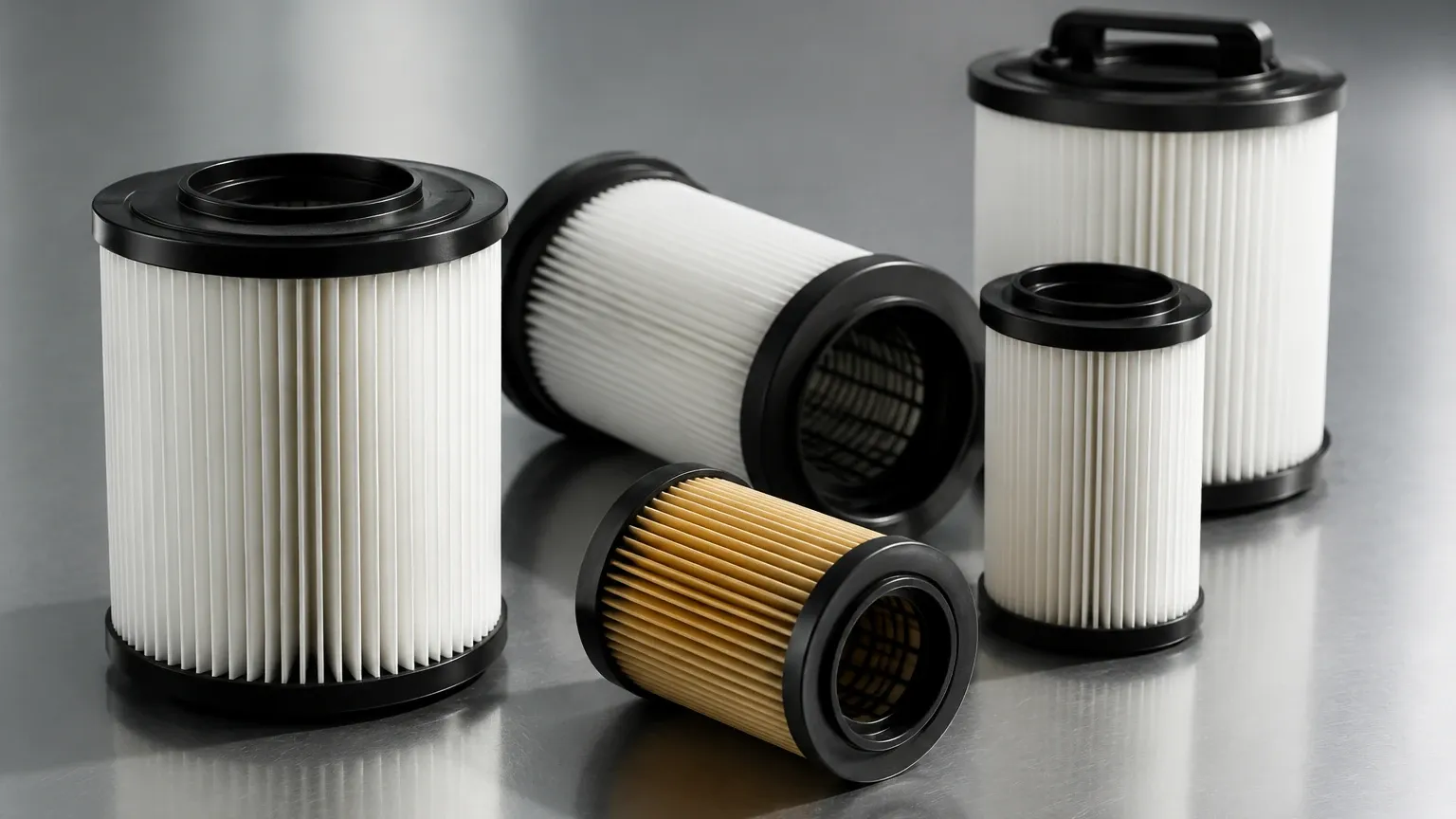
Custom Engineering: Tailoring Filtration for Specific Industrial Fluids
One of the primary advantages of working with specialized manufacturers like Kaifil is the ability to customize Filter Cartridges to fit existing housings, including those found in Karcher industrial systems. Customization options go beyond simple dimensions; they include:
* End Cap Configurations: Ensuring a leak-proof seal with various O-ring materials (Viton, EPDM, Silicone) to match the chemical profile of the process fluid.
* Reinforcement Layers: Adding internal support cores or external shrouds to handle extreme pressure spikes or back-pulsing cleaning cycles.
* Multi-Layer Sintering: Combining different grades of wire mesh to create a depth-filtration effect, which optimizes both flow rate and particle retention.
By tailoring the filter's construction, engineers can resolve recurring issues such as premature clogging or media failure that may occur with standard off-the-shelf components.
Maintenance Protocols and Total Cost of Ownership Analysis
When evaluating the procurement of a filter cartridge karcher or its industrial equivalent, the Total Cost of Ownership (TCO) should be the primary financial metric. While a stainless steel filter cartridge has a higher initial purchase price than a disposable synthetic one, the long-term savings are often substantial.
Reduced Replacement Frequency
In a high-debris environment, a standard filter may require replacement weekly or even daily. A durable metal filter, designed for the same application, can last for years with proper maintenance. This eliminates the recurring cost of purchasing, shipping, and storing disposable inventory.
Minimized Downtime
Every time a system is shut down to replace a filter cartridge karcher, production stops. Metal filters designed for backwashing can often be cleaned in-situ or swapped quickly with a standby unit, significantly improving the Overall Equipment Effectiveness (OEE) of the industrial cleaning or processing line.
Environmental Impact
Industrial sustainability initiatives are increasingly targeting the reduction of consumable waste. Moving away from disposable filters toward cleanable stainless steel elements aligns with corporate environmental goals by reducing the volume of contaminated waste sent to landfills.
Application-Specific Selection: Chemical, Hydraulic, and Water Treatment
The requirements for a filter cartridge karcher vary significantly depending on the industry. For example:
* Chemical Processing: Filters must withstand pH extremes. 316L stainless steel is the standard here due to its molybdenum content, which provides superior resistance to pitting and crevice corrosion.
* Hydraulic Systems: These systems operate under immense pressure. The filter must not only capture fine particulates to protect valves but also maintain its shape under high-viscosity fluid flow.
* Food and Beverage: Filtration components must be manufactured from FDA-compliant materials and designed without dead spaces where bacteria could proliferate. Stainless steel is the ideal material for these sanitary applications because it can be sterilized using steam or high-temperature water.
Conclusion: Engineering the Optimal Filtration Solution
Selecting the right filtration component requires a balance between performance, durability, and cost. While the filter cartridge karcher serves as a reliable baseline for many cleaning applications, industrial environments often demand the enhanced properties of stainless steel Filter Cartridges. By focusing on material science, precise micron ratings, and custom engineering, purchasing teams and engineers can ensure their systems operate at peak efficiency with minimal maintenance-related disruptions.
For those managing complex industrial processes, the move toward high-quality, cleanable metal filtration is a strategic investment in system reliability. Whether replacing a standard component or designing a new process from the ground up, understanding the technical nuances of filter construction is the key to achieving optimal fluid purity and equipment longevity.
