


Filter Cartridge Lg
In industrial filtration, the term "LG" often refers to Large Geometry or high-capacity configurations designed to handle significant flow rates while maintaining structural integrity under pressure. For engineers and procurement specialists, selecting the right filter cartridges involves more than just matching a part number; it requires a deep understanding of fluid dynamics, material compatibility, and the mechanical stresses of the specific application. High-capacity or large-format filter cartridges are engineered to optimize the surface area within a given footprint, providing a balance between filtration efficiency and operational longevity.
When dealing with large-scale industrial processes—ranging from chemical processing to hydraulic power units—the choice of filtration media and cartridge design directly impacts the total cost of ownership. This guide explores the technical parameters of industrial filter cartridges, focusing on high-performance metal solutions that offer durability beyond the capabilities of standard polymer-based filters.
Understanding Large Geometry (LG) Filter Cartridges in Industrial Systems
Industrial systems often transition to larger cartridge formats (LG) to reduce the number of filter elements required in a single housing. This consolidation simplifies maintenance and reduces potential leak points. A large geometry cartridge typically features a wider diameter—often 6 inches or more—compared to the standard 2.5-inch industrial cartridge. This increased diameter allows for significantly higher pleat density or thicker depth media, which translates to a higher dirt-holding capacity.
From an engineering perspective, the transition to larger cartridges is driven by the need to manage high flux rates (flow per unit area). By increasing the available surface area, the face velocity of the fluid passing through the media is reduced. Lower face velocity results in a lower initial pressure drop and more efficient particle capture, as particles are less likely to be forced through the media pores by sheer hydraulic pressure.
Material Engineering: The Advantage of Stainless Steel
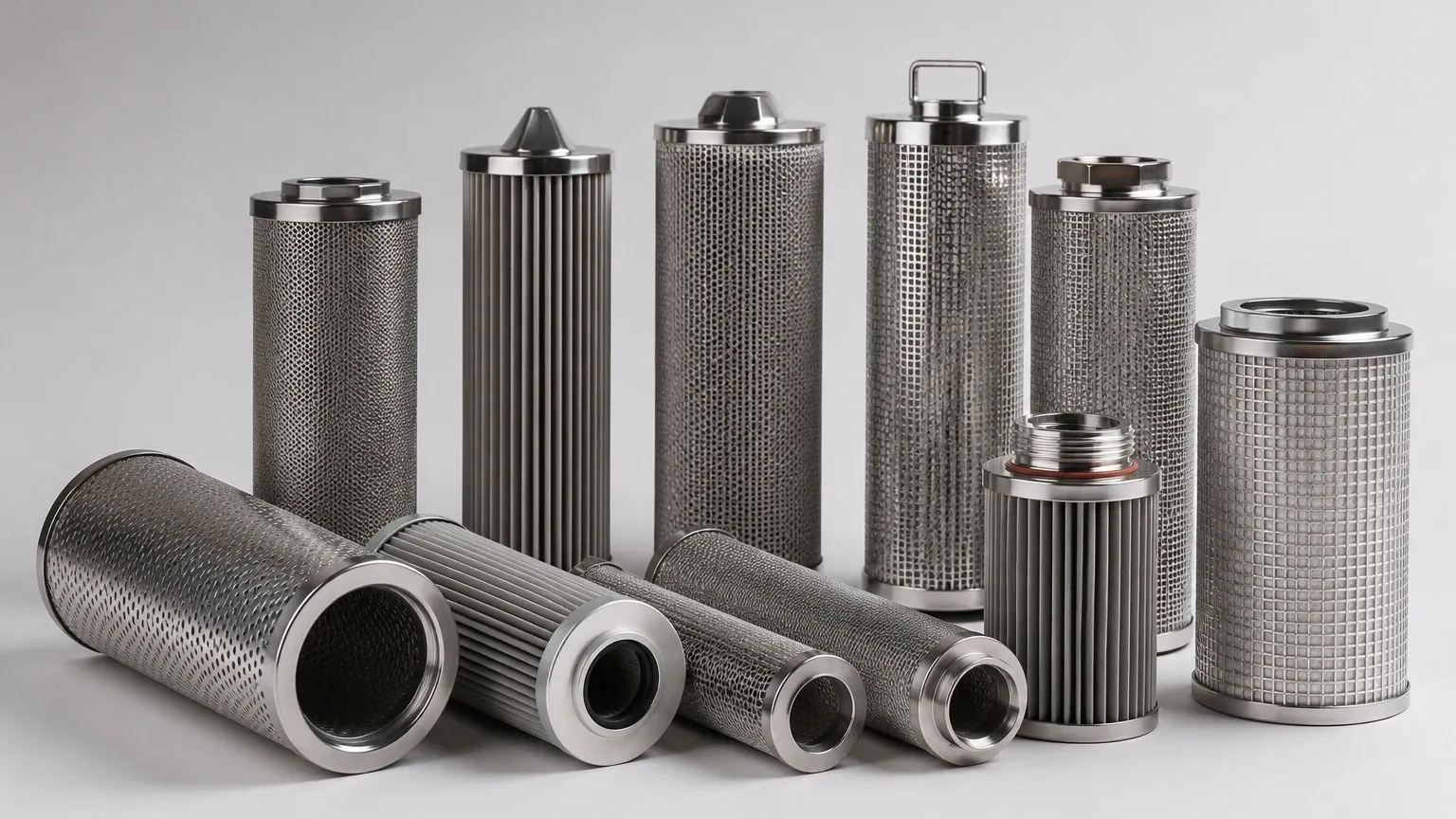
While many high-flow cartridges are available in polypropylene or glass fiber, demanding industrial environments often necessitate the use of stainless steel. Stainless steel filter cartridges, typically manufactured from 304 or 316L grades, provide several critical advantages in "LG" or high-capacity applications:
1. Temperature Resistance: Unlike polymer filters that soften or degrade at elevated temperatures, stainless steel maintains its mechanical properties in processes exceeding 250°C.
2. Chemical Compatibility: In chemical processing and solvent filtration, 316L stainless steel offers superior resistance to corrosion and chemical attack, ensuring that the filter media does not leach contaminants into the filtrate.
3. Structural Rigidity: Large cartridges are subject to high differential pressures, especially as they become loaded with contaminants. Metal cartridges, often reinforced with internal support cores and external cages, resist collapsing or bypassing under these stresses.
4. Cleanability: One of the most significant advantages of metal filtration is the ability to clean and reuse the elements. Through ultrasonic cleaning, backwashing, or chemical baths, the initial investment in a stainless steel cartridge is offset by the elimination of frequent disposal and replacement costs.
Performance Metrics: Filtration Accuracy and Flow Dynamics
When evaluating a filter cartridge, engineers must distinguish between nominal and absolute filtration ratings. A nominal rating refers to an approximate micron size that the filter will retain, typically at an efficiency of 60% to 90%. In contrast, an absolute rating (often defined by a Beta Ratio of 5000 or higher) indicates that 99.9% of particles of a specific size are captured.
For high-flow or large-format applications, the flow dynamics within the cartridge are critical. As fluid enters a large cartridge, it must be distributed evenly across the entire surface of the media. Poorly designed cartridges can suffer from "channeling," where the fluid takes the path of least resistance, leading to premature loading of certain areas and reduced overall efficiency. Precision-engineered wire mesh and sintered metal cartridges utilize uniform pore structures to ensure consistent flow distribution and predictable performance throughout the service life.
Application-Specific Selection for High-Flow Environments
Different industries have unique requirements that dictate the design of the filter cartridge. Understanding these nuances is essential for selecting the correct "LG" solution.
Chemical and Petrochemical Processing
In these sectors, cartridges must withstand aggressive solvents and high pressures. Sintered metal felt or multi-layered wire mesh cartridges are preferred for their ability to provide fine filtration (down to 1 micron) while remaining chemically inert. The large surface area of LG-style cartridges is particularly beneficial for filtering high-viscosity resins or polymers where pressure drop is a primary concern.
Food and Beverage Industry
Filtration in the food and beverage sector requires compliance with strict hygiene standards. Stainless steel cartridges are ideal here because they can be steam-sterilized (SIP) or cleaned-in-place (CIP). Large-capacity filters are often used for bulk ingredient filtration, such as water, syrups, or oils, where maintaining a high throughput is essential for production efficiency.
Hydraulic and Lubrication Systems
Large hydraulic systems in mining, construction, and manufacturing generate significant amounts of particulate matter. High-capacity cartridges are used to protect sensitive valves and pumps. In these applications, the "LG" format allows for longer intervals between maintenance, reducing downtime in critical infrastructure.
Customization and OEM Integration for Industrial Filters
Off-the-shelf filtration solutions do not always meet the specific constraints of specialized industrial equipment. Customization plays a vital role in optimizing filtration performance. This can include:
* End-Cap Configurations: Customizing the interface (e.g., 222, 226, or threaded connections) to ensure a bypass-free seal within existing housings.
* Reinforced Structures: Adding heavy-duty internal cores for applications involving high-pressure surges or hydraulic shocks.
* Hybrid Media: Combining different layers of wire mesh or sintered metal to create a depth-filtration effect that targets specific particle size distributions.
By working with a manufacturer capable of OEM customization, engineering teams can ensure that the filter cartridge is perfectly matched to the system's flow rate, fluid chemistry, and particulate load.
Maintenance and Operational Longevity
The total cost of ownership (TCO) for filtration is heavily influenced by the replacement cycle and the labor required for maintenance. While a large-format (LG) cartridge may have a higher upfront cost than several smaller cartridges, the reduction in labor and the potential for cleaning often make it the more economical choice over the long term.
Monitoring the differential pressure (ΔP) across the filter is the standard method for determining when a cartridge requires cleaning or replacement. For stainless steel elements, reaching the terminal pressure drop does not mean the end of the filter's life. Instead, it signals the need for a regeneration cycle. In many industrial settings, a backwash system is integrated, allowing the filter to be cleaned without removing it from the housing, which significantly increases uptime.
Critical Factors to Confirm Before Procurement
Before finalizing a purchase for industrial filter cartridges, engineers should confirm the following technical details with their supplier:
1. Micron Rating and Efficiency: Confirm whether the rating is nominal or absolute and request the Beta Ratio data if high-precision filtration is required.
2. Maximum Differential Pressure: Ensure the cartridge can withstand the maximum pressure the system's pump can deliver, especially in a fouled state.
3. Seal Compatibility: Verify that the O-ring or gasket material (EPDM, Viton, PTFE, etc.) is compatible with the process fluid and operating temperature.
4. Flow Rate vs. Pressure Drop Curves: Request data showing the clean pressure drop at the intended operating flow rate to ensure the system has sufficient head pressure.
5. Cleaning Protocols: If opting for reusable stainless steel, confirm the recommended cleaning methods and the expected number of cleaning cycles before the media integrity might be compromised.
Selecting the appropriate large-capacity filter is a strategic decision that affects the reliability of the entire production line. By focusing on material quality, precise engineering, and application-specific design, facilities can achieve superior filtration results while minimizing operational disruptions. For those seeking specialized solutions, exploring professional filter cartridges tailored to industrial needs is the first step toward optimized system performance.
