


Filter Cartridge M
In the landscape of industrial fluid management, the selection of filtration components is a critical engineering decision that directly impacts process efficiency, product purity, and equipment longevity. Among the various specifications encountered by procurement teams and process engineers, the "M" designation—often referring to specific end-cap configurations like the Code M (222 O-ring with a fin) or specific micron-rated performance—represents a standard of precision and reliability. Choosing the correct Filter Cartridges requires a deep understanding of how these components interact with high-pressure systems, corrosive chemicals, and stringent sanitary requirements.
Industrial filtration is not a one-size-fits-all field. Whether a facility is processing volatile chemicals or high-viscosity food syrups, the structural integrity and filtration accuracy of a filter cartridge m must align with the operational variables of the system. This guide examines the technical nuances of stainless steel filter cartridges, focusing on the engineering considerations that define high-performance filtration in demanding environments.
Technical Architecture of the Code M Configuration
One of the most common applications of the "M" designation in B2B filtration procurement is the Code M end-cap style. For engineers, the end-cap configuration is as vital as the filter media itself because it determines the integrity of the seal within the filter housing. A failure in the seal leads to fluid bypass, where unfiltered contaminants circumvent the media, potentially damaging downstream equipment or compromising the final product.
The 222 O-Ring and Fin Design
The filter cartridge m (specifically Code M) typically features a double 222 O-ring base with a flat or "spear" (fin) top. The 222 O-ring provides a robust, redundant seal that is particularly effective in high-vibration or high-pressure applications. Unlike flat gaskets, which rely on axial compression, the O-ring seal provides a radial seal that remains consistent even as the housing expands or contracts due to thermal fluctuations.
The "fin" or spear at the top of the cartridge serves a dual purpose. First, it aids in the alignment of the cartridge during installation, ensuring that the O-rings are seated squarely in the housing manifold. Second, it provides a point of contact for the housing’s compression plate, securing the cartridge against the flow of the fluid. For maintenance teams, this design simplifies the replacement cycle and reduces the risk of improper installation.
Material Selection: The Role of Stainless Steel
While polymer-based filters are common in light-duty applications, industrial-grade filtration often demands the durability of metal. Stainless steel, specifically grades 304 and 316L, is the material of choice for the filter cartridge m used in aggressive environments.
Corrosion and Temperature Resistance
In chemical processing and steam filtration, temperatures can exceed the melting points or structural limits of polypropylene or polyester. Stainless steel filter cartridges can operate in temperatures ranging from cryogenic levels up to 500°C (932°F), depending on the seal material and construction method.
Grade 316L is particularly valued for its resistance to pitting and crevice corrosion in chloride-rich environments. For engineers designing systems for the pharmaceutical or food and beverage industries, 316L provides a non-leaching, sanitary surface that can withstand rigorous Clean-in-Place (CIP) and Sterilize-in-Place (SIP) protocols. The ability to withstand high-pressure differentials without media migration or fiber shedding is a primary reason why metal cartridges are preferred for critical applications.
Filtration Media: Pleated vs. Sintered Mesh
The performance of a filter cartridge m is largely dictated by the structure of its filtration media. Depending on the required micron rating and the nature of the contaminants, two primary metal media types are utilized: pleated wire mesh and sintered metal felt.
Pleated Wire Mesh
Pleating is a mechanical process that increases the available surface area of the filter media within a fixed diameter. By folding the stainless steel wire mesh, manufacturers can provide significantly higher flow rates and lower initial pressure drops compared to cylindrical filters. This is ideal for applications with high flow requirements but relatively low contaminant loads. The surface-loading nature of pleated mesh also makes it easier to clean via backwashing or ultrasonic baths.
Sintered Metal Felt and Mesh
For applications requiring absolute filtration at very fine micron levels, sintered media is the engineering standard. Sintering involves bonding multiple layers of wire mesh or metal fibers using heat and pressure without the use of binders. This creates a porous, monolithic structure with high mechanical strength. Sintered filter cartridge m options are capable of depth filtration, where particles are trapped within the tortuous path of the media, providing higher dirt-holding capacity for fine particulates.
Engineering Considerations for Micron Ratings
When specifying a filter cartridge m, the micron rating (µm) is the most discussed metric, yet it is often the most misunderstood. Engineers must distinguish between nominal and absolute ratings to ensure the filtration system meets the required purity standards.
1. Nominal Rating: This is an indicative value, representing the ability of the filter to retain a majority percentage (typically 60% to 90%) of particles at a specific size. Nominal filters are best suited for pre-filtration stages where the goal is to protect more expensive downstream components.
2. Absolute Rating: This refers to the diameter of the largest hard spherical particle that will pass through the filter under specified test conditions. In critical industries like pharmaceuticals or microelectronics, absolute-rated cartridges are mandatory to guarantee that no particles above a certain threshold enter the process stream.
Understanding the particle size distribution (PSD) of the process fluid is essential. If the micron rating of the filter cartridge m is too fine, the filter will clog prematurely, leading to frequent downtime. If it is too coarse, it will fail to protect the system. A balanced approach often involves a multi-stage filtration strategy, using coarser nominal filters to remove the bulk of the solids before the fluid reaches the absolute-rated final stage.
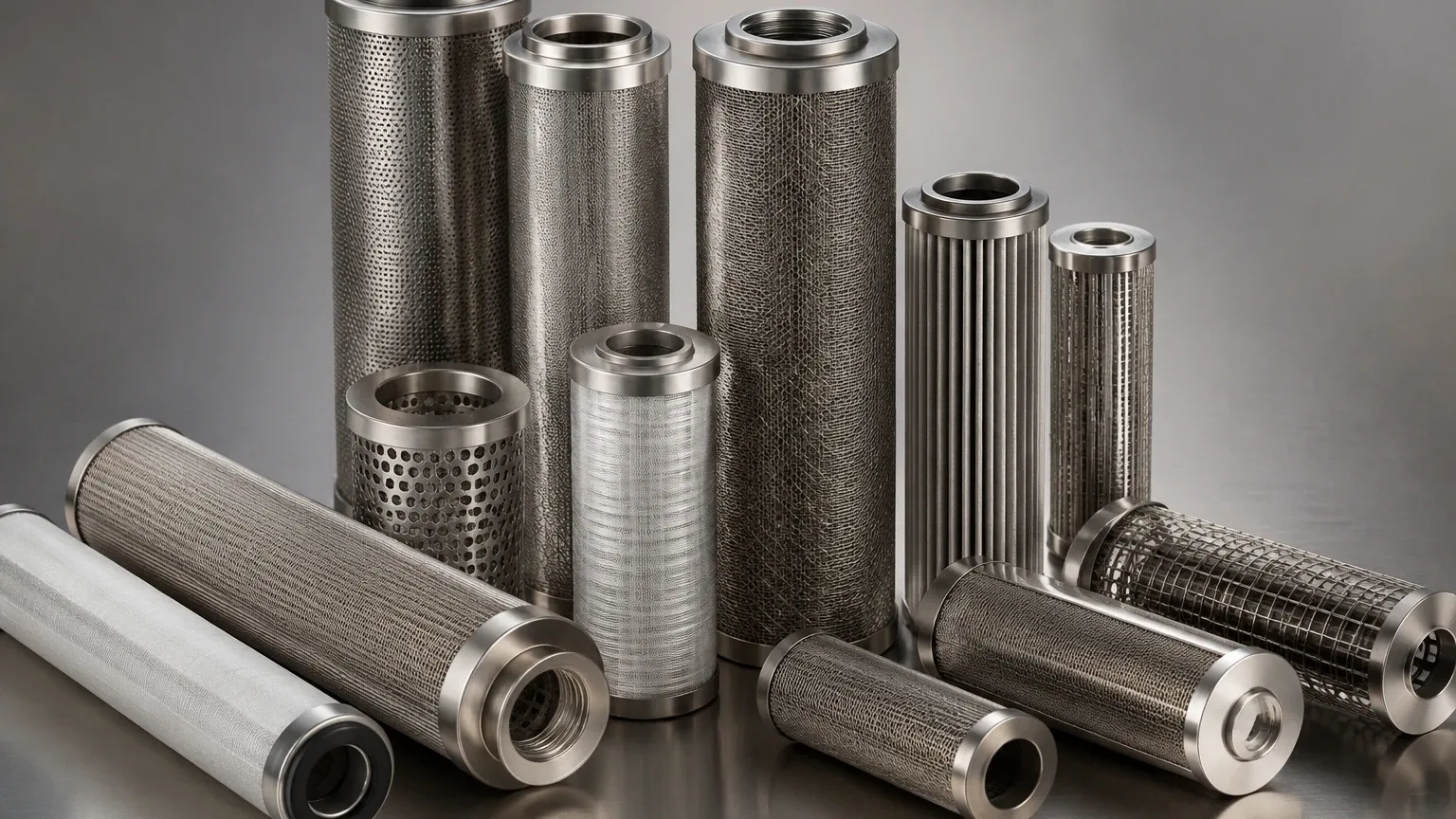
Customization and OEM Integration
In many B2B scenarios, off-the-shelf solutions do not meet the unique spatial or chemical requirements of a specific plant. Customization of the filter cartridge m is a core service provided by specialized manufacturers like Kaifil. Engineering teams often require modifications in several areas:
* Dimensional Adjustments: Standard lengths (10", 20", 30", 40") may not fit custom-built housings. Precision manufacturing allows for bespoke lengths and diameters to maximize the use of available space.
* Seal Compatibility: While EPDM and Buna-N are standard, aggressive chemicals may require Viton (FKM), PTFE (Teflon), or Kalrez (FFKM) O-rings to prevent seal degradation and leaks.
* Structural Reinforcement: In high-viscosity or high-pressure applications, the internal core and external cage of the cartridge may need reinforcement to prevent collapsing or bursting under extreme differential pressure (Delta P).
By working closely with a manufacturer that understands these variables, purchasing teams can ensure that the Filter Cartridges they procure are optimized for their specific operational environment, rather than settling for a generic component that may underperform.
Total Cost of Ownership and Maintenance
One of the most significant advantages of a stainless steel filter cartridge m over disposable alternatives is the total cost of ownership (TCO). While the initial capital expenditure for a metal cartridge is higher than that of a melt-blown or string-wound cartridge, the long-term savings are substantial.
Cleanability and Reusability
Disposable filters represent a recurring cost and a significant waste stream. In contrast, stainless steel cartridges are designed to be cleaned and reused. Depending on the contaminant, cleaning methods include:
* Backwashing: Reversing the flow of fluid to dislodge surface contaminants.
* Ultrasonic Cleaning: Using high-frequency sound waves in a solvent bath to remove fine particles trapped deep within sintered media.
* Chemical Cleaning: Using acids or alkalis to dissolve organic or inorganic scaling, provided the chemicals are compatible with the 316L structure.
Reducing Downtime
The durability of metal cartridges also reduces the frequency of filter changes. In many industrial processes, the cost of stopping production to change a filter far exceeds the cost of the filter itself. A robust filter cartridge m that can withstand pressure surges and maintain its integrity over hundreds of cleaning cycles provides a level of process stability that disposable filters cannot match.
Applications Across Key Industries
The versatility of the filter cartridge m makes it a staple in various sectors:
* Chemical Processing: Used for the filtration of catalysts, solvents, and polymers where chemical compatibility is paramount.
* Food and Beverage: Employed in the filtration of edible oils, beverages, and steam (culinary steam) where sanitary standards are strictly enforced.
* Pharmaceuticals: Critical for the removal of bacteria and particulates in sterile environments, requiring high-precision absolute micron ratings.
* Hydraulics and Power Generation: Protecting sensitive valves and pumps from wear-inducing metallic particles in high-pressure oil systems.
Conclusion: Making an Informed Selection
Selecting the right filter cartridge m is a technical process that requires the evaluation of flow rates, pressure drops, chemical compatibility, and the specific nature of the contaminants. For engineers and procurement professionals, the goal is to find a balance between filtration efficiency and operational cost.
By focusing on high-quality materials like 316L stainless steel, ensuring the integrity of the end-cap seals (such as the Code M configuration), and choosing the appropriate media structure (pleated or sintered), facilities can achieve reliable, long-term filtration performance. Partnering with a manufacturer that offers both technical expertise and customization capabilities ensures that the filtration solution is not just a component, but a strategic asset in the production process.
For those looking to optimize their filtration systems, it is recommended to Review product options and application support to identify the specific configurations that will best serve their industrial requirements.
