


Filter Cartridge Mask
In industrial environments where air quality and gas purity are critical, the technical configuration of a filter cartridge mask system determines both the safety of personnel and the efficiency of the process. While many associate filtration masks with simple disposable units, industrial-grade applications—ranging from chemical processing to high-temperature metalworking—require robust, often reusable, filter cartridges engineered to withstand corrosive atmospheres and high particulate loads. Understanding the engineering behind these components is essential for procurement teams and safety engineers tasked with maintaining compliance and operational continuity.
Industrial filtration relies on the precise interaction between the filter media and the structural integrity of the cartridge. When selecting or designing a Filter Cartridges solution for specialized mask or respiratory systems, several variables must be evaluated, including material compatibility, micron ratings, and the physical environment of the application.
Engineering Fundamentals of Industrial Filter Cartridges
The core of any filter cartridge mask system is the media. In heavy-duty industrial settings, traditional polymer-based media may fail due to thermal degradation or chemical instability. This is where stainless steel and precision metal filtration components become indispensable. These cartridges are designed to capture contaminants through several mechanisms: inertial impaction, interception, and diffusion.
For industrial respiratory protection and gas-phase filtration, the cartridge housing must maintain a perfect seal to prevent bypass. Engineering a high-performance cartridge involves optimizing the surface area. Pleated designs are frequently employed to increase the effective filtration area without increasing the overall footprint of the mask or system. This reduction in face velocity across the media allows for higher capture efficiency of fine particulates while maintaining a lower pressure drop, which is critical for reducing the breathing resistance or energy consumption of the system.
Material Selection for Specialized Filtration
Material selection is perhaps the most critical decision in the engineering of industrial filter cartridges. For environments involving volatile organic compounds (VOCs), acidic vapors, or extreme temperatures, stainless steel 316L is the industry standard.
1. Corrosion Resistance: Stainless steel resists oxidation and chemical attack, ensuring that the filter media does not shed metallic particles into the clean air stream—a phenomenon known as media migration.
2. Thermal Stability: Unlike synthetic fibers, metal wire mesh and sintered metal cartridges can operate in temperatures exceeding 500°C, making them suitable for specialized industrial exhaust and high-heat safety masks.
3. Mechanical Strength: In high-pressure hydraulic or pneumatic systems that integrate filter cartridges, the structural rigidity of the metal prevents the media from collapsing or deforming under stress.
In the context of a filter cartridge mask used in a manufacturing plant, using a stainless steel mesh as a pre-filter can significantly extend the life of more expensive chemical-adsorbent layers. This multi-stage approach is a hallmark of professional filtration design.
Technical Performance Criteria: Efficiency and Pressure Drop
When evaluating a filter cartridge mask, engineers must look beyond simple efficiency percentages. The performance is defined by the relationship between the micron rating and the pressure drop (differential pressure).
Micron Ratings and Capture Efficiency
Industrial cartridges are categorized by their absolute or nominal micron ratings. An absolute rating implies that the filter will capture 99.9% of particles of a specific size. For precision applications, such as pharmaceutical cleanrooms or semiconductor gas lines, absolute-rated stainless steel cartridges provide the necessary reliability. In mask applications, the goal is often to capture sub-micron particulates, which requires a dense, multi-layered mesh structure.
Pressure Drop (ΔP)
The pressure drop is the difference in pressure between the upstream and downstream sides of the filter. A high initial pressure drop indicates that the system must work harder to move air or fluid through the cartridge. For a filter cartridge mask, a high pressure drop leads to user fatigue or system strain. Engineers aim to select a media geometry that maximizes dirt-holding capacity while keeping ΔP within acceptable limits for the duration of the service cycle.
Maintenance and Replacement Cycles in Industrial Applications
A critical aspect of total cost of ownership (TCO) for industrial filters is the maintenance schedule. Unlike disposable masks, industrial filter cartridges used in heavy machinery or large-scale respiratory systems are often designed for longevity.
Determining the replacement cycle requires monitoring the differential pressure. As the filter captures contaminants, the pores become restricted, and the ΔP rises. Once it reaches a predetermined "terminal pressure drop," the cartridge must be cleaned or replaced.
One of the primary advantages of stainless steel filter cartridges is their cleanability. Through methods such as ultrasonic cleaning, backwashing, or chemical cleaning, these components can be restored to near-original performance levels. This reduces waste and long-term procurement costs compared to single-use synthetic cartridges. However, it is vital to confirm that the cleaning process does not compromise the pore structure or the integrity of the wire mesh weave.
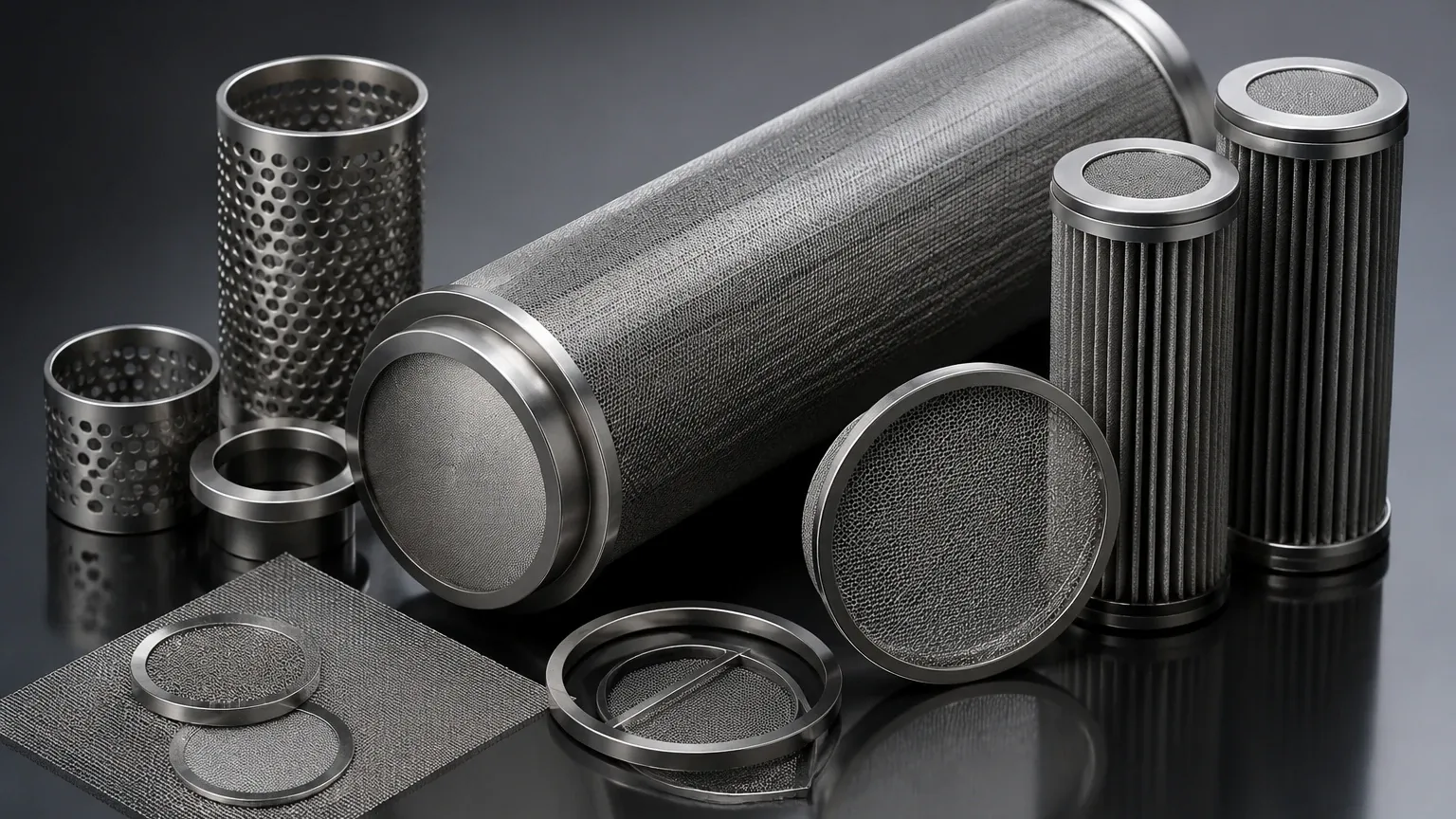
Customization and OEM Solutions for Precision Filtration
Standard off-the-shelf filtration products often fall short in specialized industrial environments. OEM and customized filtration solutions allow engineers to specify exact dimensions, end-cap configurations, and media types to fit proprietary mask systems or unique industrial housings.
Customization options typically include:
* Custom End-Caps: Options such as DOE (Double Open End), SOE (Single Open End) with various O-ring configurations (e.g., 222, 226) ensure a leak-proof fit.
* Layered Media: Combining different mesh counts to create a gradient density filter, which improves dirt-holding capacity.
* Reinforced Cores: For high-pressure applications, an internal perforated core can be added to provide additional burst strength.
When working with a manufacturer like Kaifil, providing detailed application data—such as flow rate, fluid type, operating temperature, and the specific nature of the contaminants—allows for the development of a filter cartridge that is optimized for both performance and durability.
Addressing Common Engineering Questions
Before finalizing a purchase for a filter cartridge mask system, several technical questions should be addressed to ensure the solution is fit for purpose:
* Chemical Compatibility: Does the filter media or the sealing gasket (EPDM, Viton, Silicone) react with the gases or fluids in the environment? For example, certain solvents may degrade rubber seals, necessitating the use of PTFE.
* Flow Velocity: Is the cartridge sized correctly for the required flow rate? Oversizing a filter can lead to unnecessary costs, while undersizing leads to premature clogging and excessive pressure drop.
* Regulatory Compliance: Does the filtration efficiency meet the specific industry standards (such as ISO, HEPA, or specific safety ratings) required for the application?
The Role of Sintered Metal in High-Performance Masks
In the most demanding filter cartridge mask applications, sintered metal fiber or mesh is often the preferred choice. Sintering is a process where metal layers are bonded together under high heat and pressure without melting them. This creates a porous structure that is incredibly strong and has a fixed pore size that cannot shift during operation.
Sintered metal cartridges offer superior permeability compared to standard woven mesh. This is particularly beneficial in gas filtration where high flow rates are required. Furthermore, the absence of binders or adhesives in sintered products eliminates the risk of outgassing, which is a critical safety consideration in respiratory and high-purity chemical applications.
Conclusion: Selecting the Right Filtration Partner
Selecting a filter cartridge mask solution is an exercise in balancing technical performance with economic reality. For B2B buyers and engineers, the focus should remain on the durability of the materials and the precision of the manufacturing process. Stainless steel filtration components offer a level of reliability and reusability that synthetic alternatives cannot match, especially in harsh industrial sectors.
By focusing on the engineering details—from micron ratings and pressure drops to material science and custom OEM designs—organizations can ensure they are implementing a filtration strategy that protects both their personnel and their industrial processes. When precision and durability are non-negotiable, customized stainless steel filter cartridges provide the high-performance foundation necessary for modern industrial safety and efficiency.
