


Laica Water Filter Cartridges
In the landscape of water purification, understanding the technical specifications and engineering principles behind various filtration media is essential for both residential and industrial applications. While many users encounter filtration technology through consumer brands, the underlying science remains consistent across sectors. Laica water filter cartridges represent a specific approach to point-of-use water treatment, utilizing multi-stage media to address common contaminants. For engineers and procurement professionals, analyzing these components provides a baseline for understanding how filtration efficiency, material compatibility, and flow dynamics influence the selection of Filter Cartridges for more demanding industrial environments.
Industrial filtration often requires a higher degree of structural integrity and chemical resistance than what is found in standard consumer units. However, the fundamental goal—removing unwanted particulates and chemical constituents—remains the same. This article examines the technical aspects of Laica’s filtration technology, compares it with industrial standards, and outlines the critical evaluation criteria for selecting filtration solutions in professional settings.
The Engineering Behind Laica Water Filter Cartridges
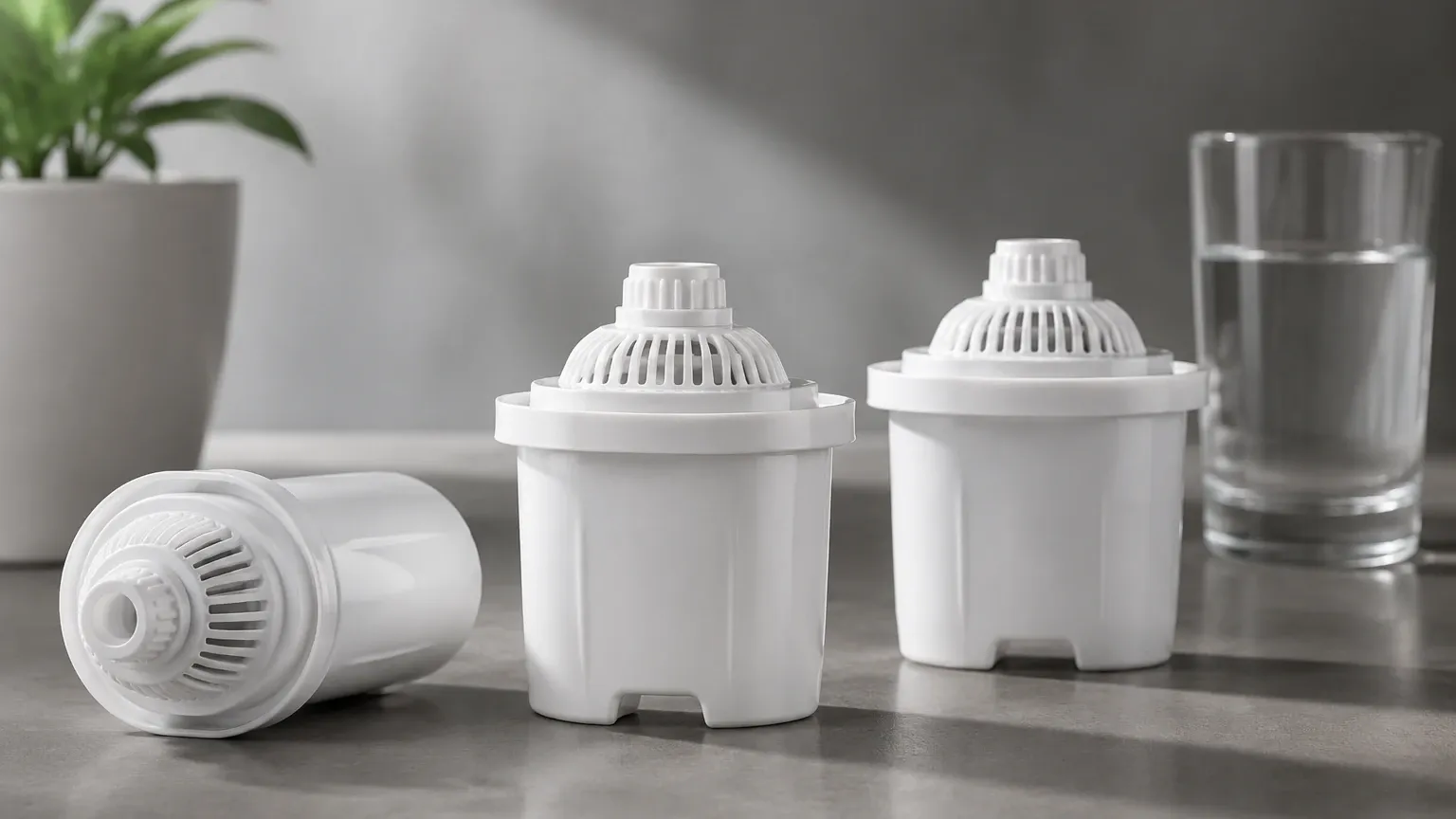
Laica water filter cartridges are primarily designed around the "Bi-flux" technology, which is a patented system involving a multi-step filtration process contained within a single housing. From a technical perspective, this system is engineered to balance contact time between the water and the filter media with the required flow rate for gravity-fed or low-pressure systems.
The internal architecture of these cartridges typically includes a pre-filter mesh, activated carbon, and ion-exchange resins. The pre-filter serves as the first line of defense, capturing larger suspended solids that could otherwise clog the finer media downstream. This is a common principle in industrial filtration, where multi-stage systems are utilized to protect expensive fine-filtration stages from premature loading.
The activated carbon component is selected for its high surface area and porosity, which facilitates the adsorption of organic compounds, chlorine, and certain pesticides. Meanwhile, the ion-exchange resin is engineered to reduce carbonate hardness and heavy metals such as lead and copper. For engineers, the efficiency of these processes is measured by the reduction percentage of specific contaminants over the rated life of the cartridge, typically expressed in liters or gallons.
Material Composition and Filtration Mechanisms
The materials used in laica water filter cartridges are selected for food-grade safety and specific chemical interactions. The housing is generally constructed from high-quality, BPA-free plastics, which are suitable for ambient temperature water but may not be appropriate for high-temperature or high-pressure industrial process water.
Adsorption and Chemical Interaction
Activated carbon works through the process of adsorption, where molecules of the contaminant are held by Van der Waals forces to the internal surface of the carbon pores. In industrial applications, the choice between granular activated carbon (GAC) and carbon block filters depends on the required contact time and the allowable pressure drop across the system. Laica utilizes a specific blend designed to optimize this interaction within the constraints of a compact cartridge.
Ion Exchange Principles
The ion-exchange resin within these cartridges operates by exchanging undesirable ions (like calcium or magnesium) for less problematic ions (like sodium or hydrogen). This process is critical for preventing scale buildup in downstream equipment, such as espresso machines or industrial boilers. When evaluating Filter Cartridges for industrial use, engineers must consider the total exchange capacity of the resin and the potential for "breakthrough," where the media becomes saturated and contaminants begin to pass through.
Performance Metrics: Micron Ratings and Flow Rates
When specifying filtration components, two of the most critical metrics are the micron rating and the flow rate. The micron rating defines the size of the particles that the filter can effectively trap. While consumer-grade laica water filter cartridges are designed to improve taste and odor and remove common tap water impurities, they are generally rated for nominal filtration rather than absolute filtration.
Nominal vs. Absolute Filtration
In industrial contexts, the distinction between nominal and absolute ratings is vital. A nominal rating indicates that the filter will trap a certain percentage of particles of a given size (e.g., 85% of 5-micron particles). An absolute rating implies a much higher efficiency, often 99.9% or higher. For critical processes in the pharmaceutical or chemical industries, absolute-rated stainless steel mesh or pleated cartridges are often required to ensure process consistency.
Flow Dynamics and Pressure Drop
Flow rate is determined by the permeability of the filter media and the surface area available for filtration. In gravity-fed systems like those used by Laica, the flow rate is relatively low. In pressurized industrial systems, engineers must calculate the "clean pressure drop" (the initial resistance to flow) and the "terminal pressure drop" (the point at which the filter is considered fouled and must be replaced). High-performance Filter Cartridges are designed to maximize surface area—often through pleating—to maintain high flow rates while extending the service life.
Industrial vs. Residential Filtration Standards
While laica water filter cartridges meet stringent standards for domestic water use, industrial applications often demand compliance with different sets of regulations and performance benchmarks. In the food and beverage industry, for instance, all components must be FDA-compliant and often require 3-A Sanitary Standards certification.
Structural Integrity
Industrial environments often subject filtration components to hydraulic shock (water hammer), high temperatures, and aggressive cleaning chemicals (CIP – Clean-In-Place). While plastic cartridges are cost-effective for stable, low-pressure environments, industrial process water often necessitates the use of stainless steel (304 or 316L) filter housings and cartridges. Stainless steel provides the mechanical strength to withstand high differential pressures without the risk of housing failure or bypass leaks.
Contaminant Loading Capacity
Another key difference is the contaminant loading capacity. Residential filters are designed for relatively clean municipal water. Industrial filters must often handle high turbidity or specific process byproducts. This requires deeper media beds or multi-layered sintered metal structures that can be backwashed or ultrasonically cleaned, a feature not available in disposable consumer cartridges.
Evaluating Durability and Chemical Compatibility
For any technical professional, the durability of a filter cartridge is a primary concern. The lifespan of laica water filter cartridges is typically determined by the volume of water processed or a specific time interval (e.g., 30 days). In an industrial setting, the replacement cycle is dictated by the increase in differential pressure or a decline in filtrate quality.
Chemical Resistance
When dealing with process fluids other than water, chemical compatibility becomes the most important selection factor. While the resins and carbons in standard water filters are effective for chlorine and minerals, they may degrade when exposed to solvents, strong acids, or bases. In these cases, engineers turn to specialized Filter Cartridges made from fluoropolymers (PTFE), polypropylene, or stainless steel mesh. These materials ensure that the filter media does not leach impurities into the process stream or lose its structural integrity.
Temperature Considerations
Standard water filter cartridges are typically rated for temperatures up to 30°C or 40°C. In many industrial processes, such as steam filtration or hot oil processing, temperatures can exceed 200°C. Sintered metal cartridges and high-temperature alloys are required for these applications, as plastic components would soften and fail, leading to catastrophic system contamination.
Customization and OEM Considerations for Filter Cartridges
One of the limitations of consumer-market products like laica water filter cartridges is the lack of customization. They are designed for specific proprietary housings. In contrast, industrial filtration solutions often require custom engineering to fit existing infrastructure or to meet unique process requirements.
Custom Dimensions and Fittings
OEM manufacturers like Kaifil specialize in producing Filter Cartridges with custom diameters, lengths, and end-cap configurations (e.g., DOE – Double Open End, SOE – Single Open End with various O-ring codes). This flexibility allows engineers to optimize the filtration system for the specific space constraints of their machinery.
Tailored Filtration Accuracy
Customization also extends to the filtration media itself. Depending on the particle size distribution of the fluid, a manufacturer can adjust the weave pattern of a wire mesh or the density of a sintered metal fiber felt to achieve the exact micron rating required. This precision ensures that the filter removes harmful particles without unnecessarily restricting flow or trapping beneficial components of the fluid.
Maintenance, Lifespan, and Replacement Strategies
Effective maintenance is key to the total cost of ownership (TCO) of any filtration system. For laica water filter cartridges, maintenance is simplified to the periodic replacement of the entire unit. In industrial systems, the strategy is more complex and involves monitoring and scheduled intervention.
Monitoring Differential Pressure
In professional systems, pressure gauges are installed upstream and downstream of the filter housing. A rising differential pressure indicates that the filter is accumulating debris. Setting clear thresholds for replacement prevents pump strain and ensures that the filter media does not rupture under excessive pressure.
Cleanable vs. Disposable Media
While many industrial filters are disposable (similar to consumer cartridges), many others are designed to be cleaned and reused. Stainless steel wire mesh filters can be cleaned via backflushing, chemical baths, or ultrasonic cleaning. This significantly reduces the long-term waste and replacement costs, making them a more sustainable and cost-effective choice for high-volume applications.
Conclusion: Selecting the Right Filtration Solution
Whether evaluating laica water filter cartridges for a small-scale office application or specifying heavy-duty Filter Cartridges for a chemical plant, the selection process must be grounded in factual performance data and an understanding of the operating environment. Consumer products offer a convenient, standardized solution for basic water treatment, but they lack the robustness and customization required for industrial process control.
Engineers must prioritize material compatibility, micron accuracy, and structural integrity to ensure the reliability of their systems. By understanding the mechanisms of adsorption, ion exchange, and mechanical straining, and by choosing the appropriate media—whether it be activated carbon, synthetic fibers, or precision stainless steel—purchasing teams can achieve optimal filtration performance and protect their downstream equipment from damage and contamination.
