


Filter Cartridge Material
In industrial filtration, the selection of filter cartridge material is a fundamental engineering decision that dictates the efficiency, longevity, and safety of a process. For engineers and procurement professionals, understanding the technical nuances of various materials is essential to prevent premature component failure, ensure chemical compatibility, and optimize the total cost of ownership. While various polymers and fibers are available in the market, stainless steel and specialized alloys remain the gold standard for demanding industrial applications due to their mechanical strength and thermal resilience.
Selecting the appropriate material involves a multi-faceted evaluation of the operating environment, including temperature fluctuations, chemical exposure, pressure differentials, and the physical characteristics of the contaminants being removed. This guide examines the technical properties of industrial filter cartridge material and provides a framework for selecting the most effective solutions for complex filtration challenges.
The Role of Material Selection in Industrial Filtration
The primary function of Filter Cartridges is to remove particulates from a fluid or gas stream while maintaining structural integrity under operational stress. The material chosen for the filter media, support core, and end caps determines the cartridge's performance limits. In industries such as chemical processing, pharmaceuticals, and oil and gas, the filter is often exposed to aggressive solvents, high-pressure surges, and extreme temperatures that would cause standard synthetic materials to degrade or collapse.
Material selection directly influences the filtration mechanism—whether it be surface filtration or depth filtration. Metal-based materials allow for precise control over pore size and distribution, which is critical for achieving specific micron ratings. Furthermore, the choice of material impacts the cleanability of the cartridge. Unlike disposable synthetic filters, high-quality metal filter cartridge material allows for repeated cleaning and reuse, significantly reducing long-term operational waste and replacement costs.
Common Stainless Steel Alloys for Filter Cartridges
Stainless steel is the most prevalent material used in high-performance industrial filtration. Its popularity stems from its excellent corrosion resistance and mechanical durability. However, not all stainless steel alloys are suitable for every environment. The most common grades used in the manufacturing of filter cartridges include:
Stainless Steel 304
Grade 304 is a versatile, general-purpose stainless steel with good corrosion resistance in most atmospheric and many organic and inorganic chemical environments. It contains approximately 18% chromium and 8% nickel. It is often used in food and beverage applications and general industrial water filtration where the environment is not excessively corrosive.
Stainless Steel 316 and 316L
For more demanding applications, Grade 316 is the preferred choice. The addition of molybdenum (usually 2-3%) significantly enhances its resistance to chlorides and industrial solvents. Grade 316L, the low-carbon version of 316, is specifically used for components that require welding. The lower carbon content prevents carbide precipitation during the welding process, which maintains the material's corrosion resistance at the weld joints. This is crucial for the structural integrity of pleated or cylindrical filter cartridges used in pharmaceutical and chemical sectors.
Specialized Alloys
In environments involving extreme acidity or high-salinity fluids, specialized alloys such as Hastelloy, Monel, or Inconel may be required. These materials offer superior resistance to pitting, stress-corrosion cracking, and high-temperature oxidation, ensuring that the filtration system remains operational in conditions where standard stainless steel would fail.
Evaluating Chemical Compatibility and Corrosion Resistance
Chemical compatibility is perhaps the most critical factor when determining the appropriate filter cartridge material. If the material is incompatible with the process fluid, it can lead to leaching, material softening, or catastrophic corrosion. This not only destroys the filter but can also contaminate the downstream product.
When evaluating compatibility, engineers must consider the concentration of the chemicals, the operating temperature, and the duration of exposure. For example, while 304 stainless steel may resist a specific acid at room temperature, it may corrode rapidly if the temperature is increased.
Corrosion typically manifests in several forms in filtration systems:
* Uniform Corrosion: The gradual thinning of the metal surface.
* Pitting Corrosion: Localized holes or pits that can penetrate the filter media.
* Crevice Corrosion: Occurs in shielded areas, such as under gaskets or within the pleats of the filter.
* Stress Corrosion Cracking (SCC): The growth of crack formations in a corrosive environment under tensile stress.
Using 316L stainless steel provides a robust defense against many of these issues, particularly in environments containing chlorides, which are notorious for causing pitting in lower-grade steels.
Thermal and Mechanical Properties of Metal Filter Media
Industrial processes often operate at temperatures that exceed the melting or softening points of polymer-based filters. Metal filter cartridges can typically withstand temperatures ranging from cryogenic levels up to 500°C (932°F) or higher, depending on the alloy and the seal materials used. This thermal stability ensures that the pore structure remains consistent, preventing "unloading" of captured contaminants due to thermal expansion or material deformation.
Mechanically, the filter cartridge material must withstand high differential pressures (ΔP). As a filter accumulates debris, the pressure drop across the media increases. A material with high tensile strength and rigidity, such as sintered metal or heavy-duty wire mesh, can resist collapsing or bursting under these loads. This is particularly important in hydraulic systems and high-viscosity fluid filtration, where pressure spikes are common.
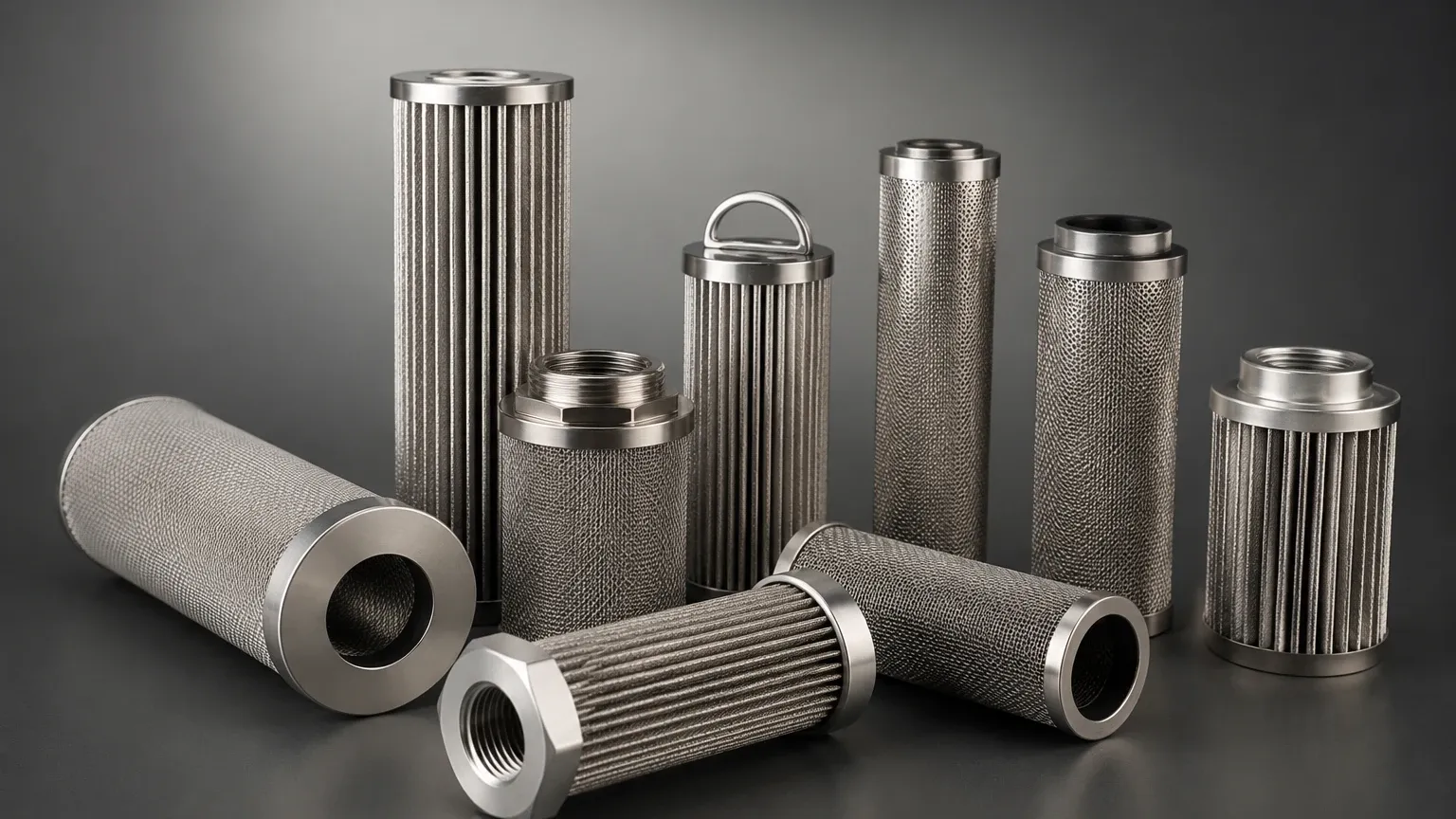
Structural Designs: Pleated, Sintered, and Wire Mesh
The physical form of the filter cartridge material also dictates its performance characteristics. Different manufacturing techniques are employed to meet specific industrial requirements:
Pleated Metal Mesh
Pleating increases the effective filtration area within a standard cartridge footprint. This design allows for higher flow rates and increased dirt-holding capacity. Pleated cartridges are ideal for applications requiring fine filtration and low initial pressure drops.
Sintered Metal Fiber and Powder
Sintering involves bonding metal fibers or powders together using heat and pressure without melting them. This creates a porous, rigid structure with high permeability and excellent filtration precision. Sintered depth media are highly effective at capturing irregularly shaped particles and are known for their exceptional mechanical strength.
Wedge Wire and Perforated Metal
For coarse filtration or as a support structure for finer media, wedge wire and perforated metals are used. These designs provide a high open area and are extremely easy to clean through backwashing or mechanical scraping, making them suitable for high-solids applications like wastewater treatment.
Engineering Guide: How to Choose the Right Filter Cartridge Material
To select the optimal material for a specific application, engineers should follow a systematic evaluation process:
1. Define the Fluid Characteristics: Identify the chemical composition, pH level, and viscosity of the fluid. Determine if the fluid is aqueous, organic, or a gas.
2. Establish Operating Parameters: Note the maximum and continuous operating temperatures, as well as the maximum expected differential pressure.
3. Determine Filtration Goals: Specify the required micron rating (absolute or nominal) and the nature of the contaminants (hard, soft, deformable, or abrasive).
4. Assess Regulatory Requirements: In the food, beverage, and pharmaceutical industries, materials must often comply with FDA or EC standards for food contact. Stainless steel 316L is generally the preferred material for these regulated environments due to its inert nature.
5. Consider Cleaning Protocols: If the cartridge is intended to be reused, the material must be compatible with cleaning agents such as caustic sodas, acids, or high-pressure steam (SIP/CIP processes).
By aligning these factors with the properties of the filter cartridge material, purchasing teams can avoid the costs associated with over-engineering or the risks of under-performing components.
Maintenance and the Economics of Reusable Filter Cartridges
While the initial investment in stainless steel Filter Cartridges is higher than that of disposable plastic or paper alternatives, the total cost of ownership is often significantly lower in industrial settings. The durability of metal allows for various cleaning methods, including ultrasonic cleaning, chemical baths, and backpulsing.
Effective maintenance of metal filters involves monitoring the differential pressure. Once the pressure reaches a predetermined limit, the cartridge should be cleaned to restore its flow characteristics. Because metal materials do not shed fibers or degrade over time like synthetics, they provide a consistent filtration performance over hundreds of cleaning cycles. This longevity reduces the frequency of system downtime for filter changes and eliminates the disposal costs associated with contaminated single-use cartridges.
Conclusion
The choice of filter cartridge material is a technical decision that impacts every aspect of a filtration system's performance. Stainless steel, particularly grades 304 and 316L, offers the necessary balance of corrosion resistance, thermal stability, and mechanical strength required for modern industrial processes. By understanding the specific demands of the application and the capabilities of different metal alloys and structures, engineers can ensure reliable, efficient, and cost-effective filtration. For those seeking specialized configurations or high-performance components, exploring professional Filter Cartridges options is the next step in optimizing industrial filtration infrastructure.
