


Filter Cartridge O Ring
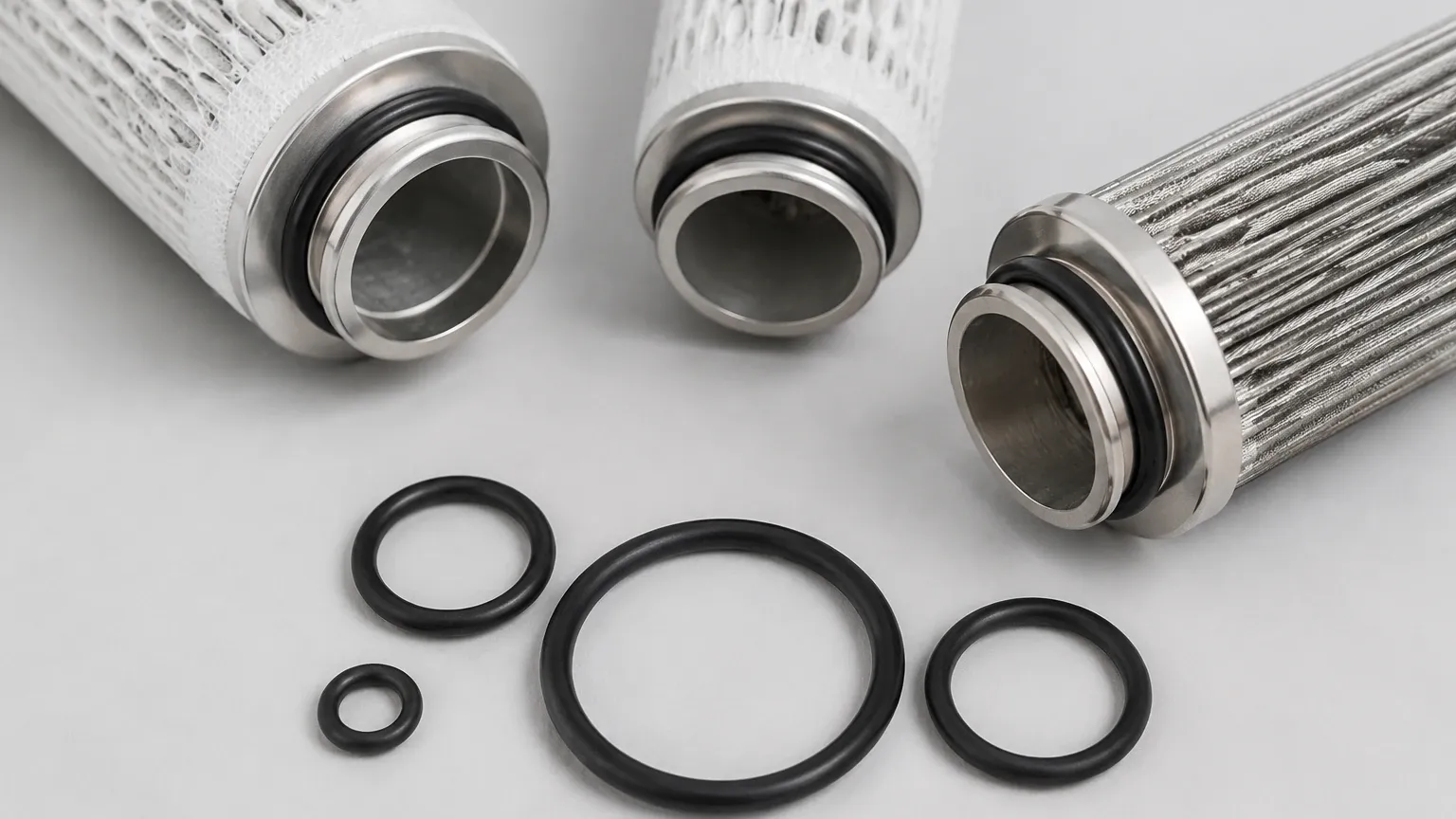
In industrial filtration systems, the integrity of the seal is as critical as the efficiency of the filter media itself. A high-performance stainless steel filter is only effective if the fluid is forced through the media rather than bypassing it. The filter cartridge o ring serves as the primary sealing mechanism that prevents contaminated fluid from bypassing the filter element. For engineers and procurement professionals managing chemical processing, pharmaceutical production, or hydraulic systems, selecting the correct O-ring material and specification is essential for maintaining system pressure, fluid purity, and operational safety.
When specifying Filter Cartridges, the O-ring is often the first point of failure if environmental conditions such as temperature, chemical composition, or pressure fluctuations are not accurately accounted for. Understanding the technical nuances of elastomeric seals ensures that the filtration system operates at peak efficiency with minimal downtime.
The Technical Function of O-Rings in Filtration
The primary function of a filter cartridge o ring is to create a mechanical seal between the filter element and the housing head or manifold. This is achieved through the deformation of the elastomer within a gland or against a seating surface. When the filter is installed, the O-ring is compressed, creating a zero-clearance barrier.
In industrial applications, this seal must withstand differential pressures. As the filter media becomes loaded with contaminants, the pressure drop across the element increases. The O-ring must maintain its seal under these varying loads. If the O-ring fails to maintain its shape or loses its elasticity (a condition known as compression set), fluid will take the path of least resistance through the gaps, leading to "bypass." In precision industries like food and beverage or microelectronics, even a minor bypass can result in entire batches of product being compromised.
Material Selection: Engineering for Chemical and Thermal Compatibility
Selecting the material for a filter cartridge o ring is a critical engineering decision. There is no universal elastomer; each material offers specific advantages and limitations regarding chemical resistance, temperature range, and mechanical strength.
EPDM (Ethylene Propylene Diene Monomer)
EPDM is one of the most common materials used in industrial filtration. It offers excellent resistance to hot water, steam, and polar solvents (such as acetone and alcohols). It is widely used in water treatment and food processing applications. However, EPDM is not compatible with petroleum-based oils or mineral acids, which will cause the material to swell and degrade rapidly.
Viton™ / FKM (Fluorocarbon)
Viton is the preferred choice for high-temperature applications and environments involving aggressive chemicals, oils, and fuels. It can withstand temperatures up to 200°C (392°F) and remains stable in the presence of most acids and hydrocarbons. In chemical processing plants where Filter Cartridges are exposed to diverse reagents, Viton provides the necessary durability to prevent frequent seal replacements.
Silicone
Silicone O-rings are primarily utilized in the pharmaceutical and biotechnology sectors due to their excellent biocompatibility and wide temperature range. They are highly flexible and maintain their properties in both extreme cold and high heat. While silicone has lower mechanical strength and abrasion resistance compared to Viton or EPDM, its purity and FDA-compliance make it indispensable for sanitary filtration.
PTFE-Encapsulated O-Rings
For the most demanding chemical environments where standard elastomers fail, PTFE-encapsulated O-rings are used. These consist of a silicone or Viton core encased in a seamless FEP or PFA (Teflon™) jacket. This configuration combines the chemical inertness of PTFE with the resiliency of an elastomer. These are common in aggressive solvent filtration but require careful installation as the outer jacket is less flexible than a pure elastomer.
Buna-N (Nitrile/NBR)
Buna-N is the standard for hydraulic and pneumatic applications. It offers excellent resistance to petroleum-based oils and fluids. While it is cost-effective and provides good abrasion resistance, it has a limited temperature range and poor resistance to ozone and weathering, making it less suitable for outdoor or high-heat chemical applications.
Standard End-Cap Configurations and O-Ring Sizes
In the industrial filter market, O-rings are integrated into specific end-cap configurations that follow industry standards. Understanding these "Codes" is vital for ensuring compatibility between the cartridge and the housing.
* Code 7 (2-226 O-Rings): This is a common high-security seal featuring two 226-size O-rings and a bayonet locking tab. It is designed for critical applications where the filter must be locked into place to prevent movement during pressure surges.
* Code 3 (2-222 O-Rings): A standard double O-ring configuration (size 222) with a flat end. This is frequently used in general industrial and water filtration housings.
* Code 8 (2-222 O-Rings with Fin): Similar to Code 3 but includes a "fin" or spear on the top end to help center the cartridge within the housing.
* DOE (Double Open End): These cartridges use flat gaskets rather than O-rings on both ends. While simpler, they generally provide a less reliable seal than O-ring-based SOE (Single Open End) designs in high-pressure or high-purity environments.
Engineering Considerations: Compression Set and Durometer
Beyond material type, engineers must consider the mechanical properties of the filter cartridge o ring, specifically its durometer and resistance to compression set.
Durometer (Hardness)
The hardness of an O-ring is measured on the Shore A scale. Most industrial filter O-rings have a durometer of 70 Shore A. This provides an optimal balance between flexibility (allowing the seal to conform to surface irregularities) and structural integrity (preventing the O-ring from being extruded into the clearance gap under high pressure). In high-pressure hydraulic systems, a higher durometer (90 Shore A) may be required to prevent extrusion.
Compression Set
Compression set refers to the permanent deformation of an elastomer after being compressed over time, especially at elevated temperatures. If an O-ring has a high compression set, it will fail to "spring back" when the pressure is released or when the cartridge is serviced. This leads to a loss of sealing force. High-quality stainless steel Filter Cartridges often utilize premium-grade elastomers with low compression set values to extend the service life of the seal during long filtration cycles.
Common Risks and Failure Modes
Failure to properly manage O-ring selection and maintenance leads to several common industrial risks:
1. Chemical Swell: If the elastomer is incompatible with the process fluid, it will absorb the fluid and swell. This can make it nearly impossible to remove the filter cartridge from the housing or can cause the O-ring to pinch and tear during installation.
2. Thermal Degradation: Operating above the rated temperature of the elastomer causes it to harden and crack (embrittlement). Once the O-ring loses its elasticity, the seal is compromised.
3. Installation Damage: One of the most frequent causes of O-ring failure is "nicking" or cutting the seal during installation. If the O-ring is not lubricated or if it is forced over sharp threads or edges, a small tear can occur, providing a path for bypass.
4. Explosive Decompression: In high-pressure gas applications, gas can permeate the elastomer. If the system is depressurized too rapidly, the trapped gas expands, causing the O-ring to blister or rupture.
Maintenance and Replacement Protocols
To ensure the continued performance of industrial Filter Cartridges, a strict maintenance schedule for O-rings should be implemented.
* Inspection: Every time a filter housing is opened for a cartridge change-out, the O-rings should be inspected for signs of flattening, cracking, or swelling.
* Lubrication: Use a compatible lubricant (such as silicone grease for EPDM/Viton or the process fluid itself) to reduce friction during installation. This ensures the O-ring seats properly without twisting.
* Replacement: It is a best practice to replace the O-ring every time the filter cartridge is replaced. While an O-ring may look intact, its sealing properties may have diminished due to the factors mentioned above.
Customization and OEM Solutions
For specialized industrial equipment, standard O-ring sizes may not always suffice. Kaifil specializes in providing customized stainless steel filtration solutions where the housing and cartridge interface may require non-standard sealing geometries. In high-viscosity chemical processing or high-pressure steam filtration, the design of the O-ring gland and the selection of the elastomer must be integrated into the overall engineering of the filter element.
When working with custom stainless steel filters, engineers should confirm the following before finalizing a specification:
* Max/Min Operating Temperatures: Including cleaning cycles like SIP (Steam-in-Place).
* Full Chemical Profile: Including trace amounts of additives or cleaning agents.
* Differential Pressure Limits: The maximum expected pressure drop before change-out.
* Regulatory Requirements: Such as FDA, USP Class VI, or REACH compliance.
By addressing these technical variables, purchasing teams can ensure they are acquiring a filtration solution that offers the lowest total cost of ownership through durability and reliable performance. The filter cartridge o ring may be a small component, but its role in industrial process integrity is foundational.
