


Filter Cartridge Pleated
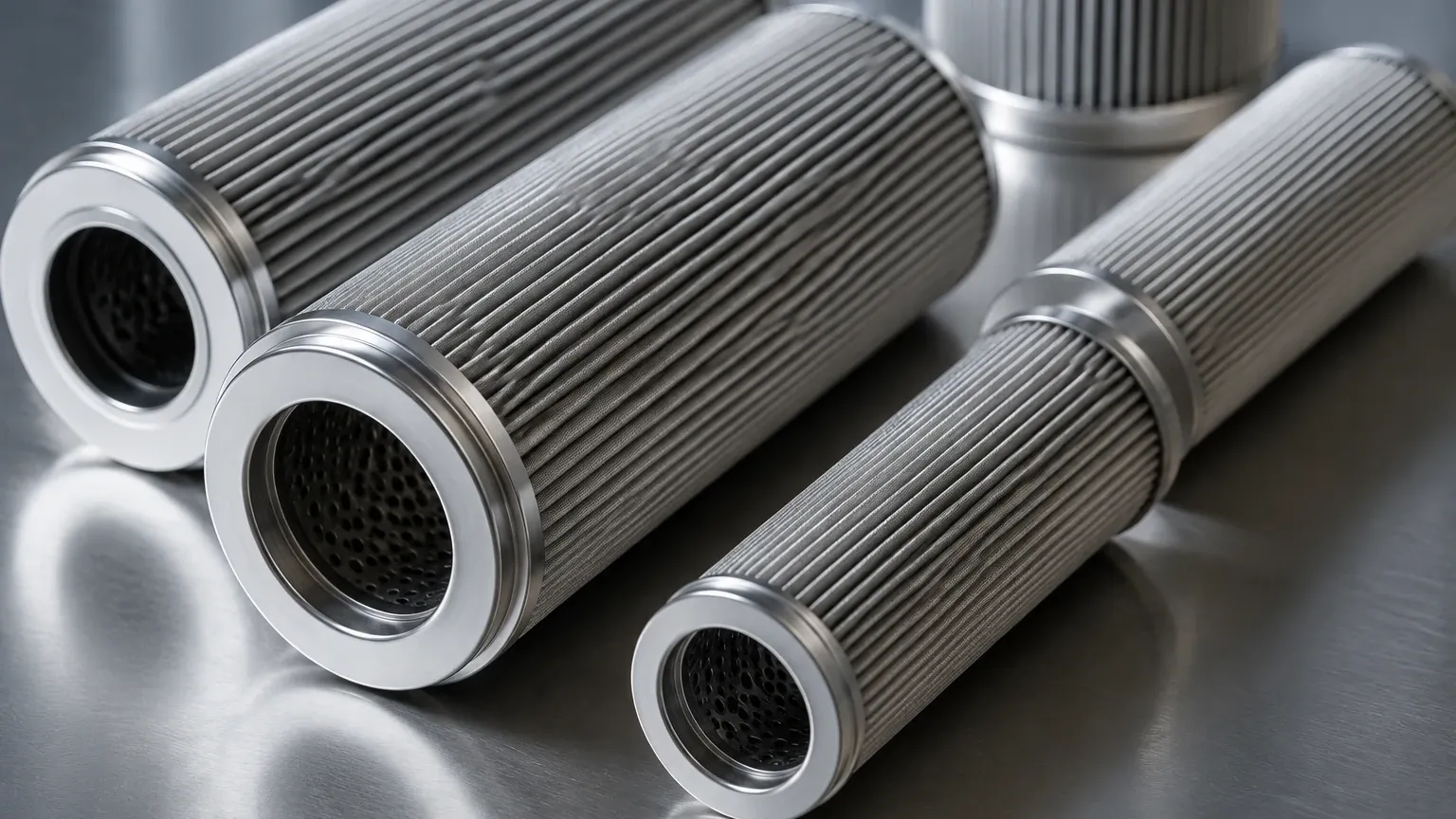
In industrial filtration, the efficiency and longevity of a system are often dictated by the geometry of the filter media. A filter cartridge pleated design represents a critical engineering solution for applications requiring high flow rates, low pressure drops, and extended service intervals. By folding the filtration media—typically stainless steel wire mesh or sintered metal fiber—manufacturers can significantly increase the effective filtration area (EFA) within a standard cylindrical envelope. This geometric optimization allows for superior performance in demanding environments where traditional cylindrical or depth filters might fail due to rapid clogging or structural instability.
For engineers and procurement professionals, understanding the technical nuances of pleated configurations is essential for optimizing process uptime and reducing the total cost of ownership. This article examines the engineering principles, material science, and selection criteria associated with industrial-grade pleated stainless steel filter cartridges.
Engineering Principles of the Pleated Design
The primary objective of a filter cartridge pleated structure is to maximize the surface area available for particle capture. In a standard 10-inch cylindrical filter, the surface area is limited to the outer circumference of the cylinder. By introducing pleats, the surface area can be increased by a factor of three to nine times, depending on the pleat depth and density.
Effective Filtration Area (EFA) and Flow Dynamics
Increased surface area directly correlates with a lower face velocity—the speed at which the fluid passes through the media. A lower face velocity reduces the pressure drop (Delta P) across the filter, which in turn reduces the energy requirements for pumps and minimizes the risk of particle breakthrough. Furthermore, a larger EFA allows the filter to hold a greater volume of contaminants before reaching its terminal pressure drop, effectively extending the time between cleaning or replacement cycles.
Pleat Geometry and Mechanical Support
The design of the pleat is a delicate balance between surface area and fluid access. If pleats are packed too tightly (high pleat density), the "blind spot" at the base of the pleat increases, and fluid cannot flow efficiently through the entire surface. This can lead to localized high-velocity zones that cause premature wear. To prevent pleat collapse under high differential pressure, industrial Filter Cartridges often incorporate internal support cores made of perforated stainless steel and outer cages or wraps to maintain the integrity of the pleat crests.
Material Selection for Industrial Environments
When specifying a filter cartridge pleated solution, the choice of material is governed by the chemical nature of the process fluid, the operating temperature, and the required filtration precision. Stainless steel is the industry standard for high-performance applications due to its mechanical strength and thermal resistance.
Stainless Steel Wire Mesh
Woven wire mesh is the most common media for pleated cartridges. It offers precise pore sizes and is available in various weave types, such as plain, twilled, or Dutch weave. Woven mesh is surface-loading, meaning particles are trapped on the surface of the wire, making it exceptionally easy to clean via backwashing or ultrasonic methods. It is ideal for removing hard, non-deformable particles from liquids and gases.
Sintered Metal Fiber Felt
For applications requiring higher dirt-holding capacity and finer filtration (down to 1 micron), sintered metal fiber felt is utilized. This media consists of non-woven stainless steel fibers that are bonded together through a high-temperature sintering process. The resulting structure is highly porous (up to 80% porosity) and provides depth filtration characteristics within a pleated format. Sintered felt is particularly effective for removing gel-like contaminants or irregularly shaped particles.
Alloy Grades: 304 vs. 316L
* Type 304: Suitable for general industrial use, offering good corrosion resistance and mechanical strength.
* Type 316L: Contains molybdenum, providing superior resistance to chlorides and organic acids. It is the preferred choice for pharmaceutical, food and beverage, and marine applications where corrosion resistance is paramount.
Performance Metrics and Selection Criteria
Selecting the correct filter cartridge pleated specification requires a detailed analysis of the application's operating parameters. Engineers should evaluate the following technical specifications:
Micron Rating: Absolute vs. Nominal
It is vital to distinguish between nominal and absolute ratings. A nominal rating refers to a filter's ability to retain a majority of particles of a certain size, whereas an absolute rating (determined through glass bead testing or similar methods) indicates the size at which 99.9% of particles are retained. For critical processes, such as catalyst recovery or final product polishing, absolute-rated pleated cartridges are necessary.
Pressure Drop and Cleanability
The initial clean pressure drop should be calculated based on fluid viscosity and flow rate. Because stainless steel pleated cartridges are a significant capital investment compared to disposable polymer filters, their cleanability is a key performance metric. The ability to withstand multiple cleaning cycles without loss of structural integrity or filtration efficiency is what defines a high-quality industrial cartridge.
Chemical and Thermal Compatibility
Unlike polymer-based filters, stainless steel pleated cartridges can operate in temperatures exceeding 300°C (depending on seal materials) and are compatible with a wide range of aggressive solvents and caustic cleaning agents. This makes them indispensable in chemical processing and steam filtration.
Industrial Applications of Pleated Cartridges
The versatility of the filter cartridge pleated design allows it to be used across diverse sectors:
1. Chemical and Petrochemical: Used for the filtration of polymers, monomers, and corrosive process chemicals. The high pressure resistance of the pleated stainless steel structure is critical for handling high-viscosity fluids.
2. Food and Beverage: Employed in the filtration of edible oils, syrups, and beverages. Stainless steel construction ensures no migration of filter media into the product and allows for Steam-In-Place (SIP) sterilization.
3. Pharmaceutical: Used for the recovery of expensive active pharmaceutical ingredients (APIs) and the filtration of process gases. The precise pore size distribution of sintered media ensures consistent product quality.
4. Hydraulic and Lubrication Systems: High-pressure hydraulic systems require pleated cartridges to remove fine metallic wear particles that could otherwise damage sensitive valves and pumps.
Customization and OEM Considerations
Most industrial filtration housings require specific configurations to ensure a leak-proof seal. When ordering a filter cartridge pleated, the following customization options should be confirmed:
* End Cap Configurations: Common types include Double Open End (DOE), Single Open End (SOE) with 222 or 226 O-ring fittings, and threaded connections (NPT/BSP). The end caps are typically TIG welded to the pleated media to ensure a robust, bypass-free construction.
* Seal Materials: The choice of O-ring or gasket material (Viton, EPDM, PTFE, or Buna-N) must be compatible with the process fluid and operating temperature.
* Dimensions: While standard lengths are 10, 20, 30, and 40 inches, custom lengths and diameters can be engineered to fit existing housings or specialized equipment.
Maintenance and Total Cost of Ownership
While the initial cost of a stainless steel filter cartridge pleated is higher than that of a disposable melt-blown or string-wound cartridge, the long-term economic benefits are substantial. The primary driver of this value is reusability.
Cleaning Protocols
Depending on the contaminant, pleated stainless steel filters can be cleaned using several methods:
* Backwashing: Reversing the flow of fluid to dislodge surface-loaded particles.
* Ultrasonic Cleaning: Using high-frequency sound waves in a detergent bath to remove fine particles trapped deep within the media.
* Chemical Cleaning: Using acids, alkalis, or solvents to dissolve organic or inorganic scale.
* Burn-off/Pyrolysis: Removing organic polymers by heating the cartridge in a controlled vacuum oven.
By implementing a structured maintenance program, a single pleated stainless steel cartridge can serve for several years, drastically reducing waste and the frequency of procurement cycles.
Technical Checklist for Engineers
Before finalizing a specification for a filter cartridge pleated, engineers should verify the following data points with the manufacturer:
* Fluid Properties: What is the viscosity at operating temperature? What is the pH level?
* Contaminant Profile: Is the loading constant or slug-fed? Are the particles hard, soft, or fibrous?
* Flow Requirements: What is the maximum and minimum flow rate? What is the maximum allowable pressure drop?
* Housing Compatibility: Does the cartridge length and end-cap style match the existing filter vessel requirements?
* Certification Needs: Does the application require FDA compliance or specific material certifications (e.g., 3.1 material certificates)?
By addressing these technical boundaries, purchasing teams can ensure they acquire a filtration solution that provides the necessary precision and durability for their specific industrial environment.
