


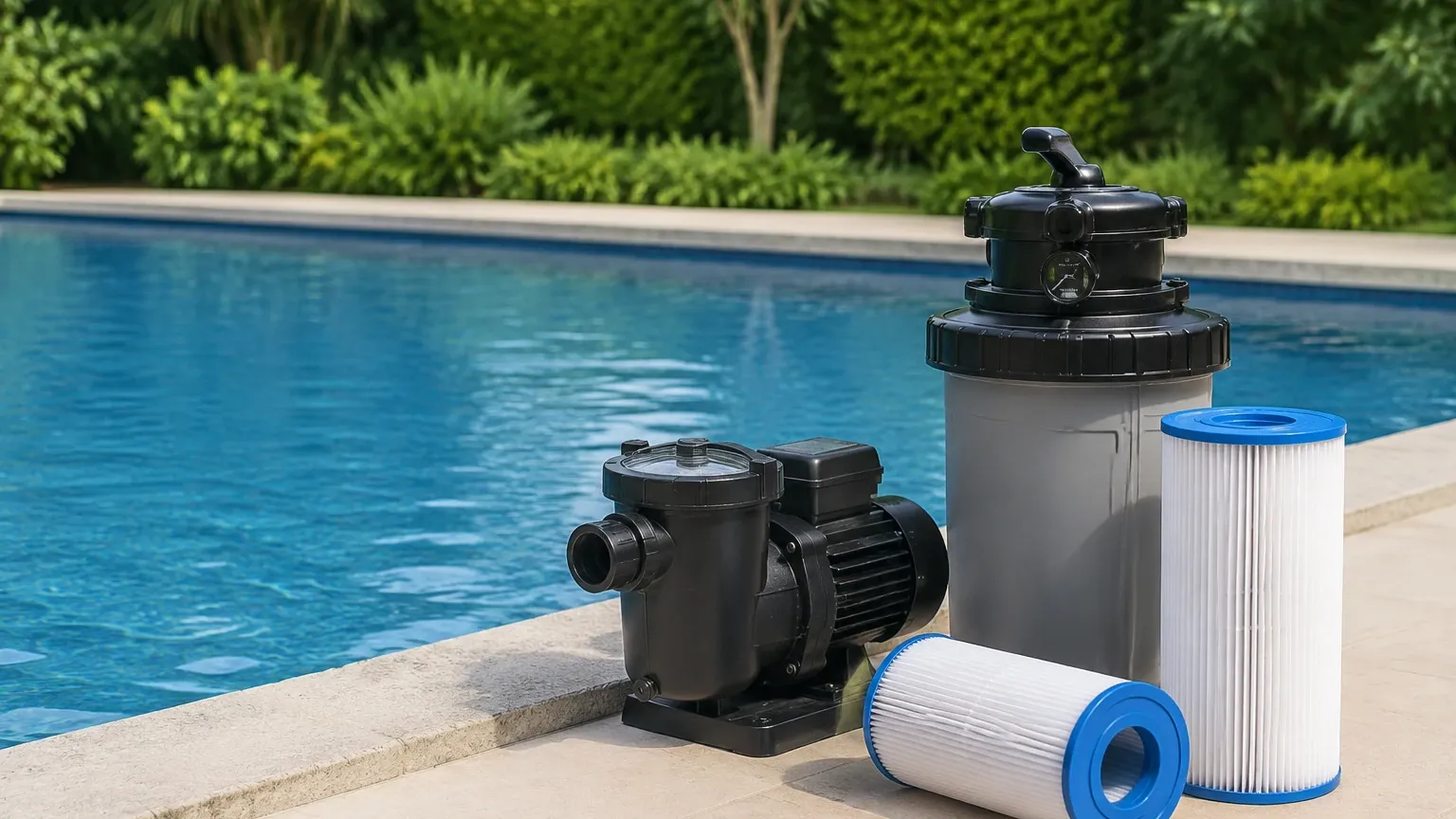
Filter Cartridge Pool Pump
In industrial and commercial water management, the integration of a filter cartridge pool pump system represents a critical intersection of hydraulic efficiency and precision filtration. While residential applications focus on basic clarity, industrial-grade aquatic systems—such as those found in large-scale hospitality complexes, municipal water features, and industrial cooling loops—demand a more rigorous engineering approach. Selecting the correct Filter Cartridges for these high-demand pumps requires an understanding of flow dynamics, material compatibility, and the total cost of ownership.
This guide examines the technical parameters of filter cartridge pool pump systems from an engineering perspective, focusing on how technical professionals can optimize filtration performance and equipment longevity through informed component selection.
Engineering Principles of Cartridge Filtration in High-Flow Systems
The fundamental goal of a filter cartridge pool pump system is to remove suspended solids from water while maintaining a consistent flow rate. Unlike sand or Diatomaceous Earth (DE) filters, cartridge systems utilize a pleated medium to provide a high surface area within a relatively small footprint. This design allows for lower back-pressure, which reduces the energy consumption of the pump.
Surface Area and Flux Rate
In industrial water treatment, the "flux rate" is defined as the volume of water passing through a specific area of filter media over time (typically measured in gallons per minute per square foot, or GPM/ft²). For a filter cartridge pool pump to operate efficiently, the flux rate must be kept within manufacturer specifications. Exceeding the recommended flux rate can lead to "bridging," where contaminants are forced deep into the media or even through it, compromising water quality and leading to premature cartridge failure.
Pressure Differential (ΔP)
The pressure differential is the difference between the influent (inlet) and effluent (outlet) pressure. As the filter cartridge pool pump circulates water, particles accumulate on the surface of the media, increasing the ΔP. Engineers must monitor this metric closely; a high ΔP indicates that the pump is working harder to push water through a clogged filter, which can lead to cavitation or mechanical seal failure in the pump motor.
Material Science in Industrial Filter Cartridges
Material selection is the most significant factor in determining the durability and chemical resistance of a filtration system. While standard pool cartridges often use polyester or cellulose, industrial applications frequently require more robust materials to handle high temperatures or aggressive chemical treatments.
Stainless Steel vs. Synthetic Media
In demanding environments, such as those involving high-pressure industrial pumps or corrosive water chemistry, stainless steel filter cartridges offer distinct advantages over synthetic alternatives. Stainless steel mesh (typically 304 or 316L) provides:
* Thermal Stability: Capability to operate in high-temperature water loops where synthetic fibers would degrade.
* Mechanical Strength: Resistance to collapsing under high pressure differentials.
* Cleanability: Unlike disposable synthetic cartridges, stainless steel media can often be ultrasonically cleaned or backwashed, extending the service life significantly.
Chemical Compatibility
When selecting a filter cartridge pool pump system for industrial process water or chemically treated pools, the compatibility of the gaskets and end caps is as important as the media itself. EPDM, Viton, and Silicone are common elastomer choices, each offering different levels of resistance to chlorine, ozone, and pH adjusters. Failure to match the elastomer to the water chemistry can result in bypass leakage, where unfiltered water escapes around the cartridge ends.
Optimizing Performance for Pool and Industrial Water Systems
To achieve optimal performance, the filter cartridge pool pump must be sized correctly in relation to the filtration vessel and the cartridges housed within. A common mistake in procurement is oversizing the pump without increasing the filtration surface area, which leads to high-velocity flow that can damage the pleats of the filter.
Variable Speed Pump Integration
Modern industrial water systems increasingly utilize Variable Speed Pumps (VSPs). These pumps allow engineers to dial in the exact flow rate required for the filtration cycle. By running the filter cartridge pool pump at a lower RPM for longer durations, the system achieves better particulate capture and reduces the mechanical stress on the Filter Cartridges.
Micron Ratings and Capture Efficiency
Filter cartridges are rated by their ability to trap particles of a specific size, measured in microns (µm).
* Nominal Rating: Indicates the filter's ability to trap a percentage of particles of a given size (e.g., 90% of 10-micron particles).
* Absolute Rating: Indicates that the filter will trap 99.9% or more of particles of that size.
For high-clarity aquatic systems, a 10 to 20-micron nominal rating is standard. However, in industrial cooling or pharmaceutical pre-filtration, absolute ratings may be required to protect downstream equipment.
Maintenance Protocols and Replacement Cycles
Maintenance of a filter cartridge pool pump system is a balance between operational uptime and component protection. Unlike backwashable sand filters, cartridge systems require physical removal and cleaning of the media.
Cleaning Indicators
The standard industry practice is to clean or replace cartridges when the pressure gauge shows an increase of 8 to 10 PSI over the "clean" starting pressure. Waiting beyond this point can cause the pleats to compress or "blind," making it nearly impossible to restore the original flow rate even after cleaning.
Cleaning Procedures
For synthetic cartridges, cleaning involves a low-pressure rinse to remove surface debris, followed by a soak in a degreasing solution to remove body oils or organic films. In industrial settings using stainless steel cartridges, more aggressive cleaning methods, such as chemical baths or high-pressure steam, may be employed to ensure the pore structure is fully cleared of mineral scale or bio-fouling.
Replacement Frequency
Even with diligent cleaning, all filter media eventually reaches a point of irreversible fouling. In a commercial filter cartridge pool pump application, synthetic cartridges typically last 1 to 2 years, whereas high-quality stainless steel components can last significantly longer if maintained correctly. Engineers should track the "clean pressure" after each maintenance cycle; once the clean pressure remains 3-5 PSI higher than the original baseline, the cartridge has reached the end of its effective service life.
Custom OEM Solutions for High-Demand Filtration
Standard off-the-shelf filtration products often fall short in specialized industrial environments. This is where custom engineering and OEM capabilities become essential. When a standard filter cartridge pool pump setup cannot meet specific flow, pressure, or chemical requirements, customized filtration components are necessary.
Tailored Micron and Mesh Configurations
Custom manufacturers can produce cartridges with specific mesh weaves or multi-layered sintered structures to target specific contaminants. For example, a system handling fine metallic fines in an industrial wash-water loop may require a different pleated geometry than a standard swimming pool application.
Structural Reinforcement
In systems where the pump may experience sudden pressure surges (water hammer), custom cartridges can be designed with reinforced inner cores and outer cages. This prevents the media from deforming or rupturing, ensuring that the filter cartridge pool pump continues to deliver clean water without the risk of media migration downstream.
Total Cost of Ownership (TCO) Analysis
When specifying filtration components for B2B applications, the initial purchase price is only one part of the economic equation. A comprehensive TCO analysis for a filter cartridge pool pump system should include:
1. Energy Consumption: Systems with higher surface area cartridges operate at lower pressures, reducing the electrical load on the pump motor.
2. Labor Costs: The time required for manual cleaning vs. the frequency of replacement. Disposable cartridges have lower labor costs but higher recurring material costs.
3. Disposal Costs: In some industrial sectors, used synthetic cartridges may be classified as hazardous waste depending on the contaminants trapped, making cleanable stainless steel options more cost-effective over time.
4. Uptime: The impact of filtration failure on the overall process. High-quality Filter Cartridges reduce the risk of unscheduled downtime and protect expensive pump hardware.
Conclusion: Selecting the Right Filtration Partner
Successful management of a filter cartridge pool pump system requires more than just standard maintenance; it requires an engineering-first approach to component selection. By understanding the relationship between pump hydraulics and filtration media, technical professionals can ensure water clarity, protect mechanical assets, and optimize operational costs.
Whether the application involves a high-capacity commercial pool or a complex industrial process water loop, the choice of filter cartridge is the determining factor in system performance. For those requiring precision-engineered solutions, focusing on material durability, custom design capabilities, and technical support is the most reliable path to achieving long-term filtration success.
