


Filter Cartridge Sediment
In industrial fluid processing, the management of suspended solids is a fundamental requirement for maintaining equipment integrity and product quality. Sediment, a broad term encompassing sand, silt, scale, rust, and other particulate matter, can cause catastrophic failure in downstream components such as high-pressure pumps, spray nozzles, and heat exchangers. Selecting the appropriate filtration technology to handle specific sediment profiles is an engineering challenge that requires a deep understanding of particle dynamics, material science, and fluid mechanics.
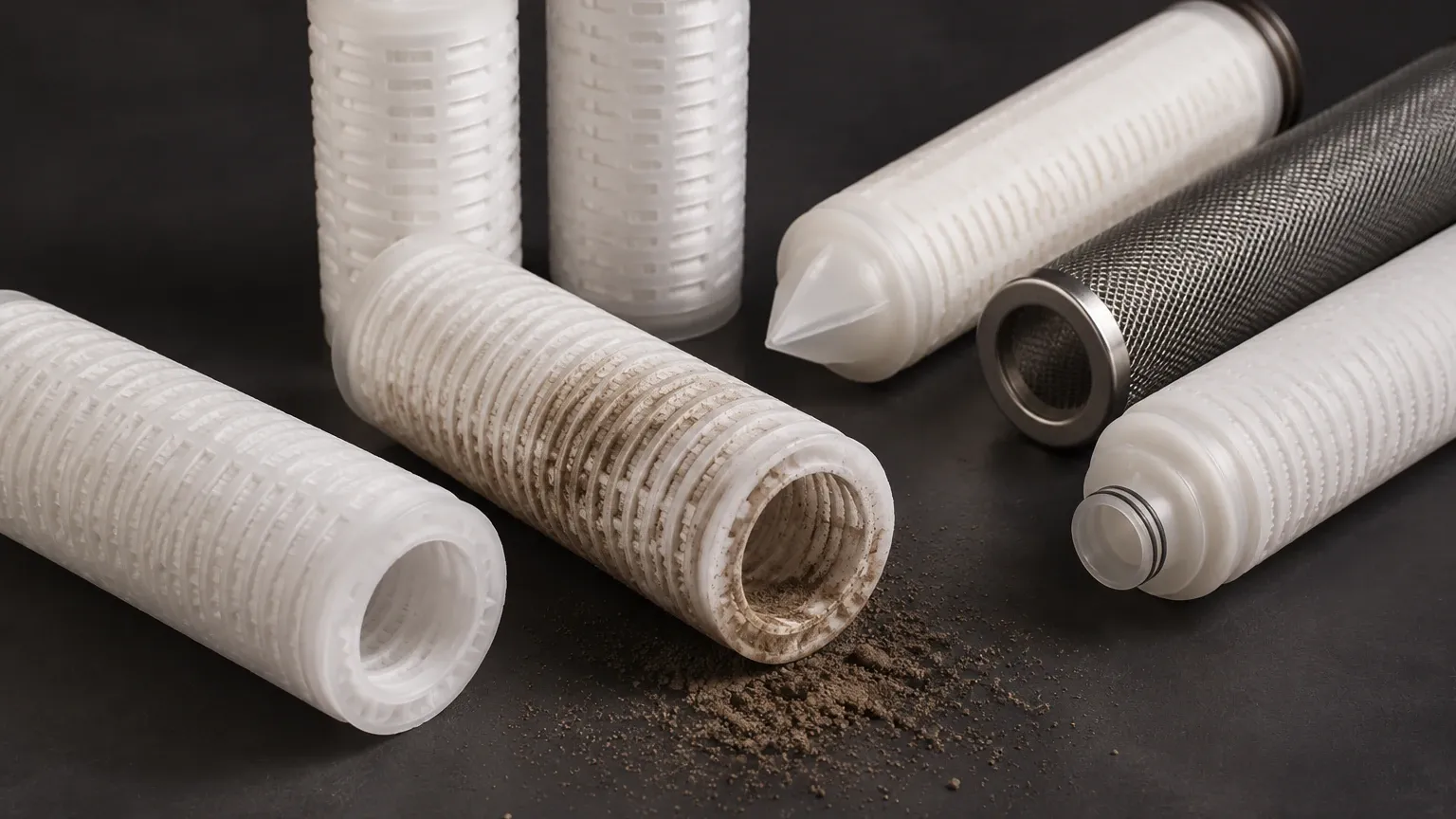
Industrial Filter Cartridges serve as the primary line of defense against these contaminants. Unlike simple residential filters, industrial-grade cartridges must be engineered to withstand high differential pressures, corrosive chemical environments, and extreme temperatures while maintaining precise micron ratings. Effectively managing filter cartridge sediment involves more than just selecting a pore size; it requires a comprehensive evaluation of the sediment’s physical properties and the operational parameters of the system.
Understanding the Nature of Industrial Sediment
Before an engineer can specify a filtration solution, the sediment itself must be characterized. In B2B industrial applications, sediment is rarely uniform. It is typically categorized by its origin and physical behavior within the fluid stream.
Inorganic vs. Organic Particulates
Inorganic sediment, such as silica sand or oxidized metal (rust), is generally non-compressible. These particles tend to form a porous "filter cake" on the surface of the filter media, which can actually assist in filtration but will eventually lead to a predictable increase in pressure drop. Conversely, organic or gelatinous sediment is often compressible. Under pressure, these particles can deform and wedge themselves deep into the filter media, leading to rapid blinding and a non-linear increase in differential pressure.
Particle Size Distribution (PSD)
Sediment is seldom comprised of a single particle size. A Particle Size Distribution (PSD) analysis is critical for determining the efficiency required of the filter. If a system contains a high volume of "fines" (particles significantly smaller than the nominal rating of the filter), a depth-style cartridge or a multi-stage filtration approach may be necessary to prevent premature surface clogging.
Mechanisms of Sediment Capture in Filter Cartridges
To manage filter cartridge sediment effectively, engineers must choose between different capture mechanisms. The choice often depends on whether the goal is absolute retention or high dirt-holding capacity.
Surface Filtration
Surface filtration occurs when particles are larger than the openings in the filter media. Stainless steel wire mesh and pleated metal membranes are classic examples of surface filters. These are ideal for applications where the sediment is relatively uniform in size and where the filter must be cleaned and reused. The sediment accumulates on the exterior of the cartridge, forming a cake that can often be removed via backwashing or ultrasonic cleaning.
Depth Filtration
Depth filtration involves a thick media—often composed of sintered metal fibers or multi-layered wire mesh—where particles are trapped throughout the tortuous path of the material. This mechanism is superior for handling a wide range of particle sizes and higher concentrations of sediment. The internal structure provides a much higher dirt-holding capacity compared to a single-layer surface filter, though these cartridges are often more complex to clean once fully loaded.
Engineering Considerations for High-Sediment Applications
When designing a system to handle significant filter cartridge sediment, several technical variables must be balanced to ensure operational efficiency and longevity.
Flow Velocity and Flux Rates
The velocity at which the fluid passes through the filter media, known as the flux rate, directly impacts the efficiency of sediment capture. High flux rates can force particles through the media or cause compressible sediment to deform and bypass the filter. For heavy sediment loads, reducing the flux by increasing the total filtration surface area (e.g., using pleated designs) is a common engineering strategy to extend the service life between cleanings.
Differential Pressure ($ΔP$) Monitoring
The most reliable indicator of sediment accumulation is the pressure drop across the filter. As sediment builds up, the available flow path narrows, and $ΔP$ increases. Industrial systems should be equipped with differential pressure transducers to monitor this in real-time. Engineers typically define a "clean" $ΔP$ and a "terminal" $ΔP$. Reaching the terminal $ΔP$ indicates that the cartridge is saturated with sediment and requires maintenance or replacement.
Material Compatibility
In industries such as chemical processing or oil and gas, the sediment may be suspended in aggressive solvents or high-temperature fluids. While polymer-based cartridges are common in water treatment, they often fail in demanding industrial environments. Stainless steel (304, 316L) and specialized alloys like Hastelloy are preferred for their mechanical strength and resistance to chemical erosion. These materials ensure that the filter structure does not collapse under the weight of accumulated sediment or the force of high-pressure flow.
The Advantages of Stainless Steel in Sediment Management
For B2B applications where downtime is costly, the durability of the filter media is paramount. Stainless steel Filter Cartridges offer several distinct advantages over disposable alternatives when dealing with heavy sediment loads.
1. Mechanical Integrity: Stainless steel media can withstand high differential pressures without bypassing or "unloading" captured sediment back into the process stream.
2. Thermal Stability: In high-temperature applications, such as steam filtration or hot oil processing, metal cartridges maintain their pore structure, whereas synthetic fibers might soften or melt, releasing sediment downstream.
3. Cleanability and Reusability: One of the most significant benefits is the ability to clean the media. Whether through back-pulsing, chemical baths, or ultrasonic cleaning, the sediment can be removed, restoring the cartridge to near-original pressure drop levels. This significantly reduces the total cost of ownership (TCO) compared to frequently replacing disposable elements.
Selecting the Right Micron Rating for Sediment Control
A common misconception in filtration is that a finer micron rating is always better. However, over-specifying a filter can lead to unnecessary operational costs. If a 50-micron filter is sufficient to protect downstream equipment, installing a 5-micron filter will simply result in the cartridge capturing a much larger volume of sediment than necessary, leading to frequent clogging and maintenance cycles.
Engineers must distinguish between nominal and absolute ratings:
* Nominal Rating: An approximate value indicating the filter can trap a large percentage of particles of a certain size.
* Absolute Rating: A verified value indicating that 99.9% (or higher) of particles above the specified micron size will be retained.
For critical sediment control, such as protecting precision nozzles, an absolute-rated stainless steel wire mesh cartridge is often the standard choice.
Maintenance Strategies for Sediment-Loaded Filters
The lifecycle of a filter cartridge is determined by the volume and type of sediment it encounters. Developing a robust maintenance strategy is essential for preventing process interruptions.
Backwashing and Back-pulsing
In automated systems, backwashing involves reversing the flow of the fluid to dislodge sediment from the surface of the filter. This is highly effective for inorganic, non-sticky sediment. If the sediment is particularly stubborn, high-pressure gas pulses (back-pulsing) can be used to "shock" the particles off the media.
Chemical Cleaning
For applications involving organic sediment or scale, chemical cleaning may be required. Stainless steel cartridges can be soaked in caustic or acidic solutions that dissolve the sediment without damaging the filter structure. This is a primary reason why metal filtration is preferred in the food and beverage and pharmaceutical industries.
Replacement Cycles
Even with cleaning, all filters eventually reach a point of diminishing returns where the residual pressure drop after cleaning is too high. Tracking the performance history of filter cartridge sediment accumulation allows purchasing teams to forecast replacement needs and maintain an optimized inventory of spare cartridges.
Conclusion: Optimizing Your Filtration Process
Effective sediment management is a cornerstone of industrial process efficiency. By understanding the physical characteristics of the sediment, selecting the appropriate capture mechanism, and utilizing durable materials like stainless steel, engineers can ensure long-term system reliability.
When evaluating Filter Cartridges for a specific application, it is vital to consult with manufacturers who can provide customized solutions tailored to unique sediment profiles and flow requirements. Whether the challenge involves fine silt in water treatment or heavy scale in chemical manufacturing, the right engineering approach to sediment filtration will minimize downtime and maximize the lifespan of critical industrial assets.
