


Filter Cartridge Stainless Steel
In industrial process engineering, the selection of filtration media is a critical decision that impacts operational efficiency, product purity, and long-term maintenance costs. While polymer-based disposable filters are common in light-duty applications, demanding industrial environments require the robustness of a filter cartridge stainless steel construction. These components are engineered to withstand extreme temperatures, high pressure differentials, and aggressive chemical solvents that would cause synthetic media to fail.
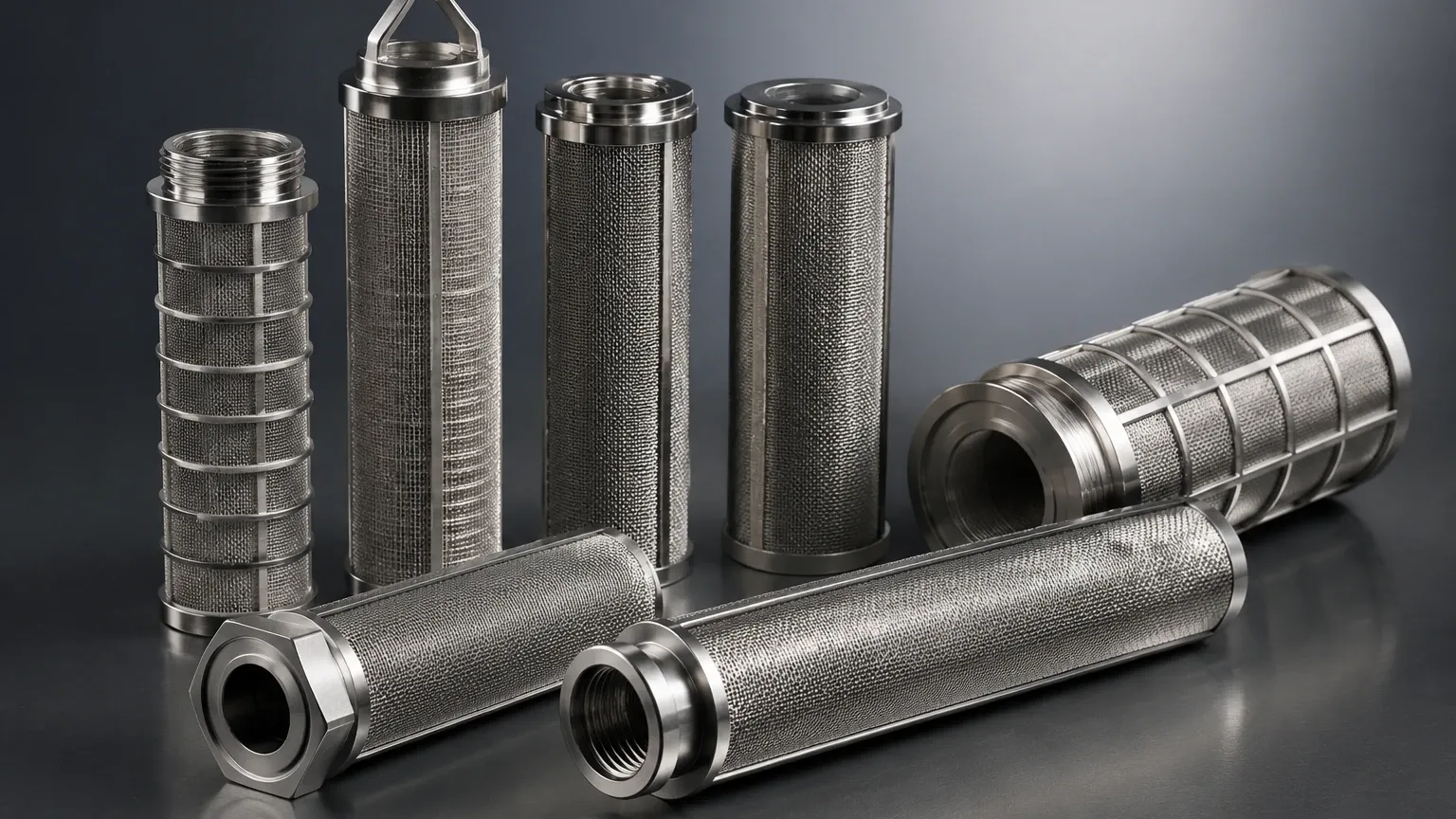
For engineers and procurement teams, understanding the technical nuances of stainless steel Filter Cartridges is essential for optimizing system performance. This guide examines the material science, construction methodologies, and selection criteria necessary for implementing reliable metal filtration solutions.
Material Science: Why Stainless Steel?
The primary advantage of using a filter cartridge stainless steel design lies in the inherent properties of the alloys used. Most industrial filters are fabricated from either 304 or 316L stainless steel.
304 Stainless Steel
Grade 304 is the most common stainless steel used in filtration. It offers excellent durability and good corrosion resistance for many water-based and atmospheric applications. It is often the cost-effective choice for hydraulic oils, cooling water, and general industrial fluids where high concentrations of chlorides or acids are not present.
316L Stainless Steel
For more demanding environments, 316L is the industry standard. The "L" denotes low carbon content, which minimizes carbide precipitation during welding, ensuring the structural integrity of the filter seams. The addition of molybdenum in 316L provides superior resistance to pitting and crevice corrosion, particularly in chloride-rich environments or acidic chemical processing. This makes it the preferred material for pharmaceutical, food and beverage, and marine applications.
Beyond corrosion resistance, stainless steel maintains its mechanical properties across a wide temperature spectrum—from cryogenic levels up to 500°C (932°F) or higher, depending on the specific alloy and seal materials used. This thermal stability allows for in-situ sterilization (SIP) and high-temperature gas filtration that polymers cannot accommodate.
Construction Types of Stainless Steel Filter Cartridges
Not all stainless steel filters are created equal. The method of construction determines the filtration efficiency, flow capacity, and cleaning characteristics of the cartridge.
1. Sintered Wire Mesh
Sintered wire mesh is produced by layering multiple sheets of stainless steel woven wire cloth and bonding them through a vacuum sintering process. This creates a porous material with high mechanical strength and precise pore size distribution. The sintering process ensures that the wires do not migrate under high pressure, providing a stable and predictable filtration rating. These cartridges are ideal for high-pressure hydraulic systems and polymer melt filtration.
2. Pleated Stainless Steel Mesh
To maximize surface area within a standard cartridge footprint, stainless steel mesh can be pleated. A pleated filter cartridge stainless steel design offers significantly higher dirt-holding capacity and lower initial pressure drops compared to cylindrical designs. This is particularly beneficial in high-flow applications where frequent downtime for cleaning is undesirable. The pleated structure is typically supported by an internal perforated core and an external guard to prevent pleat collapse.
3. Sintered Metal Fiber (Felt)
Sintered metal fiber media consists of non-woven stainless steel fibers that are sintered into a depth-filtration matrix. This structure provides high porosity (up to 80%) and exceptionally low flow resistance. Because it functions as a depth filter, it can capture a wide range of particle sizes throughout the media thickness, making it excellent for gel removal in chemical processing and high-purity gas filtration.
4. Sintered Powder Metal
Created by pressing and sintering stainless steel powder, these cartridges feature a rigid, porous structure. They are characterized by high structural integrity and are often used in applications requiring very fine filtration ratings and the ability to withstand extreme backpressure during cleaning cycles.
Key Engineering Evaluation Criteria
When specifying a filter cartridge stainless steel for an industrial system, engineers must look beyond simple dimensions. The following technical parameters dictate the success of the installation:
Micron Rating: Absolute vs. Nominal
It is vital to distinguish between nominal and absolute ratings. A nominal rating refers to a filter's ability to retain a percentage of particles of a certain size, whereas an absolute rating (often determined by a bubble point test) indicates the diameter of the largest spherical particle that can pass through the media. For critical applications like pharmaceutical processing or fine chemical production, absolute-rated cartridges are required to ensure consistent quality.
Differential Pressure ($ΔP$)
Every filter introduces a pressure drop into the system. Engineers must calculate the clean pressure drop based on fluid viscosity, flow rate, and the effective filtration area. Furthermore, the "terminal differential pressure"—the point at which the filter must be cleaned or replaced—must be established to prevent structural failure of the media or bypass of contaminants.
Chemical Compatibility and End-Cap Configurations
While the stainless steel media itself is highly resistant, the seals and end-caps must also be compatible with the process fluid. Common seal materials include Viton, EPDM, PTFE, and Silicone. End-cap configurations must match existing housing requirements, with common standards including:
* DOE (Double Open End): Flat gaskets on both ends.
* Code 7 (226 O-ring/Fin): High-security locking mechanism for critical applications.
* Code 3 (222 O-ring/Flat): Standard O-ring seal for liquid housings.
Industrial Applications and Performance Expectations
Stainless steel Filter Cartridges serve as the backbone for several high-stakes industries due to their reliability and reusability.
Chemical and Petrochemical Processing
In these sectors, filters must handle aggressive solvents, high-viscosity polymers, and corrosive catalysts. The ability of stainless steel to maintain pore geometry under high torque and pressure ensures that downstream equipment, such as high-pressure pumps and spray nozzles, remains protected from particulate damage.
Food and Beverage Industry
Compliance with FDA and EC regulations is non-negotiable. Stainless steel filters are naturally inert and do not shed fibers or leach chemicals into the product stream. They are used extensively for steam filtration (culinary steam), carbonated beverage polishing, and the filtration of edible oils. The ability to undergo repeated Clean-in-Place (CIP) cycles without degradation is a significant advantage over plastic alternatives.
Pharmaceutical and Biotechnology
In sterile environments, the ability to withstand autoclaving and steam sterilization is paramount. Sintered metal fiber cartridges are often used for vent filtration on storage tanks and for the recovery of expensive active pharmaceutical ingredients (APIs) from solvent streams.
Water Treatment and Desalination
While many water applications use plastic, stainless steel is preferred for pre-filtration in desalination plants and high-temperature condensate return systems in power plants. The resistance to biofouling and the ability to be chemically cleaned makes them a sustainable choice for long-term infrastructure.
Maintenance: Cleaning and Total Cost of Ownership
One of the most compelling reasons to invest in a filter cartridge stainless steel solution is the transition from an OpEx-heavy "use and toss" model to a CapEx-focused reusable model. While the initial purchase price of a metal cartridge is higher than a polypropylene melt-blown filter, the total cost of ownership (TCO) is often lower over a 2-to-5-year horizon.
Cleaning Methodologies
To restore the flow characteristics of a blinded stainless steel filter, several professional cleaning methods can be employed:
* Ultrasonic Cleaning: High-frequency sound waves create cavitation bubbles that dislodge fine particulates from deep within the media pores.
* Backpulsing/Backwashing: Reversing the flow of fluid or gas through the filter to push contaminants off the surface. This is highly effective for surface-filtration media like wedge wire or sintered mesh.
* Chemical Cleaning: Using acids, caustics, or specialized solvents to dissolve organic or inorganic scaling. This must be done with careful consideration of the alloy's corrosion limits.
* Burn-off (Pyrolysis): For polymer-heavy applications, heating the filter in a controlled vacuum oven can carbonize and remove organic buildup.
Determining Replacement Cycles
Despite their durability, stainless steel filters are not infinite. Repeated cleaning cycles and mechanical stress can eventually lead to work hardening or microscopic fractures. Engineers should monitor the time it takes for the filter to reach terminal differential pressure after each cleaning. A shortening of the operational cycle usually indicates that the media is becoming permanently fouled or that the pore structure is collapsing, signaling the need for a replacement.
Customization and OEM Solutions
Standard off-the-shelf filters do not always meet the specific geometry or performance requirements of specialized industrial machinery. Kaifil specializes in providing customized filtration solutions that bridge the gap between standard specifications and unique application needs.
When working with a manufacturer, engineers should confirm the following before proceeding with a custom filter cartridge stainless steel order:
1. Fluid Characteristics: Viscosity at operating temperature, density, and chemical composition.
2. Contaminant Profile: Particle size distribution, concentration (ppm), and the nature of the solids (deformable vs. hard).
3. Flow Dynamics: Maximum and minimum flow rates, and whether the flow is steady or pulsating.
4. Housing Constraints: Internal clearances, sealing surface conditions, and available space for cartridge removal.
By addressing these factors during the design phase, Kaifil helps technical teams develop filtration components that not only meet micron-level precision but also enhance the overall reliability of the industrial process. Whether for a new installation or an upgrade to an existing system, selecting the right metal filter requires a balance of metallurgical knowledge and fluid dynamics expertise.
For those seeking to evaluate specific configurations for their facility, it is recommended to Review product options and application support to ensure the selected media aligns with the technical demands of the environment. Investing in high-quality stainless steel filtration is not merely a purchase—it is a strategic decision to ensure process continuity and product integrity in the most demanding industrial landscapes.
