


Filter Cartridge Udf
In the landscape of industrial liquid processing, the selection of filtration media is a critical engineering decision that impacts both product purity and equipment longevity. Among the various configurations available, the filter cartridge UDF (Universal Direct Flow) remains a staple for applications requiring the adsorption of organic compounds, chlorine removal, and the elimination of unwanted odors or tastes. While often associated with water treatment, the technical principles of UDF cartridges are widely applied across chemical processing, pharmaceutical manufacturing, and the food and beverage industry.
For engineers and procurement professionals, understanding the internal dynamics of a filter cartridge UDF is essential for optimizing filtration systems. This article examines the technical specifications, flow mechanics, and industrial integration of these components, particularly in the context of high-performance Filter Cartridges used in demanding environments.
Understanding the UDF Configuration
The term "UDF" typically refers to a cartridge design filled with Granular Activated Carbon (GAC). Unlike carbon block filters (CTO), which use extruded or compressed carbon, UDF cartridges utilize loose granules held within a cylindrical housing. The "Universal Direct Flow" designation highlights the design's intent: to facilitate a specific flow path that maximizes the contact time between the fluid and the filtration media.
The Internal Flow Path
In a standard filter cartridge UDF, the fluid enters through the bottom or top (depending on the housing design) and passes through the entire column of granular media. This longitudinal flow path is designed to prevent "channeling"—a phenomenon where the fluid finds the path of least resistance, bypassing much of the active media. By forcing the fluid through the packed bed of carbon, the system ensures that the adsorption kinetics have sufficient time to remove contaminants effectively.
Media Composition
The performance of a UDF cartridge is primarily dictated by the quality of the granular activated carbon inside. Industrial-grade cartridges often utilize carbon derived from coconut shells, coal, or wood, each offering different pore structures (microporous, mesoporous, or macroporous). For B2B applications, coconut shell carbon is frequently preferred due to its high iodine value and superior hardness, which reduces the generation of carbon fines that could contaminate downstream processes.
Engineering Considerations for Industrial UDF Applications
When integrating a filter cartridge UDF into an industrial process, several engineering parameters must be evaluated to ensure the system meets performance expectations without becoming a bottleneck.
1. Flow Rate vs. Contact Time
Adsorption is a time-dependent process. If the flow rate is too high, the "Empty Bed Contact Time" (EBCT) decreases, leading to a breakthrough where contaminants remain in the effluent. Engineers must balance the required system throughput with the adsorption capacity of the GAC. In high-flow industrial settings, this often necessitates the use of multiple cartridges in a multi-round housing to distribute the flow and maintain adequate contact time.
2. Pressure Drop (Delta P)
Because UDF cartridges contain loose granules, they generally exhibit a lower initial pressure drop compared to dense carbon blocks. However, as the bed traps suspended solids, or as the carbon granules settle and compact over time, the pressure differential will increase. Monitoring this Delta P is crucial for determining the replacement cycle and preventing housing failure.
3. Structural Integrity and Gasket Selection
In industrial environments, the chemical compatibility of the cartridge housing and gaskets is paramount. While many UDF cartridges use plastic shells, high-temperature or chemically aggressive applications may require specialized materials. Ensuring that the gaskets (typically EPDM, Buna-N, or Silicone) are compatible with the process fluid prevents bypass leaks that would compromise the entire filtration stage.
The Role of Secondary Filtration
A common challenge with granular media like that found in a filter cartridge UDF is the migration of carbon fines. During the initial startup or during pressure surges, small particles of carbon can break off and travel downstream. To mitigate this, professional filtration systems often incorporate a secondary precision filter.
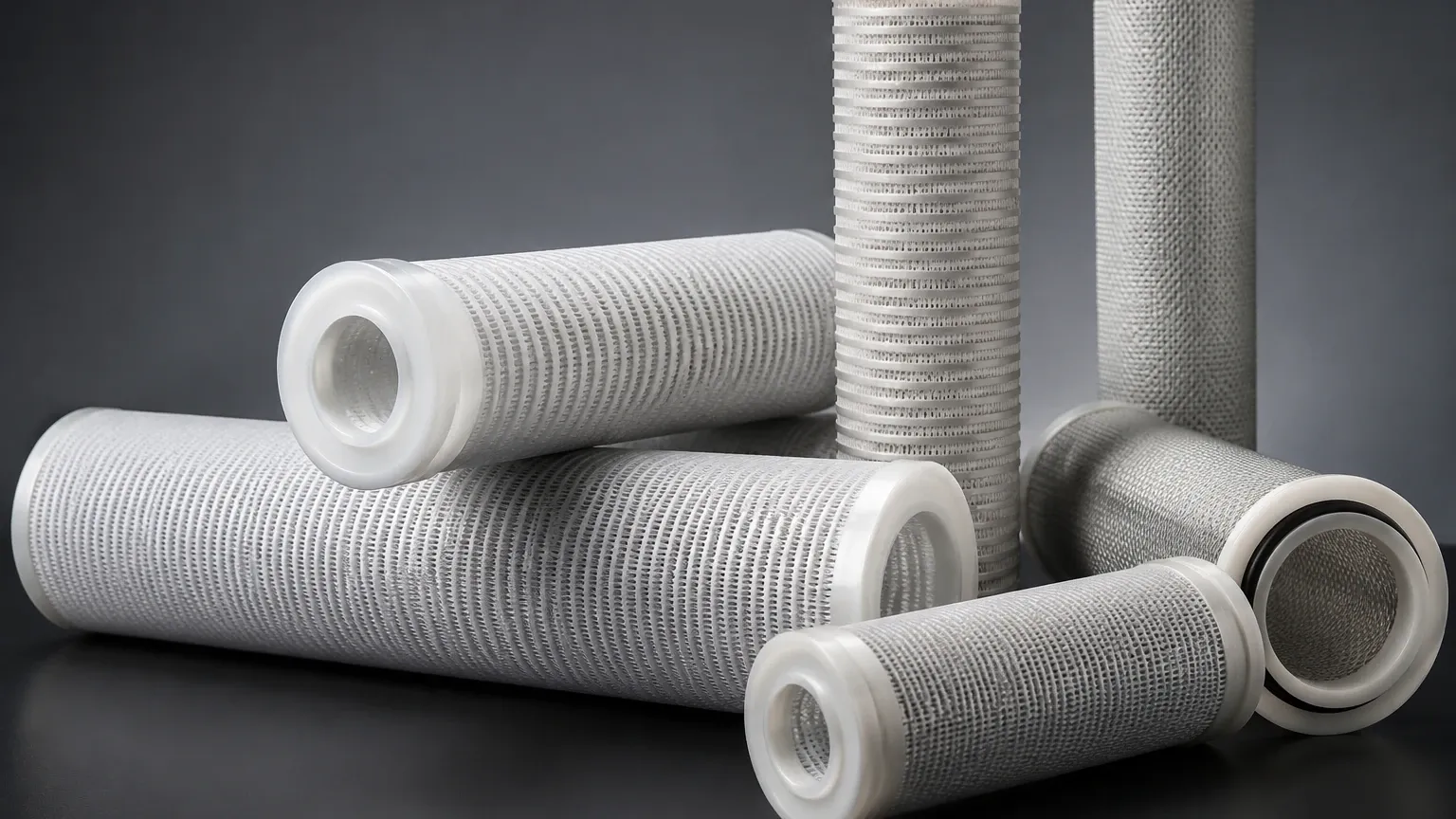
Stainless steel wire mesh filters or pleated stainless steel cartridges are ideal for this role. By placing a 5-micron or 10-micron stainless steel filter after the UDF stage, engineers can ensure that the final product is free of carbon particles. This is particularly vital in the pharmaceutical and food industries, where particulate contamination is strictly regulated. The durability of stainless steel components ensures they can withstand the abrasive nature of carbon fines without degrading.
Industrial Applications of UDF Filters
The versatility of the filter cartridge UDF makes it applicable across diverse sectors. Its primary function is the removal of dissolved organic carbon (DOC) and chlorine, which can interfere with chemical reactions or affect the sensory qualities of a product.
Chemical Processing
In chemical manufacturing, UDF cartridges are used to remove organic impurities from process water or to decolorize specific chemical solutions. The granular bed allows for the handling of fluids with slightly higher turbidity than what a carbon block could manage, as the spaces between granules can accommodate some particulate loading before clogging.
Food and Beverage Production
Chlorine is a common disinfectant in municipal water, but it can impart off-flavors to beverages and damage sensitive equipment like Reverse Osmosis (RO) membranes. UDF cartridges provide a cost-effective method for large-scale dechlorination. When used in conjunction with precision Filter Cartridges, they form a robust pre-treatment train for bottling lines and brewing processes.
Pharmaceutical and Biotech
In these sectors, UDF filtration is often used in the early stages of water purification. Removing organic precursors is essential to prevent the formation of disinfection byproducts (DBPs) and to protect downstream ion-exchange resins and ultrafiltration membranes from organic fouling.
Comparing UDF and CTO Cartridges
Engineers often face the choice between a filter cartridge UDF (granular) and a CTO (Carbon Block) filter. The decision should be based on the specific goals of the filtration stage:
* Adsorption Capacity: UDF cartridges often contain more carbon by weight than a block of the same size, potentially offering a higher total adsorption capacity for chlorine and organics.
* Sediment Handling: UDF filters are slightly more tolerant of suspended solids due to the interstitial spaces between granules. CTO filters act as both a mechanical filter and an adsorbent, which means they can clog faster if the fluid has high turbidity.
* Fines Migration: CTO filters generally release fewer fines than UDF filters because the carbon is bonded. If using UDF, a post-filter is almost always recommended.
* Flow Resistance: UDF typically offers lower resistance to flow, making it suitable for gravity-fed or low-pressure systems where maintaining head pressure is critical.
Selection Criteria and Procurement Best Practices
To ensure the successful implementation of UDF filtration, purchasing teams and engineers should confirm the following technical details with their suppliers:
1. Micron Rating of Internal Pads: UDF cartridges contain internal spun-polypropylene or mesh pads at the ends to keep the carbon in place. Confirming the micron rating of these pads helps in selecting the appropriate downstream secondary filter.
2. Iodine Value: This is a measure of the carbon's porosity. For industrial applications, an iodine value of 800 to 1000 mg/g is typically required for efficient adsorption.
3. Certification Compliance: For F&B and pharmaceutical use, ensure the materials meet FDA or NSF/ANSI standards for food contact.
4. Customization Requirements: In some industrial cases, standard plastic UDF housings are insufficient. Inquiring about custom-designed stainless steel housings or specialized internal components can solve problems related to high pressure or temperature.
Maintenance and Replacement Cycles
Unlike mechanical filters that are replaced based on pressure drop, a filter cartridge UDF is often replaced based on "breakthrough" or a predetermined volume of throughput. Once the adsorption sites on the carbon granules are saturated, the contaminant concentration in the effluent will rise rapidly.
Engineers should implement a regular testing protocol—such as chlorine testing for water systems—to determine the actual lifespan of the cartridge in their specific environment. Replacing the cartridge before saturation is critical, as saturated carbon can sometimes "dump" concentrated contaminants back into the stream if the chemical equilibrium shifts.
Conclusion
The filter cartridge UDF is a fundamental tool in the industrial filtration toolkit, offering high-capacity adsorption and reliable performance for organic and chlorine removal. By understanding the nuances of granular media, flow dynamics, and the necessity of secondary particulate filtration, engineers can design systems that are both efficient and cost-effective.
For demanding industrial applications, integrating these cartridges with high-quality stainless steel components ensures a robust solution capable of meeting stringent purity standards. Whether used as a pre-treatment for RO systems or as a standalone purification stage, the UDF cartridge remains a versatile choice for modern liquid processing. When selecting your next filtration solution, consider the full range of Filter Cartridges and how customized engineering can optimize your specific industrial process.
