


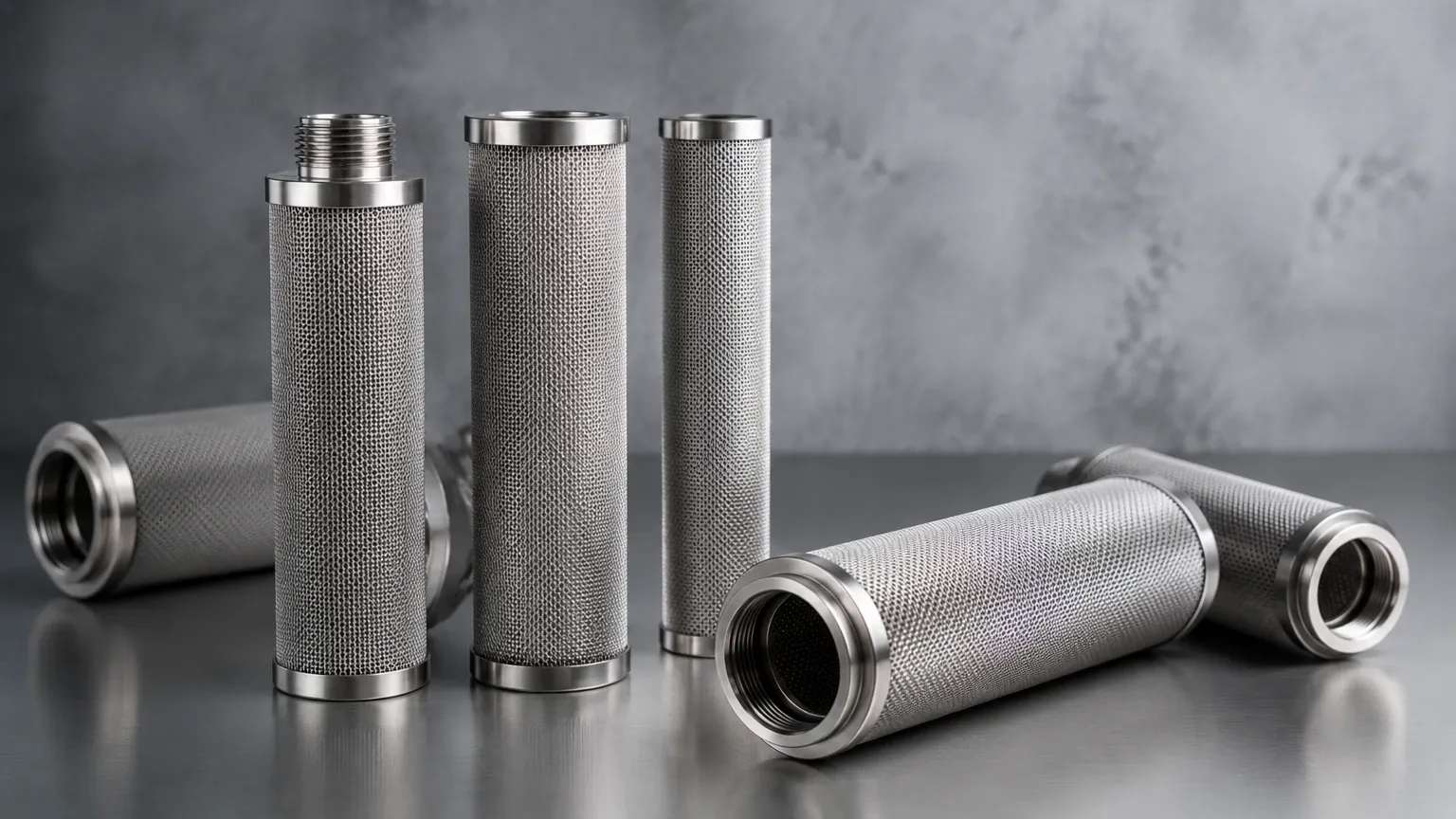
Filter Cartridge V1
In the landscape of industrial filtration, the term "Filter Cartridge V1" often represents the foundational design or the initial version of a high-performance filtration component. For engineers and procurement specialists, understanding the technical nuances of these cartridges is essential for maintaining system integrity and optimizing process efficiency. Stainless steel filter cartridges, particularly those engineered for demanding environments, provide a level of durability and precision that disposable polymer filters cannot match. This article examines the technical specifications, material considerations, and engineering principles behind the V1 series of stainless steel filter cartridges.
The Role of Stainless Steel Filter Cartridges in Industrial Systems
Industrial filtration is a critical process in sectors ranging from chemical processing to food and beverage production. The primary function of Filter Cartridges is to remove contaminants—such as particulates, precipitates, or unwanted microorganisms—from a fluid stream. Unlike disposable filters made of polypropylene or cellulose, stainless steel cartridges are designed for longevity and reuse.
The "V1" designation typically refers to a baseline specification that prioritizes structural rigidity and standard filtration accuracy. These components are often used in high-pressure hydraulic systems, steam filtration, and aggressive chemical environments where temperature and corrosive agents would degrade synthetic materials. By utilizing a metal-based architecture, these cartridges offer a stable pore structure that remains consistent even under fluctuating pressure conditions.
Technical Specifications and Design Parameters
When evaluating a filter cartridge v1, engineers must look beyond basic dimensions. The performance of a cartridge is dictated by its internal geometry and the type of media employed. In stainless steel designs, three primary media types are commonly used:
1. Sintered Wire Mesh: This involves multiple layers of stainless steel wire cloth bonded together through a vacuum sintering process. This creates a robust, multi-layered filter medium with high mechanical strength and precise pore sizes.
2. Sintered Metal Fiber Felt: Made from non-woven stainless steel fibers, this medium offers high porosity and low resistance to flow. It is particularly effective for high-viscosity fluids where a high dirt-holding capacity is required.
3. Wedge Wire: For heavy-duty applications, wedge wire designs provide a smooth surface that is easy to clean, making them ideal for self-cleaning filtration systems.
The V1 design usually incorporates a central support core to prevent collapse under high differential pressure. The outer layer may feature a protective shroud or a pleated design to maximize the surface area, which directly impacts the flow rate and the interval between cleaning cycles.
Material Engineering: 304 vs. 316L Stainless Steel
The choice of material is perhaps the most critical factor in the longevity of a filter cartridge v1. Most industrial applications utilize either Grade 304 or Grade 316L stainless steel.
* Grade 304: This is the standard industrial grade, offering good corrosion resistance and excellent forming properties. It is suitable for water treatment, hydraulic oils, and general industrial fluids where extreme chemical exposure is not a concern.
* Grade 316L: The "L" stands for low carbon, which improves weldability and resistance to intergranular corrosion. Grade 316L contains molybdenum, significantly enhancing its resistance to chlorides and acidic environments. This makes it the preferred choice for pharmaceutical, chemical processing, and marine applications.
In the context of the V1 series, material selection must align with the chemical compatibility of the fluid being processed. For instance, in food and beverage applications, 316L is often mandatory to meet stringent sanitary standards and to withstand aggressive Clean-in-Place (CIP) chemicals.
Filtration Efficiency and Micron Rating Accuracy
A common point of confusion in filter procurement is the distinction between nominal and absolute micron ratings. A filter cartridge v1 is typically rated based on its ability to capture particles of a specific size.
* Nominal Rating: This is an efficiency figure based on weight percentage. For example, a 10-micron nominal filter might capture 60% to 90% of particles that are 10 microns or larger. This is often sufficient for pre-filtration stages.
* Absolute Rating: This refers to the diameter of the largest hard spherical particle that will pass through the filter under specified test conditions. An absolute-rated cartridge is essential for critical processes where the presence of even a few oversized particles could damage downstream equipment or compromise product quality.
For the V1 series, the filtration accuracy can range from 0.1 microns to over 200 microns. Engineers must balance the need for fine filtration with the allowable pressure drop across the system. A finer micron rating generally results in a higher initial differential pressure ($ΔP$), which may require larger pumps or more frequent cleaning.
Structural Components and End-Cap Configurations
The physical integration of a filter cartridge into a housing depends on its end-cap configuration. The V1 design must ensure a leak-proof seal to prevent fluid bypass, which would allow unfiltered contaminants to enter the clean side of the system.
Common end-cap styles include:
* Double Open End (DOE): Features flat gaskets at both ends. This is a versatile design but requires a housing with a compression nut or spring to hold the cartridge in place.
* Code 7 (226 O-ring/Fin): Utilizes two 226-style O-rings and a locking tab (bayonet) to ensure a secure, high-integrity fit. This is common in the pharmaceutical and biotech industries.
* Code 3 (222 O-ring/Flat): Features two 222-style O-rings and a flat end cap, providing a reliable seal for standard industrial housings.
The seals themselves (O-rings or gaskets) must also be compatible with the process fluid. Common materials include Viton (FKM), EPDM, Silicone, and PTFE-encapsulated O-rings. During the selection of a filter cartridge v1, confirming the seal material is as important as confirming the metal grade.
Cleaning Protocols and Longevity
One of the primary economic advantages of stainless steel filter cartridges is their cleanability. Unlike polymer filters that are disposed of once they reach their terminal pressure drop, a V1 series cartridge can be restored to near-original performance through various cleaning methods:
1. Backwashing: Reversing the flow of fluid through the cartridge to dislodge particles trapped on the surface.
2. Ultrasonic Cleaning: Using high-frequency sound waves in a cleaning solvent to remove fine particulates from deep within the sintered media.
3. Chemical Cleaning: Soaking the cartridge in acids, alkalis, or surfactants to dissolve organic or inorganic scaling. This is particularly common in the food and beverage industry.
4. Burn-off/Pyrolysis: In cases where the filter is used for polymers or resins, high-temperature ovens can be used to burn off the contaminants, leaving the stainless steel structure intact.
The ability to clean and reuse a filter cartridge v1 significantly reduces the total cost of ownership (TCO) by eliminating the recurring cost of replacement filters and reducing waste disposal fees.
Selection Criteria for High-Pressure and High-Temperature Applications
In high-temperature environments, such as steam filtration or hot oil processing, the thermal expansion of materials must be considered. Stainless steel cartridges can typically operate at temperatures exceeding 300°C (572°F), depending on the seal material. If the application involves extreme heat, metal-to-metal seals or specialized high-temperature gaskets are required.
Furthermore, the "collapse pressure" is a vital metric for V1 designs. If the differential pressure becomes too high due to clogging, the cartridge could buckle. Engineering teams should specify the maximum allowable $ΔP$ and ensure that the cartridge's structural core is rated for that pressure. In many hydraulic applications, the V1 series is designed to withstand differential pressures of up to 210 bar (3,000 psi) or more.
Cost Considerations and Total Cost of Ownership
While the initial purchase price of a stainless steel filter cartridge v1 is higher than that of a disposable alternative, the long-term economics often favor the metal solution. When calculating the TCO, purchasing managers should consider:
* Replacement Frequency: How often must disposable filters be changed?
* Labor Costs: What is the cost of downtime and labor associated with frequent filter changes?
* Disposal Costs: Many industrial filters become hazardous waste after use, incurring high disposal fees.
* Product Loss: High-quality stainless steel cartridges often have lower hold-up volumes and more consistent performance, reducing product loss during changeovers.
By investing in a durable V1 series cartridge, facilities can transition from a reactive maintenance model to a more predictable, sustainable operation.
Conclusion
The filter cartridge v1 serves as a critical component in the modern industrial toolkit. By combining the precision of advanced filtration media with the ruggedness of stainless steel, these cartridges provide a reliable solution for the most challenging process environments. Whether the goal is to protect sensitive downstream equipment, ensure product purity, or reduce operational waste, understanding the engineering behind these components is the first step toward optimization. When selecting a cartridge, engineers must carefully evaluate material compatibility, micron requirements, and structural limits to ensure the chosen solution meets the specific demands of their application.
