


Filter Cartridge Wound
In the landscape of industrial liquid processing, the filter cartridge wound remains a foundational technology for depth filtration. Often referred to as string-wound filters, these components are engineered to provide reliable, economical, and effective removal of suspended solids from various fluid streams. For engineers and procurement professionals, understanding the technical nuances of wound filtration is essential for optimizing process efficiency and ensuring the longevity of downstream equipment.
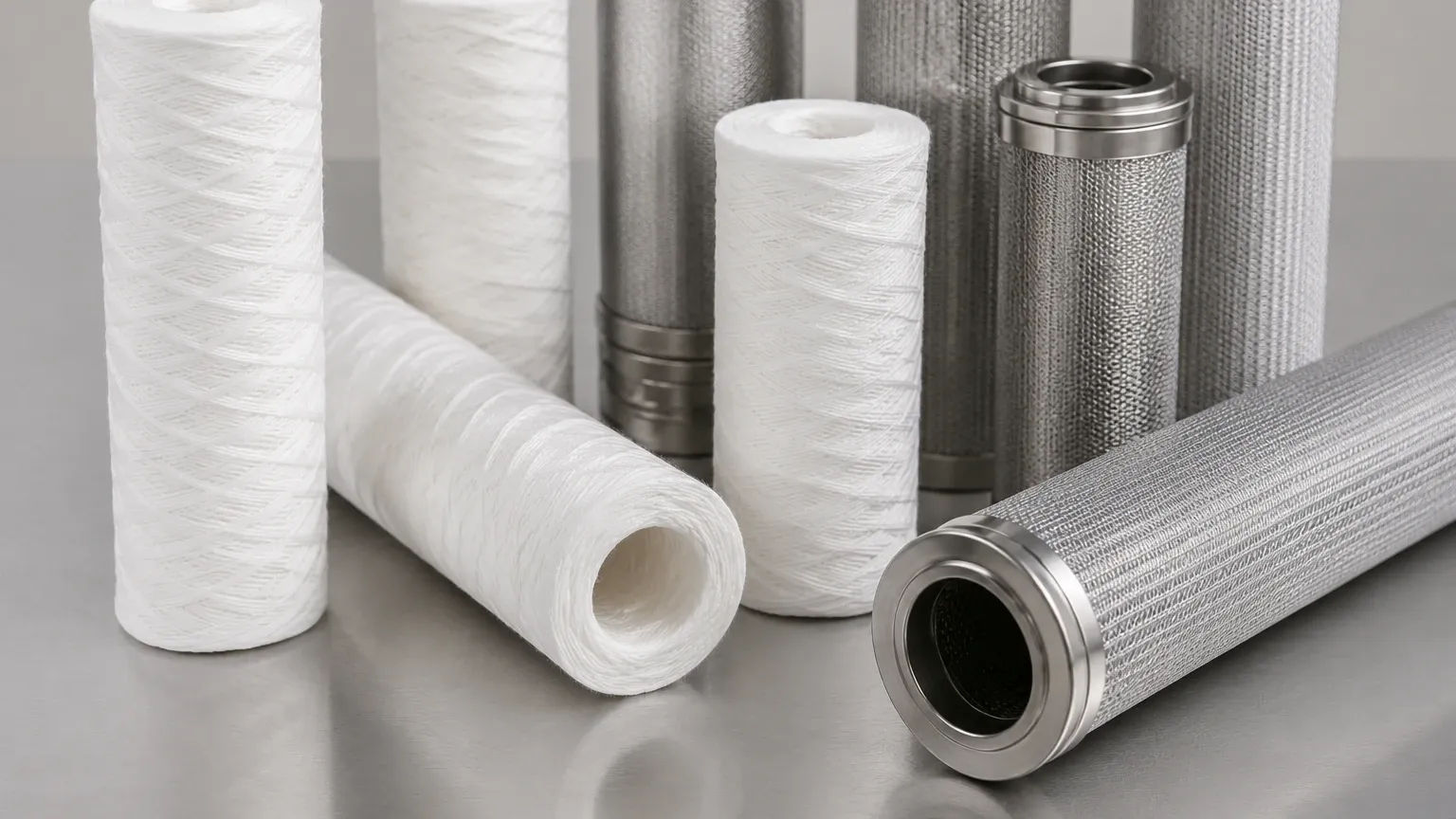
Wound cartridges are characterized by their unique manufacturing process, where textile yarns are precision-wound around a perforated central core. This construction creates a gradient density structure that allows for the entrapment of particles throughout the entire depth of the filter media, rather than just on the surface. This article explores the engineering principles, material considerations, and selection criteria necessary for implementing Filter Cartridges in demanding industrial environments.
Understanding the Fundamentals of Wound Filter Cartridges
The primary function of a filter cartridge wound is depth filtration. Unlike surface filters, such as pleated membranes that capture particles on a single plane, wound filters utilize the thickness of the wound yarn to trap contaminants. The winding process is carefully controlled to create diamond-shaped openings that become progressively smaller toward the center of the cartridge.
The Gradient Density Principle
This "gradient density" is the hallmark of a high-quality wound filter. By maintaining a more open structure on the outer layers and a tighter weave near the core, the cartridge can capture larger particles on the exterior while allowing smaller particles to penetrate deeper before being trapped. This prevents the surface from blinding prematurely, significantly increasing the dirt-holding capacity of the unit compared to non-gradient media.
Winding Patterns and Tension
The performance of the filter is dictated by the winding pattern and the tension applied during manufacturing. High-precision winding machines ensure that the yarn is laid down in a consistent geometric pattern. If the tension is too loose, the filter may experience "channeling," where the fluid bypasses the media through gaps. Conversely, if the tension is too tight, the flow rate may be restricted, leading to an unnecessary pressure drop.
Material Engineering: Yarn and Core Selection
Selecting the correct materials for both the winding media and the internal core is critical for chemical compatibility and thermal stability. Industrial applications often involve aggressive chemicals or high temperatures that can degrade standard materials.
Media Materials
1. Polypropylene (PP): The most common material for general industrial use. It offers excellent chemical resistance to most acids, alkalis, and many solvents. It is also naturally hydrophobic and resistant to microbial growth, making it suitable for water treatment and food-grade applications.
2. Cotton: Often used for filtering oils, fuels, and aqueous solutions where polypropylene might not be compatible. Bleached cotton is frequently utilized in food and beverage processes due to its high purity.
3. Fiberglass: Reserved for high-temperature applications (up to 750°F or 400°C) and aggressive chemical filtration where polymers would melt or dissolve. Fiberglass wound cartridges are common in the petrochemical and power generation sectors.
4. Polyester and Nylon: These materials provide specific resistance to certain hydrocarbons and solvents that might swell polypropylene.
Core Materials
The core provides the structural integrity of the filter, preventing it from collapsing under differential pressure.
* Polypropylene Cores: Standard for low-temperature, general-purpose applications.
* Stainless Steel Cores (304 or 316): Essential for high-temperature processes or applications involving high differential pressures. Stainless steel cores ensure that the filter maintains its shape and performance even in the most demanding hydraulic conditions, a specialty often addressed by manufacturers like Kaifil who focus on durable metal components.
* Tin-Plated Steel: A cost-effective alternative for oil-based applications where high temperature is a factor but extreme corrosion resistance is not required.
The Mechanics of Depth Filtration in Wound Cartridges
To effectively specify a filter cartridge wound, engineers must understand the mechanical interactions between the fluid, the particles, and the yarn fibers. The filtration efficiency is influenced by three primary mechanisms: bridging, interception, and adsorption.
Bridging and Interception
As fluid passes through the tortuous path created by the yarn, particles larger than the pore spaces are physically blocked (interception). As these particles accumulate, they begin to bridge across the openings, effectively creating a secondary filter cake that can enhance filtration efficiency, albeit at the cost of increased flow resistance.
The Role of "Nap"
The "nap" or fuzziness of the yarn plays a vital role in fine filtration. The tiny fibers extending from the main yarn strand act as microscopic traps for fine silt and colloidal particles. Manufacturers can adjust the nap of the yarn to fine-tune the micron rating of the cartridge. A high-nap yarn provides better efficiency for fine particles but may increase the initial pressure drop.
Key Performance Indicators for Industrial Applications
When evaluating Filter Cartridges for a specific project, several performance metrics must be analyzed to ensure the solution is technically and economically viable.
Micron Rating: Absolute vs. Nominal
Wound cartridges are typically rated nominally. A nominal rating indicates that the filter will trap a certain percentage (usually 60% to 90%) of particles of a specific size. Because the pore structure of a wound filter is somewhat flexible, it does not provide the absolute cutoff found in pleated membranes. However, for pre-filtration or general clarification, nominal wound filters offer a superior balance of cost and performance.
Flow Rate and Differential Pressure (ΔP)
The initial differential pressure is the resistance to flow when the filter is clean. Engineers should design systems where the initial ΔP is low (typically under 2-3 psi) to maximize the available service life. As the filter loads with contaminants, the ΔP increases. Most industrial systems require a cartridge change-out when the differential pressure reaches 25-30 psi to prevent media migration or core collapse.
Dirt-Holding Capacity
This refers to the total mass of contaminants a cartridge can retain before reaching its terminal differential pressure. The depth-loading nature of the filter cartridge wound typically provides a higher dirt-holding capacity than surface filters of similar dimensions, making them ideal for fluids with high solids loading.
Comparing Wound Cartridges with Other Filtration Technologies
Choosing between a wound cartridge, a melt-blown cartridge, or a pleated filter depends on the specific goals of the filtration process.
Wound vs. Melt-Blown
Melt-blown cartridges are made by thermally bonding micro-fibers. While they also offer depth filtration, wound cartridges are often preferred in applications where structural stability is paramount. The continuous yarn of a wound filter is less likely to release fibers (media migration) under high-pressure surges compared to some lower-quality melt-blown options. Furthermore, the variety of yarn materials available for wound filters often exceeds the material options for melt-blown technology.
Wound vs. Pleated
Pleated filters offer a much higher surface area, allowing for very high flow rates and extremely fine (absolute) micron ratings. However, they are prone to surface blinding if the fluid contains a high concentration of deformable particles or varied particle sizes. In many industrial sequences, a wound filter is used as a "pre-filter" to protect expensive pleated membranes downstream.
Maintenance, Replacement, and Operational Efficiency
To maintain optimal system performance, a structured maintenance schedule is required. Relying solely on visual inspections of the effluent is often insufficient, as internal bypass or channeling can occur without immediate visual cues.
Monitoring Differential Pressure
The most reliable method for determining the replacement cycle is continuous monitoring of the differential pressure across the filter housing. Installing pressure gauges on both the inlet and outlet ports allows operators to track the loading curve. A sudden drop in differential pressure may indicate a ruptured cartridge or a faulty seal, while a rapid increase suggests a change in the upstream process or fluid quality.
Avoiding Bypass and Channeling
Proper installation is critical. If the cartridge is not seated correctly against the housing gaskets, fluid will take the path of least resistance, bypassing the filter media entirely. For high-purity applications, cartridges with O-ring seals (such as 222 or 226 configurations) are preferred over Double Open End (DOE) designs to ensure a positive, leak-proof seal.
Customization and OEM Solutions for Specialized Filtration
In many industrial scenarios, off-the-shelf filtration products do not meet the specific requirements of a unique process. This is where customized manufacturing becomes essential. Manufacturers like Kaifil provide the engineering expertise to tailor filtration components to specific environmental constraints.
Custom Lengths and Diameters
While standard lengths (10", 20", 30", 40") cover most applications, custom machinery may require non-standard dimensions. Custom winding allows for the production of cartridges that fit precisely into specialized housings without the need for adapters that could introduce leak paths.
Specialized Core Reinforcement
For applications involving extreme hydraulic shock or high-viscosity fluids (such as resins or heavy oils), standard cores may fail. Custom-engineered stainless steel cores with specific perforation patterns and wall thicknesses can be designed to withstand these stresses, ensuring the filter cartridge wound remains functional throughout its intended service life.
Material Blending
Advanced OEM solutions may involve blending different yarn types or using multi-stage winding techniques to achieve a specific filtration profile. For example, a cartridge might be wound with a chemical-resistant outer layer and a high-efficiency inner layer to handle complex waste streams.
Conclusion: Selecting the Right Solution
The filter cartridge wound remains an indispensable tool in the industrial filtration toolkit. Its ability to provide high-capacity depth filtration at a competitive price point makes it the first choice for many pre-filtration and clarification tasks. However, the effectiveness of the filter is entirely dependent on the correct alignment of material properties, winding precision, and structural integrity.
For engineers tasked with designing or maintaining filtration systems, the focus should remain on the total cost of ownership rather than just the initial purchase price. A well-specified wound filter reduces the frequency of change-outs, protects downstream equipment, and ensures consistent product quality. When standard options fall short, partnering with a manufacturer capable of providing customized Filter Cartridges and precision metal components ensures that even the most challenging filtration requirements are met with technical rigor and reliability.
