


Filter Element 0.01 Micron
In high-precision industrial environments, the requirement for sub-micron filtration is a critical engineering standard. A filter element 0.01 micron rating represents an elite tier of filtration capability, often utilized where the presence of even the smallest particulates or aerosols can compromise product integrity, equipment lifespan, or process safety. Achieving this level of precision requires a deep understanding of fluid dynamics, material science, and the specific mechanical behaviors of contaminants at the nanometer scale.
For engineers and procurement teams, selecting the correct Filter Cartridges for 0.01 micron applications involves more than just matching a pore size. It requires an evaluation of the filtration mechanism, the structural integrity of the media under pressure, and the chemical compatibility of the housing and seals with the process fluid. This guide examines the technical nuances of 0.01-micron filtration and the factors that dictate performance in demanding industrial sectors.
Understanding the 0.01 Micron Filtration Rating
To put a 0.01-micron rating into perspective, it is helpful to consider that a human hair is approximately 50 to 70 microns in diameter. A filter element 0.01 micron (10 nanometers) is designed to capture particles that are significantly smaller than bacteria and most viruses. At this scale, the physics of filtration shifts from simple mechanical sieving to more complex interactions.
Absolute vs. Nominal Ratings
In the B2B industrial sector, the distinction between absolute and nominal ratings is paramount. A nominal rating refers to a filter's ability to retain a major percentage (usually 60% to 90%) of particles at a specific size. However, for 0.01-micron applications—particularly in sterile air or high-purity gas systems—an absolute rating is often required. An absolute rating implies a capture efficiency of 99.9% or higher (Beta ratio of 1000 or more) for the specified particle size. When sourcing filter cartridges, engineers must confirm the testing methodology used to validate these ratings to ensure they meet the safety margins of the application.
Filtration Mechanisms at the Sub-Micron Level
While larger particles are trapped via direct interception, particles at the 0.01-micron level are influenced by Brownian motion. At this size, the particles do not follow the streamlines of the fluid flow but move erratically due to collisions with fluid molecules. This increased path length increases the probability that the particle will come into contact with the filter fibers and be captured by adsorption or molecular forces (Van der Waals forces). Understanding this mechanism is vital when calculating flow rates, as velocity can impact the efficiency of Brownian motion-based capture.
Material Science and Media Selection
The performance of a filter element 0.01 micron is fundamentally limited by its construction material. In industrial filtration, the choice of media affects not only the filtration accuracy but also the durability and cleanability of the cartridge.
Sintered Metal Fiber and Mesh
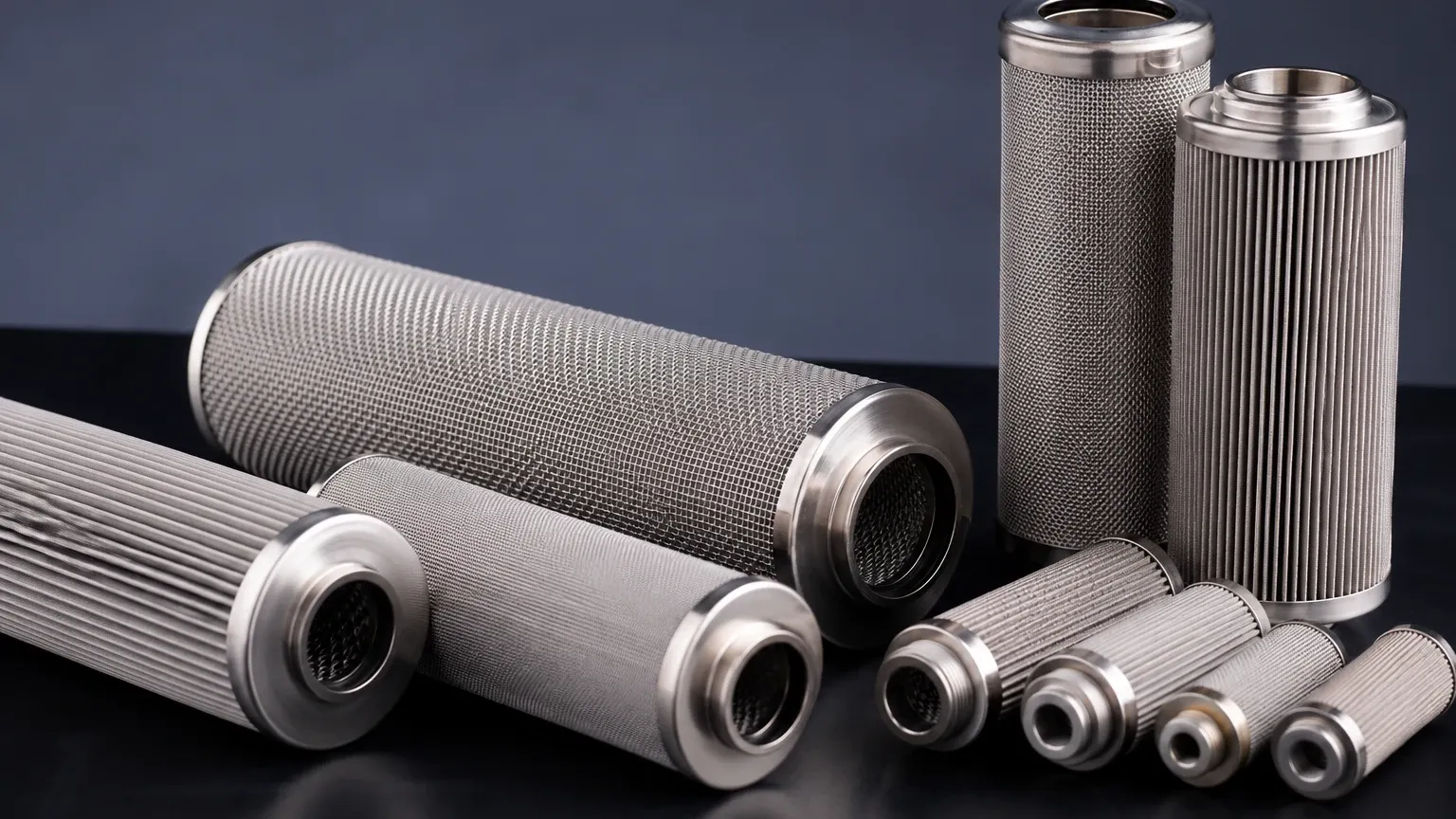
For many high-temperature or high-pressure applications, stainless steel (typically 316L) is the preferred material. Sintered metal fiber media are created by compressing and bonding fine stainless steel fibers together. This process creates a highly porous yet structurally rigid matrix. Unlike polymer-based media, sintered metal can withstand extreme thermal cycles and aggressive chemical cleaning agents. For 0.01-micron requirements, multi-layered sintered structures are often employed, where a fine filtration layer is supported by coarser mesh layers to provide mechanical strength and prevent media migration.
Borosilicate Micro-glass and Polymers
In compressed air applications, borosilicate micro-glass is frequently used for coalescing filters. These fibers are exceptionally thin, allowing for a high void volume which results in lower initial pressure drops. For liquid applications requiring 0.01-micron precision, membrane-based filter cartridges made from PES (Polyethersulfone) or PTFE (Polytetrafluoroethylene) are common. These materials offer high chemical resistance and are often pleated to maximize the surface area within a standard cartridge footprint.
Critical Applications for 0.01 Micron Filtration
Industries that operate at the 0.01-micron level usually have zero-tolerance policies for contamination. The following sectors rely heavily on these high-precision components.
Compressed Air and Gas Sterilization
In the food and beverage and pharmaceutical industries, compressed air often comes into direct contact with the product. A filter element 0.01 micron is essential for removing oil aerosols, water droplets, and sub-micron particulates from the air stream. These are frequently used as "point-of-use" filters or as pre-filters for sterile air membranes. By removing 99.99% of oil and solids, these filters protect downstream equipment and ensure compliance with international quality standards like ISO 8573-1.
Chemical and Petrochemical Processing
Precision filtration is required to protect expensive catalysts and to ensure the purity of fine chemicals. In these environments, the filter must resist corrosion. Stainless steel filter cartridges are the standard here, providing the necessary 0.01-micron precision while maintaining structural integrity in the presence of solvents, acids, and high-pressure differentials.
Semiconductor and Electronics Manufacturing
The production of microchips requires ultra-pure water and gases. Any particle larger than the circuit traces themselves can cause a short circuit or a defect. 0.01-micron filtration is a baseline requirement in these facilities to maintain high yield rates and prevent microscopic debris from contaminating the cleanroom environment.
Engineering Considerations: Flow, Pressure, and Compatibility
Selecting a filter element 0.01 micron is an exercise in balancing competing technical requirements. Engineers must look beyond the micron rating to the operational parameters of the entire system.
Pressure Drop (Delta P)
The finer the filtration, the higher the resistance to flow. A 0.01-micron filter will inherently have a higher initial pressure drop than a 5-micron filter. It is crucial to size the filter housing and the number of cartridges correctly to ensure that the system's pump or compressor can maintain the required flow rate without excessive energy consumption. Designers should aim for a low "clean" pressure drop to maximize the useful life of the element before it reaches its terminal pressure drop (the point at which it must be cleaned or replaced).
Chemical and Thermal Compatibility
Even the most efficient filter will fail if the seals or the media degrade. When specifying Filter Cartridges, engineers must verify the compatibility of the O-rings (e.g., Viton, EPDM, Silicone) and the bonding agents with the process fluid. For high-temperature steam sterilization or cryogenic applications, all-welded stainless steel constructions are often the only viable solution to prevent bypass or structural failure.
Dirt Holding Capacity
A common misconception is that a 0.01-micron filter will clog instantly. While they are more sensitive to heavy loading, modern pleated designs and gradient density media significantly increase the dirt-holding capacity. By using a multi-stage filtration approach—where a 5-micron or 1-micron pre-filter removes the bulk of the contaminants—the service life of the expensive 0.01-micron final filter can be extended by several hundred percent.
Maintenance, Cleaning, and Replacement Cycles
In a B2B context, the total cost of ownership (TCO) is often more important than the initial purchase price. The maintenance profile of a filter element 0.01 micron is a major component of TCO.
Monitoring Performance
Industrial systems should always be equipped with differential pressure gauges. A sudden spike in pressure indicates a high contaminant load or a process upset, while a sudden drop in pressure could indicate media rupture or a failed seal (bypass). For critical 0.01-micron applications, integrity testing (such as the bubble point test or aerosol challenge) is recommended after installation and during routine maintenance to verify that the filter is still performing to its rated specification.
Cleanability vs. Disposal
One of the primary advantages of stainless steel filter elements is their ability to be cleaned and reused. Techniques such as ultrasonic cleaning, backwashing, or chemical dipping can restore the permeability of the media. However, this must be done carefully to avoid damaging the fine 0.01-micron structure. For polymer or glass fiber cartridges, disposal is the only option once the terminal pressure drop is reached. Engineers must weigh the labor and equipment costs of cleaning against the recurring cost of replacement cartridges.
Customization and OEM Requirements
Standard off-the-shelf filters do not always meet the unique spatial or performance constraints of specialized industrial machinery. This is where custom manufacturing becomes essential. When a standard 10-inch or 20-inch cartridge does not fit, or when a specific end-cap configuration (such as Code 7 or 226) is required for a secure seal, OEM solutions provide the necessary flexibility.
Customization options for a filter element 0.01 micron include:
* Custom Dimensions: Tailoring the length and diameter to fit existing housings.
* Reinforced Cores: Adding internal support for high-viscosity fluids or high-pressure surges.
* Material Upgrades: Utilizing exotic alloys like Hastelloy or Monel for extreme corrosive environments.
* Surface Treatments: Electropolishing the stainless steel components to prevent bacterial adhesion in pharmaceutical applications.
By working with a manufacturer that understands these technical variables, purchasing teams can ensure they are not just buying a component, but a solution optimized for their specific operating conditions.
Conclusion
The implementation of a filter element 0.01 micron is a sophisticated engineering decision that directly impacts the quality and efficiency of industrial processes. Whether it is ensuring the sterility of compressed air in a food plant or protecting sensitive catalysts in a chemical refinery, the precision of the filter cartridge is non-negotiable. By focusing on absolute ratings, material compatibility, and the total cost of ownership through proper maintenance and pre-filtration, engineers can achieve reliable, long-term performance. As industrial standards continue to tighten, the role of high-precision filtration media remains a cornerstone of modern manufacturing excellence.
