


Filter Element Oil Hs Code
In the complex landscape of international trade and industrial procurement, the classification of technical components is as critical as their engineering specifications. For procurement managers, engineers, and logistics professionals handling industrial filtration systems, identifying the correct filter element oil hs code is a fundamental step in ensuring regulatory compliance, calculating accurate import duties, and streamlining the global supply chain. This guide provides a technical overview of how oil filter elements are classified under the Harmonized System (HS), the engineering factors that influence these classifications, and the selection criteria for high-performance filtration components.
Understanding the Harmonized System for Industrial Filtration
The Harmonized Commodity Description and Coding System, commonly known as the Harmonized System (HS), is an internationally standardized nomenclature for the description, classification, and coding of goods. Developed and maintained by the World Customs Organization (WCO), the HS code is used by more than 200 countries to determine customs tariffs and gather international trade statistics.
For industrial filtration products, the classification system is structured to distinguish between complete machinery and individual replacement components. When dealing with oil filtration, the classification typically falls within Chapter 84 of the HS nomenclature, which covers nuclear reactors, boilers, machinery, and mechanical appliances. Specifically, Heading 8421 is the primary category for "Centrifuges, including centrifugal dryers; filtering or purifying machinery and apparatus, for liquids or gases."
Identifying the Specific Filter Element Oil HS Code
Determining the exact filter element oil hs code requires an understanding of the product's end-use and its physical characteristics. Within Heading 8421, several subheadings are relevant to oil filtration:
8421.23: Oil or Petrol-Filters for Internal Combustion Engines
This subheading is specifically reserved for filters used in automotive, marine, or stationary internal combustion engines. If the filter element is designed for the lubrication system or fuel line of an engine, it generally falls under this category. This is one of the most common codes used in the automotive and heavy machinery sectors.
8421.29: Other Filtering or Purifying Machinery and Apparatus for Liquids
For industrial applications that do not involve internal combustion engines—such as hydraulic systems, chemical processing lines, or large-scale industrial lubrication systems—the equipment is often classified under 8421.29. This is a "catch-all" category for liquid filtration systems that are not specifically named elsewhere in the heading.
8421.99: Parts of Filtering or Purifying Machinery
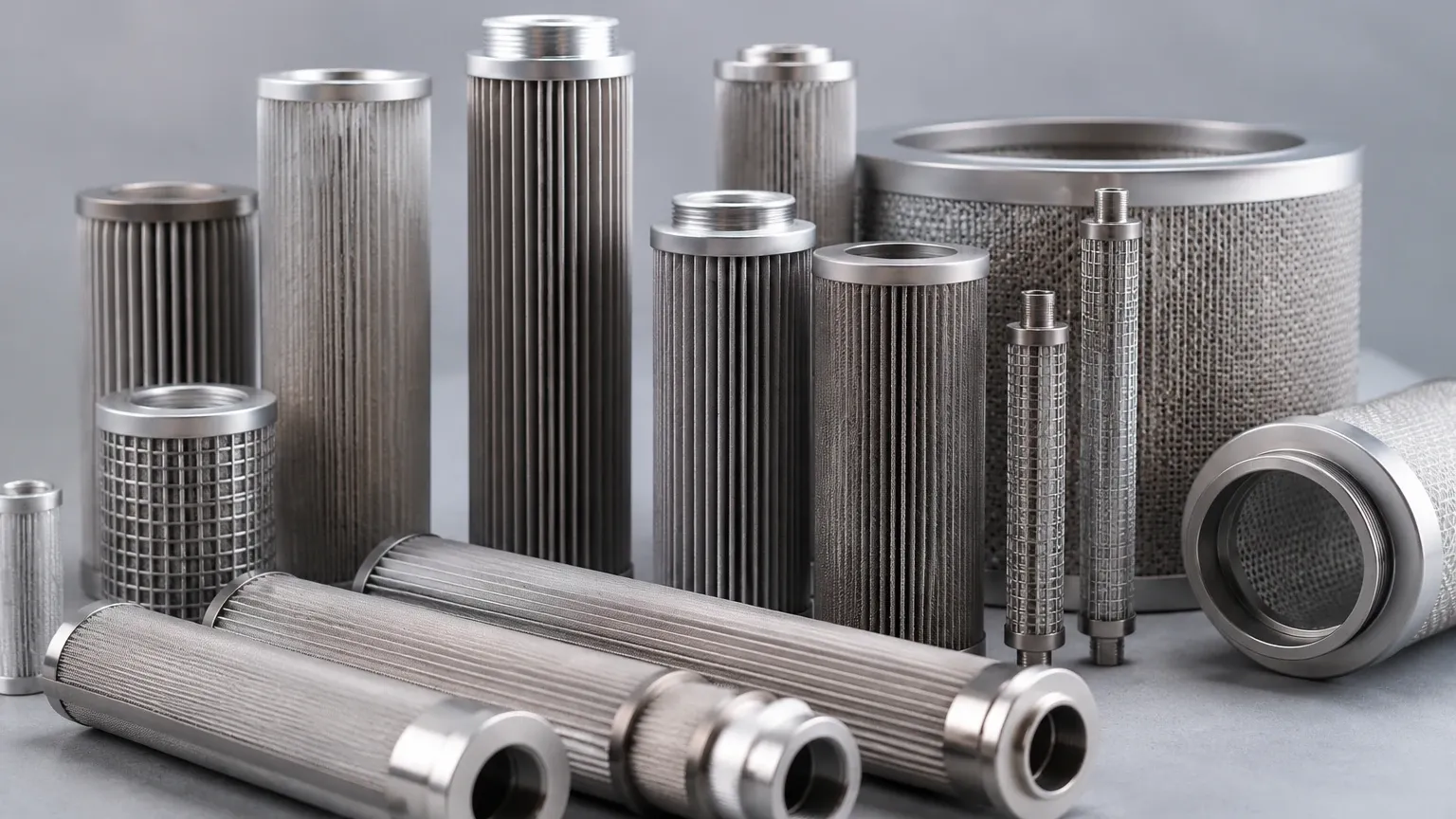
In many instances, the replacement component itself—the Filter Cartridges—is classified under 8421.99. This code is designated for "parts" of the machinery described in the earlier subheadings. Because a filter element is a consumable part of a larger housing or system, customs authorities often require it to be classified as a part rather than the complete apparatus. However, local customs interpretations can vary, and some jurisdictions may classify the element based on the system it serves (e.g., as an engine part under 8421.23).
Engineering Considerations in Filter Element Classification
While the HS code provides a regulatory framework, the technical performance of a filter element is determined by its material composition and structural design. For demanding industrial environments, stainless steel is often the preferred material due to its durability and resistance to extreme conditions.
Material Composition and Durability
Industrial oil filters manufactured from stainless steel wire mesh or sintered metal offer significant advantages over disposable paper or synthetic media. Stainless steel elements provide high mechanical strength, allowing them to withstand high differential pressures without collapsing. Furthermore, their resistance to corrosion makes them suitable for synthetic oils and chemically aggressive lubricants used in the pharmaceutical and chemical processing industries.
Filtration Accuracy and Micron Ratings
The performance of an oil filter is measured by its ability to remove contaminants of a specific size. This is defined by the micron rating. In hydraulic and lubrication systems, maintaining oil cleanliness is vital for preventing component wear and system failure. Precision-engineered wire mesh filters can provide absolute filtration ratings, ensuring that particles above a certain size are consistently captured. When selecting a filter element, engineers must balance the need for fine filtration with the requirement for low initial pressure drop.
The Role of Customization in Industrial Oil Filtration
Standard off-the-shelf filters often fall short in specialized industrial applications where flow rates, temperature ranges, or space constraints are unique. Custom-designed filtration solutions allow for the optimization of the filter’s geometry and media layers to meet specific operational targets.
OEM and Custom Design Capabilities
Manufacturers specializing in custom stainless steel filtration, such as Kaifil, work closely with OEM clients to develop filter elements that fit proprietary housings. This process involves selecting the appropriate weave type (e.g., plain, twill, or dutch weave) and the number of mesh layers to achieve the desired flow characteristics and dirt-holding capacity. Customization also extends to the end-cap design and sealing methods, ensuring leak-free performance in high-vibration or high-pressure environments.
Technical Documentation and Compliance
When procuring custom filter elements, the technical documentation provided by the manufacturer is essential for both engineering validation and customs classification. Detailed material certificates (MTRs), pressure test reports, and technical drawings help confirm that the product meets the specifications required for the intended filter element oil hs code. This documentation is also critical for industries with stringent regulatory requirements, such as food and beverage or pharmaceutical manufacturing.
Selection Criteria for Industrial Oil Filter Cartridges
Choosing the right filter element involves more than just matching a part number. To ensure long-term reliability and cost-effectiveness, several factors must be evaluated during the procurement process:
1. Fluid Compatibility: The filter media and seals must be compatible with the specific type of oil being filtered, whether it is mineral-based, synthetic, or a specialized hydraulic fluid.
2. Operating Temperature: High-temperature applications require metal-bonded or welded constructions rather than those using adhesives or epoxy, which can degrade over time.
3. Flow Rate and Pressure Drop: The filter must be sized to handle the maximum system flow without creating an excessive pressure drop, which could trigger bypass valves or starve downstream components of oil.
4. Cleaning and Reusability: Stainless steel filter elements are often cleanable, providing a lower total cost of ownership compared to disposable elements. The ability to ultrasonically clean or backwash the filter can significantly extend its service life.
5. Environmental Impact: By choosing reusable metal filters, industrial facilities can reduce the waste stream associated with frequent filter changes, aligning with corporate sustainability goals.
Common Risks in HS Code Misclassification
Misclassifying a filter element oil hs code can lead to significant financial and operational disruptions. If a product is imported under the wrong code, the importer may face:
* Incorrect Duty Payments: Overpaying duties increases the total cost of the project, while underpaying can result in heavy fines and back-taxes during an audit.
* Customs Delays: Inconsistent documentation can cause shipments to be held at the border, leading to production downtime if the filters are critical for maintenance.
* Regulatory Non-Compliance: Certain HS codes may trigger additional regulatory requirements, such as environmental inspections or specific country-of-origin restrictions.
To mitigate these risks, it is recommended to consult with a qualified customs broker and provide the manufacturer’s technical specifications to ensure the most accurate classification possible.
Total Cost of Ownership and Replacement Cycles
In a B2B environment, the initial purchase price of a filter element is only one component of the total cost of ownership (TCO). High-quality stainless steel Filter Cartridges may have a higher upfront cost than disposable alternatives, but their longevity and cleanability often make them the more economical choice over the life of the machinery.
Engineers should establish clear replacement or cleaning cycles based on differential pressure monitoring. When the pressure drop across the filter reaches a predetermined limit, it indicates that the media is loaded with contaminants. For critical systems, using high-performance elements ensures that these cycles are predictable, preventing unscheduled maintenance and protecting expensive machinery like turbines, compressors, and hydraulic pumps.
Conclusion
Navigating the technical and regulatory requirements of industrial oil filtration requires a dual focus on engineering excellence and administrative precision. Understanding the nuances of the filter element oil hs code is essential for the smooth movement of goods across borders, while selecting the right filtration technology is vital for the operational integrity of industrial systems. By partnering with experienced manufacturers who provide both high-quality custom components and the necessary technical support, procurement teams can optimize their filtration processes, ensure compliance, and achieve superior performance in even the most demanding applications.
