


Filter Logic Cartridges
In industrial fluid processing, the efficiency of a system is rarely the result of a single component acting in isolation. Instead, it is the product of a systematic approach to particle separation—a concept often embodied in the design and application of filter logic cartridges. For engineers and procurement specialists, understanding the underlying logic of cartridge filtration is essential for optimizing throughput, protecting downstream equipment, and ensuring the purity of the final product.
When we discuss filter logic cartridges in a B2B context, we are addressing the engineering rationale used to select media, determine pore structures, and configure housing sequences. Whether the application involves high-viscosity chemicals, sterile pharmaceutical ingredients, or high-temperature steam, the "logic" applied to the selection of Filter Cartridges determines the total cost of ownership and the operational reliability of the entire plant.
The Fundamental Logic of Industrial Filtration
The term "filter logic" refers to the strategic alignment of filtration media with the specific physical and chemical characteristics of the process fluid. Industrial filtration is governed by several physical mechanisms, including inertial impaction, diffusion, and bridging. Filter logic cartridges are designed to leverage these mechanisms based on the target particle size and the flow dynamics of the system.
Surface vs. Depth Filtration Logic
One of the first logical decisions an engineer must make is between surface and depth filtration. Surface filtration, typically achieved through stainless steel wire mesh or pleated metal membranes, relies on a precise two-dimensional grid to block particles larger than the pore size. This logic is ideal for applications requiring absolute micron ratings and the ability to clean and reuse the media.
Conversely, depth filtration logic utilizes a thick matrix of fibers (such as sintered metal fibers) to trap particles throughout the entire thickness of the medium. This approach is preferred when the fluid contains a wide distribution of particle sizes or when a high dirt-holding capacity is required to extend the intervals between maintenance cycles.
Absolute vs. Nominal Ratings
Applying the correct logic to micron ratings is critical. A nominal rating refers to a filter's ability to retain a major percentage of particles of a certain size, whereas an absolute rating implies a 99.9% efficiency (Beta ratio of 1000) at that specific size. In critical industries like pharmaceutical manufacturing or fine chemical processing, the logic dictates the use of absolute-rated filter logic cartridges to prevent any risk of bypass or contamination.
Material Selection and Chemical Compatibility
The logic of material science is perhaps the most significant factor in the longevity of a filtration system. In demanding industrial environments, plastic or polymer-based cartridges often fail due to thermal degradation or chemical attack. This is where stainless steel filter logic cartridges become the logical choice.
The Advantages of Stainless Steel 304 and 316L
Stainless steel 316L is the industry standard for corrosive environments due to its high molybdenum content, which provides superior resistance to pitting and crevice corrosion. In applications involving food and beverage production, the logic of using 316L is driven by the need for non-leaching materials that can withstand rigorous Clean-in-Place (CIP) and Steam-in-Place (SIP) sterilization cycles.
Temperature and Pressure Resilience
Standard polymer cartridges typically have a maximum operating temperature of 60°C to 80°C. However, many industrial processes, such as steam filtration or polymer melt processing, operate at temperatures exceeding 200°C. The logic of using metal-based filter logic cartridges allows for operational stability at extreme temperatures and high differential pressures (up to 3000 PSI in some reinforced designs) that would cause synthetic media to collapse or deform.
Structural Integrity and Pressure Management
A filter is only as effective as its structural integrity. The logic of cartridge design must account for the mechanical stresses imposed by fluid flow and pressure surges.
Pleated vs. Cylindrical Designs
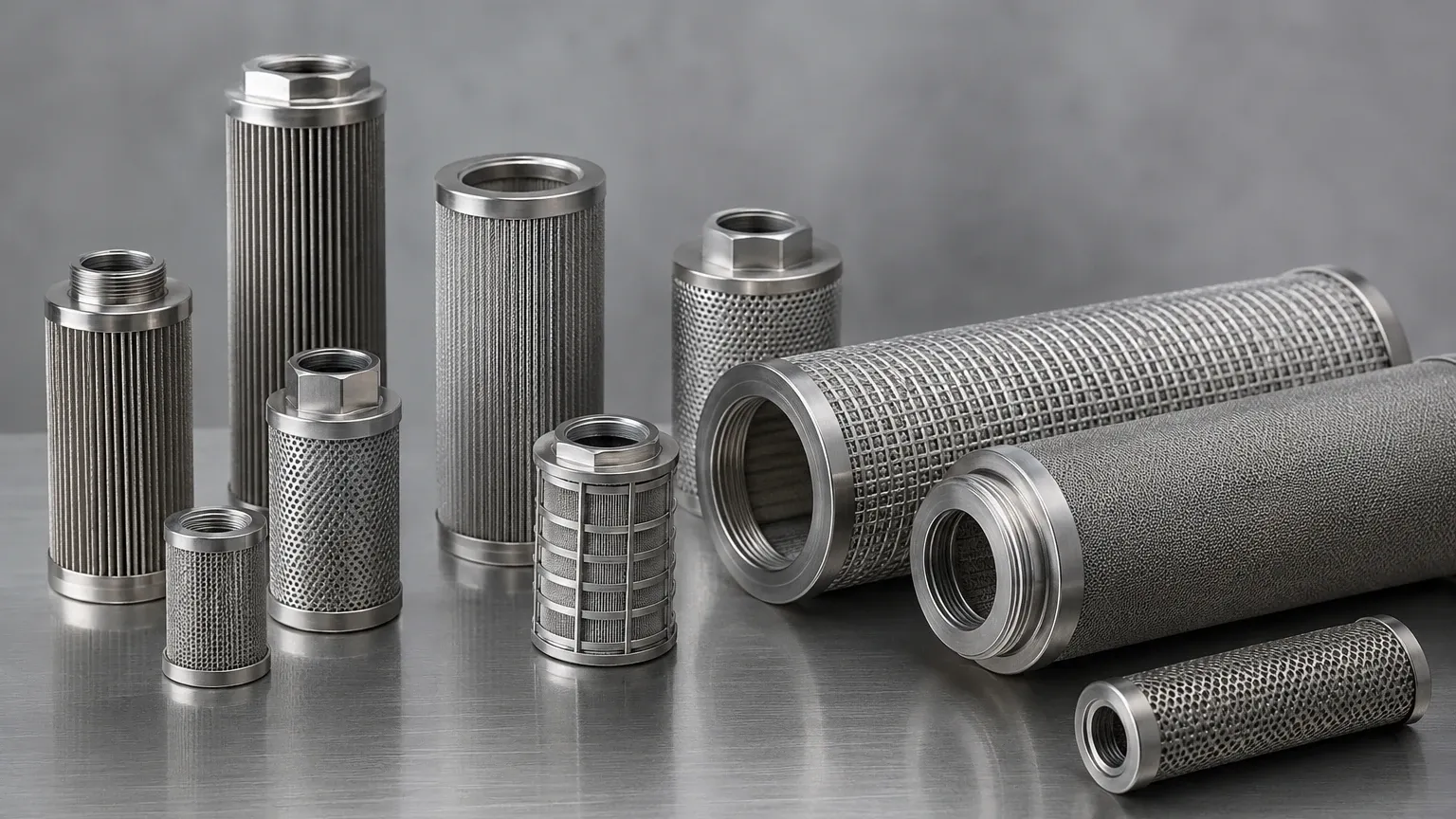
When designing filter logic cartridges, engineers must choose between pleated and plain cylindrical configurations. The logic of pleating is to maximize the effective filtration area within a standard housing footprint. By increasing the surface area, the flux (flow per unit area) is reduced, which in turn lowers the initial pressure drop and extends the service life of the cartridge. For high-flow applications, pleated stainless steel cartridges are almost always the logical preference.
End Cap Configurations and Sealing
The logic of the "seal" is often overlooked but is a common point of failure. Industrial cartridges utilize various end cap styles—such as Double Open End (DOE), 222 O-ring, or 226 bayonet locks—to ensure a leak-proof fit within the housing. Choosing the correct end cap logic is vital to prevent fluid bypass, which can compromise the entire filtration process. In high-purity applications, the 226 configuration is often preferred because the locking tabs provide a positive mechanical seal that cannot be dislodged by back-pressure.
Optimization Strategies for Multi-Stage Filtration
In many complex industrial processes, a single filter cannot achieve the desired clarity and throughput. The logic of multi-stage filtration involves placing different types of cartridges in series to protect the most expensive or finest filters.
Pre-filtration Logic
The primary role of a pre-filter is to remove the bulk of the contaminant load. By using a coarse stainless steel mesh cartridge (e.g., 50-100 microns) ahead of a fine membrane or sintered cartridge (e.g., 1-5 microns), the system logic ensures that the fine filter does not plug prematurely. This staged approach significantly reduces the frequency of cartridge changes and optimizes the flow rate of the entire system.
Polishing and Final Filtration
The final stage in the filtration logic is often referred to as "polishing." This stage removes the trace particles that could affect the color, clarity, or safety of the final product. For example, in the production of high-end spirits or bottled water, the logic of the final filter logic cartridges is to ensure absolute clarity and microbial stability before packaging.
Maintenance Logic: Cleaning vs. Replacement
One of the most compelling arguments for high-quality stainless steel Filter Cartridges is the logic of sustainability and long-term cost reduction. While disposable cartridges have a lower initial purchase price, their total cost of ownership (TCO) can be significantly higher due to disposal costs, downtime, and frequent replacement.
Ultrasonic and Chemical Cleaning
Stainless steel filter logic cartridges are designed to be cleaned. The logic of the cleaning process usually involves backwashing (reversing the flow to dislodge particles) or ultrasonic cleaning, where high-frequency sound waves create cavitation bubbles that scrub the mesh at a microscopic level. In the chemical industry, cartridges may be soaked in specific solvents or acids to dissolve organic or inorganic foulants, restoring the cartridge to near-original permeability.
Monitoring Differential Pressure
The logic of maintenance should be data-driven. By monitoring the differential pressure ($ΔP$) across the filter bank, operators can determine the exact moment a cartridge needs cleaning. A logic-based maintenance schedule prevents the risk of media migration or structural failure that can occur if a filter is pushed beyond its rated pressure limit.
Engineering Custom Solutions for Specific Logic Requirements
No two industrial processes are identical, and often, off-the-shelf solutions do not satisfy the specific logic required for a unique application. Customization is where engineering expertise adds the most value.
Tailoring Pore Geometry
For specialized applications, such as catalyst recovery or polymer filtration, the logic of the pore geometry must be precisely engineered. This might involve multi-layered sintered mesh where different layers provide drainage, support, and filtration. Customizing the "logic" of the weave pattern (plain, twill, or dutch) allows for a balance between flow resistance and particle retention that standard cartridges cannot match.
OEM and Bespoke Dimensions
In many cases, existing filtration housings require custom-length cartridges or non-standard diameters. The logic of OEM (Original Equipment Manufacturer) support ensures that replacement filter logic cartridges integrate seamlessly with existing infrastructure, avoiding the need for expensive piping or housing modifications.
Conclusion: Implementing the Right Filtration Logic
Selecting the appropriate filter logic cartridges is an exercise in balancing technical requirements with economic realities. By understanding the relationship between material science, structural design, and fluid dynamics, engineers can implement filtration systems that are not only effective but also durable and cost-efficient.
Whether you are upgrading an existing system or designing a new process from the ground up, the logic of your filtration strategy will define your operational success. Investing in high-performance stainless steel Filter Cartridges ensures that your system can handle the rigors of industrial production while maintaining the highest standards of purity and performance. As industrial demands continue to evolve, the logic of using robust, cleanable, and precisely engineered filtration components remains the most sustainable path forward for modern manufacturing.
