


Filter Queen Replacement Parts
In the landscape of high-efficiency filtration, maintaining the integrity of the system through high-quality replacement components is critical for consistent performance. Whether managing air purification systems or specialized industrial liquid filtration, the selection of replacement parts determines the longevity of the equipment and the purity of the output. While the term "Filter Queen replacement parts" is often associated with high-standard surface-loading filtration technology, the engineering principles behind these components are rooted in the same rigorous standards required for industrial-grade Filter Cartridges.
For engineers and procurement professionals, sourcing replacement parts is not merely a matter of finding a dimensional fit; it involves an evaluation of material science, filtration mechanics, and structural durability. This guide examines the technical considerations essential for selecting and maintaining high-performance filtration components in demanding environments.
Understanding the Technical Specifications of Replacement Filtration Components
When evaluating replacement parts for any high-efficiency filtration system, the primary focus must be on the technical specifications that define the component's performance. Filtration is a mechanical process governed by several variables, including pore size distribution, permeability, and structural stability under pressure.
Pore Size and Micron Ratings
Replacement elements are categorized by their micron rating, which can be either nominal or absolute. A nominal rating indicates the ability of the filter to retain a majority of particles of a specific size, whereas an absolute rating represents the diameter of the largest spherical particle that can pass through the filter under laboratory conditions. In industrial applications, where precision is paramount, moving from standard consumer-grade materials to precision-engineered metal mesh can provide more reliable absolute filtration ratings.
Differential Pressure (Delta P)
The resistance to flow, or differential pressure, is a key indicator of a filter's health. As replacement parts accumulate contaminants, the Delta P increases. High-quality replacement components are designed to offer low initial pressure drops, which reduces the energy load on pumps or fans and extends the operational life of the filter before it requires cleaning or replacement.
Material Selection: Stainless Steel vs. Traditional Media in Replacement Parts
The material composition of a replacement part dictates its chemical compatibility and thermal resistance. While many standard replacement parts utilize cellulose, polypropylene, or fiberglass, industrial environments often necessitate a transition to stainless steel (304 or 316L) for enhanced durability.
Advantages of Stainless Steel Wire Mesh
Stainless steel wire mesh is a preferred material for high-performance replacement parts due to several factors:
1. Thermal Stability: Unlike polymer-based media, stainless steel can withstand extreme temperatures, making it suitable for hot gas filtration or high-temperature chemical processing.
2. Chemical Resistance: 316L stainless steel provides superior resistance to corrosion, particularly in environments involving acids, alkalis, or saline solutions.
3. Mechanical Strength: Metal components resist deformation under high-pressure surges, ensuring that the pore structure remains consistent throughout the filtration cycle.
Sintered Metal Technology
For applications requiring even higher structural integrity, sintered metal replacement parts offer a porous structure created by bonding multiple layers of wire mesh or metal powder through a high-temperature diffusion process. This results in a rigid, self-supporting element that eliminates the need for internal perforated cores in some designs, further optimizing flow paths.
Evaluating Filtration Efficiency and Surface Loading
The efficacy of a filtration system is often determined by its loading mechanism. Standard replacement parts typically rely on depth filtration, where particles are trapped within the thickness of the media. However, high-efficiency systems, including those utilizing specialized surface-loading technology, focus on capturing particles on the outer layer.
Surface Loading vs. Depth Loading
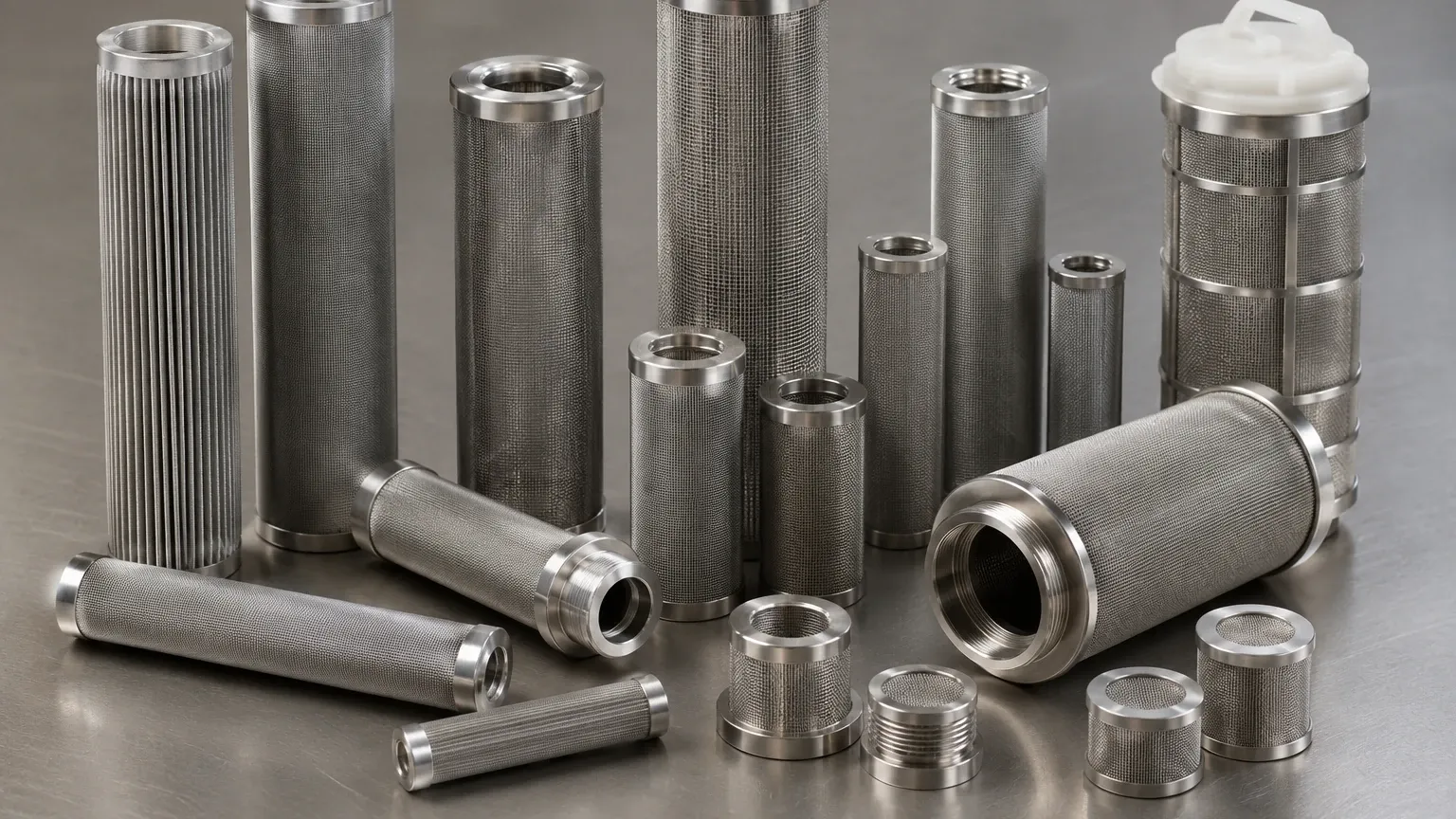
Surface loading allows for easier cleaning and more predictable performance. When particles accumulate on the surface of a stainless steel mesh, they can often be removed via backwashing or ultrasonic cleaning. This is a significant advantage over depth-loading media, which must be discarded once the internal matrix is saturated. For organizations looking to reduce waste and long-term operational costs, investing in cleanable stainless steel Filter Cartridges as replacement parts is a strategic engineering decision.
Dirt-Holding Capacity
A critical metric for any replacement part is its dirt-holding capacity (DHC). This refers to the total mass of a specific contaminant the filter can retain before reaching a terminal pressure drop. Increasing the surface area through pleating is a common engineering technique used to enhance DHC without increasing the overall footprint of the filter housing.
Engineering Considerations for Custom Filter Cartridges and Replacement Elements
In many industrial settings, standard off-the-shelf replacement parts may not meet the specific requirements of a unique process. Customization becomes necessary when dealing with non-standard housings, specialized flow rates, or unique chemical profiles.
Custom End Cap Configurations
The interface between the filter element and the housing is a common failure point. Replacement parts must feature precision-engineered end caps—such as DOE (Double Open End), 222, 226, or threaded connections—to ensure a leak-proof seal. The choice of gasket or O-ring material (Viton, EPDM, Silicone, or PTFE) must also be matched to the process fluid to prevent swelling or degradation.
Structural Reinforcement
For high-viscosity fluids or high-pressure applications, replacement elements may require internal support cores or external shrouds. These components prevent the media from collapsing or bursting during pressure spikes, which is a common risk when using lower-grade replacement parts in industrial machinery.
Lifecycle Management and Replacement Cycles
Effective lifecycle management of filtration components involves more than just reacting to a system failure. It requires a proactive approach to monitoring and replacement to ensure optimal system hygiene and efficiency.
Monitoring Performance
Industrial systems should be equipped with differential pressure gauges to monitor the condition of the filter. A sudden drop in pressure may indicate media rupture or a seal failure, while a rapid increase suggests heavy contaminant loading or a change in the process fluid's characteristics.
Total Cost of Ownership (TCO)
When sourcing replacement parts, the initial purchase price is only one component of the TCO. Engineers must also consider:
* Labor Costs: The time required to change out filters.
* Disposal Costs: Environmental regulations regarding the disposal of contaminated filter media.
* Downtime: The cost of lost production during maintenance intervals.
* Cleaning Costs: If using reusable stainless steel elements, the cost of the cleaning process versus the cost of a new disposable element.
By selecting high-durability stainless steel components, facilities can often extend the time between replacement cycles, significantly reducing the TCO over the life of the equipment.
Ensuring Compatibility: Dimensions and Tolerances
One of the most frequent challenges in sourcing replacement parts is ensuring dimensional compatibility. Even minor deviations in length, outer diameter (OD), or inner diameter (ID) can lead to bypass—a condition where unfiltered fluid bypasses the media entirely, compromising the downstream process.
Precision Manufacturing
Reliable manufacturers utilize CNC machining and precision welding to ensure that every replacement part adheres to strict tolerances. When replacing components in high-precision systems, it is essential to verify that the replacement part matches the original equipment manufacturer (OEM) specifications or improves upon them. For instance, upgrading to a pleated stainless steel element can often provide a higher surface area than the original part within the same dimensional envelope.
Quality Assurance Protocols
Technical professionals should look for replacement parts that have undergone rigorous quality control, including bubble point testing to verify pore integrity and pressure testing to ensure structural soundness. These protocols guarantee that the part will perform as expected from the moment of installation.
Conclusion: Optimizing Performance through Precision Engineering
Selecting the right replacement parts is fundamental to the efficiency and reliability of any filtration system. While the search for "Filter Queen replacement parts" may begin with a need for standard maintenance, it often reveals an opportunity to upgrade to more robust, industrial-grade solutions. By prioritizing material quality, structural integrity, and precise filtration ratings, engineers can protect their equipment and ensure the purity of their processes.
For those managing complex industrial applications, transitioning to custom-engineered Filter Cartridges made from high-grade stainless steel offers a path toward improved performance and reduced operational costs. Whether through enhanced chemical resistance or the ability to withstand high-pressure environments, the right replacement part is an investment in the long-term success of the filtration system.
