


Filter Replacement Ro
In industrial water treatment, the efficiency of a Reverse Osmosis (RO) system is fundamentally dependent on the integrity of its filtration stages. Maintaining these systems requires a rigorous approach to filter replacement ro, ensuring that the semi-permeable membrane—the most critical and expensive component—remains protected from fouling, scaling, and physical damage. For engineers and facility managers, understanding the technical nuances of replacement cycles, material selection, and filtration mechanics is essential for optimizing system uptime and reducing total cost of ownership.
Industrial RO systems are designed to remove dissolved solids, organic contaminants, and microorganisms. However, the RO membrane itself is highly sensitive to suspended solids and chemical oxidants. This necessitates a robust pre-filtration strategy. When discussing filter replacement ro, the focus often shifts to the consumable components that stand between the raw feed water and the high-pressure RO pump. These components must be managed with precision to prevent catastrophic system failure.
The Engineering Logic Behind RO Filter Maintenance
The primary goal of a structured filter replacement ro schedule is the preservation of the RO membrane's flux and rejection rates. RO membranes operate through cross-flow filtration, where water is forced through microscopic pores. If the feed water contains excessive particulate matter, these pores become blocked (fouling), or minerals precipitate on the surface (scaling).
Pre-filtration components, typically Filter Cartridges, are sacrificial by design. They are engineered to capture the bulk of the contaminant load so the membrane does not have to. However, as these cartridges accumulate debris, the differential pressure ($ΔP$) across the filter housing increases. High differential pressure can lead to several engineering challenges:
1. Structural Bypass: Excessive pressure can deform the filter media or seals, allowing unfiltered water to bypass the cartridge and reach the RO membrane.
2. Energy Inefficiency: High-pressure pumps must work harder to push water through clogged filters, leading to increased electrical consumption.
3. Media Migration: In low-quality depth filters, high pressure can cause the filter fibers to shed, potentially clogging the narrow spacers within the RO membrane elements.
Indicators for Filter Replacement Ro in Industrial Environments
Determining the optimal time for filter replacement ro should not be based solely on calendar dates. Instead, industrial operators rely on data-driven indicators to trigger maintenance.
Differential Pressure (ΔP) Monitoring
This is the most reliable metric for filter exhaustion. Most industrial filter housings are equipped with upstream and downstream pressure gauges. A common industry standard is to replace cartridges when the differential pressure reaches 15–20 psi (1.0–1.4 bar), regardless of the time in service. Operating beyond this point risks media collapse or bypass.
Flow Rate Degradation
If the system's permeate production drops while the feed pressure remains constant, it often indicates that the pre-filters are restricted. While flow meters provide a clear visual of this trend, they must be calibrated against temperature, as water viscosity changes with thermal fluctuations.
Silt Density Index (SDI) Testing
The Silt Density Index is a standard measure of the fouling potential of feed water. If the SDI of the water exiting the pre-filtration stage begins to rise, it is a clear sign that the current filter replacement ro protocol is insufficient or that the cartridges have reached their capacity to effectively retain fine particulates.
Material Selection for High-Performance Filter Cartridges
When sourcing replacements, the material of construction is paramount. While polymer-based depth filters are common in light industrial applications, demanding environments—such as chemical processing, high-temperature lines, or pharmaceutical manufacturing—often require more robust solutions.
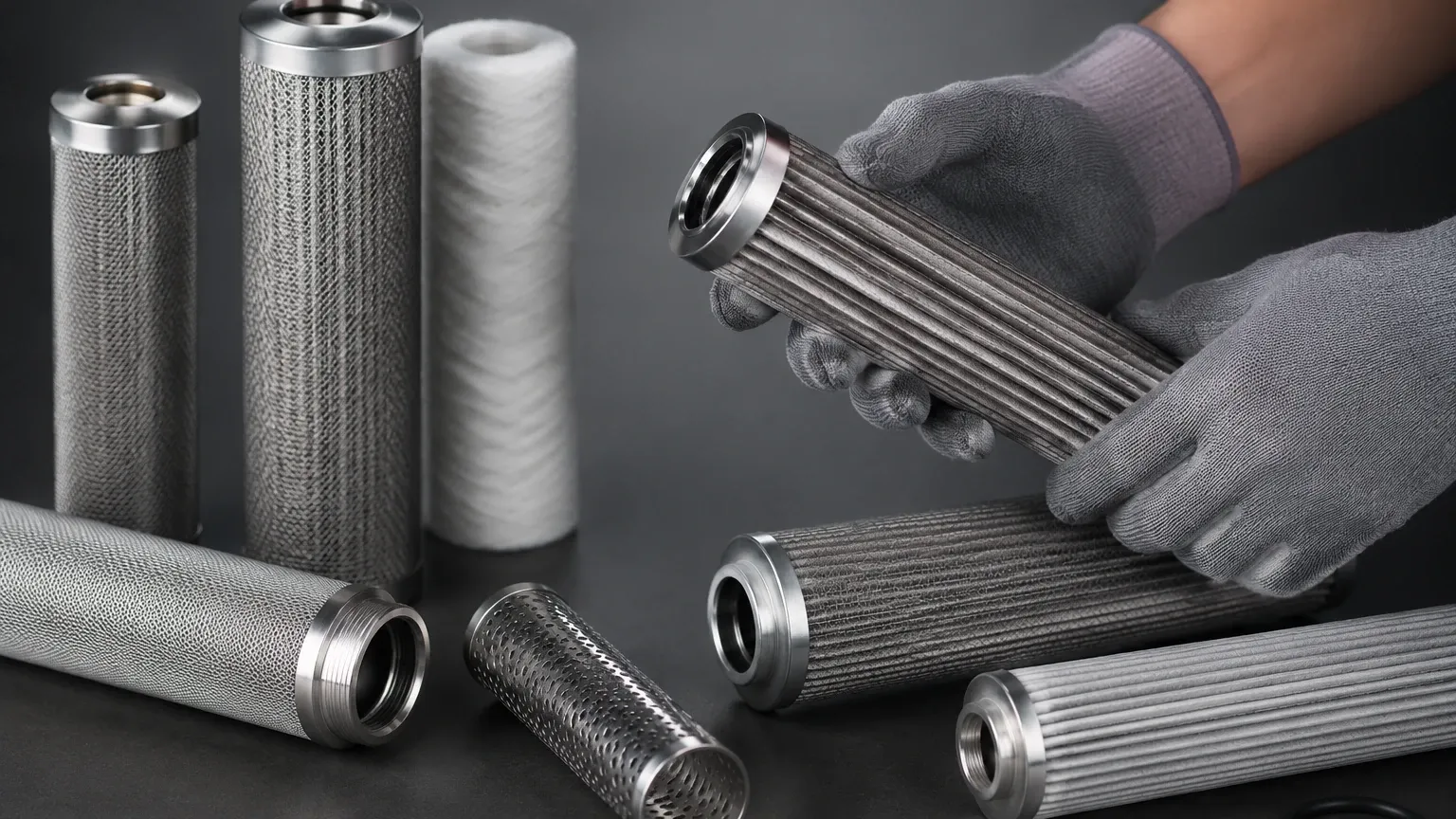
Filter Cartridges manufactured from stainless steel offer significant advantages in industrial RO pre-filtration. Stainless steel wire mesh and sintered metal components provide a level of structural integrity that polymers cannot match.
Advantages of Stainless Steel in RO Pre-filtration:
* Thermal Stability: Stainless steel filters maintain their pore structure even in high-temperature feed water applications where polypropylene might soften or deform.
* Chemical Compatibility: In systems where the feed water contains aggressive solvents or where aggressive Clean-in-Place (CIP) chemicals are used, stainless steel (304 or 316L) provides superior corrosion resistance.
* Backwashability: Unlike disposable depth filters, certain pleated wire mesh cartridges can be cleaned and reused, significantly reducing the long-term cost of filter replacement ro.
* Absolute Micron Ratings: Precision-woven wire mesh provides a consistent and verifiable pore size, ensuring that no particles larger than the specified rating pass through to the membrane.
Pre-filtration Engineering: Maximizing RO Membrane Lifespan
The configuration of the pre-filtration stage is as important as the filters themselves. Many industrial systems utilize a multi-stage approach to filter replacement ro to maximize efficiency.
Multi-Stage Filtration Strategy
1. Coarse Pre-filtration (20–50 Microns): Often a cleanable stainless steel mesh filter designed to remove large sediment, sand, and scale. This protects the finer downstream filters from premature loading.
2. Fine Pre-filtration (1–5 Microns): This is the final barrier before the RO membrane. High-efficiency pleated Filter Cartridges are preferred here due to their large surface area, which allows for lower flux rates per unit area and longer service life.
3. Carbon Filtration: Used specifically to remove chlorine and chloramines, which can chemically oxidize and permanently damage polyamide RO membranes.
By utilizing a graduated approach, the cost of filter replacement ro is distributed. The cheaper, coarse filters protect the more expensive, high-precision fine filters, which in turn protect the most expensive RO membranes.
Evaluating the Structural Integrity of Replacement Components
When engineers evaluate options for filter replacement ro, they must look beyond the micron rating. The physical construction of the cartridge determines its reliability under stress.
End Cap Configuration
Industrial filter housings use various sealing methods, such as Double Open End (DOE), Code 7 (226 O-ring with fin), or Code 3 (222 O-ring). Ensuring an airtight seal is critical; even a microscopic gap can allow enough bypass to foul an RO membrane within weeks. Stainless steel cartridges with welded end caps eliminate the risk of adhesive failure, which can occur in glued polymer filters.
Core Strength
In high-flow industrial RO systems, the center core of the filter cartridge must withstand significant radial pressure. A collapsed core not only stops filtration but can also release a slug of captured contaminants directly into the high-pressure pump. Kaifil’s precision-engineered metal cores provide the necessary rigidity for high-pressure industrial environments.
Operational Impact of Improper Filter Replacement Ro
Neglecting the filter replacement ro schedule has immediate and long-term financial consequences. Beyond the cost of the RO membrane itself, there are operational variables to consider:
* Membrane Cleaning Frequency: If pre-filters are not replaced timely, the RO membrane will require more frequent chemical cleanings. Each cleaning cycle slightly degrades the membrane material, shortening its overall lifespan.
* Pump Wear: High-pressure RO pumps are precision instruments. Particulate bypass caused by failed pre-filters can score the pump cylinders or damage the impellers, leading to expensive mechanical repairs.
* Product Water Quality: As membranes foul, their salt rejection capability decreases. For industries requiring high-purity water (such as semiconductor or pharmaceutical), this can result in product batches that do not meet specification.
Transitioning to Cleanable Stainless Steel Solutions
For many B2B operations, the move toward sustainable and cost-effective manufacturing involves re-evaluating the "disposable" mindset. While traditional filter replacement ro involves discarding spent polymer cartridges, many industrial processes are switching to cleanable stainless steel Filter Cartridges.
These metal components can be ultrasonically cleaned or backflushed, allowing them to be returned to service multiple times. This is particularly advantageous in applications with high solids loading or where the cost of hazardous waste disposal for used polymer filters is significant. By investing in high-quality stainless steel filtration components, companies can stabilize their filtration costs and reduce the logistical burden of maintaining large inventories of disposable filters.
Conclusion: Best Practices for Procurement and Engineering
Effective filter replacement ro is a balance of technical monitoring and quality component sourcing. To ensure the longevity of an industrial RO system, engineering teams should confirm the following before their next procurement cycle:
1. Verify Micron Ratings: Ensure the replacement cartridges meet the "absolute" rating required by the membrane manufacturer, rather than a "nominal" rating which may allow larger particles through.
2. Assess Material Compatibility: Confirm that the filter media and seals (O-rings/gaskets) are compatible with the feed water chemistry and any cleaning agents used in the system.
3. Monitor Performance Trends: Use digital logging of differential pressure and flow rates to predict filter exhaustion and schedule maintenance during planned downtime.
4. Partner with Specialists: Work with manufacturers like Kaifil who understand the rigors of industrial filtration and can provide customized stainless steel solutions tailored to specific water chemistry and flow requirements.
By treating filter replacement ro as a critical engineering task rather than a routine maintenance chore, industrial facilities can achieve higher reliability, lower energy consumption, and superior water quality. Whether utilizing standard depth filters or advanced stainless steel Filter Cartridges, the focus must remain on precision, durability, and the protection of the downstream RO process.
