


Filter Replacement Water Purifier
In industrial water treatment and process engineering, the efficiency of a system is fundamentally tied to the condition of its filtration media. The process of filter replacement water purifier maintenance is not merely a routine task but a critical engineering intervention that ensures the longevity of downstream equipment, the purity of the final product, and the overall cost-effectiveness of the operation. Whether in chemical processing, pharmaceutical manufacturing, or high-volume food and beverage production, understanding the technical nuances of when and how to replace filtration components is essential for any facility manager or engineer.
Industrial water purification often relies on robust Filter Cartridges designed to withstand high pressures, corrosive environments, and extreme temperatures. Unlike residential systems, industrial filter replacement requires a deep understanding of flow dynamics, particle load, and material compatibility to prevent system failure or contamination.
The Technical Necessity of Filter Replacement in Water Systems
Filtration systems operate on the principle of capturing contaminants through various mechanisms, including mechanical straining, adsorption, or depth capture. Over time, the accumulated debris creates a physical barrier that increases the resistance to flow. In technical terms, this is measured as differential pressure (ΔP)—the difference in pressure between the upstream and downstream sides of the filter.
When considering a filter replacement water purifier strategy, the differential pressure is the most reliable indicator of a filter’s remaining service life. As the pores of the filter media become blinded by particulates, the pump must work harder to maintain the required flow rate. If the filter is not replaced at the manufacturer’s recommended terminal pressure drop, several risks emerge:
1. Media Migration: Excessive pressure can cause the filter media to deform or rupture, allowing captured contaminants and filter material to enter the clean stream.
2. Bypass Leakage: High pressure may compromise the seals or O-rings, allowing unfiltered water to bypass the cartridge entirely.
3. Structural Collapse: In extreme cases, the internal core of the filter cartridge may collapse, leading to catastrophic system failure and potential damage to downstream pumps or membranes.
Key Indicators for Filter Replacement Water Purifier Maintenance
While differential pressure is a primary metric, engineers must also monitor other variables to determine the optimal timing for a filter replacement water purifier cycle. Relying solely on a calendar schedule is often inefficient, as it does not account for fluctuations in source water quality or production volume.
Flow Rate Degradation
In constant-pressure systems, a noticeable drop in the flow rate at the point of use indicates that the filter is reaching its loading capacity. For critical applications like pharmaceutical rinsing or boiler feed water, even a minor reduction in flow can disrupt the entire production line.
Effluent Quality Analysis
Regular sampling of the filtered water is necessary to ensure the filter is still meeting its micron rating. If turbidity levels rise or if specific contaminants (such as chlorine in carbon-based systems or particulates in sediment systems) are detected downstream, the filter has likely reached its breakthrough point and requires immediate replacement.
Total Organic Carbon (TOC) and Biofouling
In water purification systems used for high-purity applications, biofouling can occur even before a significant pressure drop is noted. Bacteria can colonize the surface of the filter media, forming a biofilm that may shed into the water stream. In these instances, replacement is dictated by microbial counts rather than mechanical clogging.
Engineering Considerations for Selecting Replacement Filter Cartridges
When performing a filter replacement water purifier update, selecting the correct replacement media is as important as the replacement process itself. Industrial applications often demand more than standard polymer-based filters. Stainless steel Filter Cartridges are frequently specified for their durability and specialized performance characteristics.
Material Compatibility
The chemical composition of the water and any cleaning agents used in the system must be compatible with the filter media and the hardware (end caps, cores, and support mesh). 304 and 316L stainless steel are the industry standards for water purification due to their excellent corrosion resistance and ability to withstand high-temperature sterilization processes like Steaming in Place (SIP).
Micron Rating and Efficiency
Engineers must distinguish between nominal and absolute micron ratings. A nominal rating indicates the filter can trap a large percentage of particles of a certain size, whereas an absolute rating guarantees the retention of nearly all particles at that size. For critical water purification, absolute-rated cartridges are typically required to ensure consistent water quality.
Structural Integrity
In high-pressure hydraulic or water treatment systems, the replacement cartridge must have a high collapse pressure rating. This is particularly important in systems prone to pressure surges or water hammer, which can instantly destroy lower-quality filter elements.
The Advantages of Stainless Steel Media in Water Purification
While disposable polypropylene or pleated paper filters are common, many industrial water systems benefit significantly from transition to stainless steel wire mesh or sintered metal filters. These materials offer unique advantages during the filter replacement water purifier lifecycle:
* Cleanability: Unlike disposable filters, stainless steel cartridges can often be cleaned via backwashing, ultrasonic cleaning, or chemical baths. This extends the interval between total replacements and reduces the total cost of ownership.
* Temperature Resistance: In applications involving hot water loops or steam filtration, synthetic filters may soften or leach chemicals. Stainless steel remains structurally sound at temperatures exceeding 250°C.
* No Media Migration: Metal filters do not suffer from the fiber shedding that can occur with some felt or string-wound cartridges, ensuring that the water remains free of filter-derived contaminants.
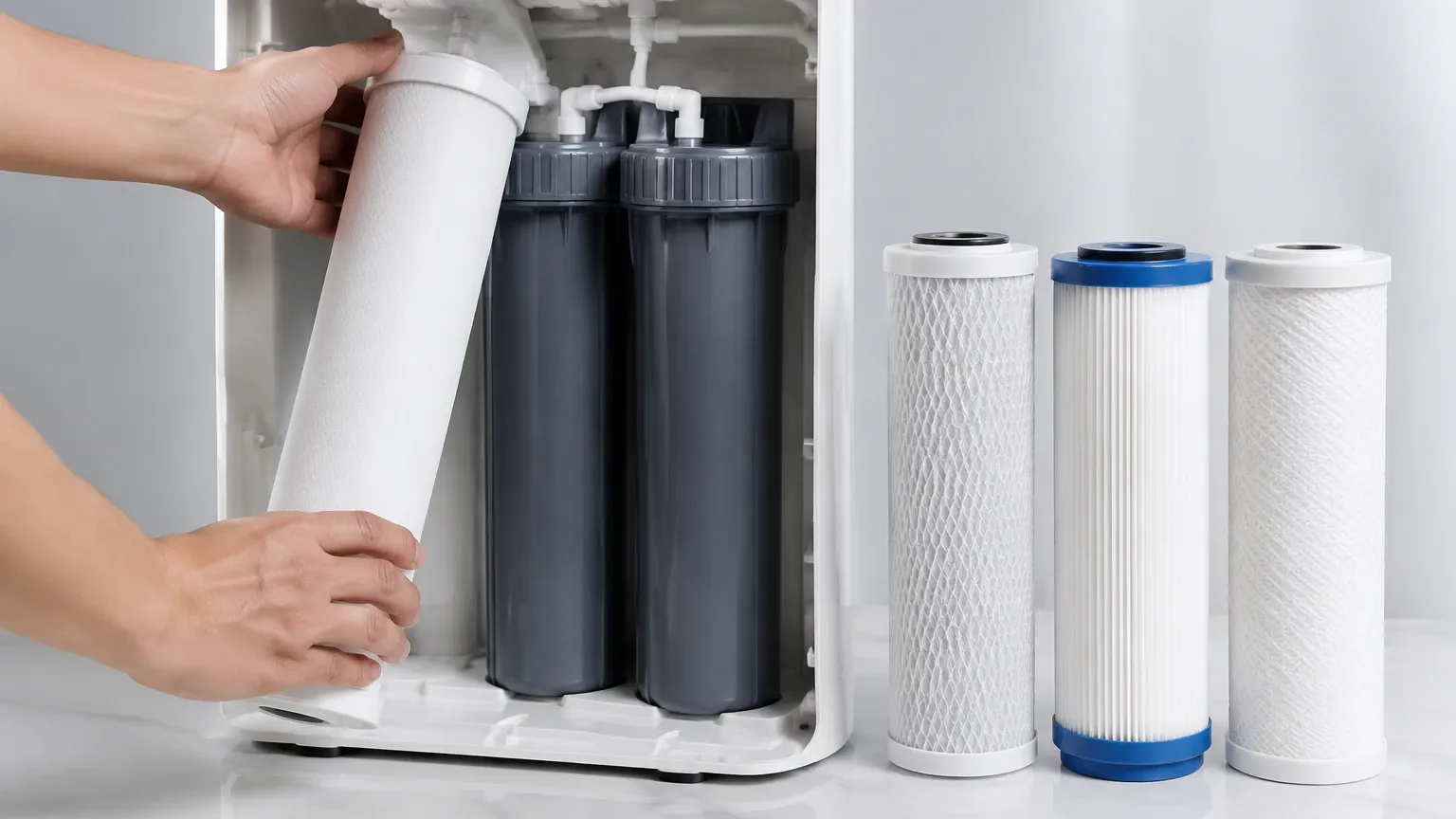
Best Practices for the Replacement Procedure
To ensure safety and system integrity during a filter replacement water purifier task, a standardized protocol should be followed. Failure to properly handle the replacement can lead to air pockets in the system, water hammer, or immediate contamination of the new filter.
1. System Isolation: Close the inlet and outlet valves to isolate the filter housing. Ensure the pump is locked out according to safety protocols.
2. Depressurization: Use the vent valve to release internal pressure. Attempting to open a pressurized housing is extremely dangerous and can lead to mechanical damage.
3. Drainage: Open the drain valve to remove the liquid from the housing. This prevents spills and makes the removal of the heavy, water-saturated cartridges easier.
4. Inspection: Once the old cartridge is removed, inspect the housing for signs of corrosion or sediment buildup. Check the condition of the O-rings and gaskets; these should generally be replaced alongside the filter to ensure a leak-proof seal.
5. Installation: Handle the new Filter Cartridges with clean gloves to avoid transferring oils or bacteria. Ensure the cartridge is seated correctly in the housing base before tightening the cover.
6. Venting and Priming: Slowly open the inlet valve while keeping the vent open to allow air to escape. Once water flows steadily from the vent, close it and slowly open the outlet valve to bring the system back online.
Evaluating Total Cost of Ownership (TCO)
When purchasing components for filter replacement water purifier systems, procurement teams often focus on the unit price of the cartridge. However, a technical evaluation of the Total Cost of Ownership (TCO) provides a more accurate picture of value. The TCO includes the initial cost, the frequency of replacement, the labor costs associated with downtime, and the disposal costs of used filters.
High-quality stainless steel filters may have a higher upfront cost but can result in significant savings over time due to their durability and the ability to be cleaned and reused. Furthermore, reducing the frequency of replacement minimizes the risk of system contamination that occurs every time a housing is opened.
Customization and OEM Solutions
Every industrial water system has unique requirements based on its flow rate, contaminant profile, and spatial constraints. Standard off-the-shelf filters may not always provide the optimal balance of flow and filtration accuracy. In these cases, working with a manufacturer that offers custom-engineered Filter Cartridges is vital.
Customization options can include specialized end-cap configurations (such as Code 7, 222, or 226 styles), varied pleat densities to increase surface area, and specific wire mesh weaves designed for targeted particle retention. By tailoring the filter to the specific demands of the application, engineers can optimize the filter replacement water purifier schedule, ensuring that the system runs at peak efficiency for the longest possible duration.
In conclusion, the effective management of filter replacement in water purification systems requires a combination of real-time monitoring, material science, and disciplined maintenance procedures. By selecting high-performance filtration components and adhering to rigorous replacement standards, industrial facilities can ensure consistent water quality while minimizing operational risks and costs.
