


Filter Replacement Water
In industrial water treatment and process fluid management, the efficiency of a system is fundamentally tied to the integrity of its filtration components. The term filter replacement water refers to the critical maintenance cycle and the specific technical requirements for swapping out exhausted media to ensure continuous water quality and system protection. For engineers and facility managers, understanding the nuances of when and how to replace Filter Cartridges is essential for preventing downstream contamination, protecting expensive equipment like high-pressure pumps, and maintaining regulatory compliance in sectors such as food and beverage, pharmaceuticals, and chemical processing.
This guide examines the technical parameters that dictate replacement cycles, the engineering considerations for selecting replacement media, and the operational impacts of filtration maintenance in industrial water applications.
The Role of Filter Cartridges in Industrial Water Systems
Industrial water systems rely on a variety of filtration stages, ranging from coarse pre-filtration to ultra-fine polishing. At the heart of these systems are various types of filter cartridges designed to capture suspended solids, particulates, and microorganisms. Unlike bulk media filters (such as sand or anthracite beds), cartridges provide a high surface-area-to-volume ratio, allowing for precise control over particle retention in a compact footprint.
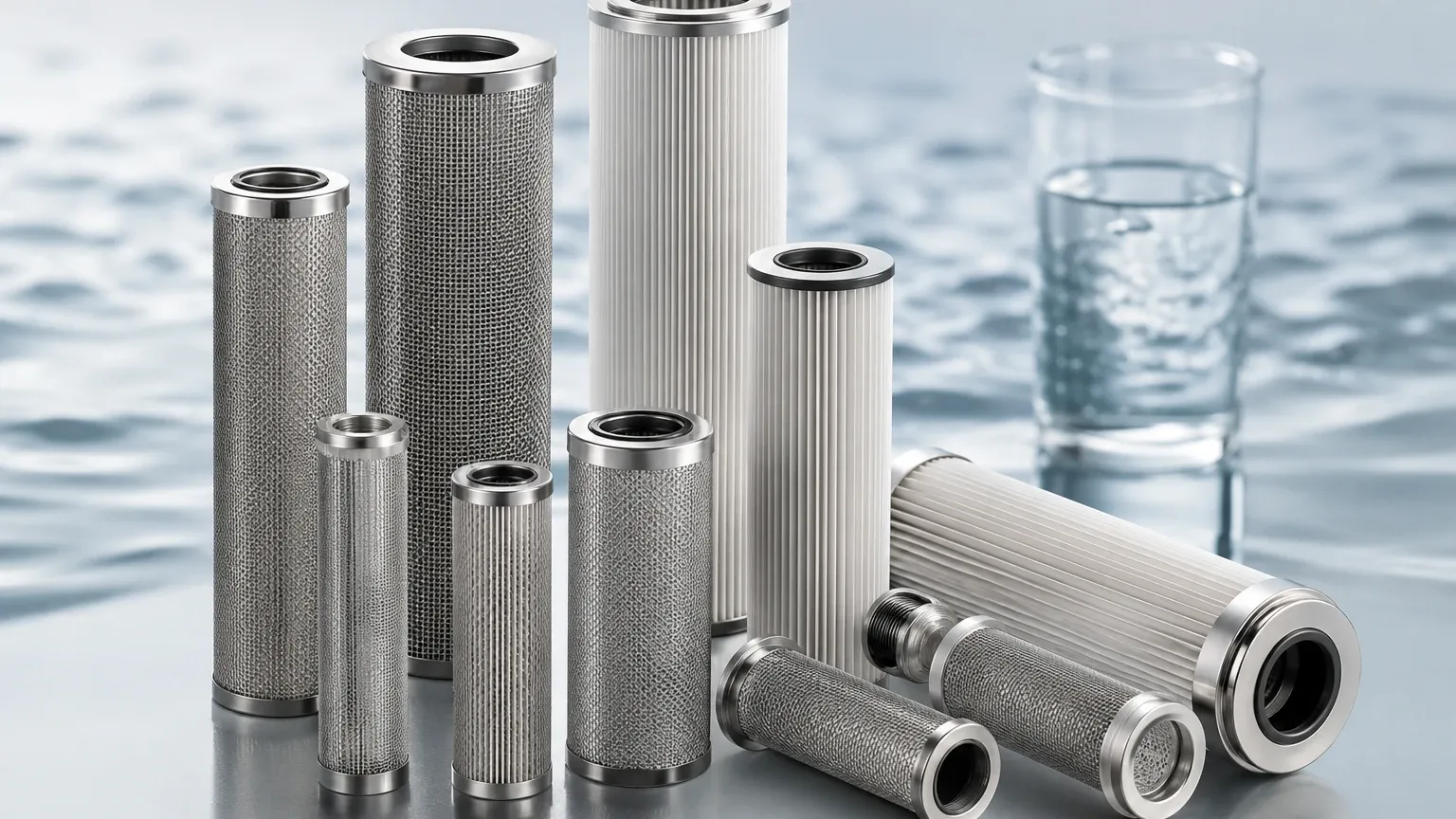
When discussing filter replacement water protocols, engineers must distinguish between the different mechanical structures of the cartridges. Stainless steel wire mesh filters, for instance, offer distinct advantages over disposable polymer-based filters. They are capable of withstanding higher temperatures, greater differential pressures, and aggressive chemical cleaning agents. In many industrial water loops, the transition from disposable to cleanable stainless steel cartridges represents a significant shift in maintenance strategy, moving from a "use and discard" model to a sustainable, long-term asset management approach.
Indicators for Filter Replacement Water Cycles
The most critical aspect of managing industrial water filtration is identifying the optimal point for replacement or cleaning. Replacing a filter too early leads to unnecessary operational costs and downtime, while replacing it too late can result in media breakthrough, structural failure, or pump cavitation.
Differential Pressure (ΔP)
The primary indicator for filter replacement is differential pressure—the difference in pressure between the inlet and outlet of the filter housing. As particulates accumulate on the surface or within the depth of the filter media, the resistance to flow increases. For most industrial water applications, a clean filter cartridge will exhibit a low initial ΔP (often less than 2 PSI). As the filter loads, the ΔP rises.
Engineers typically set a "terminal pressure drop" at which the filter must be replaced or cleaned. For many stainless steel cartridges, this limit is determined by the structural integrity of the mesh and the requirements of the downstream process. If the ΔP exceeds the manufacturer’s recommended limit, the force of the fluid can cause the filter media to deform or "bypass," allowing unfiltered water to enter the clean side of the system.
Flow Rate Degradation
In systems where pumps operate at a constant speed without variable frequency drives (VFDs), a clogged filter will manifest as a noticeable drop in the system flow rate. In high-demand applications, such as cooling water loops or boiler feed systems, a reduction in flow can lead to overheating or insufficient supply to critical components. Monitoring flow rates in conjunction with pressure drop provides a comprehensive view of the filter's health.
Water Quality and Turbidity
In some specialized applications, such as pharmaceutical grade water or food-grade ingredient water, filter replacement is triggered by effluent quality rather than pressure. If downstream turbidity sensors or particle counters detect a rise in contaminants, it indicates that the filter has reached its capacity or that "channeling" has occurred. Channeling is a phenomenon where the fluid carves a path through the media, bypassing the intended filtration mechanism.
Technical Parameters Influencing Replacement Frequency
Several factors influence how often a facility must address filter replacement water needs. Understanding these variables allows engineering teams to optimize their inventory and maintenance schedules.
1. Particulate Loading: The concentration and nature of the solids in the source water are the primary drivers of filter life. High-turbidity water sources, such as surface water or recycled process water, require more frequent replacement cycles compared to treated municipal water.
2. Particle Size Distribution: If the micron rating of the filter cartridge is significantly smaller than the average particle size in the water, the filter will surface-load quickly. Conversely, if the rating is too large, the filter may never reach its terminal ΔP but will fail to protect downstream equipment.
3. Flow Velocity: Higher face velocities (the speed of the fluid through the filter media) tend to drive particles deeper into the media or compress the filter cake, leading to a faster rise in differential pressure.
4. Temperature and Viscosity: While water viscosity is relatively stable, fluctuations in temperature can affect the structural stability of certain filter materials. Stainless steel cartridges are preferred in high-temperature water applications because they do not soften or lose their pore geometry under thermal stress.
Material Selection: The Case for Stainless Steel
When evaluating options for filter replacement water components, material selection is paramount. While polypropylene or pleated paper cartridges are common for low-cost, single-use applications, industrial environments often demand the durability of stainless steel.
Corrosion Resistance and Longevity
Stainless steel 304 and 316L are the standards for industrial water filtration. 316L, containing molybdenum, offers superior resistance to chlorides, making it the preferred choice for brackish water, seawater desalination pre-filtration, and chemical process water. Unlike polymer filters, stainless steel does not leach surfactants or binders into the water stream, which is a critical requirement for high-purity applications.
Cleanability and Sustainability
One of the most significant advantages of stainless steel filter cartridges is their ability to be cleaned and reused. Through backwashing, ultrasonic cleaning, or chemical soaking, the accumulated contaminants can be removed, restoring the filter to near-original ΔP. This capability significantly reduces the volume of waste generated by a facility and lowers the total cost of ownership over the life of the system.
Engineering Challenges in High-Temperature and Corrosive Environments
Industrial water is rarely "just water." It often contains dissolved gases, scale-forming minerals, or residual chemicals from upstream processes. These factors complicate the filter replacement process.
In steam condensate return lines or high-temperature boiler feed water, standard plastic filters would melt or deform. Stainless steel cartridges, specifically those with welded rather than bonded construction, maintain their micron rating and structural integrity at temperatures exceeding 250°C.
Furthermore, in chemical processing where the water may have extreme pH levels, the choice of gasket and seal material (such as Viton, EPDM, or PTFE) is just as important as the filter media itself. A failure in the seal during a filter replacement can lead to bypass, rendering the entire filtration stage ineffective.
Best Practices for Installing Replacement Filter Cartridges
The physical process of replacing a filter is a critical maintenance task that requires precision to avoid system contamination.
* System Isolation and Depressurization: Before opening a filter housing, the system must be properly isolated and the internal pressure bled off. Failure to do so is a significant safety hazard.
* Sanitization: In food, beverage, and pharmaceutical applications, the housing should be sanitized during the replacement process to prevent the introduction of microbial contaminants.
* Seating and Alignment: It is essential to ensure that the cartridge is correctly seated on the internal pedestal or guide. Misalignment is a common cause of bypass. For multi-round housings, using a compression plate helps ensure all cartridges are held firmly in place.
* Venting: After installing the new filter and refilling the housing, air must be vented from the high point of the vessel. Trapped air can cause flow imbalances and may lead to water hammer, which can damage the filter media.
Total Cost of Ownership and Long-Term Filtration Strategy
When procurement teams look at the cost of filter replacement water solutions, they often focus on the initial purchase price of the cartridge. However, a professional engineering approach considers the Total Cost of Ownership (TCO).
TCO includes:
* Purchase Price: The cost of the cartridge itself.
* Disposal Costs: For disposable filters, the cost of hazardous or non-hazardous waste disposal.
* Labor Costs: The man-hours required to perform the replacement.
* Downtime: The lost production value while the system is offline.
* Energy Costs: The cost of pumping water against an increasing pressure drop.
By switching to high-quality, customized stainless steel Filter Cartridges, many facilities find that while the initial investment is higher, the TCO is dramatically lower due to the extended service life and the ability to clean the media. Kaifil specializes in these types of high-performance solutions, providing OEM and custom-engineered filters that meet the specific rigors of demanding industrial water applications.
Conclusion
Managing filter replacement water is more than a routine maintenance task; it is a strategic component of industrial process control. By monitoring differential pressure, selecting the appropriate materials for the chemical and thermal environment, and adhering to strict installation protocols, engineers can ensure the longevity of their equipment and the purity of their water supply. Whether dealing with hydraulic fluids, chemical solvents, or process water, the transition to durable, precision-engineered stainless steel filtration components offers a reliable path toward operational efficiency and cost reduction.
