


Filter Replacement Waterdrop
In industrial fluid processing, the integrity of a filtration system is often measured by its weakest link: the maintenance cycle. While consumer-grade systems often focus on simple "filter replacement waterdrop" indicators to signal the end of a filter's life, industrial environments require a more rigorous, data-driven approach to component replacement. For engineers and facility managers, understanding the nuances of Filter Cartridges and their replacement protocols is essential for maintaining process uptime, protecting downstream equipment, and ensuring product purity.
Industrial filtration involves complex variables, including chemical compatibility, thermal resistance, and mechanical strength. Unlike residential systems where a "waterdrop" icon might suffice, industrial replacement cycles are dictated by differential pressure (ΔP) readings, flow rate degradation, and periodic laboratory analysis of the filtrate. This article explores the technical foundations of filter replacement, the engineering considerations for selecting replacement cartridges, and how to optimize the total cost of ownership in demanding industrial applications.
The Engineering Logic of Filter Replacement
The primary function of any filter is to remove contaminants while allowing the carrier fluid to pass with minimal resistance. Over time, the accumulation of solids on the filter media—whether it is a surface-loading wire mesh or a depth-loading sintered metal—creates a "filter cake." While this cake can actually improve filtration efficiency in some scenarios, it inevitably increases the resistance to flow.
Differential Pressure (ΔP) Monitoring
In professional settings, the "filter replacement waterdrop" concept is translated into differential pressure monitoring. Most industrial housings are equipped with gauges that measure the pressure before and after the filter. As the pores of the filter cartridges become occluded, the pressure drop increases. Engineers typically define a "terminal pressure drop"—the point at which the energy required to push fluid through the filter exceeds the cost of replacing or cleaning the element, or where the pressure risks damaging the filter media itself.
Flow Rate Consistency
In processes such as chemical dosing or food and beverage bottling, maintaining a consistent flow rate is critical. When a filter reaches its loading capacity, the pump must work harder to maintain the set point. If the system cannot compensate, the flow rate drops, potentially stalling production lines. Monitoring these fluctuations provides a clear indicator that a replacement is necessary to prevent system-wide inefficiency.
Material Selection for Replacement Filter Cartridges
When sourcing replacement components, material science plays a pivotal role. Industrial environments often involve corrosive chemicals, high temperatures, or high-pressure surges that would cause standard polymer filters to fail. Stainless steel remains the gold standard for these demanding applications.
304 vs. 316L Stainless Steel
For most general industrial applications, Grade 304 stainless steel offers excellent durability and cost-effectiveness. However, in pharmaceutical or marine environments where chloride corrosion is a concern, 316L stainless steel is preferred. The "L" denotes low carbon content, which improves weldability and resistance to intergranular corrosion, ensuring that the replacement cartridge does not introduce metallic contaminants into the process stream.
Sintered Metal vs. Wire Mesh
The choice between different stainless steel structures depends on the specific filtration task:
* Wire Mesh Filters: Ideal for surface filtration where high flow rates and easy cleaning are required. These are often used as pre-filters to protect more sensitive downstream components.
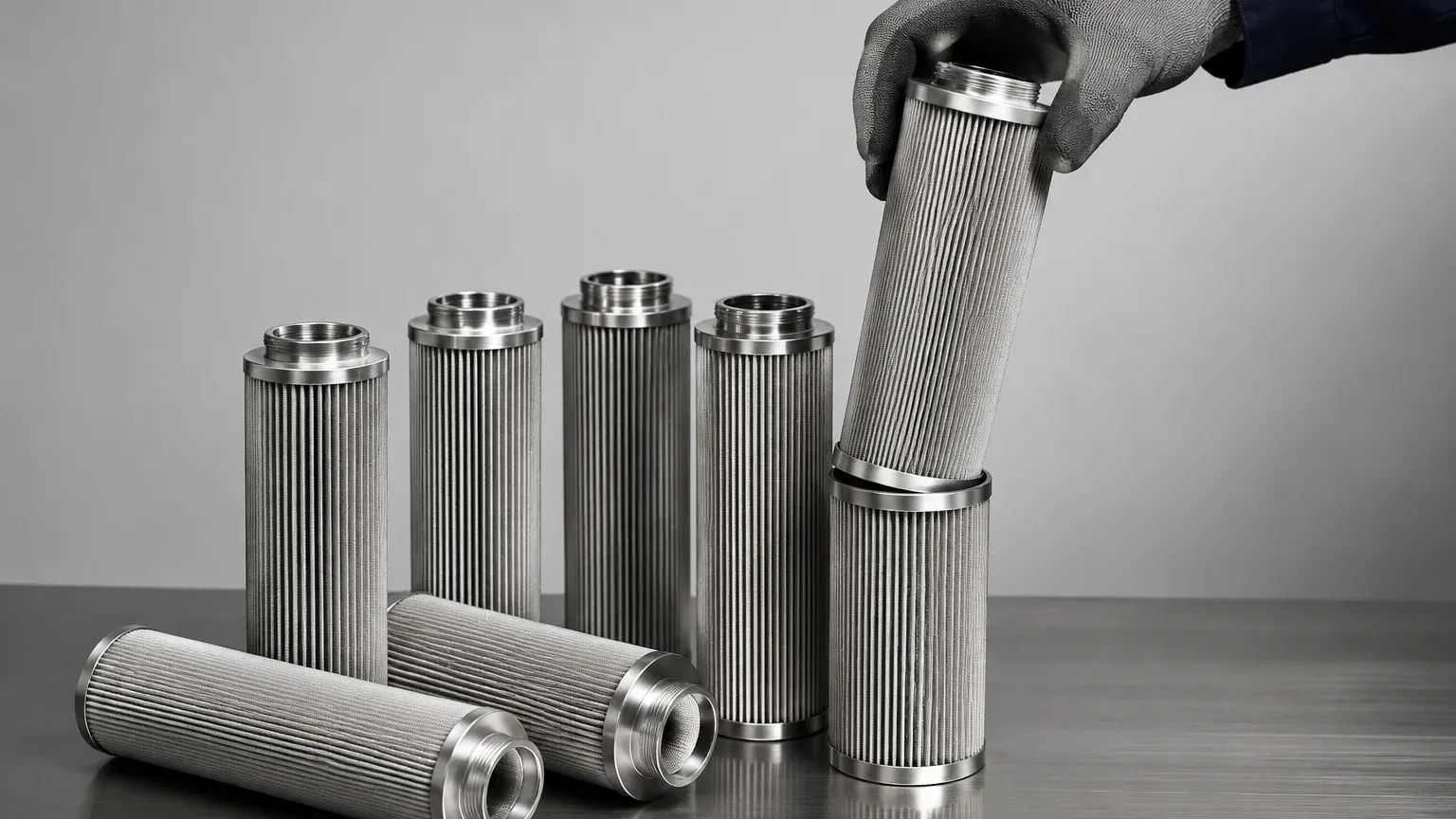
* Sintered Metal Cartridges: Created by fusing layers of wire mesh or metal fibers under heat and pressure, these provide a rigid, high-strength structure capable of withstanding extreme pressure differentials. They are excellent for fine filtration where pore stability is paramount.
Addressing the "Filter Replacement Waterdrop" in Industrial Maintenance
The term "filter replacement waterdrop" often surfaces in discussions regarding the ease of maintenance and the visual cues for replacement. In an industrial context, this relates to the "drop-in" compatibility of replacement parts. A replacement cartridge must fit perfectly within the existing housing to prevent "bypass"—a condition where unfiltered fluid escapes around the edges of the filter element.
Sealing Mechanisms
To ensure a zero-leak environment, engineers must evaluate the sealing method of the replacement cartridge. Common options include:
* 222/226 O-Rings: These provide a secure, double-seal fitment common in high-purity applications.
* Double Open End (DOE): Utilizes flat gaskets at both ends, requiring a compression nut within the housing to maintain the seal.
* Threaded Connections: Used in high-pressure hydraulic or gas systems where mechanical vibration might loosen a standard O-ring fit.
Failure to match the exact sealing configuration during a filter replacement can lead to catastrophic downstream contamination, rendering the entire filtration process moot.
Performance Evaluation and Quality Control
Not all replacement filter cartridges are engineered to the same standards. When evaluating a supplier, technical professionals should look for specific performance metrics that guarantee the longevity and efficiency of the component.
Micron Rating: Absolute vs. Nominal
Understanding the difference between absolute and nominal ratings is vital. A nominal rating indicates that the filter can trap a certain percentage of particles of a given size. In contrast, an absolute rating (often verified through a glass bead test or bubble point test) guarantees that 99.9% of particles above the specified micron size will be retained. For critical applications like pharmaceutical sterile venting or catalyst recovery, absolute-rated stainless steel cartridges are non-negotiable.
Structural Integrity Testing
Industrial filters must withstand "collapse pressure." This is the maximum pressure differential the cartridge can handle before the internal support core or the filter media itself deforms. High-quality stainless steel cartridges are engineered with reinforced inner cores to handle the surges often found in hydraulic systems or during the start-up of high-capacity pumps.
Total Cost of Ownership (TCO) Considerations
While the initial purchase price of a replacement filter is a factor, the total cost of ownership is a more accurate metric for B2B decision-making. This includes the cost of the filter, the labor required for replacement, the cost of disposal, and the potential loss of production during downtime.
Cleanable vs. Disposable
One of the primary advantages of stainless steel filter cartridges over polymer alternatives is their cleanability. In many industrial processes, the "filter replacement waterdrop" signal doesn't mean the cartridge must be discarded. Instead, it can be backwashed, ultrasonically cleaned, or chemically treated to restore its original flow characteristics. This significantly reduces the long-term cost and environmental impact of the filtration system.
Customization for Optimized Life Cycles
Often, a standard off-the-shelf filter is not the most efficient choice for a specific process. Customization of the pleat density, surface area, and wire diameter can extend the time between replacement cycles. By increasing the effective filtration area, the flux (flow per unit area) is reduced, which slows the rate of pressure buildup and allows the filter to stay in service longer.
Common Risks in Delayed Filter Replacement
Ignoring the indicators for filter replacement—whether they are manual gauge readings or automated system alerts—carries significant risks:
1. Media Migration: If a filter is pushed beyond its structural limits, the media can break down, sending fragments of the filter itself into the clean-side fluid.
2. Contaminant Unloading: In depth-style filters, extreme pressure can force previously trapped particles through the media and back into the process stream.
3. Pump Failure: Excessive backpressure forces pumps to operate outside their design curve, leading to overheating, cavitation, and premature mechanical failure.
Conclusion: Strategic Filtration Management
Successful industrial filtration relies on more than just the initial installation; it requires a disciplined approach to maintenance and a deep understanding of replacement component engineering. Whether you are managing a complex chemical refinery or a precision pharmaceutical line, the logic behind the "filter replacement waterdrop" remains the same: timely intervention prevents system failure.
By selecting high-quality Filter Cartridges that are specifically engineered for the chemical and thermal demands of your application, you can ensure consistent performance and protect your critical infrastructure. Moving beyond simple indicators to a comprehensive understanding of material compatibility, micron accuracy, and structural integrity allows engineering teams to optimize their processes and achieve superior filtration results.
For those looking to refine their filtration strategy, the focus should always be on technical verification. Confirming the exact dimensions, sealing types, and pressure ratings before purchasing replacement units ensures that every maintenance cycle contributes to the overall stability and efficiency of the industrial operation.
