


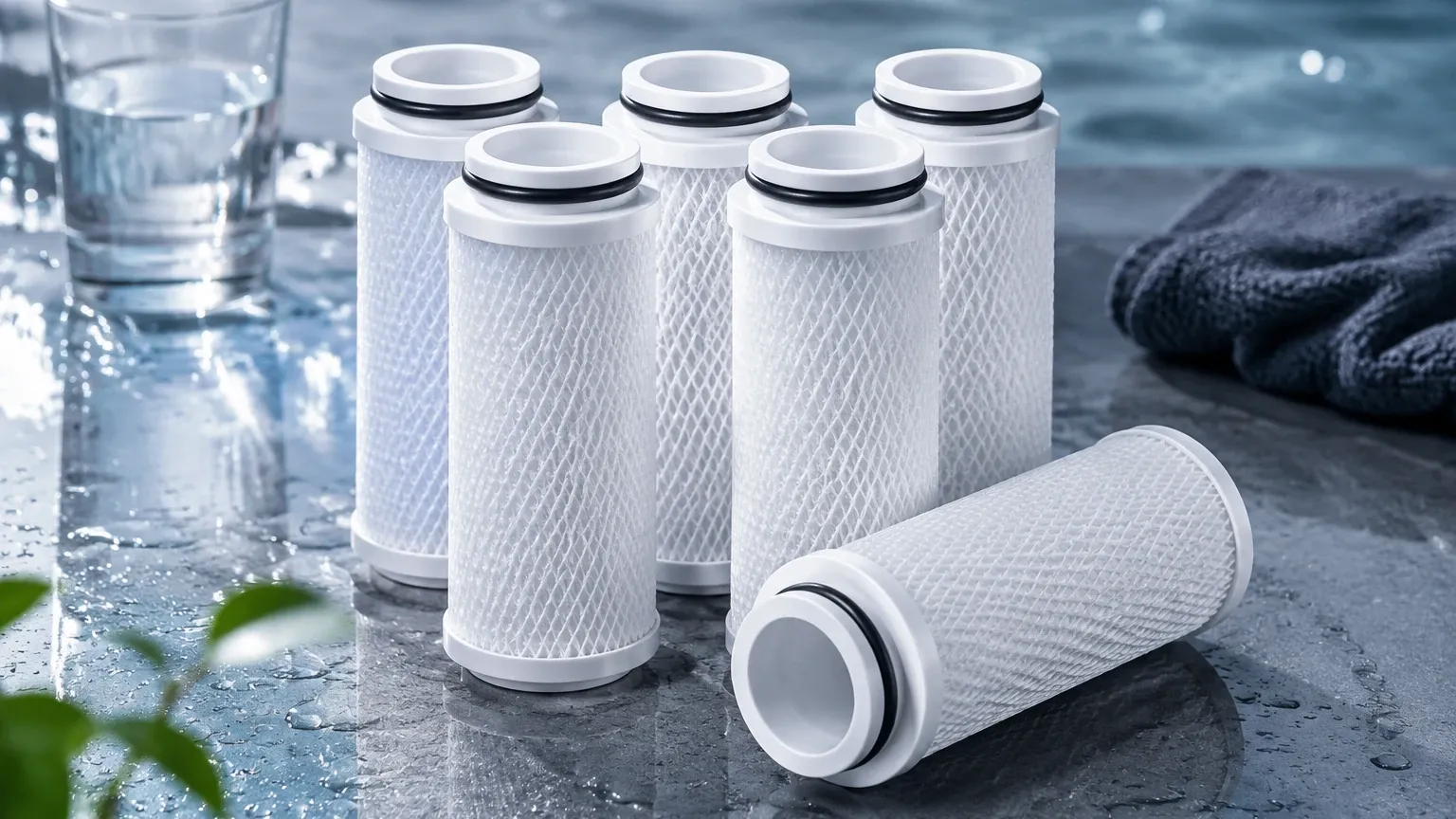
George Home 6 Water Filter Cartridges
In the landscape of water treatment, understanding the technical specifications and performance boundaries of various filtration media is essential for both domestic and light industrial applications. The George Home 6 water filter cartridges represent a common consumer-grade solution for sediment reduction and chemical adsorption. However, for engineers and procurement professionals, evaluating these components requires a deeper look into the materials science, filtration mechanics, and the operational limitations that distinguish them from industrial-grade Filter Cartridges.
This guide provides a technical analysis of the filtration principles utilized in these cartridges, their performance metrics, and the engineering considerations necessary when scaling from domestic use to more demanding industrial environments.
Technical Composition and Filtration Mechanics
The George Home 6 water filter cartridges typically employ a multi-stage filtration process designed to address common municipal water contaminants. From an engineering perspective, these cartridges function through a combination of mechanical straining, adsorption, and ion exchange.
1. Mechanical Pre-Filtration
The outermost layer usually consists of a fine mesh, often made of non-woven polymer fibers. This layer serves as a primary barrier against macro-particles such as silt, sand, and rust. In industrial contexts, this is analogous to a coarse strainer, protecting the more sensitive internal media from premature clogging. The micron rating at this stage is generally high, focusing on visibility-impairing particulates rather than microscopic contaminants.
2. Activated Carbon Adsorption
The core of the cartridge contains granulated activated carbon (GAC). This media is highly porous, providing a massive surface area for the adsorption of organic compounds, chlorine, and certain pesticides. The effectiveness of this stage depends heavily on the "contact time"—the duration the water remains in contact with the carbon. In gravity-fed systems like those using these cartridges, the flow rate is naturally restricted to maximize this contact time, ensuring efficient chemical reduction.
3. Ion-Exchange Resin
To address water hardness and heavy metal presence (such as lead or copper), these cartridges incorporate ion-exchange resin beads. These resins function by swapping unwanted ions in the water with less objectionable ions (typically hydrogen or sodium) bound to the resin beads. This process is critical for preventing limescale buildup in downstream equipment, such as kettles or small-scale laboratory heaters.
Performance Evaluation and Efficiency Metrics
When evaluating the George Home 6 water filter cartridges, technical professionals must look beyond marketing claims and focus on standardized performance metrics. These metrics define the cartridge's utility in specific environments.
Micron Rating and Particle Retention
While domestic filters often do not publish precise beta ratios, they are generally designed to operate in the 50 to 100-micron range for sediment. For applications requiring sub-micron filtration or absolute retention of bacteria and cysts, these cartridges are insufficient. In contrast, industrial stainless steel Filter Cartridges can be engineered for much tighter tolerances and higher structural integrity under pressure.
Flow Rate and Pressure Drop
In a gravity-fed configuration, the flow rate is determined by the hydraulic head (the weight of the water above the filter). As the filter media becomes saturated with particulates, the pressure drop increases, and the flow rate decreases. For B2B applications where consistent flow is required for process cooling or chemical mixing, the variable flow rate of a domestic cartridge often presents a challenge that necessitates a pressurized filtration housing.
Contaminant Reduction Capacity
The "6-pack" designation usually refers to a multi-month supply, with each cartridge rated for a specific volume—typically around 100 to 150 liters. This capacity is a function of the volume of media inside the housing. Once the active sites on the carbon and resin are occupied, the filter reaches its breakthrough point, after which contaminants pass through untreated.
Engineering Considerations for Replacement Cycles
Maintaining filtration efficiency requires a rigorous replacement schedule. In industrial maintenance protocols, replacement is often dictated by differential pressure (DP) sensors. For the George Home 6 water filter cartridges, replacement is typically time-based or volume-based.
Media Exhaustion and Biofilm Risks
Because these cartridges utilize organic media (carbon) and operate in stagnant or low-flow conditions, they are susceptible to biofilm formation if left in place beyond their rated lifespan. Microorganisms can colonize the carbon surface, potentially leading to a higher bacterial count in the effluent than in the influent. This is a critical consideration for food and beverage or pharmaceutical applications where sterility is paramount.
Total Cost of Ownership (TCO)
For procurement teams, the TCO of disposable plastic cartridges vs. permanent, cleanable metal filters is a primary concern. While the initial cost of a 6-pack of cartridges is low, the cumulative cost over several years of high-volume use often exceeds the investment in a stainless steel filtration system. Industrial Filter Cartridges made of sintered mesh or wedge wire can be backwashed or ultrasonically cleaned, offering a longer service life and reduced waste stream.
Comparing Domestic Cartridges with Industrial Stainless Steel Solutions
Engineers often need to decide whether a standard consumer-style cartridge is sufficient or if a custom industrial solution is required. The following table highlights the key differences between these categories:
| Feature | George Home Style Cartridges | Industrial Stainless Steel Cartridges |
| :— | :— | :— |
| Material | Polypropylene / ABS Plastic | SS 304, 316L, or Monel |
| Pressure Limit | Gravity-fed / Low Pressure | High Pressure (up to 300+ PSI) |
| Temperature Range | 4°C to 30°C | -200°C to 600°C |
| Chemical Compatibility | Limited to water | High (Acids, Bases, Solvents) |
| Reusability | Disposable | Cleanable and Reusable |
| Filtration Accuracy | Nominal | Absolute or Nominal |
For demanding industrial environments, such as chemical processing or hydraulic systems, the plastic housing and organic media of domestic cartridges would fail due to chemical degradation or structural collapse. In these instances, precision-engineered metal Filter Cartridges are the industry standard.
Selection Criteria for Technical Procurement
When specifying filtration components for a project, whether for a small office breakroom or a pilot plant, the following criteria should be confirmed before purchase:
1. Compatibility with Existing Housings: Ensure the cartridge geometry (O-rings, bayonet mounts, or flat gaskets) matches the filter head. The George Home series uses a specific shape that is compatible with many universal-style pitchers but may not fit proprietary industrial housings.
2. Certification and Compliance: Look for NSF/ANSI standards (specifically Standard 42 for aesthetic effects and Standard 53 for health effects). For food-grade applications, FDA compliance of all wetted materials is mandatory.
3. Specific Contaminant Targeting: If the goal is to remove specific heavy metals or volatile organic compounds (VOCs), verify that the cartridge's media blend is optimized for those substances. Not all carbon filters are equal; some are optimized for chlorine, while others focus on lead reduction.
4. Environmental Impact: Disposable cartridges contribute to plastic waste. In corporate environments with sustainability mandates, moving toward systems with replaceable media or cleanable elements is often preferred.
Customization and Scaling Filtration Solutions
Standardized products like the George Home 6 water filter cartridges are designed for a "one-size-fits-all" market. However, industrial filtration often requires customization to meet specific process parameters.
At the OEM level, manufacturers like Kaifil work with engineers to design filtration components that fit unique spatial constraints or withstand extreme environmental conditions. This might involve:
* Custom Mesh Weaving: Selecting specific weave patterns (Plain, Dutch, or Twilled) to achieve precise flow characteristics.
* Sintering Technology: Bonding multiple layers of stainless steel mesh to create a rigid, high-strength filter element that can be cleaned repeatedly without losing its micron rating.
* Pleated Designs: Increasing the surface area within a standard cartridge footprint to extend the time between maintenance cycles.
For technical professionals, the transition from a standard cartridge to a customized Filter Cartridges solution often occurs when the limitations of plastic and carbon—such as temperature sensitivity or lack of durability—interfere with operational efficiency.
Conclusion
The George Home 6 water filter cartridges serve as an accessible entry point for basic water purification, utilizing proven adsorption and ion-exchange technologies. For light-duty applications, they provide a cost-effective means of improving water quality. However, as application requirements scale in terms of pressure, temperature, and chemical complexity, the engineering necessity shifts toward more robust, industrial-grade solutions. By understanding the underlying mechanics and performance boundaries of these cartridges, procurement teams and engineers can make informed decisions that balance initial costs with long-term reliability and filtration precision.
