


Graver Filter Cartridges
In the landscape of industrial liquid and gas processing, the selection of filtration media is a critical engineering decision that directly impacts product purity, equipment longevity, and operational overhead. Graver filter cartridges represent a standard in high-purity filtration, utilized across sectors such as pharmaceutical manufacturing, food and beverage processing, microelectronics, and chemical refining. Understanding the technical nuances of these components—ranging from material science to hydraulic performance—is essential for engineers tasked with optimizing filtration systems.
Industrial filtration is rarely a one-size-fits-all application. The choice between different types of filter cartridges involves evaluating the chemical nature of the fluid, the required retention efficiency, and the physical constraints of the operating environment. This guide examines the technical specifications and application considerations of Graver-style cartridges while highlighting when specialized stainless steel alternatives may be required for more demanding industrial conditions.
The Role of Graver Filter Cartridges in High-Purity Applications
Graver filter cartridges are primarily engineered for applications where contaminant removal must be precise and consistent. These cartridges are often categorized by their construction method, typically falling into pleated, depth, or membrane configurations. In high-purity water systems, for instance, these filters serve as critical barriers against microbial growth and particulate matter.
For technical professionals, the value of these cartridges lies in their predictable performance. Whether used for pre-filtration to protect expensive downstream membranes or as final filters to ensure bottled water clarity, the integrity of the cartridge housing and the media itself is paramount. In the pharmaceutical sector, these filters must often meet stringent regulatory requirements, including USP Class VI toxicity testing and FDA compliance for food contact.
Technical Specifications: Media Types and Construction
The performance of any filter cartridge is fundamentally determined by its media. Graver-style cartridges utilize several distinct media types, each suited to specific process fluids:
1. Polypropylene (PP): A versatile and cost-effective material used in both pleated and depth filters. It offers broad chemical compatibility and is often used for general-purpose clarification and pre-filtration.
2. Polyethersulfone (PES): Highly valued in the pharmaceutical and beverage industries for its hydrophilic nature and high flow rates. PES membranes provide absolute retention of bacteria and fine particulates.
3. Polytetrafluoroethylene (PTFE): Naturally hydrophobic, PTFE is the material of choice for venting applications and the filtration of aggressive chemicals or compressed gases.
4. Glass Fiber: Often used for high dirt-holding capacity in applications involving oils or complex hydrocarbons.
Beyond the media, the structural components—the core, cage, and end caps—are typically thermally bonded. This eliminates the need for adhesives or surfactants that could leach into the process stream, ensuring a high level of extractable-free performance. For engineers, confirming that a cartridge is "free of surfactants" is a key step in preventing downstream contamination.
Performance Evaluation: Beta Ratios and Retention Efficiency
When specifying Filter Cartridges, engineers must distinguish between nominal and absolute ratings. Nominal ratings refer to an approximate micron size where a majority of particles are retained, whereas absolute ratings are determined through rigorous testing, such as the Multi-Pass Test (ISO 16889).
Retention efficiency is often expressed via the Beta Ratio (β), which is the ratio of particles of a given size in the influent versus the effluent. For example, a Beta Ratio of 5000 (β5000) indicates 99.98% efficiency at that specific micron rating. Graver filter cartridges designed for critical applications typically provide absolute ratings to ensure that process specifications are met without deviation.
Another critical metric is the "Bubble Point," a standard non-destructive integrity test for membrane filters. This test measures the pressure required to force air through a liquid-saturated pore structure, providing a direct correlation to the filter's pore size and integrity.
Operating Parameters: Temperature, Pressure, and Flow Rate
Every filtration system operates within a specific hydraulic envelope. Exceeding the design limits of a filter cartridge can lead to media migration, bypass, or catastrophic structural failure. Key parameters to monitor include:
* Maximum Differential Pressure (ΔP): This is the limit at which the cartridge can no longer withstand the pressure difference between the upstream and downstream sides. For most polymeric cartridges, this limit decreases as the operating temperature increases.
* Flow Rate vs. Pressure Drop: Engineers must calculate the initial clean pressure drop to ensure the pump system has sufficient head. A high flow rate through a small surface area leads to rapid fouling and increased energy costs.
* Effective Filtration Area (EFA): Pleated designs significantly increase the EFA compared to depth filters, allowing for higher flow rates and longer service life within the same footprint.
In high-temperature applications (exceeding 80°C to 100°C), standard polypropylene cartridges may lose structural integrity. In these scenarios, transitioning to specialized materials or metallic filter elements becomes a technical necessity.
Chemical Compatibility and Material Integrity
Chemical compatibility is perhaps the most complex aspect of filter selection. A cartridge that performs well in water may fail rapidly when exposed to solvents, strong acids, or bases. Compatibility charts provided by manufacturers are essential tools, but they often assume ambient temperatures.
Engineers must consider the synergistic effects of temperature and chemical concentration. For instance, a material that is "recommended" for a specific acid at 20°C may be "not recommended" at 60°C. Furthermore, the O-ring material (EPDM, Viton, Silicone, or Teflon-encapsulated) must be as compatible as the filter media itself to prevent bypass leakage at the seal points.
Comparing Polymeric and Metallic Filter Cartridges
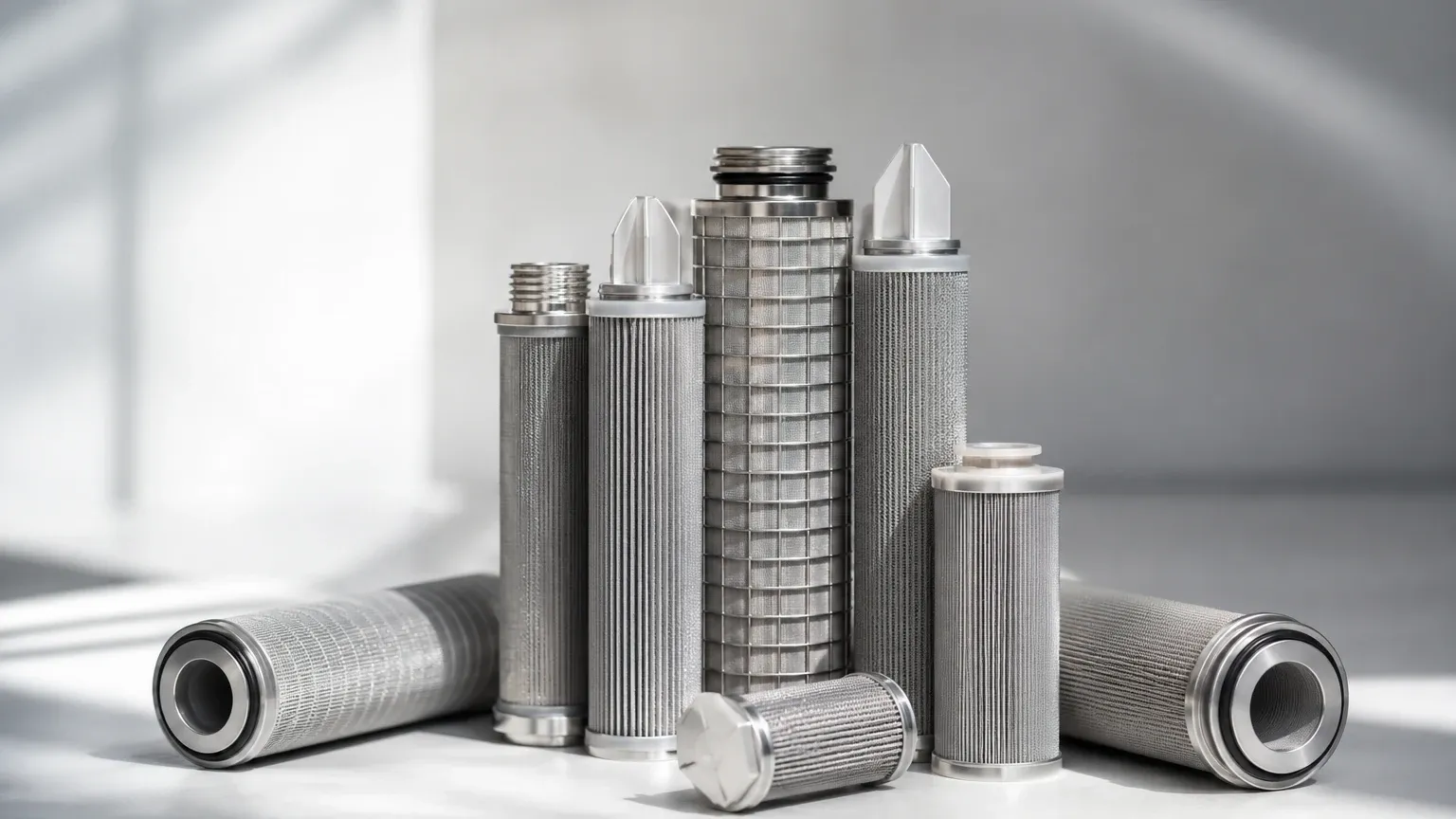
While Graver filter cartridges are excellent for many high-purity applications, there are industrial environments where polymeric materials are insufficient. This is where stainless steel filtration solutions, such as those manufactured by Kaifil, provide a critical alternative.
* Temperature Extremes: Stainless steel cartridges can operate in environments exceeding 300°C, where polymers would melt or degrade.
* Mechanical Strength: In high-viscosity applications or systems prone to pressure spikes, the rigid structure of a stainless steel mesh or sintered metal filter prevents media deformation.
* Cleanability: Unlike disposable polymer cartridges, stainless steel filters can often be cleaned (via backwashing, ultrasonic cleaning, or chemical baths) and reused, which can lower the total cost of ownership in specific high-volume industrial processes.
* Chemical Resistance: For highly aggressive solvents that would swell or dissolve PES or PP, 304 or 316L stainless steel offers superior resistance.
For many facilities, a hybrid approach is used: stainless steel filters for harsh pre-filtration or high-temperature stages, followed by Graver-style membrane cartridges for final high-purity polishing.
Maintenance, Cleaning, and Replacement Protocols
The lifespan of a filter cartridge is usually determined by the terminal differential pressure. Once the ΔP reaches a predetermined setpoint (often 2.0 to 2.5 bar for many industrial systems), the cartridge is considered fouled and must be replaced.
In critical processes, waiting for a drop in flow rate is not an acceptable maintenance strategy, as it can lead to "breakthrough," where contaminants are forced through the media. Instead, automated monitoring of differential pressure is the industry standard. For disposable cartridges, proper disposal protocols must be followed, especially if the filtered material is hazardous. For cleanable metal cartridges, the cleaning cycle must be validated to ensure that the original flow characteristics are restored without damaging the precision mesh or sintered structure.
Selection Guide: Choosing the Right Filtration Solution
To select the appropriate filtration component, purchasing teams and engineers should confirm the following data points before procurement:
1. Fluid Characteristics: Viscosity, density, and chemical composition.
2. Contaminant Profile: Particle size distribution and concentration (PPM).
3. Target Effluent Quality: Required micron rating and efficiency (Absolute vs. Nominal).
4. Operating Conditions: Normal and maximum temperature, operating pressure, and allowable pressure drop.
5. Regulatory Requirements: FDA, USP, or industry-specific certifications.
6. Housing Compatibility: Ensure the end-cap configuration (e.g., Code 7, 222, 226, or DOE) matches the existing filter housing.
By carefully evaluating these factors, organizations can ensure they are using the most efficient and cost-effective filtration technology. Whether the application calls for the high-purity capabilities of Graver filter cartridges or the rugged durability of custom stainless steel elements, the goal remains the same: achieving consistent, reliable separation performance in a demanding industrial environment.
