


Guardian Pool Filter Cartridges
In the realm of commercial and industrial water management, maintaining water clarity and hygiene is a critical operational requirement. Whether managing a large-scale aquatic facility, a resort water system, or an industrial cooling loop that utilizes similar filtration architectures, the choice of filtration media directly impacts both water quality and system longevity. Guardian pool filter cartridges have become a recognized standard in these environments, offering a balance of high-surface-area filtration and ease of maintenance. For engineers and facility managers, understanding the technical specifications, material limitations, and performance variables of these cartridges is essential for optimizing filtration efficiency and controlling total cost of ownership.
Industrial filtration often requires a rigorous evaluation of media types. While many systems rely on traditional sand or DE (diatomaceous earth) filters, pleated Filter Cartridges provide a distinct advantage in terms of micron efficiency and physical footprint. This guide examines the engineering principles behind these components and provides technical insights into their selection and application.
Understanding the Engineering Behind Guardian Pool Filter Cartridges
The primary function of a pleated filter cartridge is to provide a mechanical barrier against suspended solids. Guardian pool filter cartridges utilize a pleated design to maximize the available surface area within a compact cylindrical volume. In fluid dynamics, increasing the surface area reduces the "flux" or the velocity of the water passing through the media. Lower flux rates allow for more effective particle entrapment and reduce the pressure drop across the filter, which in turn reduces the strain on circulation pumps.
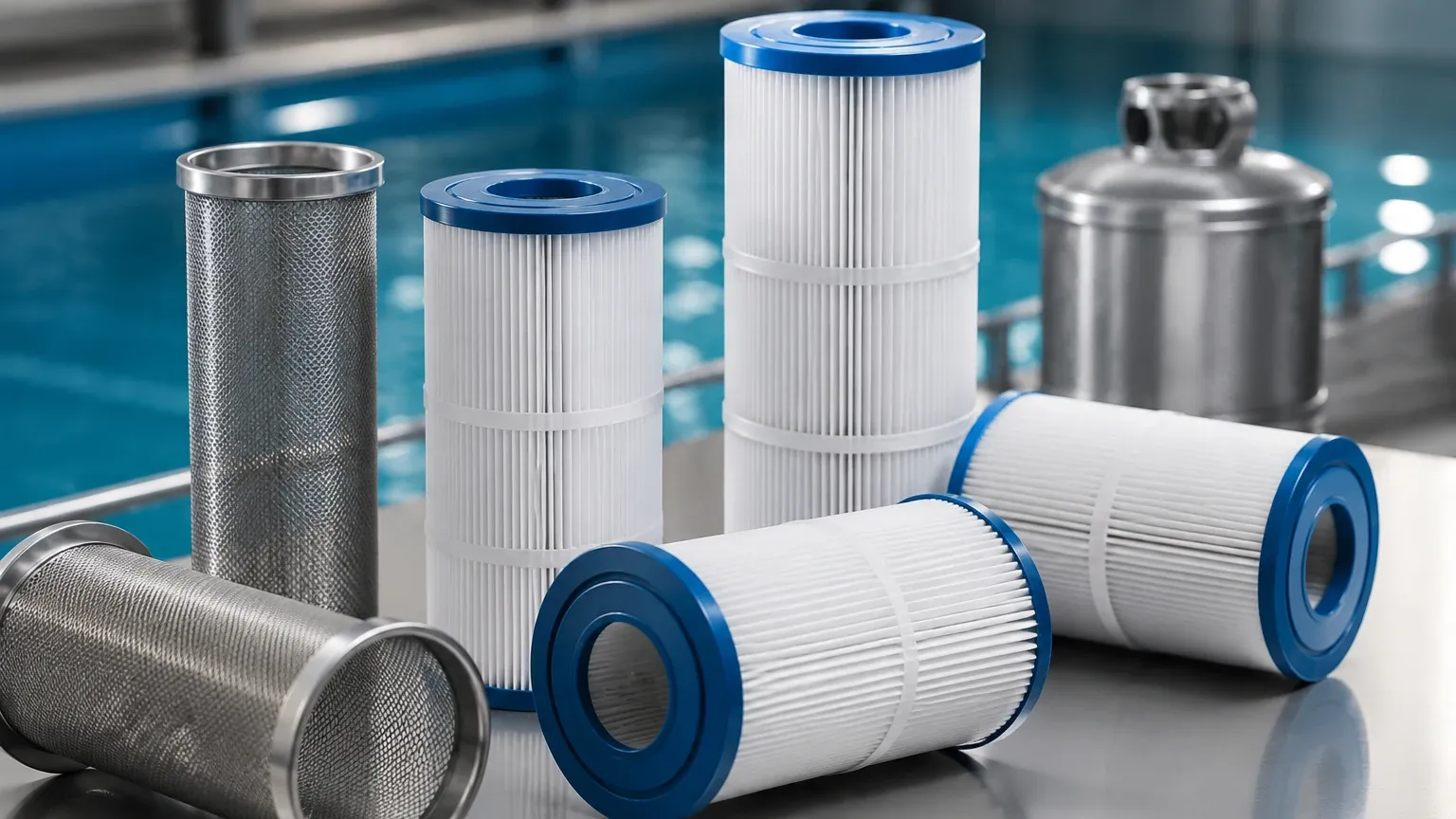
From a B2B perspective, the engineering of these cartridges focuses on three primary components: the filtration media, the support core, and the end caps. The media is typically a non-woven polyester fabric, engineered with specific pore sizes to capture debris ranging from large organic matter to microscopic particles. The pleat density—the number of pleats per inch—is a critical metric. A higher pleat count generally indicates a higher filtration capacity, provided the pleats are spaced correctly to allow for uniform water flow and effective cleaning.
Key Performance Indicators in Pool Filtration
When evaluating guardian pool filter cartridges for commercial use, engineers must look beyond basic dimensions and focus on specific performance indicators:
Micron Rating and Filtration Efficiency
Most high-quality pool cartridges are designed to filter particles down to the 10 to 20-micron range. For context, the human eye can typically see particles down to 40 microns. In commercial applications where water clarity is a safety and aesthetic requirement, maintaining a consistent micron rating is vital. It is important to distinguish between nominal and absolute filtration; most fabric-based pool cartridges provide nominal filtration, meaning they capture a high percentage of particles at their rated size.
Total Filtration Area
This is measured in square feet. A standard commercial filter tank may house multiple cartridges, each providing 100 to 200 square feet of media. Engineers must ensure that the total filtration area is sufficient for the system's flow rate (measured in Gallons Per Minute, or GPM). Exceeding the recommended GPM per square foot can lead to "media migration" or structural failure of the cartridge.
Clean vs. Dirty Pressure Drop
The differential pressure (ΔP) across the filter is the most reliable indicator of performance. A clean cartridge should exhibit a minimal pressure drop. As the media loads with contaminants, the ΔP increases. In professional settings, monitoring these levels helps in scheduling predictive maintenance rather than reactive repairs.
Material Composition and Structural Integrity
The durability of guardian pool filter cartridges in demanding environments depends heavily on their material construction. In industrial or high-use commercial pools, the water chemistry can be aggressive, involving high concentrations of chlorine, bromine, or pH adjusters.
1. Polyester Media: The non-woven fabric must be resistant to chemical degradation and fiber shedding. High-quality cartridges often use Reemay® or similar spunbound polyester, which maintains its pore structure even after multiple cleaning cycles.
2. Reinforced Center Cores: The core is the backbone of the cartridge. Under high-pressure conditions, a weak core can collapse, leading to a total bypass of the filtration system. Industrial-grade cores are typically made of extruded PVC or ABS with high perforation patterns to ensure unobstructed flow.
3. Antimicrobial Treatments: Some B2B-grade cartridges incorporate antimicrobial technology into the fabric fibers. This inhibits the growth of mold and bacteria on the filter media itself, which can otherwise lead to "bio-fouling" and premature clogging.
4. End Cap Integrity: The end caps provide the seal between the cartridge and the filter housing. They must be made of a durable, high-impact material (often polyurethane or plastisol) that resists cracking and maintains a tight seal under thermal expansion.
Sizing and Compatibility Requirements for Commercial Systems
One of the most common challenges for purchasing teams is ensuring compatibility when replacing guardian pool filter cartridges. Unlike some industrial Filter Cartridges that follow rigid ISO standards, pool cartridges come in a vast array of proprietary sizes. To ensure a proper fit, three measurements are mandatory:
* Outer Diameter (OD): Measured across the top or bottom cap.
* Overall Length: Measured from end cap to end cap. This does not include any handles or specialized fittings.
* Hole Diameter (ID): The internal diameter of the center opening. If the top and bottom holes differ, both must be recorded.
Furthermore, the configuration of the end caps—whether they are open, closed, or feature a threaded fitting (such as an MPT or SAE thread)—is critical. Using an incorrectly sized cartridge, even by a fraction of an inch, can allow "bypass," where unfiltered water escapes around the edges of the filter, compromising the entire system's water quality.
Maintenance Protocols and Lifecycle Management
For B2B operations, the goal is to maximize the service life of the filtration media while maintaining water standards. Guardian pool filter cartridges are designed to be cleaned and reused, but their lifespan is finite.
Cleaning Cycles
The standard protocol for cleaning involves removing the cartridges when the pressure gauge indicates a rise of 8 to 10 PSI over the initial "clean" pressure. Cleaning should be performed with a specialized filter cleaner or a degreasing solution to remove body oils, lotions, and organic films. Acid washing should only be used as a last resort to remove mineral scale, as frequent acid exposure can weaken the polyester fibers.
Replacement Indicators
A cartridge should be replaced if any of the following are observed:
* The fabric appears frayed or "fuzzy" (fiber migration).
* The pleats are permanently compressed or collapsed.
* The end caps show signs of cracking or brittleness.
* The baseline pressure (after cleaning) remains significantly higher than the original clean pressure.
In a commercial setting, cartridges typically last 12 to 24 months, depending on the bather load and water chemistry management. Keeping a detailed log of pressure readings and cleaning dates is a hallmark of professional facility management.
Comparing Fabric Cartridges with Industrial Stainless Steel Alternatives
While guardian pool filter cartridges are the standard for recreational water, certain industrial applications require more robust solutions. In environments involving high temperatures (exceeding 140°F), high pressures, or highly corrosive chemicals, fabric-based cartridges may fail prematurely.
This is where the expertise of manufacturers like Kaifil becomes relevant. For specialized industrial water treatment or process filtration, stainless steel Filter Cartridges offer a permanent, cleanable alternative. Unlike polyester, stainless steel wire mesh can withstand extreme mechanical stress and can be ultrasonically cleaned to restore original flow characteristics.
For engineers managing complex systems, the choice between a disposable/semi-disposable fabric cartridge and a permanent metal filter involves a total cost of ownership (TCO) analysis. While the initial investment in stainless steel is higher, the elimination of recurring replacement costs and the reduction in waste can make it the more sustainable and cost-effective choice for long-term industrial operations.
Conclusion: Optimizing Your Filtration Strategy
Selecting the right guardian pool filter cartridges requires a technical understanding of flow rates, micron requirements, and material compatibility. By adhering to strict maintenance schedules and ensuring precise sizing, facility managers can maintain superior water quality while extending the life of their equipment.
For those operating in more demanding industrial sectors, it is worth consulting with filtration specialists to determine if standard fabric cartridges or customized stainless steel solutions are better suited for the specific application. Regardless of the material chosen, the goal remains the same: achieving reliable, efficient, and consistent filtration performance to protect both the process and the end-user.
