


Hayward Pool Filter Cartridges
In the realm of commercial water management and large-scale aquatic facilities, the efficiency of filtration systems is paramount to maintaining water clarity, safety, and equipment longevity. Hayward pool filter cartridges represent a significant segment of the market, often serving as the primary filtration component in high-traffic commercial pools, spas, and industrial water features. Understanding the technical specifications, material composition, and performance metrics of these components is essential for engineers and facility managers who must balance operational costs with stringent water quality standards.
Industrial-grade filtration requires a deep dive into the engineering principles that govern sediment removal and flow dynamics. While often associated with residential applications, the design principles behind hayward pool filter cartridges are rooted in fundamental fluid mechanics and material science. This guide explores the technical nuances of these filtration elements, providing a professional perspective on selection, maintenance, and the transition toward more durable industrial filtration solutions.
Technical Design and Material Composition
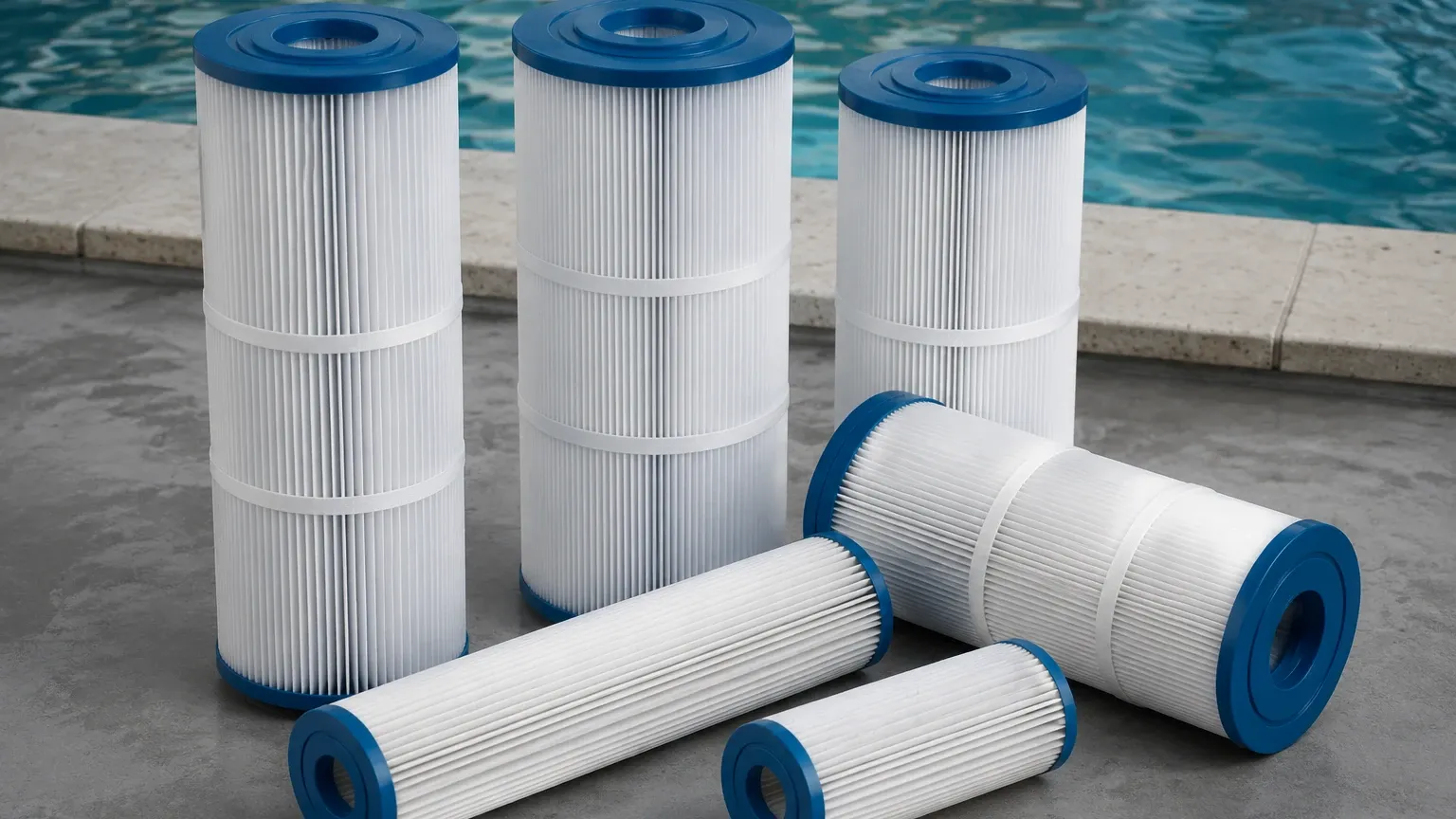
The performance of a filter cartridge is fundamentally determined by its physical architecture and the materials used in its construction. Most standard pool filter cartridges utilize a pleated non-woven polyester media. The pleating strategy is not arbitrary; it is a calculated engineering choice to maximize the effective surface area within a constrained cylindrical volume.
Media Density and Pore Size
For hayward pool filter cartridges, the media is typically a high-quality spun-bond polyester. This material is selected for its chemical resistance to chlorine and other sanitizers, as well as its structural stability under hydraulic pressure. The pore size—often referred to in microns—determines the smallest particle the filter can reliably capture. In commercial pool environments, these cartridges are generally rated to capture particles between 10 and 20 microns.
From an engineering standpoint, the "nominal" vs. "absolute" micron rating is a critical distinction. Most pool cartridges provide nominal filtration, meaning they capture a high percentage of particles at the rated size, but not 100%. For applications requiring higher precision, such as pharmaceutical water pre-treatment or specialized chemical processing, engineers often look toward more advanced Filter Cartridges that offer absolute ratings or specialized metal mesh constructions.
Structural Reinforcement
A cartridge is only as strong as its core and end caps. Industrial-grade Hayward-compatible filters feature a reinforced center core, often made of high-impact ABS or PVC, designed to prevent collapse under high differential pressure. The end caps are typically thermally bonded to the pleated media to ensure that no bypass occurs. Bypass is a common failure point where unfiltered water escapes around the edges of the media, significantly compromising the entire system's efficiency.
Performance Metrics and Hydraulic Efficiency
When evaluating hayward pool filter cartridges for commercial use, engineers must prioritize hydraulic efficiency. The goal is to achieve maximum particulate removal with minimum resistance to flow.
Pressure Differential (Delta P)
The pressure differential is the difference in pressure between the inlet and outlet of the filter housing. A clean cartridge should ideally exhibit a very low Delta P. As the media traps debris, the effective flow area decreases, causing the pressure to rise. In commercial settings, a rise of 8 to 10 PSI over the clean starting pressure is the standard indicator that the cartridge requires cleaning or replacement.
High Delta P does more than just reduce flow; it places additional strain on the circulation pumps, increasing energy consumption and accelerating wear on mechanical seals. By selecting cartridges with optimized pleat spacing—which prevents "pleat pinching"—operators can maintain lower operating pressures for longer periods.
Flow Rates and Turnover
Every filtration system is designed for a specific flow rate, measured in gallons per minute (GPM). Exceeding the manufacturer’s recommended flow rate for a specific cartridge size can lead to "channeling," where the force of the water pushes contaminants through the media rather than trapping them. For large-scale facilities, manifolding multiple cartridges together is the standard approach to handle high GPM requirements while maintaining low face velocity across the media.
Maintenance Protocols and Longevity
The service life of hayward pool filter cartridges is highly dependent on the bather load and the chemical balance of the water. However, standardized maintenance protocols can significantly extend the interval between replacements.
Cleaning Procedures
Unlike sand filters that require backwashing, cartridge filters must be manually cleaned. This involves removing the element and rinsing it with a high-pressure (but not damaging) water stream. In industrial or high-load commercial applications, specialized cleaning agents are used to break down oils, scale, and organic biofilms that water alone cannot remove.
1. Degreasing: Essential for removing body oils and suntan lotions that clog the polyester fibers.
2. Acid Bathing: Used only when mineral scale (calcium) is present. It is crucial to degrease before acid bathing, as acid can set oils into the fabric, permanently blinding the filter.
Indicators for Replacement
Even with meticulous cleaning, all synthetic Filter Cartridges eventually reach a point of diminishing returns. The polyester fibers lose their loft and become compacted, leading to a permanent increase in the baseline pressure. Other signs of required replacement include:
* Visible fraying or tearing of the media.
* Cracking or degradation of the end caps.
* A rapid return to high pressure shortly after a thorough cleaning.
In heavy-duty industrial environments, the frequent replacement of synthetic cartridges often prompts a shift toward stainless steel alternatives, which can withstand aggressive cleaning cycles and higher temperatures without structural failure.
Comparing Synthetic and Metal Mesh Filtration
While hayward pool filter cartridges are the standard for traditional pool environments, it is important to understand where they sit in the broader spectrum of filtration technology. For engineers managing complex industrial systems that may involve pool-like water chemistry but require higher durability, a comparison between synthetic and metal mesh is necessary.
Temperature and Chemical Resistance
Polyester cartridges have a limited temperature threshold, usually around 100°F to 120°F. In industrial heat recovery systems or specialized hot springs, this can be a limiting factor. Stainless steel filter cartridges, on the other hand, can operate in extreme temperatures and are resistant to a wider range of pH levels and aggressive chemicals that might degrade synthetic polymers over time.
Sustainability and Total Cost of Ownership (TCO)
The TCO of a filtration system includes the initial purchase price, labor costs for cleaning, energy costs related to pressure drop, and the cost of disposal. While synthetic cartridges have a lower upfront cost, their frequent replacement cycle creates a recurring expense and waste stream. In B2B environments focused on sustainability and long-term ROI, high-performance metal filters are often preferred for their multi-year service life and cleanability.
Selection Criteria for Procurement Teams
When sourcing hayward pool filter cartridges or equivalent components for large-scale projects, procurement teams should confirm several key factors to ensure system compatibility and performance.
Dimensional Accuracy
Even slight variations in the outer diameter (OD), inner diameter (ID), or length can lead to improper seating within the filter housing. A cartridge that is too short will allow water to bypass the media entirely. Procurement should always verify the exact dimensions against the original equipment manufacturer (OEM) specifications.
Square Footage Requirements
Filter cartridges are sold based on their total surface area (e.g., 100 sq. ft., 150 sq. ft.). It is a common mistake to assume that more surface area is always better. While more area generally allows for longer cycles, it must be balanced against the pump's ability to provide sufficient flow. If the pleats are too tightly packed to achieve a higher square footage rating, the inner parts of the pleats may become ineffective, leading to premature clogging.
Application-Specific Customization
For unique industrial applications that utilize Hayward housings but require non-standard filtration levels, customization is often necessary. This might involve using different media weights or incorporating specialized support cores. Working with a manufacturer that understands the nuances of Filter Cartridges allows for the development of solutions tailored to specific particulate types, whether they are organic solids, mineral precipitates, or industrial byproducts.
Conclusion: Optimizing Filtration Performance
Hayward pool filter cartridges remain a cornerstone of modern water treatment due to their balance of efficiency and ease of use. However, for the technical professional, they are not a "set and forget" component. Successful operation requires an understanding of the relationship between media integrity, hydraulic pressure, and maintenance discipline.
As industrial demands evolve, the transition from standard synthetic media to more robust filtration technologies becomes a matter of operational efficiency. Whether maintaining a commercial aquatic center or managing an industrial process water loop, selecting the right filtration element—and understanding the engineering behind it—is the key to achieving consistent water quality and optimized total cost of ownership. By focusing on high-quality construction and adhering to rigorous technical standards, facility managers can ensure their systems remain reliable under the most demanding conditions.
