


How Long Do Cartridge Filters Last
In industrial filtration, the service life of a filter is a critical variable that directly impacts operational uptime, maintenance costs, and process efficiency. For engineers and procurement teams, the question of "how long do cartridge filters last" does not have a single, universal answer. Instead, the lifespan is determined by a complex interplay between the filter’s material properties, the nature of the fluid being processed, and the specific mechanical stresses of the operating environment.
Understanding the factors that govern the longevity of Filter Cartridges is essential for optimizing filtration systems. While disposable polymer filters may last only days or weeks in high-load applications, high-performance stainless steel cartridges are designed for durability and can often be cleaned and reused for several years. This guide examines the technical parameters that influence filter life and provides actionable insights for predicting and extending the service cycle of industrial filtration components.
Factors Influencing the Lifespan of Industrial Filter Cartridges
The primary driver of filter failure is "blinding" or "plugging," where the accumulation of contaminants restricts flow to the point where the system can no longer operate efficiently. Several variables dictate how quickly this occurs.
Contaminant Type and Concentration
The nature of the solids being removed is perhaps the most significant factor. Hard, granular particles (such as sand or metal shavings) tend to form a porous "filter cake" on the surface of the media, which can actually assist in filtration but eventually increases resistance. Conversely, soft, gelatinous, or deformable particles (such as oils, fats, or organic slimes) can smear across the filter surface or penetrate deep into the media pores, causing a rapid increase in differential pressure.
Fluid Chemistry and Temperature
The chemical compatibility of the filter media with the process fluid is a fundamental engineering consideration. If a filter material is not chemically resistant to the fluid—such as a polymer filter exposed to aggressive solvents or high-pH cleaners—it may undergo structural degradation, softening, or swelling long before it becomes clogged with debris. High temperatures also accelerate chemical reactions and can weaken the structural integrity of certain materials, leading to premature failure or bypass.
Flow Rate and Flux
Flux, defined as the flow rate per unit of filter surface area, significantly impacts how long do cartridge filters last. Operating a filter at a high flux forces contaminants deep into the media, leading to faster clogging. By contrast, a system designed with a larger total surface area (lower flux) allows for a slower accumulation of particles, significantly extending the time between change-outs or cleaning cycles.
Material Selection and Its Impact on Longevity
The choice of material is the first line of defense against premature filter failure. In industrial settings, the transition from disposable media to permanent metal media is often driven by the need for a longer, more predictable service life.
Stainless Steel vs. Synthetic Media
Synthetic filters (such as polypropylene or polyester) are typically considered consumables. Their lifespan is limited by their inability to withstand high differential pressures and their susceptibility to thermal and chemical breakdown. Once they are clogged, they must be discarded.
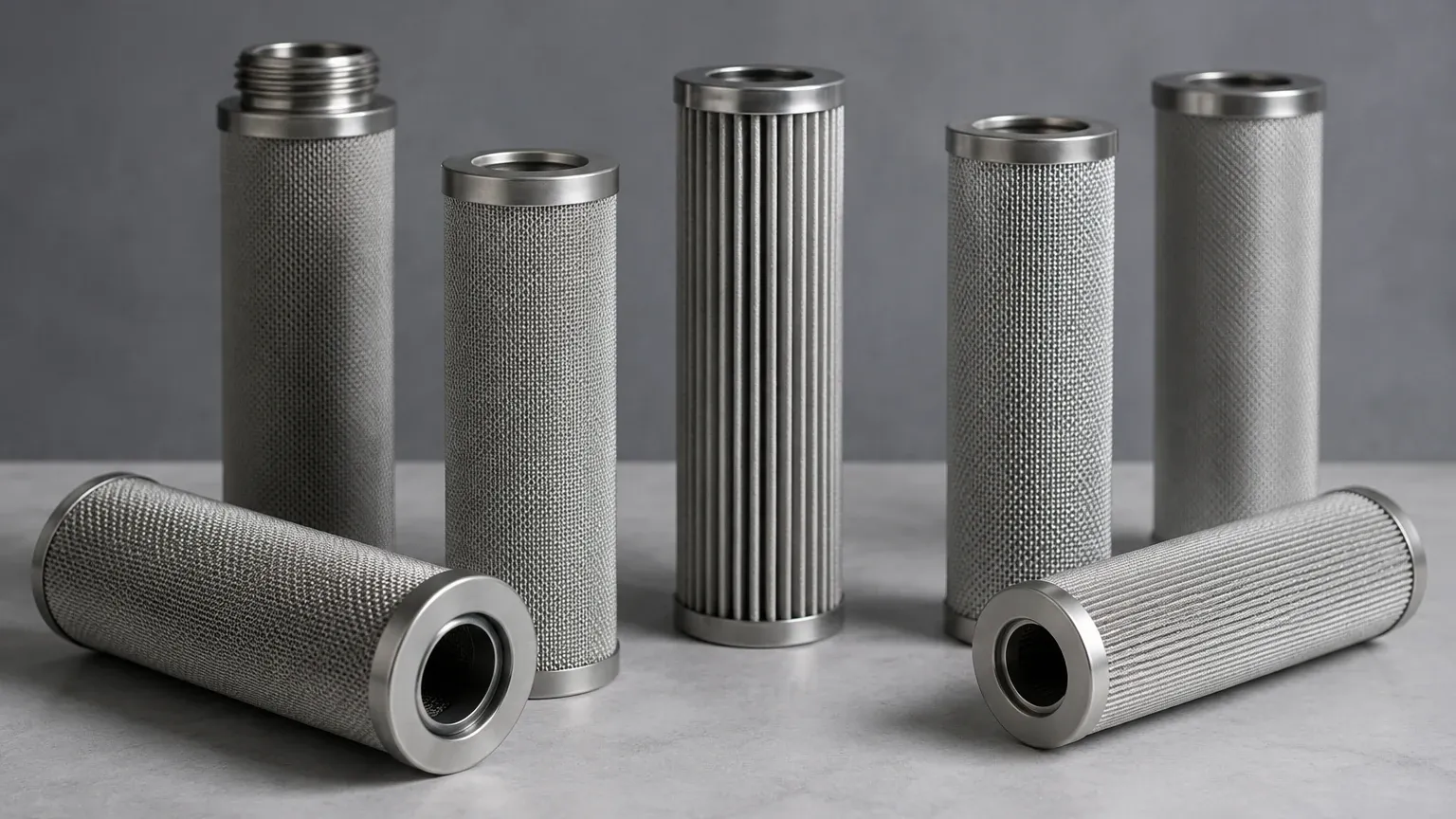
Stainless steel Filter Cartridges, manufactured from materials like 304 or 316L wire mesh or sintered metal, offer a different value proposition. These components are engineered to withstand extreme temperatures (up to 500°C or higher) and high-pressure differentials that would collapse a standard plastic filter. Because they are mechanically robust, they can be cleaned and returned to service multiple times, extending their functional life from weeks to years.
Structural Integrity and Fatigue
In applications involving frequent pressure pulses or hydraulic shocks, the mechanical design of the cartridge becomes paramount. A filter that lacks sufficient internal support or has weak longitudinal seams may fail due to structural fatigue before the media itself is exhausted. High-quality industrial cartridges utilize reinforced cores and precision-welded end caps to ensure the filter maintains its shape and seal throughout its entire service life.
Monitoring Performance: When to Replace Filter Cartridges
Determining exactly when a filter has reached the end of its life is a matter of monitoring specific performance indicators. Relying on a fixed calendar schedule is often inefficient, as it may lead to either premature replacement or unexpected system downtime.
Differential Pressure (ΔP)
The most reliable method for tracking filter life is measuring the differential pressure—the difference in pressure between the inlet and the outlet of the filter housing. As the filter captures more contaminants, the resistance to flow increases, and the ΔP rises.
Engineers typically define a "terminal pressure drop" for their system. For many industrial liquid applications, a clean filter might start with a ΔP of 2–5 psi, while the terminal ΔP (indicating a need for change-out) might be set at 15–25 psi. Exceeding the manufacturer’s recommended terminal ΔP can result in "media migration," where particles are forced through the filter, or even a catastrophic structural failure of the cartridge.
Flow Rate Degradation
In systems where the pump is operating at a constant pressure, a clogged filter will manifest as a gradual decrease in the downstream flow rate. When the flow rate drops below the minimum threshold required for the process (e.g., cooling water for a reactor or feed water for a boiler), the filter must be serviced.
Effluent Quality
In some precision applications, the lifespan of a filter is determined by the quality of the filtrate. If a filter begins to "unload" trapped particles due to high pressure or if the media begins to degrade, the presence of contaminants in the downstream fluid will signal the end of the filter’s effective life, regardless of the pressure drop.
The Role of Cleaning and Maintenance in Service Life
For cleanable Filter Cartridges, the lifespan is not just a function of the first use cycle, but of how effectively the media can be regenerated. Proper cleaning protocols can restore a metal filter to nearly its original "clean" pressure drop.
Backwashing and Backpulsing
Automated systems often use backwashing (reversing the flow of fluid) or backpulsing (a short, high-pressure burst of air or fluid) to dislodge surface contaminants. This is highly effective for surface-loading filters like plain square weave wire mesh. If performed correctly, these methods can extend the interval between deep-cleaning cycles significantly.
Ultrasonic and Chemical Cleaning
When contaminants are lodged deep within the pores of a sintered or multi-layered mesh filter, mechanical backwashing may not be sufficient. In these cases, ultrasonic cleaning or chemical baths (using acids, surfactants, or solvents) are used to dissolve or dislodge stubborn debris. The longevity of a stainless steel cartridge is often limited only by the number of times it can undergo these aggressive cleaning processes before the wire mesh or sintered structure begins to thin or wear.
Engineering Considerations for Optimizing Filter Life
To maximize the time between maintenance events, engineers should consider the following design strategies during the system specification phase:
1. Staged Filtration (Pre-filtration): Using a coarse, inexpensive pre-filter upstream of a high-precision cartridge can capture the bulk of the contaminant load. This protects the more expensive primary Filter Cartridges from rapid clogging and ensures they only handle the fine particles they were designed to remove.
2. Increased Surface Area: Doubling the surface area of the filtration media does not just double the lifespan; it often increases it exponentially. Lower flux rates result in a more porous, less compressed filter cake, which allows for a much higher total dirt-holding capacity before the terminal pressure drop is reached.
3. Correct Micron Rating: Selecting a filter with a micron rating that is unnecessarily fine for the application will lead to rapid plugging. Engineers should select the coarsest micron rating that still meets the downstream purity requirements to ensure the longest possible service life.
4. Bypass Protection: Ensure that the filter housing and cartridge seals (O-rings or gaskets) are properly maintained. If fluid bypasses the filter because of a worn seal, the cartridge may appear to "last" a long time, but the filtration system is failing to protect downstream equipment.
Total Cost of Ownership (TCO) and Replacement Cycles
When evaluating how long do cartridge filters last, it is important to look beyond the initial purchase price. A disposable filter with a low unit cost may seem economical, but if it requires replacement every three days, the annual cost—including labor, disposal fees, and lost production time—can be staggering.
In contrast, a high-quality stainless steel filter cartridge represents a higher initial investment but offers a significantly lower Total Cost of Ownership (TCO). Because these filters can last for years with proper maintenance, the cost per gallon of filtered fluid is drastically reduced. Furthermore, the predictability of a durable metal filter allows for better maintenance planning and reduces the risk of emergency shutdowns caused by the failure of fragile disposable media.
Conclusion
The lifespan of industrial filter cartridges is a variable that can be managed through informed material selection, proper system sizing, and diligent monitoring of operating parameters. While the question of "how long do cartridge filters last" depends heavily on the specific application, choosing robust materials like stainless steel and implementing staged filtration are proven methods for extending service life. For technical teams, the goal is to balance filtration efficiency with durability, ensuring that the chosen solution provides reliable performance over the long term while minimizing the frequency of interventions.
