


What Is Code 7 Filter Cartridge
In the landscape of industrial filtration, standardization is the foundation of system reliability and process safety. Among the various configurations used to secure filtration media within a housing, the Code 7 configuration stands as one of the most widely adopted standards for critical applications. For engineers and procurement professionals, understanding what is code 7 filter cartridge involves more than just identifying a part number; it requires a technical grasp of the mechanical interface, sealing mechanisms, and the operational advantages this specific design provides in high-stakes environments like pharmaceutical manufacturing, food and beverage processing, and chemical refining.
A Code 7 filter cartridge is defined by its specific end-cap geometry, featuring a double O-ring (226 style) base with a locking bayonet and a closed-end top, typically finished with a "spear" or "fin" for alignment. This design is engineered to eliminate the risk of fluid bypass and ensure the cartridge remains seated even under significant differential pressure or hydraulic shock.
The Anatomy of a Code 7 Configuration
To answer the question of what is code 7 filter cartridge from an engineering perspective, one must look at the two distinct ends of the cartridge. The naming convention refers specifically to the interface between the filter element and the filter housing tube sheet.
The 226 Base with Bayonet Tabs
The base of a Code 7 cartridge utilizes the "226" O-ring design. This refers to two O-rings with a specific diameter (approximately 2.26 inches or 57mm) seated in parallel grooves. This double-seal approach provides redundancy; if the primary seal is compromised, the secondary seal prevents contaminated fluid from bypassing the filter media.
Beyond the O-rings, the Code 7 base features two locking tabs, often called bayonets. These tabs are designed to fit into a corresponding plate in the filter housing. Once inserted, the cartridge is rotated (usually a quarter-turn), locking it firmly into place. This mechanical lock is critical because it prevents the cartridge from being unseated by backpressure or high flow rates, a common failure point in simpler plug-in designs.
The Spear (Fin) Top
The opposite end of a Code 7 cartridge is typically a closed end-cap with a pointed extension known as a "spear" or "fin." This component serves a dual purpose. First, it provides a handle for easier installation and removal. Second, and more importantly, it fits into a guide plate at the top of the filter housing. This ensures that the cartridge remains perfectly vertical and centered, preventing lateral movement that could stress the base seal during high-flow operations.
Why Engineering Teams Specify Code 7
When designing a filtration system, the choice of cartridge interface is dictated by the required level of security and the nature of the process fluid. Code 7 is frequently specified for several technical reasons:
1. Bypass Prevention: In sterile or high-purity applications, even a 0.01% bypass can lead to batch contamination. The combination of the double O-ring and the locking bayonet creates a high-integrity seal that is far superior to Double Open End (DOE) or single O-ring designs.
2. Pressure Stability: Industrial processes often involve pressure surges. Because Code 7 Filter Cartridges are mechanically locked into the housing, they cannot "float" or lift off the seal seat when differential pressure increases.
3. Ease of Validation: For regulated industries like pharmaceuticals (governed by FDA or EMA), using a standardized, secure interface like Code 7 simplifies the validation of the filtration process. It provides a repeatable, verifiable seal that is less prone to human error during installation.
4. Thermal Resistance: When paired with stainless steel construction, the Code 7 interface maintains its structural integrity during Steam-in-Place (SIP) or high-temperature sterilization cycles, where thermal expansion might cause other seal types to leak.
Comparing Code 7 with Other Common Standards
To fully understand what is code 7 filter cartridge, it is helpful to compare it against other industry-standard end-cap configurations. Selecting the wrong code can lead to housing incompatibility or catastrophic process failure.
| Feature | Code 7 | Code 3 | Code 8 | DOE (Double Open End) |
| :— | :— | :— | :— | :— |
| Base Seal | 226 Double O-ring | 222 Double O-ring | 222 Double O-ring | Flat Gasket |
| Locking Mechanism | Bayonet Tabs | None (Plug-in) | None (Plug-in) | Compression Nut/Spring |
| Top Configuration | Spear/Fin | Flat/Closed | Spear/Fin | Open |
| Security Level | Highest | Moderate | Moderate | Low |
| Common Use | Critical Sterile/High Pressure | General Industrial | Prefiltration | Water/Coarse Filtration |
The primary difference between Code 7 and Code 8 (which also uses a spear top) is the base diameter and the absence of locking tabs on the Code 8. A Code 7 cartridge will not fit into a housing designed for Code 3 or Code 8 because the 226 base is larger than the 222 base.
Material Selection for Code 7 Cartridges
While the "Code 7" designation refers to the geometry of the end caps, the material of the cartridge itself is determined by the application. While many standard filters are made of polypropylene or PES, demanding industrial environments often require stainless steel variants.
Stainless Steel Code 7 Filters
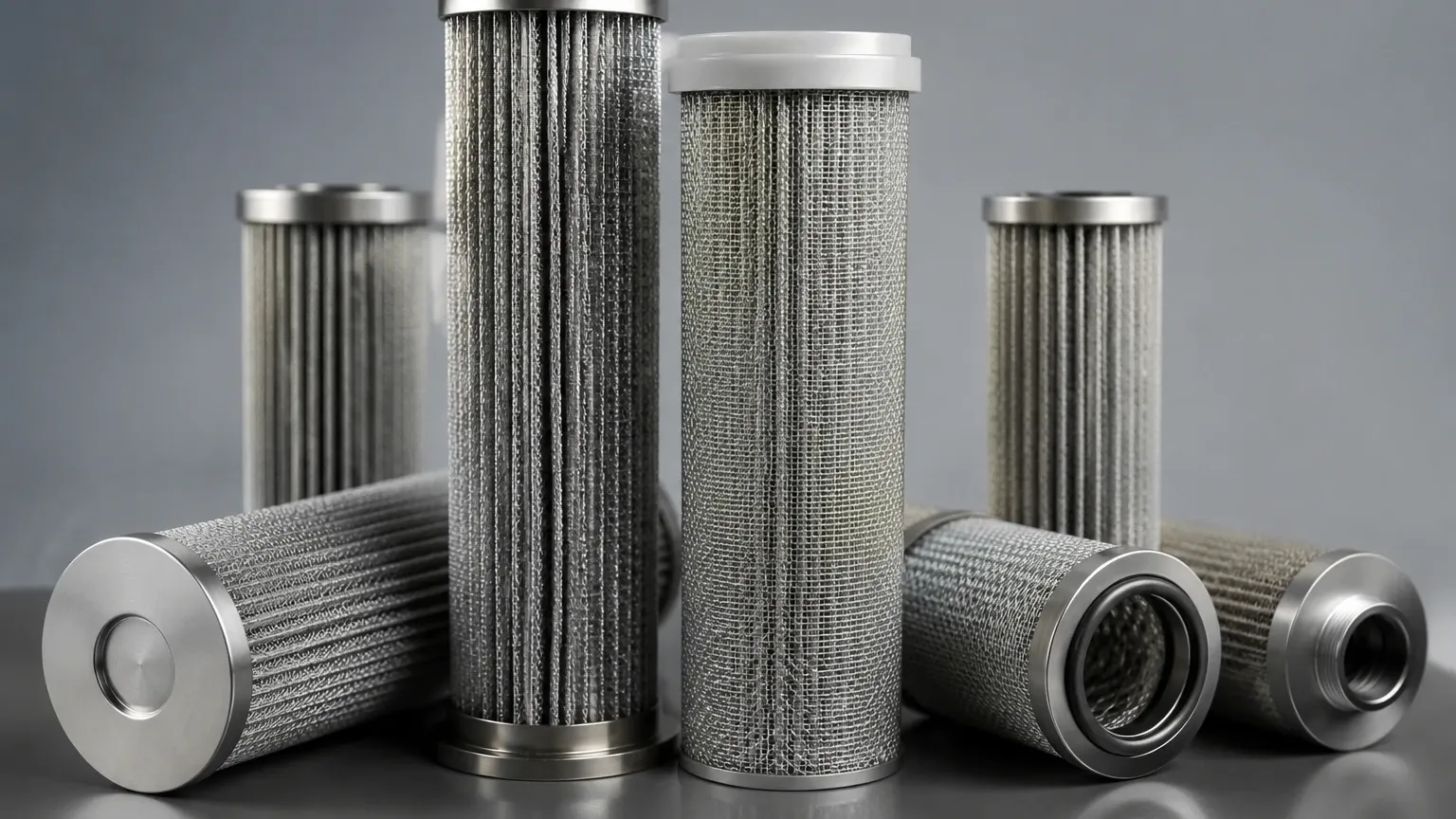
In chemical processing or high-temperature steam filtration, polymer-based cartridges may fail due to chemical degradation or thermal softening. Stainless steel Code 7 cartridges, manufactured by specialists like Kaifil, utilize pleated wire mesh or sintered metal fibers.
* Durability: Metal cartridges can withstand high differential pressures that would collapse a plastic filter.
* Cleanability: Unlike disposable plastic filters, stainless steel Code 7 elements can often be cleaned via backwashing or ultrasonic baths, offering a lower total cost of ownership in the long run.
* Chemical Compatibility: Stainless steel (304 or 316L) is resistant to a wide range of solvents, acids, and bases that would dissolve standard O-ring housings or filter media.
O-Ring Material Considerations
The "double O-ring" part of the Code 7 definition requires careful elastomer selection. Depending on the process fluid, engineers must choose between:
* EPDM: Excellent for steam and polar solvents.
* Silicone: Preferred for food and beverage due to low extractables.
* Viton (FKM): Ideal for oils, fuels, and aggressive chemicals.
* PTFE Encapsulated: Provides the chemical resistance of Teflon with the elasticity of a rubber core.
Critical Evaluation Criteria for Purchasing
When sourcing Filter Cartridges with a Code 7 interface, purchasing teams and engineers should confirm several technical parameters to ensure the product meets the operational requirements.
1. Housing Compatibility
Confirm that the filter housing is specifically designed for 226 bayonet-style cartridges. Some older housings may look similar but lack the internal locking plate required for the bayonets to engage. If the housing is designed for a 222 base (Code 3 or 8), a Code 7 cartridge will not seat.
2. Micron Rating and Efficiency
Code 7 is a mechanical standard, not a performance standard. You must still specify the required filtration accuracy (e.g., 0.22 micron for sterilization or 10 microns for pre-filtration) and whether the rating is absolute or nominal.
3. Differential Pressure Limits
While the Code 7 interface is secure, the internal media has a maximum differential pressure (ΔP) it can withstand before deformation. Engineers should check the collapse pressure rating, especially in applications involving viscous fluids or high-flow starts.
4. Manufacturing Quality
For critical applications, the integrity of the bond between the filter media and the Code 7 end caps is paramount. High-quality manufacturers use thermal bonding or specialized welding (for stainless steel) to ensure that the end caps do not separate from the pleat pack under stress.
Installation and Maintenance Best Practices
Proper installation is essential to realize the benefits of the Code 7 design. Even the highest-quality cartridge will fail if the O-rings are damaged during insertion.
* Lubrication: Always lubricate the O-rings with a process-compatible fluid (such as water or a food-grade lubricant) before installation. This prevents the O-rings from pinching or rolling as they enter the housing seat.
* The Quarter-Turn Lock: Ensure the cartridge is pushed firmly into the base and then rotated until it stops. You should feel a distinct mechanical engagement. If the cartridge can be pulled straight out without rotating it back, it is not locked.
* Alignment Check: Ensure the spear top is correctly aligned with the housing's guide plate before closing the housing lid. Misalignment can bend the spear or prevent the lid from sealing correctly.
* O-Ring Inspection: During routine maintenance, inspect the O-rings for cracks, compression set, or swelling. A compromised O-ring on a Code 7 cartridge defeats the purpose of the high-integrity design.
Conclusion: The Role of Code 7 in Modern Industry
Understanding what is code 7 filter cartridge allows technical teams to implement filtration solutions that prioritize safety and efficiency. By combining a redundant double O-ring seal with a robust mechanical locking mechanism, the Code 7 configuration addresses the primary risks of industrial filtration: bypass and cartridge displacement.
Whether you are filtering process water, clarifying chemicals, or ensuring the sterility of a pharmaceutical batch, the Code 7 interface provides the reliability required for modern manufacturing. For those operating in particularly harsh environments, opting for stainless steel Filter Cartridges with Code 7 end caps ensures that the filtration system can withstand the rigors of high temperatures and corrosive substances while maintaining a perfect seal. By focusing on these technical boundaries—interface geometry, material compatibility, and proper installation—engineers can optimize their filtration performance and protect their downstream equipment and product quality.
