


How to Use Keurig Water Filter Cartridges
Filtration is a fundamental requirement across both domestic and industrial applications, serving as the primary defense against contaminants that compromise product quality and equipment longevity. While the scale of operation differs significantly between a home coffee brewer and a chemical processing plant, the underlying principles of fluid dynamics and media efficiency remain constant. Understanding how to use Keurig water filter cartridges provides a practical entry point into the broader world of industrial Filter Cartridges, where precision, material compatibility, and maintenance cycles dictate operational success.
In this guide, we will detail the technical procedures for utilizing small-scale water filtration components and bridge the gap toward industrial-grade filtration solutions, focusing on engineering considerations that technical professionals must evaluate when selecting filtration systems.
The Role of Filtration in Fluid Management
Before addressing the specific steps of installation, it is essential to understand why filtration is necessary. In a Keurig system, the primary goal is the removal of chlorine, heavy metals, and sediment to ensure taste consistency and prevent scale buildup in the heating elements. In industrial environments, the stakes are higher. Contaminants can cause mechanical wear in hydraulic pumps, contaminate pharmaceutical batches, or lead to catastrophic failure in high-pressure systems.
Whether dealing with a charcoal-based consumer cartridge or a sintered stainless steel industrial filter, the objective is the same: achieving a specific micron rating to isolate unwanted particulates while maintaining an acceptable flow rate.
Step-by-Step Guide: How to Use Keurig Water Filter Cartridges
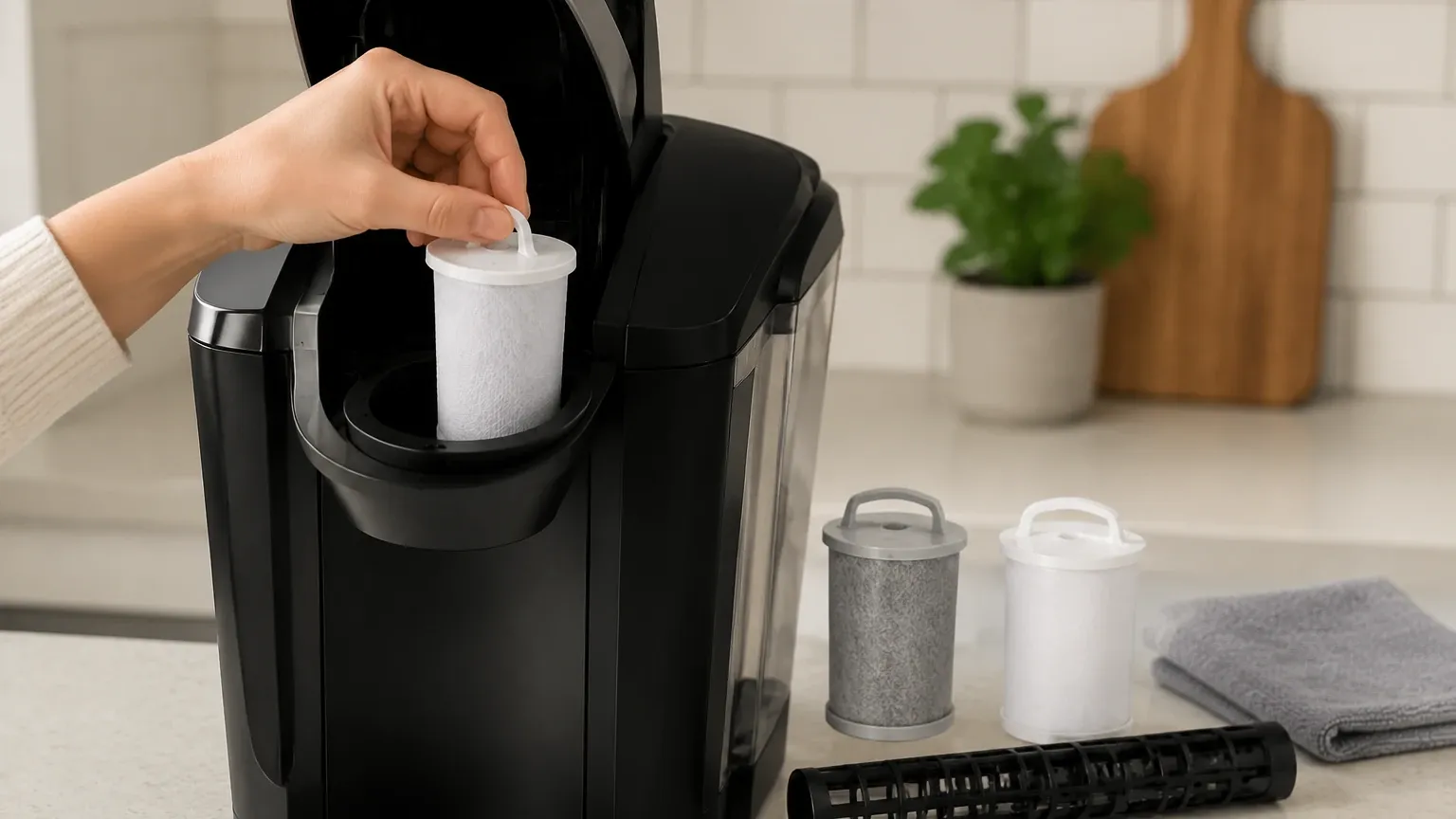
Using a water filter cartridge correctly ensures that the media—typically activated carbon—is properly activated and that the bypass of unfiltered water is minimized. For engineers looking at small-scale laboratory or office equipment, the following protocol is standard.
1. Pre-Installation Preparation (Soaking)
New cartridges often contain fine carbon dust generated during shipping and handling. To prevent this dust from entering the system and to ensure the media is fully saturated, the cartridge must be soaked in cold water for approximately 5 to 10 minutes. This process, known as wetting the media, ensures that the water flows through the entire volume of the cartridge rather than finding paths of least resistance (channeling).
2. Rinsing and Flushing
After soaking, the cartridge should be rinsed under a stream of cold tap water for 60 seconds. This step flushes out any remaining loose particles. In industrial filtration, this is analogous to a "flush-to-drain" cycle used when commissioning new Filter Cartridges to ensure the system meets cleanliness standards before going online.
3. Insertion into the Filter Holder
The cartridge is placed into the lower portion of the filter holder. It is vital to ensure the mesh side (the bottom) is seated correctly. For Keurig systems, the top piece of the handle snaps into place, securing the cartridge. In industrial housings, this alignment is critical; a misaligned cartridge can lead to "blow-by," where unfiltered fluid bypasses the media entirely due to a failed seal.
4. Setting the Replacement Reminder
Most Keurig filter handles feature a manual dial to track the replacement date. While simple, this represents the most basic form of a maintenance schedule. In industrial settings, this is replaced by differential pressure (DP) gauges and automated sensors that alert operators when a filter has reached its dirt-holding capacity.
Engineering Comparison: Consumer vs. Industrial Filter Cartridges
While the Keurig example illustrates the basic lifecycle of a filter, industrial applications require a different level of engineering rigor. The table below compares the typical specifications of consumer-grade cartridges with industrial-grade stainless steel solutions.
| Feature | Consumer Water Filter | Industrial Stainless Steel Filter |
| :— | :— | :— |
| Media Material | Activated Carbon / Ion Exchange | Stainless Steel Mesh / Sintered Metal |
| Housing Material | Food-grade Plastic (BPA-free) | 304 or 316L Stainless Steel |
| Pressure Rating | Atmospheric / Low Pressure | High Pressure (up to 3000+ PSI) |
| Temperature Limit | Ambient Water | Up to 800°F (427°C) |
| Cleaning | Disposable (Single Use) | Cleanable and Reusable (Ultrasonic/Backwash) |
| Chemical Resistance | Limited to Water | High (Acids, Alkalis, Solvents) |
Key Evaluation Criteria for Industrial Filtration
When transitioning from simple water filtration to complex industrial processes, engineers must confirm several technical parameters before selecting Filter Cartridges.
Micron Rating and Efficiency
The micron rating defines the size of particles the filter can trap. However, it is important to distinguish between "nominal" and "absolute" ratings. A nominal rating indicates the filter can trap a percentage of particles of a certain size, whereas an absolute rating (often achieved with precision wire mesh) guarantees the retention of all particles above that size. For critical applications like hydraulic systems or pharmaceutical processing, absolute ratings are mandatory.
Flow Rate and Differential Pressure (ΔP)
Every filter introduces resistance to the flow. The differential pressure is the difference in pressure between the upstream and downstream sides of the filter. As the filter collects contaminants, the ΔP increases. Engineers must ensure the initial clean pressure drop is low enough to maintain system efficiency while allowing for a sufficient dirt-holding capacity before the filter requires cleaning or replacement.
Chemical and Thermal Compatibility
Unlike Keurig cartridges, which only handle potable water, industrial filters often encounter aggressive chemicals or extreme temperatures. Stainless steel 316L is frequently the material of choice due to its superior corrosion resistance and ability to maintain structural integrity under thermal stress. Choosing the wrong material can lead to media migration, where the filter itself breaks down and becomes a source of contamination.
Total Cost of Ownership (TCO) Considerations
One of the most common questions purchasing teams ask is whether to opt for disposable or reusable filtration solutions. While disposable cartridges (like those used in Keurig machines) have a lower upfront cost, the TCO in an industrial setting can be significantly higher due to:
1. Replacement Frequency: High-volume processes can saturate disposable filters in hours or days.
2. Disposal Costs: Contaminated filters may be classified as hazardous waste, increasing disposal fees.
3. Downtime: Every filter change requires a system shutdown unless a duplex filtration system is installed.
Custom stainless steel Filter Cartridges offer a higher initial investment but provide long-term savings. They can be cleaned via backpulsing, ultrasonic baths, or chemical cleaning, extending their service life to several years even in demanding environments.
Maintenance and Replacement Cycles
How do you know when it is time to change or clean a filter? In the Keurig context, it is usually every two months or 60 tank refills. In the industrial sector, the cycle is dictated by performance data.
* Pressure Drop Monitoring: When the ΔP reaches a pre-determined limit (the "terminal pressure drop"), the filter must be serviced.
* Visual Inspection: In some low-pressure systems, visual checks for media integrity are performed during scheduled turnarounds.
* Fluid Analysis: Regular sampling of the filtrate ensures that the cartridges are still meeting the required cleanliness levels (e.g., ISO 4406 for hydraulic oils).
Customization Options in Industrial Filtration
Every industrial environment is unique. Unlike the standardized Keurig cartridge, industrial filters often require customization to fit existing housings or to meet specific process requirements. Customization options include:
* End Cap Configurations: DOE (Double Open End), SOE (Single Open End) with various O-ring configurations (222, 226, etc.).
* Reinforcement: Internal cores or external cages to prevent collapse in high-pressure applications.
* Layering: Combining multiple layers of wire mesh to create a graduated filtration effect, which increases dirt-holding capacity.
Conclusion
Understanding how to use Keurig water filter cartridges provides a basic framework for handling filtration media: prepare, install, and monitor. However, for industrial professionals, the complexity scales with the environment. Selecting the right Filter Cartridges involves a deep dive into material science, fluid dynamics, and long-term economic impact.
By prioritizing high-quality materials like stainless steel and focusing on precise engineering specifications, facilities can ensure their filtration systems provide reliable, repeatable performance. Whether you are optimizing a commercial beverage system or managing a large-scale industrial process, the goal remains the same: pure results through precision filtration.
