


Filter Element Hydac
In industrial hydraulic and lubrication systems, the maintainance of fluid cleanliness is the single most critical factor in ensuring component longevity and system reliability. The "filter element hydac" specification has become a global benchmark for high-performance fluid conditioning. For engineers and procurement specialists, understanding the technical nuances of these elements—ranging from media composition to structural integrity—is essential for optimizing system uptime and reducing the total cost of ownership.
As a specialized manufacturer of stainless steel filtration solutions, Kaifil provides precision-engineered Filter Cartridges designed to meet or exceed the rigorous demands of modern hydraulic systems. This guide explores the engineering principles, material selection criteria, and performance metrics associated with high-quality hydraulic filter elements.
Understanding Technical Standards for Hydraulic Filtration
Hydraulic systems operate under high pressures and varying flow rates, making them susceptible to particulate contamination. Even microscopic particles can cause abrasive wear on pumps, valves, and actuators. The industry standard for evaluating the performance of a filter element hydac often revolves around its ability to maintain a specific ISO 4406 cleanliness code.
Modern filtration technology relies on the Multi-Pass Test (ISO 16889) to determine two primary factors: the Beta ratio (efficiency) and the dirt-holding capacity. A high-quality filter element must balance these two often-conflicting requirements. While higher efficiency captures smaller particles, it can lead to a higher initial pressure drop and shorter service life if the media is not engineered correctly. Kaifil addresses these challenges by utilizing advanced pleating techniques and high-grade stainless steel mesh to maximize surface area without compromising structural stability.
Engineering Specifications of the Filter Element Hydac Design
When selecting or specifying a filter element hydac, several mechanical parameters must be confirmed to ensure compatibility with the existing housing and the operating environment.
Collapse Pressure Ratings
Filter elements are categorized by their ability to withstand differential pressure ($ΔP$). Standard elements typically offer a collapse rating of 20 bar (approx. 290 psi), suitable for return-line applications. However, in high-pressure or bypass-free systems, high-stability elements with collapse ratings of 210 bar (3000 psi) or higher are required. These high-stability versions often feature reinforced inner support tubes and specialized bonding agents to prevent media migration under extreme stress.
Seal Compatibility
The choice of sealing material is as important as the filter media itself. Standard hydraulic oils usually require Nitrile (NBR) seals. However, applications involving phosphate esters, high temperatures, or aggressive chemical additives necessitate Fluorocarbon (FKM/Viton) or Ethylene Propylene (EPDM) seals. Ensuring the seal material matches the fluid chemistry prevents bypass leakage and system contamination.
Material Considerations: Stainless Steel vs. Synthetic Media
While many standard hydraulic filters use inorganic glass fiber (often referred to as Betamicron or similar trade names), certain industrial applications demand the durability of metal. Kaifil specializes in the production of stainless steel Filter Cartridges that provide distinct advantages over synthetic alternatives.
1. Temperature Resistance: Synthetic media often degrades at temperatures exceeding 100°C. Stainless steel wire mesh elements can operate effectively in environments reaching 250°C and above, depending on the seal and adhesive used.
2. Chemical Compatibility: In the chemical processing and pharmaceutical industries, fluids may be corrosive to glass fibers or plastic support structures. 304 or 316L stainless steel provides the necessary inertness.
3. Cleanability: Unlike disposable glass fiber elements, stainless steel mesh elements can often be cleaned using ultrasonic baths or backflushing, making them a cost-effective choice for heavy-load applications where frequent replacement is impractical.
4. Mechanical Strength: In systems subject to high-frequency pressure pulsations or cold-start conditions (high viscosity), metal mesh offers superior resistance to fatigue compared to brittle synthetic fibers.
Evaluating Filtration Efficiency and Beta Ratios
The effectiveness of a filter element hydac is quantitatively defined by its Beta ratio ($β$). The Beta ratio is the number of particles upstream of the filter divided by the number of particles downstream for a specific micron size. For example, a $β_{10(c)} ≥ 1000$ rating indicates that for every 1,000 particles of 10 microns or larger entering the filter, only one passes through, representing 99.9% efficiency.
Engineers must distinguish between nominal and absolute filtration ratings. Nominal ratings are often arbitrary and vary between manufacturers. Absolute ratings, backed by ISO 16889 testing, provide the reliable data needed to protect sensitive components like servo valves. When sourcing replacement elements, confirming the Beta ratio at the specific micron rating is vital to maintaining the designed ISO cleanliness levels of the hydraulic circuit.
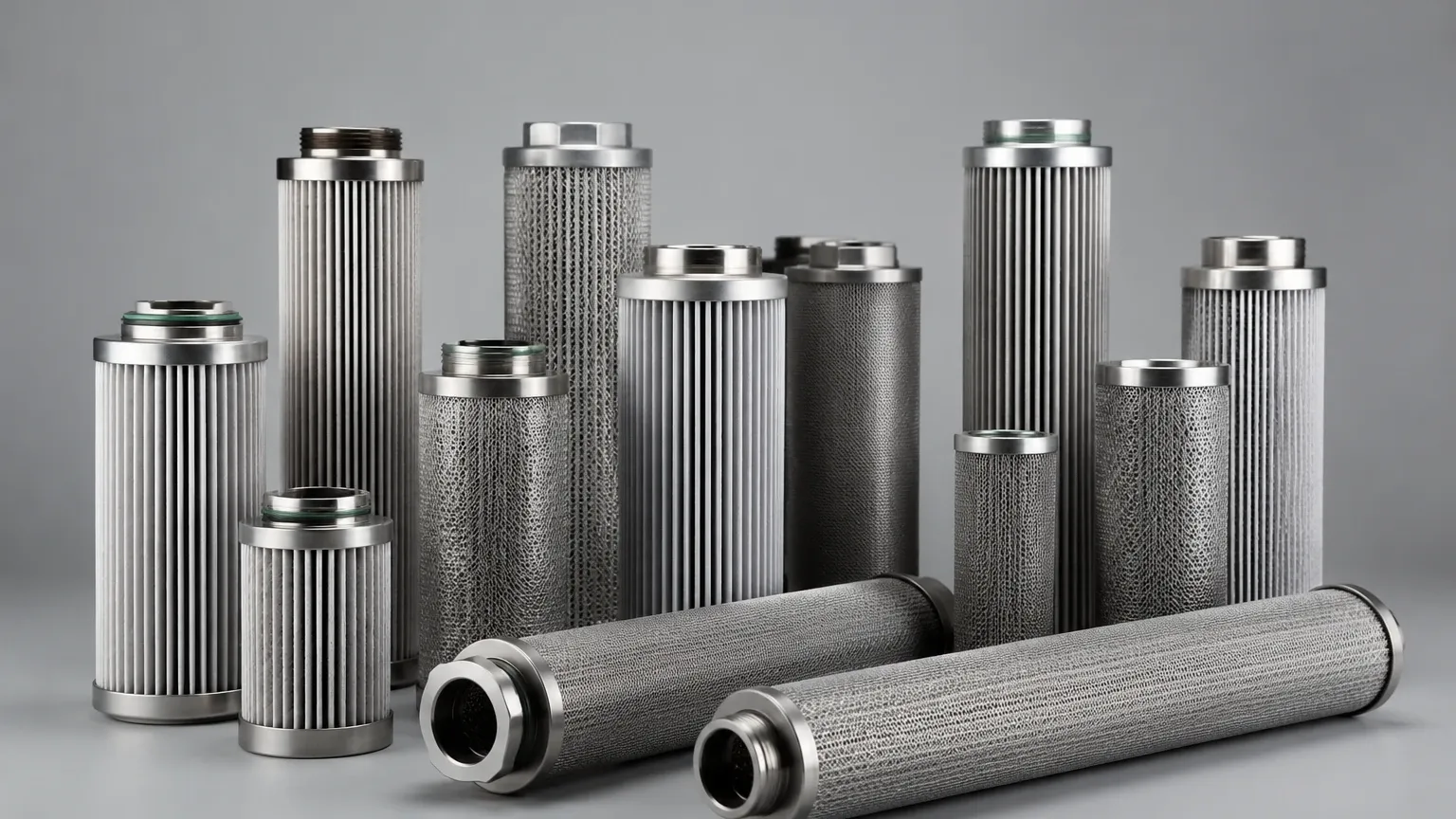
Custom Manufacturing and OEM Integration for Filter Cartridges
Not every industrial application fits the standard dimensions of a catalog filter element hydac. Variations in flow velocity, fluid viscosity, and mounting constraints often require custom-engineered solutions. Kaifil works closely with OEM partners to develop bespoke Filter Cartridges that address unique engineering challenges.
Customization options include:
* Variable Pleat Geometry: Optimizing the number and depth of pleats to manage flow resistance and maximize dirt-holding capacity in compact housings.
* Reinforced Support Structures: Utilizing heavier gauge perforated cores or outer cages for high-vibration environments.
* Multi-Layered Media: Combining different mesh counts to create a graduated filtration effect, where larger particles are trapped in the outer layers and finer particles in the inner layers, significantly extending service life.
* Specialized End Caps: Machining custom end caps from aluminum, stainless steel, or specialized polymers to interface with proprietary housing designs.
Operational Maintenance and Pressure Drop Management
The performance of a hydraulic system is intrinsically linked to the pressure drop across the filter element. The total pressure drop ($ΔP_{total}$) is the sum of the housing pressure drop and the element pressure drop. As the filter element hydac accumulates contaminants, the $ΔP$ increases.
Monitoring Contamination
Most hydraulic systems utilize clogging indicators (visual or electrical) set to trigger at a specific differential pressure—typically 2.0 to 5.0 bar depending on the application. It is a common mistake to wait until the indicator triggers to order a replacement. Proactive monitoring of the $ΔP$ trend can help predict the remaining useful life of the element and prevent unplanned downtime.
Cold Start Considerations
During system startup, especially in colder climates, fluid viscosity is significantly higher. This results in a temporary spike in differential pressure. High-quality filter elements are designed with bypass valves or high-collapse strength media to handle these transients without rupturing the media or allowing unfiltered oil to bypass the system.
Total Cost of Ownership and Selection Criteria
When evaluating a filter element hydac, the purchase price is only one component of the total cost. Engineers should consider the following factors to determine the true value of a filtration solution:
* Service Life: An element that costs 20% more but lasts 50% longer due to superior pleat design and media quality will reduce both material costs and labor.
* Component Protection: The cost of replacing a single high-pressure pump far exceeds the cost of premium filtration. High-efficiency elements prevent the "chain reaction of wear" caused by circulating contaminants.
* Energy Efficiency: A filter with a lower clean pressure drop requires less energy to move fluid through the system. Over the lifespan of a large hydraulic power unit, these energy savings can be substantial.
* Disposal Costs: Stainless steel elements that can be cleaned and reused significantly reduce the environmental impact and disposal fees associated with hazardous waste (oil-soaked disposable elements).
Conclusion
Selecting the right filter element hydac involves a deep understanding of the application's technical requirements, from fluid chemistry to pressure dynamics. While standard options are widely available, the demanding environments of the chemical, pharmaceutical, and heavy industrial sectors often require the specialized durability of stainless steel Filter Cartridges.
Kaifil's commitment to precision manufacturing and engineering support ensures that every filtration component provides the reliability needed to protect critical infrastructure. By focusing on high-grade materials, rigorous testing, and customized design, we help industrial operators achieve optimal fluid cleanliness and extended equipment life. For technical consultations or custom OEM requirements, evaluating the specific performance data of your filtration media is the first step toward a more efficient hydraulic system.
