


Inground Pool Filter Cartridges
In industrial and high-capacity residential water management, the efficiency of a filtration system is largely dictated by the quality and specifications of its internal components. Inground pool filter cartridges serve as the primary mechanical barrier against contaminants, ranging from fine organic debris to microscopic particulates. For facility managers, engineers, and procurement specialists, selecting the appropriate filtration media is not merely a matter of maintenance but a critical decision affecting hydraulic efficiency, energy consumption, and the longevity of the entire circulation system.
While the consumer market often focuses on ease of installation, the B2B perspective prioritizes technical performance metrics such as dirt-holding capacity (DHC), micron ratings, and structural integrity under high-pressure differentials. Understanding the engineering behind these Filter Cartridges is essential for optimizing water clarity and operational uptime.
Engineering Fundamentals of Cartridge Filtration
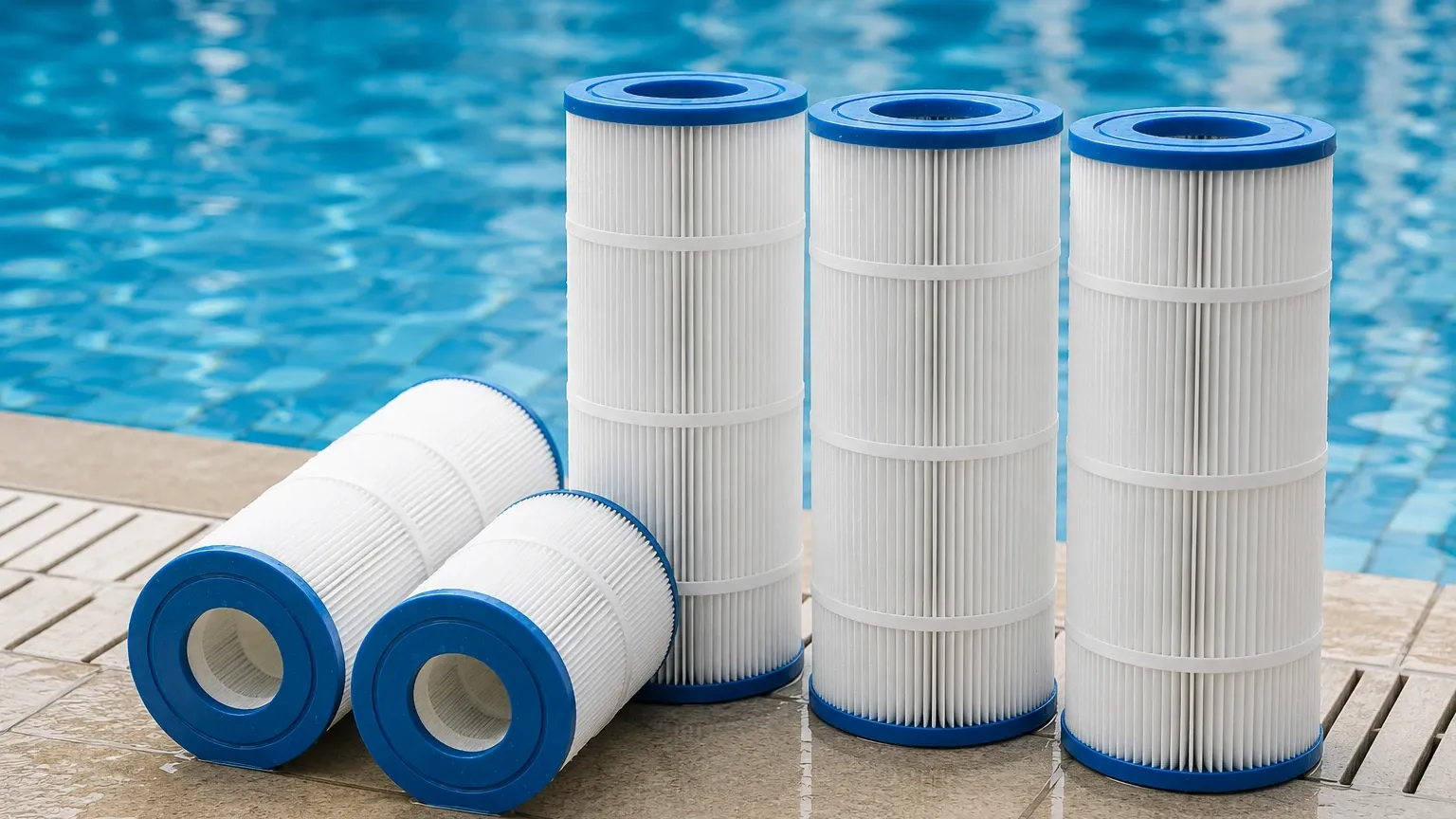
The design of inground pool filter cartridges is centered on maximizing surface area within a constrained cylindrical volume. This is achieved through pleating—a process where the filtration media is folded to increase the available contact area between the water and the filter material.
From a technical standpoint, the total filtration area is the most significant predictor of the time between cleaning cycles. A larger surface area allows for a lower face velocity (the speed at which water passes through the media), which improves the retention of finer particles and reduces the rate of pressure buildup. In industrial-grade applications, the pleat count and pleat depth are carefully engineered to prevent "pleat pinching," a phenomenon where the folds collapse against each other under high flow rates, effectively reducing the active filtration area and increasing energy costs.
Supporting this pleated media is a central core, typically constructed from high-strength polymers or, in specialized high-pressure applications, stainless steel. This core must withstand the inward radial pressure exerted by the pump. If the core fails, the media collapses, leading to a total bypass of contaminants and potential damage to downstream components like heaters and salt chlorinators.
Material Selection and Chemical Compatibility
The choice of material for inground pool filter cartridges determines their resistance to the harsh chemical environments typical of treated water. Most standard cartridges utilize spun-bonded polyester, known for its balance of filtration precision and durability. However, in commercial or industrial-scale inground systems, the demands on the media are significantly higher.
1. Polyester Media: Offers excellent resistance to chlorine and bromine. The fibers are thermally bonded to prevent shedding, ensuring that the filter itself does not become a source of contamination.
2. Stainless Steel Mesh: For specific industrial water treatment applications or high-temperature environments, stainless steel wire mesh provides a permanent, cleanable alternative. These components offer superior structural rigidity and can be backwashed more aggressively than synthetic fibers.
3. End Cap Integrity: The end caps, usually made of plastisol or polyurethane, must provide a leak-proof seal against the filter housing. Any bypass at the end caps renders the high-efficiency media useless, as water will always follow the path of least resistance.
When evaluating materials, engineers must consider the saturation of sanitizers and the potential for scale buildup. In systems with high mineral content, the media must be robust enough to withstand chemical descaling agents without degrading the fiber structure.
Performance Metrics: Micron Ratings and Flow Rates
In the context of inground pool filter cartridges, performance is defined by two primary variables: what the filter can stop (micron rating) and how much water can pass through it (flow rate).
Micron Ratings
Most cartridge filters for inground systems are rated between 10 and 20 microns. For comparison, a human hair is approximately 70 microns in diameter. A 10-micron rating is sufficient to remove most visible turbidity, including pollen, fine sand, and some types of algae. However, it is important to distinguish between nominal and absolute ratings. A nominal rating indicates the filter can trap a majority of particles at that size, while an absolute rating (more common in precision industrial Filter Cartridges) implies a 99.9% retention rate.
Flow Rate and Pressure Drop
Every filter introduces a degree of resistance to the system, known as the "clean pressure drop." As the cartridge collects debris, this resistance increases. For inground pools, maintaining a high flow rate is essential for proper chemical distribution and surface skimming. If a filter is undersized or the media is too restrictive, the pump must work harder, leading to increased electrical consumption and shortened motor life. Engineering a system with a low "clean" PSI (typically 8–12 PSI) ensures a longer functional window before the pressure reaches the recommended cleaning threshold (usually 8–10 PSI above the clean starting pressure).
Total Cost of Ownership (TCO) in Filtration
For B2B buyers, the initial purchase price of inground pool filter cartridges is often a secondary consideration compared to the Total Cost of Ownership. High-quality cartridges may have a higher upfront cost but offer significant savings through:
* Extended Service Life: Industrial-grade polyester or reinforced metal cores prevent premature failure, reducing the frequency of replacements.
* Energy Efficiency: Media that maintains a lower pressure drop over time reduces the load on variable-speed pumps.
* Reduced Water Consumption: High-capacity cartridges require less frequent cleaning. Since each cleaning cycle involves rinsing away gallons of treated water, more durable filters contribute to water conservation efforts.
* Labor Savings: In large-scale facilities, the labor cost associated with disassembling filter tanks and cleaning multiple cartridges can be substantial. Reducing the cleaning frequency directly impacts the bottom line.
Customization and OEM Requirements
Many industrial water systems and unique inground pool configurations require non-standard filtration solutions. This is where OEM (Original Equipment Manufacturer) capabilities become vital. Customization options for filter cartridges include:
* Dimensional Adjustments: Modifying the outer diameter (OD), inner diameter (ID), and overall length to fit proprietary housings.
* Media Optimization: Selecting specific weights (e.g., 4 oz. vs. 6 oz. fabric) based on the expected particulate load.
* Reinforcement: Adding outer bands or internal support sleeves to handle high-surge environments.
Manufacturers like Kaifil specialize in these precision metal and synthetic filtration components, providing the technical expertise needed to bridge the gap between standard pool maintenance and complex industrial water treatment. When a standard off-the-shelf cartridge cannot meet the durability or filtration precision required, custom-engineered Filter Cartridges become the necessary solution.
Maintenance Protocols and Failure Analysis
To maximize the ROI on inground pool filter cartridges, a rigorous maintenance schedule is required. Technical professionals should look for specific signs of wear that indicate a need for replacement rather than just cleaning:
1. Frayed Fabric: "Fuzzing" of the polyester media indicates that the fibers are breaking down, which will lead to a rapid loss in filtration efficiency.
2. Permanent Pressure Elevation: If the "clean" pressure after a thorough washing remains significantly higher than the original baseline, the media has become deeply embedded with oils, minerals, or biofilms that cannot be removed.
3. End Cap Cracking: Exposure to UV light (if the tank is open) or extreme chemical spikes can embrittle the end caps, leading to structural failure.
Cleaning should be performed using specialized filter cleaners that break down body oils and calcium deposits. High-pressure power washing is generally discouraged as it can force debris deeper into the fabric or tear the delicate fibers, effectively ruining the cartridge.
Conclusion: Selecting the Right Filtration Partner
Selecting inground pool filter cartridges for commercial or industrial applications requires a deep understanding of hydraulic flow, material science, and particulate dynamics. By focusing on high-surface-area designs, robust core construction, and chemically resistant media, facility managers can ensure water clarity while minimizing operational costs.
For organizations requiring precision and durability, partnering with a manufacturer that understands the nuances of custom filtration is essential. Whether the application calls for standard high-efficiency polyester or specialized metal components, the goal remains the same: achieving reliable, consistent, and cost-effective filtration performance. For more information on technical specifications and custom options, professional buyers should review the available Filter Cartridges to ensure their systems are equipped for long-term success.
