


Inline Water Filter Cartridges
In industrial fluid management, the efficiency of a system often depends on the precision of its smallest components. Inline water filter cartridges represent a critical segment of filtration technology, designed to be integrated directly into a piping system to remove contaminants, protect downstream equipment, and ensure the purity of process water. Unlike standalone filtration housings that may require significant floor space and complex plumbing, inline configurations offer a streamlined, space-efficient solution for various industrial applications.
For engineers and procurement professionals, selecting the right inline water filter cartridges involves more than just matching a pipe size. It requires a deep understanding of material science, fluid dynamics, and the specific environmental stressors of the application. Whether the goal is to protect sensitive reverse osmosis membranes, ensure the safety of food and beverage production, or maintain the integrity of cooling water in a chemical plant, the choice of filter cartridge significantly impacts both operational uptime and the total cost of ownership.
Understanding the Role of Inline Water Filter Cartridges in Industrial Systems
Inline filtration is defined by its installation directly within the flow path of the liquid. This design is particularly advantageous in systems where space is at a premium or where a localized filtration point is needed immediately before a piece of critical equipment. In industrial water treatment, these cartridges serve as the primary defense against particulate matter, sediment, and microorganisms.
While consumer-grade inline filters often rely on plastic housings and disposable carbon or sediment media, industrial-grade Filter Cartridges are typically engineered for much harsher conditions. In these environments, stainless steel is the material of choice due to its superior mechanical strength and resistance to extreme temperatures and pressures. Industrial inline water filter cartridges are designed to handle high flow rates while maintaining low differential pressure, ensuring that the filtration process does not become a bottleneck in the production line.
Material Selection and Structural Integrity
The performance of inline water filter cartridges is fundamentally tied to the materials used in their construction. In demanding industrial settings, synthetic fibers and plastics often fail due to chemical degradation or thermal stress. Stainless steel, specifically grades 304 and 316L, provides the necessary durability for long-term service.
Stainless Steel Wire Mesh
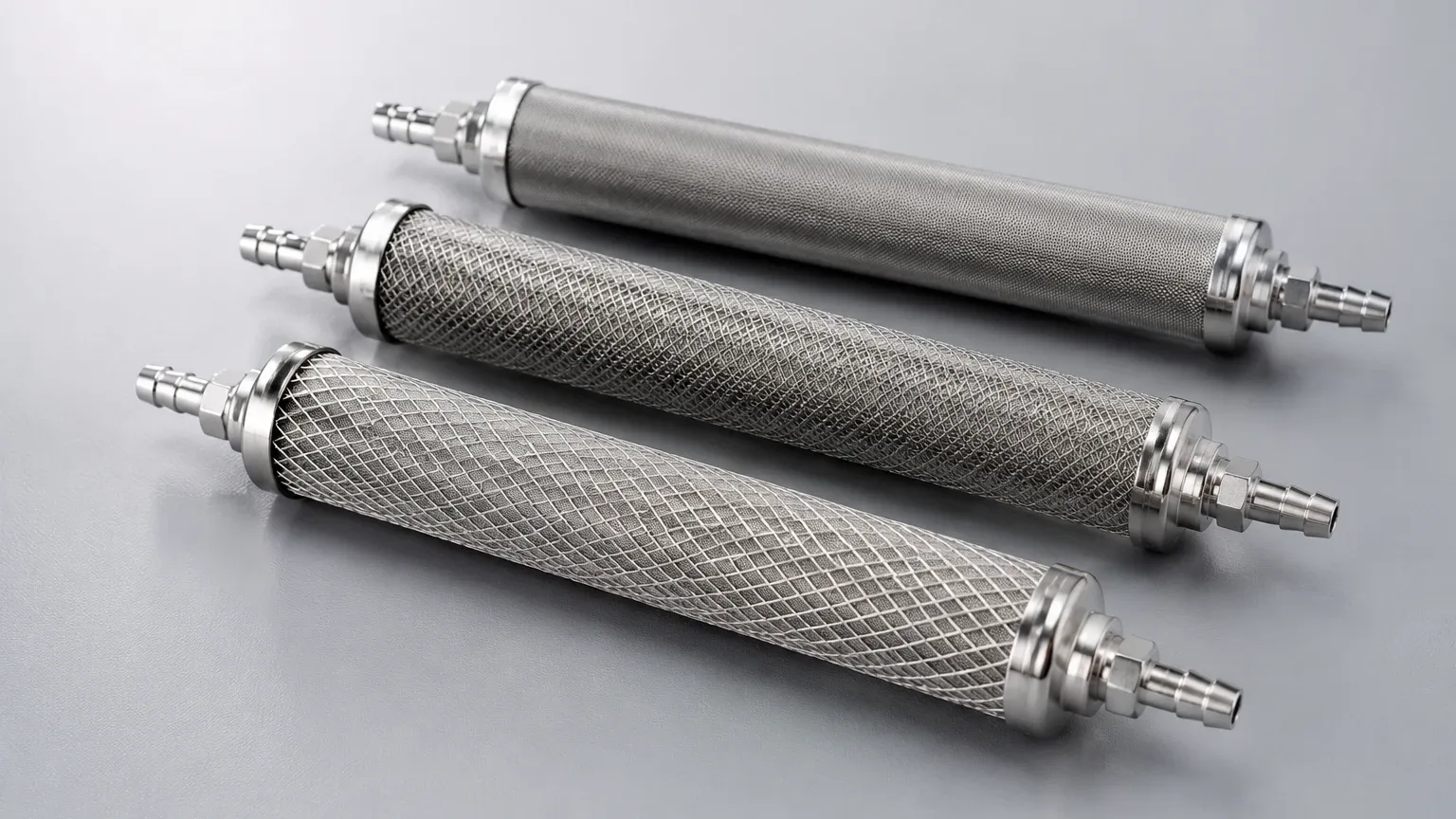
Stainless steel wire mesh is a foundational material for industrial filtration. It can be woven into various patterns, such as plain weave, twilled weave, or Dutch weave, each offering different levels of filtration accuracy and mechanical strength. For inline water filter cartridges, Dutch weave is often preferred for its ability to provide fine filtration while maintaining a robust structure that can withstand backwashing and high-pressure differentials.
Sintered Metal Media
For applications requiring even higher levels of precision and durability, sintered metal media is employed. Sintering involves bonding multiple layers of wire mesh or metal fibers through a high-temperature heat treatment process. This creates a porous structure that is incredibly strong and resistant to migration—meaning the filter media itself will not shed particles into the clean fluid stream. Sintered inline cartridges are ideal for high-pressure hydraulic systems and high-temperature steam filtration.
Key Engineering Specifications for High-Performance Filtration
When evaluating inline water filter cartridges, engineers must look beyond the physical dimensions. Several technical specifications determine whether a cartridge is suitable for a specific industrial process.
Micron Rating: Absolute vs. Nominal
One of the most common points of confusion in filter selection is the difference between nominal and absolute micron ratings. A nominal rating indicates the filter's ability to retain a majority of particles of a certain size (e.g., 90% of 10-micron particles). In contrast, an absolute rating signifies that the filter will retain 99.9% or more of particles at that size. For critical applications like pharmaceutical water or fine chemical processing, absolute-rated stainless steel cartridges are essential to ensure consistent quality.
Flow Rate and Differential Pressure
Every filter introduces some resistance to the flow of water, measured as differential pressure (ΔP). As the filter captures contaminants, the ΔP increases. High-quality inline water filter cartridges are designed with a large effective filtration area to minimize initial pressure drop. This allows for higher flow rates and extends the time between cleaning or replacement cycles. Engineers must calculate the maximum allowable pressure drop for their system to ensure the pump can maintain the required flow as the filter loads with debris.
Temperature and Chemical Compatibility
Industrial water is rarely just pure H2O. It often contains cleaning agents, process chemicals, or is handled at elevated temperatures. Stainless steel inline cartridges excel in these environments, where they can operate at temperatures exceeding 200°C and resist corrosion from a wide range of acidic or alkaline solutions. This compatibility is a major advantage over polymer-based filters, which may soften or leach chemicals under similar conditions.
Application-Specific Considerations for Industrial Water Treatment
The versatility of inline water filter cartridges allows them to be used across diverse sectors, but each industry has unique requirements that dictate the final design of the filtration component.
Food and Beverage Industry
In food and beverage production, hygiene is the primary concern. Inline filters used here must be made of food-grade materials (typically 316L stainless steel) and often require specialized finishes, such as electropolishing, to eliminate crevices where bacteria could grow. These cartridges are used for filtering ingredient water, protecting spray nozzles, and ensuring the clarity of bottled liquids.
Chemical Processing and Petrochemicals
In the chemical industry, filtration media must withstand aggressive solvents and highly corrosive fluids. Stainless steel wire mesh cartridges are preferred because they do not react with most process chemicals. Furthermore, the robust nature of metal filters allows them to handle the high-viscosity fluids often found in chemical manufacturing without deforming.
Power Generation and Cooling Water
Large-scale cooling systems use massive volumes of water that must be kept free of scale and sediment to prevent fouling of heat exchangers. Inline water filter cartridges act as a final polish to protect these expensive components. In power plants, these filters must be capable of high-velocity flow and be easily maintainable to prevent system shutdowns.
Maintenance, Cleaning, and Total Cost of Ownership
One of the most significant advantages of stainless steel inline water filter cartridges over disposable alternatives is their cleanability. While the initial purchase price of a metal cartridge is higher than a plastic or paper version, the total cost of ownership (TCO) is often much lower over the life of the equipment.
Cleaning Methods
Industrial stainless steel filters can be cleaned and reused multiple times. Common cleaning methods include:
* Backwashing: Reversing the flow of water through the cartridge to dislodge accumulated particles.
* Ultrasonic Cleaning: Using high-frequency sound waves in a cleaning solution to remove fine particles trapped deep within the mesh or sintered layers.
* Chemical Cleaning: Using specific solvents to dissolve organic or mineral scaling that cannot be removed mechanically.
Replacement Cycles
While metal cartridges are durable, they are not infinite. Over time, repeated cleaning and exposure to high pressures can lead to fatigue or permanent clogging (blinding) of the media. Engineers should establish a monitoring protocol based on differential pressure. When the pressure drop after cleaning no longer returns to the "clean" baseline, it is time to replace the cartridge to maintain system efficiency.
Technical Verification: Confirming Requirements Before Procurement
Before purchasing inline water filter cartridges, it is vital to confirm several technical details with the manufacturer. A mismatch in specifications can lead to premature filter failure, downstream contamination, or system inefficiency. Professionals should be prepared to provide the following data:
1. Fluid Characteristics: What is the chemical composition of the water? Are there oils, solvents, or abrasive particles present?
2. Operating Parameters: What is the normal operating pressure and temperature? What are the peak flow rates the filter must handle?
3. Contaminant Profile: What is the size and nature of the particles being removed? Is it hard sediment, soft organic matter, or fibrous debris?
4. Connection Requirements: Does the inline housing require NPT threads, flanged connections, or specialized sanitary fittings?
5. Customization Needs: Does the application require a specific length, diameter, or reinforced core to handle high-pressure surges?
By addressing these factors during the design and procurement phase, industrial operators can ensure they receive a filtration solution that is perfectly matched to their operational needs. Custom stainless steel filtration components offer the flexibility to meet these exact requirements, providing a reliable and cost-effective solution for modern industrial water treatment.
In conclusion, inline water filter cartridges are indispensable tools in the industrial landscape. By prioritizing high-quality materials like stainless steel and focusing on precise engineering specifications, facilities can achieve superior filtration performance, protect their infrastructure, and optimize their long-term operational costs.
