


Cartridge Filter Inline
In industrial fluid processing, the integration of a cartridge filter inline serves as a critical safeguard for downstream equipment and product purity. Unlike batch filtration systems that may require significant floor space and complex manifolding, inline filtration allows for a continuous flow of liquid or gas directly through the processing line. This configuration is essential in industries ranging from chemical processing and pharmaceuticals to food and beverage production, where maintaining system pressure and flow velocity is paramount.
Selecting the correct components for an inline system requires a deep understanding of fluid dynamics, material compatibility, and the specific mechanical stresses present in a pressurized piping environment. For engineers and procurement teams, the decision-making process involves balancing initial capital expenditure with long-term operational efficiency and maintenance requirements.
Understanding Inline Cartridge Filtration Systems
An inline filtration system typically consists of a filter housing integrated directly into the piping and the internal filter media, known as the cartridge. The term "inline" refers to the "in-and-out" flow path where the fluid enters one side of the housing, passes through the filter media, and exits through the opposite side or a perpendicular outlet, continuing its path through the process line.
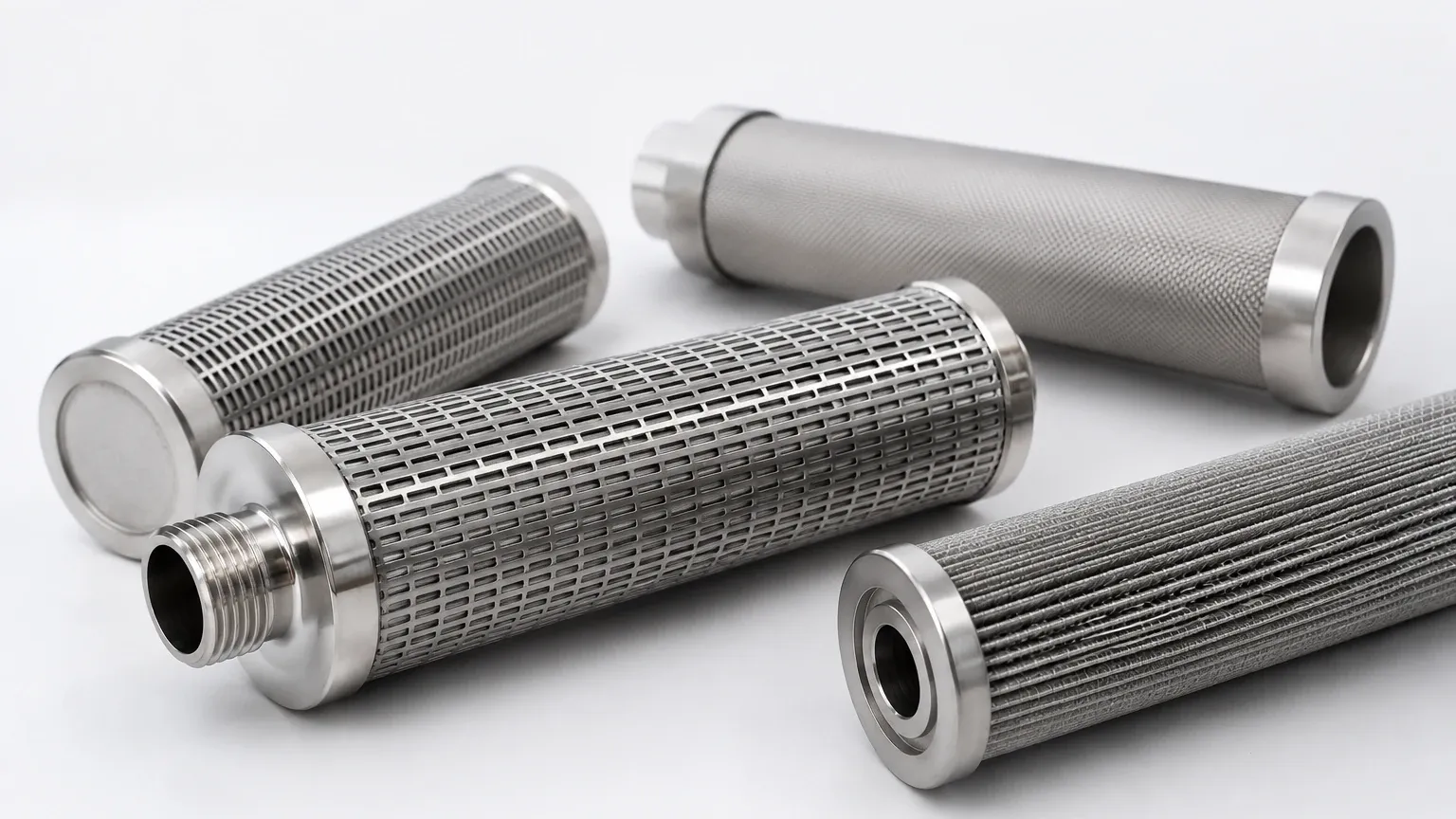
These systems are favored for their compact footprint and ease of installation. In a standard setup, the housing remains a permanent fixture of the infrastructure, while the internal Filter Cartridges are treated as the primary functional components. These cartridges are designed to capture contaminants such as suspended solids, precipitates, or biological matter.
In high-demand industrial environments, the structural integrity of the cartridge is vital. While polymer-based filters are common in low-temperature, low-pressure applications, stainless steel cartridges are the standard for demanding conditions. Stainless steel construction provides the necessary rigidity to withstand high differential pressures without collapsing or experiencing media migration, which occurs when fragments of the filter material enter the filtrate.
Engineering Considerations for Inline Filter Cartridges
The performance of a cartridge filter inline is governed by several engineering variables. Neglecting any of these can lead to premature filter failure, increased energy consumption, or contaminated end-products.
Flow Rate and Pressure Drop
Every filter media introduces a degree of resistance to the fluid flow, known as pressure drop or Delta P (ΔP). As the filter captures particles, the pores become restricted, and the ΔP increases. Engineers must calculate the "clean pressure drop" to ensure the system pump can handle the resistance while maintaining the required flow rate. A high-quality cartridge is designed to maximize the effective filtration area (EFA), often through pleating, to keep the initial pressure drop low and extend the service life between cleanings or replacements.
Micron Rating: Absolute vs. Nominal
When specifying a cartridge filter inline, understanding the distinction between absolute and nominal ratings is critical.
* Nominal Rating: Refers to an approximate retention value, often indicating that the filter can trap a certain percentage (e.g., 60% to 90%) of particles at a specific micron size.
* Absolute Rating: Indicates that the filter will capture essentially all particles (usually 99.9% or higher) at the specified micron size.
For critical applications like pharmaceutical sterile filtration or fine chemical processing, absolute-rated stainless steel mesh or sintered metal cartridges are preferred to ensure consistent performance under varying pressure conditions.
Material Selection and Chemical Compatibility
The longevity of an inline filtration system depends heavily on the chemical compatibility between the fluid and the filter materials. In industrial settings, stainless steel (primarily grades 304 and 316L) is the material of choice due to its broad resistance to corrosion and temperature extremes.
304 vs. 316L Stainless Steel
Grade 304 stainless steel is suitable for general-purpose applications, including water treatment and some food processing. However, for environments involving chlorides, acids, or high-salinity fluids, 316L stainless steel is necessary. The addition of molybdenum in 316L provides superior resistance to pitting and crevice corrosion. Furthermore, 316L is the standard for high-purity applications because its low carbon content minimizes carbide precipitation during welding, ensuring the structural integrity of the cartridge ends and seams.
Temperature and Pressure Limits
Unlike plastic or fabric filters, stainless steel inline cartridges can operate at temperatures exceeding 250°C (480°F) and handle high-pressure differentials. This makes them indispensable for steam filtration, hot oil processing, and high-viscosity polymer filtration where other materials would melt, warp, or fail mechanically.
Performance Evaluation and Selection Criteria
When evaluating a cartridge filter inline for a specific project, engineers must look beyond the initial price point and focus on the total cost of ownership (TCO). A cheaper, disposable filter may seem cost-effective initially but can lead to high costs in labor, downtime, and waste disposal over time.
Dirt Holding Capacity
The dirt holding capacity (DHC) determines how much contaminant a cartridge can retain before the pressure drop reaches a terminal point. In inline systems, a higher DHC means fewer interruptions for maintenance. Metal mesh filters, particularly those with a pleated design, offer a significant advantage here by providing a large surface area in a compact volume.
Viscosity Considerations
The viscosity of the fluid significantly impacts the choice of filter media. High-viscosity fluids, such as resins or heavy oils, require more robust filter structures to prevent the media from deforming under the force required to push the fluid through the pores. In these cases, reinforced stainless steel wire mesh or sintered metal fiber felt is often specified to ensure the cartridge maintains its shape and filtration accuracy.
Installation and Maintenance Best Practices
Correct installation of a cartridge filter inline is essential to prevent bypass—a condition where unfiltered fluid leaks around the cartridge seals and into the clean stream.
Sealing Mechanisms
Most inline cartridges use one of two sealing methods:
1. Double Open End (DOE): The cartridge is open at both ends and relies on gaskets and a compression nut within the housing to create a seal.
2. Single Open End (SOE): One end is capped, and the other features an O-ring (often a 222 or 226 configuration) that locks into the housing. SOE designs are generally preferred for critical applications as they provide a more secure, leak-proof seal.
Maintenance and Cleaning
One of the primary advantages of stainless steel inline cartridges is that they are often cleanable and reusable. Depending on the contaminant, cleaning can be achieved through:
* Backwashing: Reversing the flow of fluid to dislodge particles from the surface of the media.
* Ultrasonic Cleaning: Using high-frequency sound waves in a cleaning solvent to remove deeply embedded particles.
* Chemical Cleaning: Using acids or alkalis to dissolve organic or inorganic scaling.
Implementing a regular cleaning schedule based on differential pressure readings ensures the system operates at peak efficiency and extends the total lifespan of the filter media.
Customization and OEM Solutions in Inline Filtration
Many industrial applications involve unique constraints that standard off-the-shelf filters cannot meet. Customization is often required for specific flow rates, non-standard housing dimensions, or specialized chemical environments.
Customized Filter Cartridges can be engineered with specific end-cap geometries, reinforced internal cores for high-pressure surges, or multi-layered media to provide graduated filtration (capturing large particles in the outer layers and fine particles in the inner layers). For OEM manufacturers building integrated machinery, working with a specialist to develop a bespoke inline filtration component can optimize the performance and reliability of the entire equipment package.
Risk Mitigation in Industrial Filtration
Failure to properly specify an inline filter can result in significant operational risks. The most common risks include:
* Structural Failure: If the pressure differential exceeds the collapse rating of the cartridge, the media can rupture, sending both the contaminants and filter fragments downstream.
* Bypass: Improperly seated cartridges or worn O-rings allow unfiltered fluid to contaminate the process, potentially damaging expensive downstream components like spray nozzles, heat exchangers, or membranes.
* Incompatibility: Using materials that react with the process fluid can lead to leaching, which is a major concern in the pharmaceutical and food industries.
To mitigate these risks, it is essential to confirm the chemical compatibility, pressure ratings, and filtration efficiency with the manufacturer before procurement. Documentation such as material mill certificates and pressure test reports should be requested for critical applications.
Conclusion
The cartridge filter inline is a fundamental component of modern industrial fluid management. By providing a continuous, reliable method for removing contaminants, these systems protect infrastructure and ensure product quality. When selecting filtration components, focusing on the technical specifications—such as material grade, absolute micron ratings, and structural integrity—allows engineers to build systems that are not only effective but also durable and cost-efficient. For demanding environments, stainless steel solutions offer the thermal and mechanical resilience necessary to maintain performance over long operational cycles, ultimately supporting the efficiency and safety of the entire industrial process.
