


Jandy Pool Filter Cartridges
In the realm of commercial and high-end residential aquatic management, the efficiency of a filtration system is dictated by the structural integrity and media quality of its core components. Jandy pool filter cartridges represent a standard in the industry for high-capacity surface filtration, designed to handle significant flow rates while maintaining water clarity. For engineers and facility managers, understanding the technical nuances of these cartridges—ranging from pleat density to hydraulic resistance—is essential for optimizing pump performance and ensuring long-term system reliability.
While often associated with recreational water, the principles governing these Filter Cartridges are rooted in industrial separation science. Whether managing a commercial water park or a technical water treatment loop, selecting the right filtration media requires a deep dive into material specifications and operational parameters.
Technical Architecture of Jandy Filter Cartridges
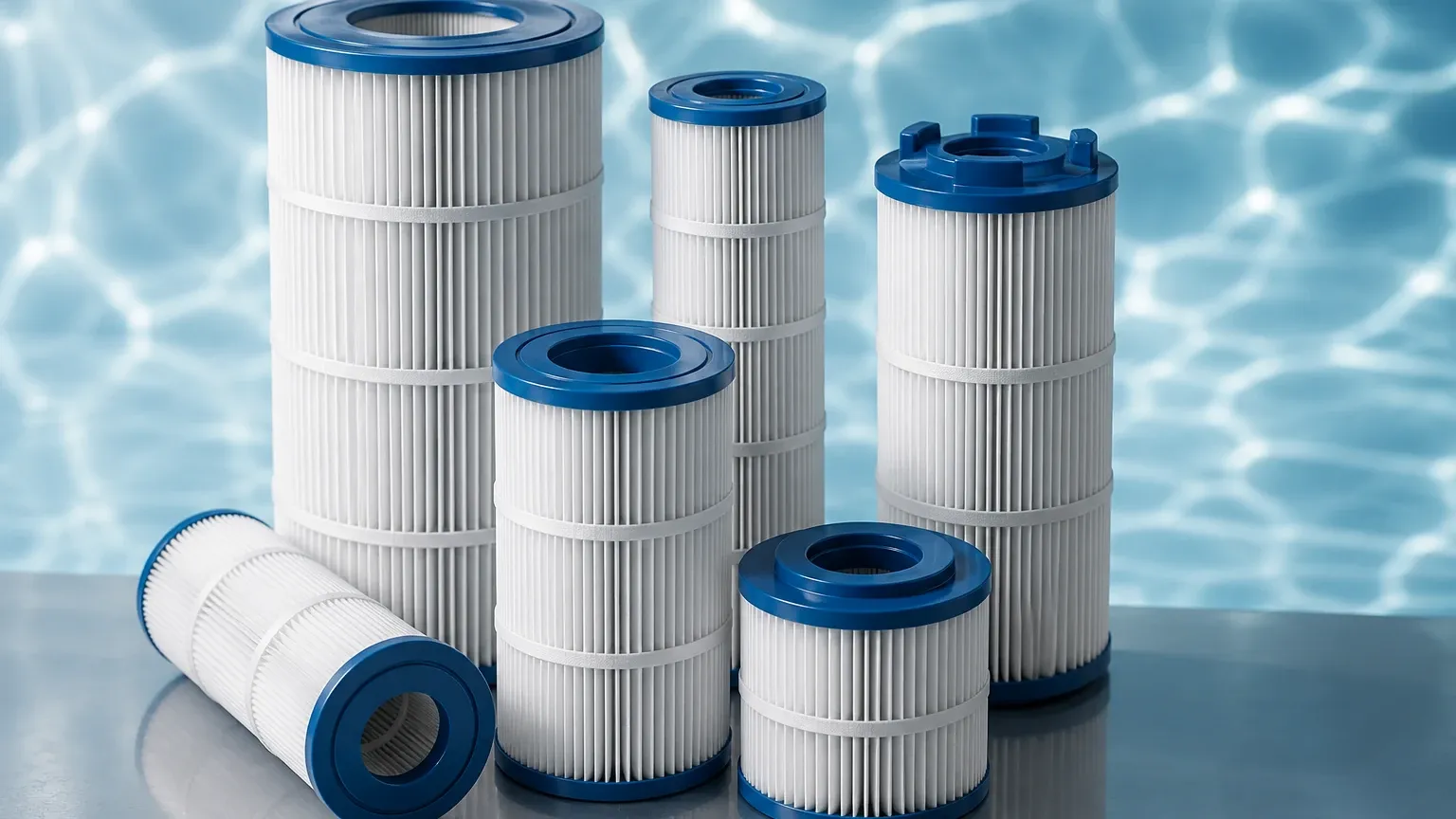
The performance of jandy pool filter cartridges is a result of specific engineering choices in material science and structural design. These cartridges are typically utilized in multi-cartridge clusters (such as the Jandy CL and CV series) to maximize the total filtration area within a compact footprint.
Media Composition and Micron Rating
Most high-quality cartridges utilize a non-woven, spun-bond polyester fabric. This material is chosen for its high tensile strength and resistance to chemical degradation from chlorine, bromine, and other sanitizers. The filtration process is primarily mechanical; as water passes through the polyester fibers, suspended solids are trapped on the surface and within the depth of the media. Standard pool cartridges typically offer a nominal filtration rating of 10 to 20 microns, which is sufficient for removing fine debris, organic matter, and some microorganisms.
The Role of Pleat Geometry
The "pleat" is the most critical design element of the cartridge. By folding the media into a star-shaped configuration around a central core, manufacturers significantly increase the surface area available for filtration. In B2B applications, the pleat count and pleat depth are key metrics. A higher pleat density allows for a lower "flux rate" (the volume of water passing through a specific area of media per minute), which improves filtration efficiency and extends the interval between cleaning cycles.
Structural Support Cores
Under the high-pressure conditions of a commercial pump system, a filter cartridge must maintain its shape. Jandy systems utilize a reinforced center core, often made of high-impact ABS or PVC, designed to prevent the pleats from collapsing inward. In industrial-grade equivalents or custom solutions provided by manufacturers like Kaifil, these cores may be further reinforced or replaced with stainless steel components to handle extreme pressure differentials.
Engineering Considerations for Selection
When specifying jandy pool filter cartridges for a project, technical professionals must look beyond brand compatibility and evaluate the hydraulic impact on the overall system.
Flow Rate and Hydraulic Resistance
Every filter cartridge introduces a certain amount of resistance into the plumbing circuit, measured as pressure drop (ΔP). As the filter accumulates debris, this resistance increases. Engineers must ensure that the total filtration area is sized correctly for the pump's GPM (gallons per minute) output. Over-sizing the filtration area is generally preferred in industrial and commercial settings, as it reduces the velocity of the water moving through the media, leading to better particulate capture and less mechanical stress on the fibers.
Chemical Compatibility and Temperature Limits
While polyester is robust, it has limits. In specialized applications where water temperatures exceed standard recreational levels (such as industrial heat recovery loops or commercial spas), the thermal stability of the end caps and the adhesive bonds must be verified. Most standard cartridges are rated for temperatures up to 100°F (38°C). For applications requiring higher thermal or chemical resistance, engineers often transition to stainless steel wire mesh filters or specialized synthetic media.
Maintenance Protocols and Lifecycle Management
The total cost of ownership (TCO) for filtration systems is heavily influenced by the replacement cycle of the cartridges. Unlike sand filters, which are backwashed, cartridge filters require manual cleaning to remove embedded contaminants.
Monitoring Pressure Differentials
A clean system typically operates at a baseline pressure determined by the plumbing's hydraulic head. Industry standards suggest that jandy pool filter cartridges should be cleaned when the pressure gauge indicates a rise of 8–10 PSI over the clean starting pressure. Ignoring this rise leads to "channeling," where high pressure forces debris through the media, or structural failure of the cartridge core.
Cleaning and Degreasing
Mechanical rinsing with water removes loose debris, but organic oils and mineral scales require chemical intervention. In commercial environments, a two-stage cleaning process is often employed:
1. Degreasing: Using an alkaline solution to break down body oils, sunscreens, and organic films.
2. Acid Bath: A mild acidic solution (such as diluted muriatic acid) to dissolve calcium carbonate scale.
It is vital to note that acid should never be applied before degreasing, as it can "set" organic contaminants into the fibers, permanently clogging the media.
Signs of Irreparable Failure
Technical teams should inspect cartridges during every cleaning cycle for the following signs of end-of-life:
* Fraying or "Fuzzing": Indicating that the polyester fibers are breaking down, which reduces filtration accuracy.
* End Cap Cracking: Usually a result of chemical embrittlement or excessive pressure.
* Pleat Bunching: When the spacers or bands holding the pleats fail, causing the media to clump together and reducing the effective filtration area.
Comparing Synthetic Cartridges with Industrial Metal Filtration
In many industrial water treatment scenarios, the limitations of synthetic jandy pool filter cartridges become apparent. This is where the expertise of a specialized manufacturer like Kaifil provides a significant advantage. While polyester cartridges are excellent for standard water clarity, certain demanding environments require the durability of stainless steel.
| Feature | Synthetic Cartridges (Polyester) | Stainless Steel Filters (Kaifil) |
| :— | :— | :— |
| Durability | Moderate; replaced every 1-3 years | High; can last for decades |
| Temperature Resistance | Limited (up to 100°F) | Excellent (up to 800°F+) |
| Chemical Resistance | Good for standard pool chemicals | Superior; resists solvents and acids |
| Cleaning Method | Manual rinsing/chemical soak | Backwashable, ultrasonic, or steam |
| Filtration Type | Surface/Depth | Surface (Precision Wire Mesh) |
For facilities looking to move away from frequent consumable replacements, upgrading to custom stainless steel filtration components can offer a more sustainable and cost-effective long-term solution. Kaifil specializes in engineering these high-performance alternatives that fit existing housings while providing superior mechanical strength.
Customization and OEM Solutions in Filtration
In complex B2B procurement, off-the-shelf solutions may not always meet the specific requirements of a unique hydraulic system. Customization is often necessary when dealing with non-standard flow rates, aggressive chemical environments, or specific space constraints.
Tailored Filtration Accuracy
While standard pool cartridges are fixed at 10-20 microns, custom-manufactured filters can be engineered to specific micron ratings ranging from coarse strainers to sub-micron precision. This is essential in industrial processes where the water from a pool or reservoir is being repurposed for cooling or as process water.
Structural Upgrades for High-Pressure Systems
Standard jandy pool filter cartridges are designed for typical residential and commercial pump pressures. However, in systems where water hammer or high-pressure surges are common, custom-designed filters with internal stainless steel support sleeves are required to prevent catastrophic failure. Kaifil’s manufacturing capabilities allow for the production of these reinforced components, ensuring that the filtration system does not become a point of failure in the broader infrastructure.
Total Cost of Ownership (TCO) Analysis
For purchasing teams, the initial price of a filter cartridge is only one component of the TCO. A comprehensive analysis must include:
1. Replacement Frequency: How often does the media fail under current load?
2. Labor Costs: The man-hours required for manual cleaning versus automated backwashing systems.
3. Energy Consumption: A clogged or poorly designed cartridge increases the Total Dynamic Head (TDH), forcing the pump to work harder and consume more electricity.
4. Water Waste: While cartridges save water compared to sand filter backwashing, the water used in manual cleaning and the chemical costs for soaking must be factored in.
By investing in high-quality Filter Cartridges or exploring durable metal alternatives, facilities can significantly reduce their operational overhead. High-performance media maintains a lower pressure drop for a longer duration, directly translating to energy savings and reduced wear on the pump motor.
Conclusion: Making an Informed Technical Choice
Selecting the appropriate filtration solution—whether it is a standard jandy pool filter cartridges replacement or a custom-engineered metal filter—requires a balance of hydraulic knowledge and material science. For standard commercial aquatic applications, the high surface area and reliable performance of polyester cartridges remain the industry benchmark. However, as system demands increase in complexity and intensity, the move toward specialized, durable filtration components becomes a necessity.
Engineers and facility managers should prioritize suppliers who provide transparent technical data and understand the rigors of industrial water treatment. By focusing on pleat integrity, core strength, and media quality, technical professionals can ensure their water systems remain clear, compliant, and cost-effective. For those seeking to optimize their filtration infrastructure beyond standard consumer-grade options, partnering with experts in custom stainless steel solutions offers a path toward superior performance and long-term reliability.
