


Jandy Filter Cartridges
In the realm of high-capacity water filtration, Jandy filter cartridges represent a standard for efficiency and clarity in residential and commercial aquatic systems. For engineers and facility managers, understanding the technical nuances of these components is essential for maintaining system integrity and optimizing operational costs. While often associated with pool and spa environments, the principles governing these Filter Cartridges—such as surface area optimization, particulate retention, and hydraulic efficiency—are fundamental to broader industrial filtration technologies.
Selecting the correct replacement or specifying a filtration system requires a deep dive into material science and fluid dynamics. This guide explores the engineering considerations, performance metrics, and procurement strategies necessary for managing Jandy filter cartridges and their industrial-grade equivalents.
The Engineering Behind Jandy Filter Cartridges
Jandy filter cartridges are typically designed as pleated surface filters. The primary objective of the pleated design is to maximize the available surface area within a constrained cylindrical volume. This is critical because the effective filtration area (EFA) directly correlates with the dirt-holding capacity and the interval between maintenance cycles.
Pleat Geometry and Flow Dynamics
In a standard cartridge, the media is folded into numerous pleats. From a technical perspective, the spacing and depth of these pleats must be precisely engineered. If the pleats are too tight, "pleat pinching" occurs, where the flow is restricted and only the outer edges of the media are utilized. Conversely, if the pleats are too loose, the total surface area is reduced, leading to higher face velocities and premature fouling.
For industrial applications, the stability of these pleats under pressure is paramount. High-quality cartridges utilize a rigid internal core and often external banding to prevent pleat collapse during high-flow events or as the pressure differential increases due to contaminant loading.
Key Evaluation Criteria for High-Performance Filtration
When evaluating jandy filter cartridges or seeking custom filtration components for similar applications, engineers must look beyond simple dimensions. The following metrics define the performance envelope of the filter:
Micron Rating and Efficiency
Filtration accuracy is measured in microns (µm). Jandy cartridges are generally designed to capture particles in the 10 to 20-micron range. However, it is important to distinguish between "nominal" and "absolute" ratings. A nominal rating indicates the ability to trap a percentage of particles of a given size, whereas an absolute rating implies a 99.9% efficiency. For critical industrial processes, understanding the particle size distribution (PSD) of the influent is necessary to select a cartridge with the appropriate retention characteristics.
Flow Rate and Pressure Drop (ΔP)
The relationship between flow rate and pressure drop is a primary indicator of system health. Every filter media introduces a degree of resistance to flow, known as the clean pressure drop. As the cartridge accumulates debris, the ΔP increases. Engineers must ensure that the pump's head capacity can overcome the maximum allowable pressure drop before the filter reaches its terminal state. Exceeding recommended flow rates (GPM per square foot of media) can lead to "channeling," where contaminants are forced through the media, compromising downstream water quality.
Material Compatibility
Standard Jandy cartridges often utilize spun-bond polyester media. While excellent for chlorinated water, industrial environments may require more robust materials. In applications involving high temperatures, aggressive chemicals, or high-pressure steam cleaning, stainless steel mesh or sintered metal components may be required. Understanding the chemical environment—including pH levels and the presence of oils or surfactants—is vital to prevent premature degradation of the filter media and end caps.
Common Risks and Failure Modes in Cartridge Systems
Identifying potential failure points early can prevent costly downtime and equipment damage. In the context of large-scale filtration, several risks are common:
1. Bypass Leakage: This occurs when the seal between the cartridge end cap and the filter housing fails. Even a small gap allows unfiltered water to bypass the media entirely, leading to a rapid decline in water clarity.
2. Structural Collapse: If the internal support core is insufficient for the operating pressure, the cartridge can implode. This usually happens when a filter is left in service long after it has reached its maximum dirt-holding capacity.
3. Media Blinding: Certain contaminants, such as oils, lotions, or fine silts, can coat the surface of the media, causing a rapid spike in pressure even if the filter is not "full" of solids. In industrial settings, this is often managed through pre-treatment or by selecting specialized oleophobic media.
4. Chemical Brittleing: Over-exposure to high concentrations of sanitizers or acidic cleaning agents can make the plastic components of the cartridge (end caps and cores) brittle, leading to cracks and structural failure.
Maintenance and Replacement Cycles
Determining the optimal replacement cycle is a balance between performance and cost. For jandy filter cartridges, the standard indicator for cleaning is a pressure rise of 8-10 PSI over the clean starting pressure. However, cleaning does not restore the filter to 100% of its original capacity. Over time, fine particulates become embedded deep within the fibers—a phenomenon known as depth loading—which cannot be removed by surface washing.
In professional and industrial environments, cartridges should be replaced when:
* The clean starting pressure after a thorough wash is significantly higher than the original baseline.
* The media shows signs of fraying or "fuzzing," indicating fiber breakdown.
* The end caps show visible cracks or deformation.
* The filtration cycle (time between cleanings) becomes unacceptably short.
Customization and OEM Solutions for Industrial Needs
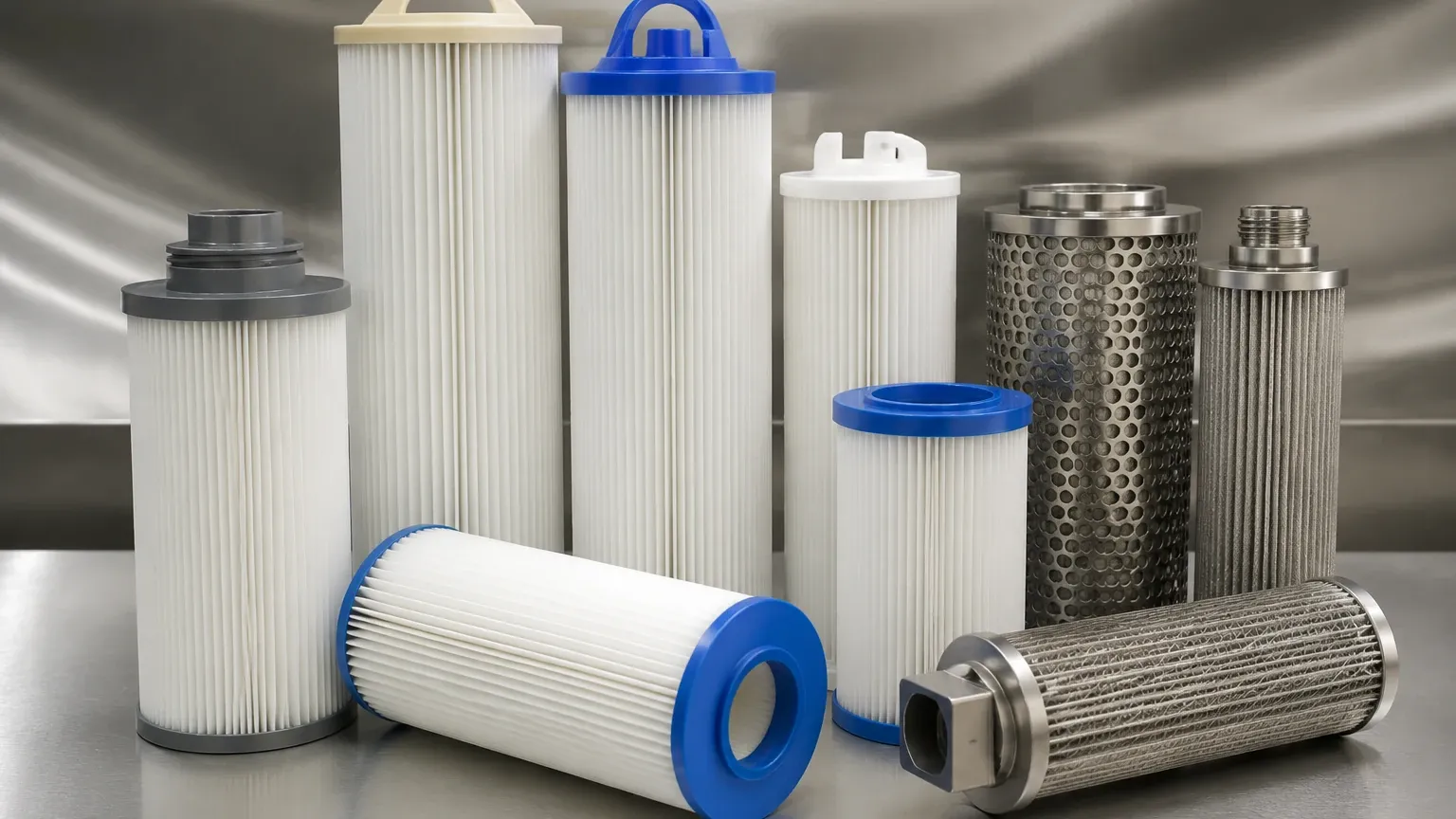
While standard jandy filter cartridges serve a wide range of needs, many industrial applications require customized solutions that standard off-the-shelf products cannot meet. This is where manufacturing expertise in precision metal filtration becomes invaluable. For processes involving high-viscosity fluids, extreme temperatures, or the need for permanent, cleanable filter elements, transitioning from synthetic media to stainless steel is often the most cost-effective long-term strategy.
Customized Filter Cartridges can be engineered with specific wire mesh weaves, such as plain, twilled, or Dutch weave, to provide exact filtration degrees while maintaining high structural integrity. These metal components offer superior resistance to pressure surges and can be ultrasonically cleaned or backwashed, significantly extending the service life compared to disposable polyester cartridges.
Procurement Checklist: What Engineers Should Confirm
Before purchasing replacement cartridges or commissioning a new filtration design, technical professionals should confirm the following data points with their supplier:
* Exact Dimensions: Confirm the outer diameter (OD), inner diameter (ID), and overall length (OAL). Even a 1/8-inch variance can prevent a proper seal.
* End Cap Configuration: Determine if the cartridge requires open ends, a handle, a threaded nut, or a specific gasket profile.
* Operating Temperature Range: Ensure the media and bonding agents can withstand the maximum process temperature.
* Chemical Resistance Data: Verify that the cartridge materials are compatible with all chemicals used in the process, including cleaning agents.
* Total Cost of Ownership (TCO): Evaluate the cost not just based on the purchase price, but on the expected lifespan, cleaning frequency, and labor costs associated with replacement.
Conclusion
Jandy filter cartridges are a critical component in maintaining water quality, but their effectiveness depends on rigorous selection and maintenance standards. By understanding the underlying engineering principles—from pleat stability to micron efficiency—engineers can ensure their systems operate at peak performance. For those operating in demanding industrial environments where standard synthetic cartridges fall short, exploring customized stainless steel or precision metal filtration solutions provides a pathway to increased durability and reliability. Whether managing a commercial aquatic facility or a complex industrial process, the goal remains the same: achieving precise, dependable filtration that protects downstream equipment and ensures the purity of the fluid stream.
