


Jojo Filter Cartridges
In the landscape of water management and industrial fluid processing, the selection of appropriate filtration components is critical to maintaining system integrity and product quality. Jojo filter cartridges have become a recognized standard in many residential and light commercial water storage systems, primarily focused on sediment removal and the protection of downstream appliances. However, for engineers and procurement professionals operating in industrial environments—such as chemical processing, food and beverage production, or hydraulic systems—understanding the technical boundaries of these cartridges and knowing when to transition to high-performance industrial alternatives is essential for operational efficiency.
This guide examines the technical specifications, application logic, and engineering considerations surrounding jojo filter cartridges and their industrial counterparts. By analyzing filtration media, micron ratings, and material compatibility, technical teams can make informed decisions that balance initial capital expenditure with long-term reliability.
The Functionality of Jojo Filter Cartridges in Fluid Management
Jojo filter cartridges are typically designed as the first line of defense in water harvesting and storage systems. Their primary role is to intercept suspended solids, such as sand, silt, rust, and organic debris, before the fluid enters a storage tank or a secondary treatment phase. In many configurations, these cartridges are housed in a slimline or standard-sized canister, serving as a point-of-entry (POE) solution.
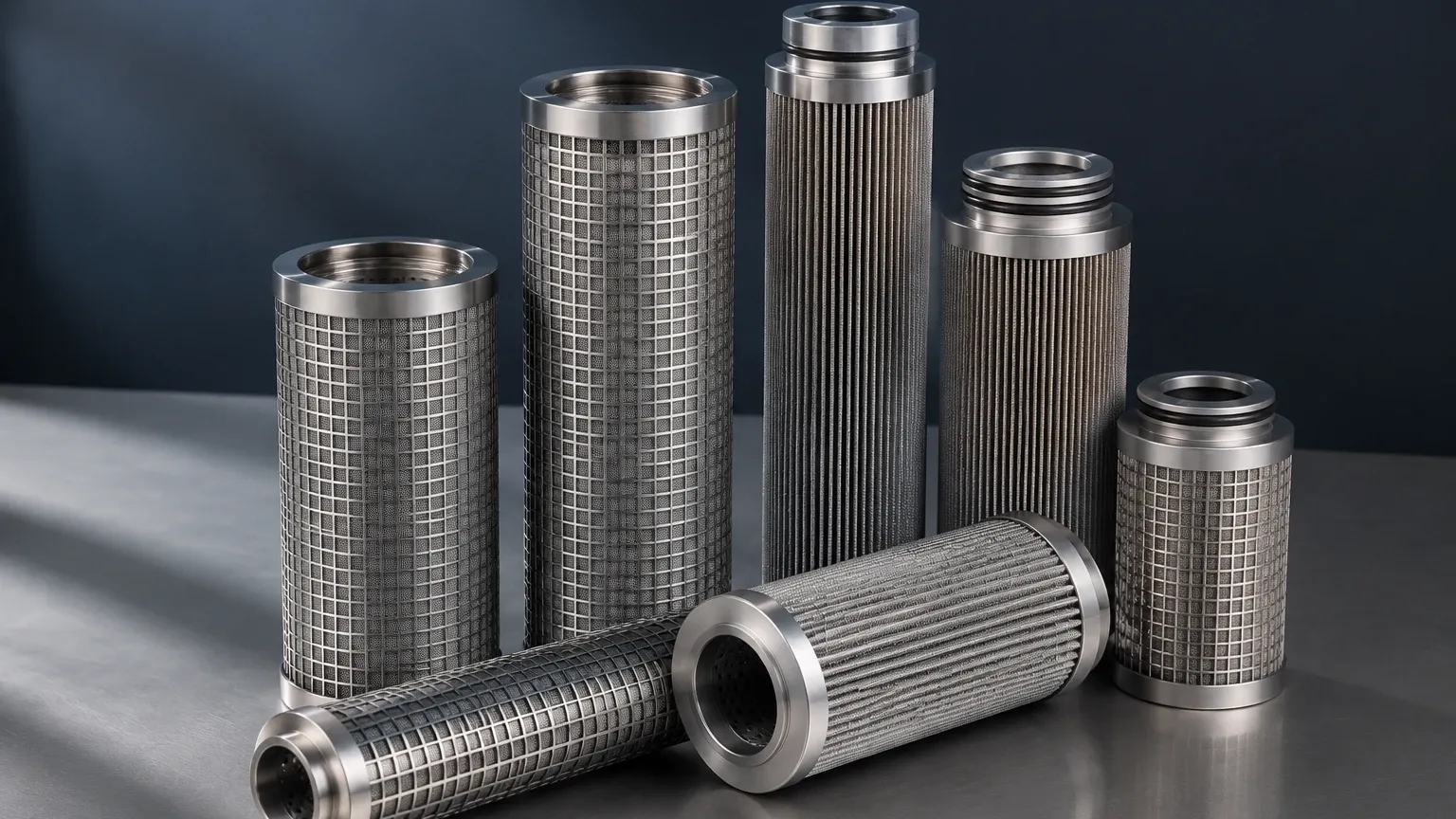
From a technical perspective, these filters operate on the principle of mechanical straining or depth filtration. As water passes through the filter media, particles larger than the pore size are trapped. In industrial contexts, this is often referred to as "pre-filtration." While effective for general water clarity, the performance of standard jojo filter cartridges is limited by the physical properties of the media used, which is usually a polymer-based material like polypropylene. For industrial applications requiring higher pressure tolerances or chemical resistance, engineers often look toward specialized Filter Cartridges that utilize stainless steel construction to ensure durability under stress.
Evaluating Filtration Media: From Polypropylene to Stainless Steel
One of the most critical decisions in filter selection is the choice of media. Standard jojo filter cartridges often utilize spun-bonded or pleated polypropylene. These materials are excellent for low-pressure, ambient-temperature water applications.
1. Spun-Bonded (Depth) Media: These cartridges consist of thermally bonded microfibers that create a complex, three-dimensional path for the fluid. They are effective at capturing a wide range of particle sizes but are disposable and cannot be cleaned once saturated.
2. Pleated Media: Pleated designs increase the available surface area, allowing for higher flow rates and lower initial pressure drops. While they offer high efficiency, they are also prone to fouling in high-sediment environments.
In contrast, industrial-grade filtration often necessitates a shift toward metal media. Stainless steel wire mesh or sintered metal cartridges provide several advantages over standard polymer options:
* Thermal Stability: Stainless steel can operate at temperatures exceeding 250°C, whereas polypropylene typically begins to lose structural integrity above 60°C.
* Chemical Compatibility: For processing solvents, oils, or caustic cleaning agents (CIP), stainless steel is far superior to plastics.
* Cleanability: Unlike disposable jojo filter cartridges, stainless steel variants can be backwashed, ultrasonically cleaned, or chemically regenerated, significantly reducing the waste stream in large-scale operations.
Key Performance Metrics for Industrial Filter Selection
When evaluating any filter cartridge, engineers must look beyond the brand name and focus on specific performance metrics. These data points determine whether a filter will meet the process requirements or become a bottleneck in the system.
Micron Rating: Nominal vs. Absolute
Most jojo filter cartridges are sold with a nominal micron rating, typically ranging from 5 to 20 microns. A nominal rating indicates that the filter will trap a large percentage of particles at that size, but not 100%. In precision industrial processes, an absolute rating is often required. An absolute rating (usually defined by a Beta Ratio of 5000 or 99.9% efficiency) ensures that no particles larger than the specified size pass through the media, which is vital for protecting sensitive components like spray nozzles or high-pressure pumps.
Flow Rate and Differential Pressure (Delta P)
The flow rate of a system is inversely proportional to the filtration fineness. As the micron rating decreases, the resistance to flow increases. It is essential to calculate the clean pressure drop (the pressure loss when the filter is new) and the terminal pressure drop (the point at which the filter must be replaced or cleaned). Industrial systems often utilize oversized housings to accommodate larger surface area Filter Cartridges, thereby extending the interval between maintenance cycles.
Installation and Housing Compatibility Requirements
Compatibility between the filter cartridge and the housing is a common point of failure in system design. Jojo filter cartridges typically follow standard dimensions (e.g., 10-inch or 20-inch lengths with a 2.5-inch or 4.5-inch diameter). However, the end-cap configuration is equally important.
* Double Open End (DOE): This is the most common configuration for standard water filters. The cartridge is open at both ends and relies on flat gaskets and housing compression to create a seal. While cost-effective, DOE configurations are more susceptible to "bypass," where unfiltered fluid leaks around the ends of the cartridge.
* Single Open End (SOE): Preferred in high-purity or high-pressure industrial applications, SOE cartridges feature a closed end and a specific locking mechanism (such as a 222 or 226 O-ring fitting) at the other. This creates a positive, leak-proof seal that prevents bypass.
Engineers must also verify the material of the O-rings or gaskets. While EPDM is standard for water, applications involving oils or chemicals may require Viton (FKM) or PTFE-encapsulated seals to prevent swelling and seal failure.
Operational Longevity and Maintenance Protocols
The total cost of ownership (TCO) for a filtration system is heavily influenced by the replacement cycle of the cartridges. Standard disposable jojo filter cartridges are inexpensive upfront, but in high-load industrial environments, the cost of frequent replacements, labor, and system downtime can quickly exceed the cost of a premium solution.
Monitoring Pressure Differential
To optimize maintenance, industrial systems should always be equipped with pressure gauges upstream and downstream of the filter housing. A rising differential pressure indicates that the filter is reaching its loading capacity. Replacing a cartridge too early wastes money, while replacing it too late can lead to media migration, cartridge collapse, or pump cavitation.
Storage and Handling
For facilities that stock large quantities of filter cartridges, environmental control is necessary. Polymer-based filters should be kept away from direct UV light and extreme temperature fluctuations to prevent embrittlement. Stainless steel cartridges, while more robust, should be stored in their original packaging to prevent contamination from ambient dust or oils before they are installed in the process line.
Selecting the Right Filter Cartridges for Specialized Environments
In certain industries, the requirements for filtration go far beyond simple sediment removal. For example, in the food and beverage industry, filter cartridges must comply with FDA or EC 1935/2004 standards for food contact. In the pharmaceutical sector, the ability to withstand steam sterilization (SIP) is a non-negotiable requirement.
Customization plays a vital role in these scenarios. While standard jojo filter cartridges serve the general market, manufacturers like Kaifil provide engineered solutions where the mesh count, weave pattern, and structural reinforcement are tailored to the specific viscosity and chemistry of the process fluid. This level of customization ensures that the filtration system does not just "work," but operates at peak efficiency with the lowest possible energy consumption.
When transitioning from a basic water filtration setup to a professional industrial system, the first step is a thorough audit of the fluid characteristics. This includes particle size distribution (PSD), fluid viscosity, operating temperature, and maximum system pressure. Armed with this data, engineers can select Filter Cartridges that provide the necessary protection without compromising system throughput.
Conclusion: Strategic Procurement for Filtration Systems
Choosing the right filtration component requires a balance between technical performance and economic reality. Jojo filter cartridges offer an accessible solution for standard water sediment issues, but they represent only a small segment of the broader filtration spectrum. For industrial professionals, the focus must remain on the long-term reliability and technical suitability of the media. By understanding the engineering principles of micron ratings, material science, and seal integrity, purchasing teams can move beyond commodity buying and invest in filtration solutions that truly protect their infrastructure and enhance their process outcomes.
