


Jandy Cv460 Filter Cartridges
In the landscape of high-capacity water treatment and commercial aquatic management, the Jandy CV460 filtration system represents a standard for high-surface-area performance. Utilizing a four-cartridge configuration, this system is designed to handle significant flow rates while maintaining a compact footprint. For engineers and facility managers, understanding the technical specifications, material limitations, and maintenance requirements of jandy cv460 filter cartridges is essential for optimizing hydraulic efficiency and ensuring long-term equipment reliability.
While the CV460 is frequently associated with large-scale residential and commercial pools, its engineering principles are applicable across various industrial water circulation loops. Selecting the right Filter Cartridges involves more than just matching dimensions; it requires a deep dive into media density, structural integrity, and the chemical compatibility of the components with the process fluid.
Technical Architecture of the CV460 System
The Jandy CV460 system is part of the CV (Cartridge Versa-Plumb) series, engineered to provide 460 square feet of total filtration area. This is achieved through a cluster of four individual cartridges, each providing 115 square feet of surface area. From a hydraulic perspective, this multi-cartridge design is superior to single-element systems because it distributes the flow across a wider surface, significantly reducing the face velocity at the media interface.
Dimensional Specifications
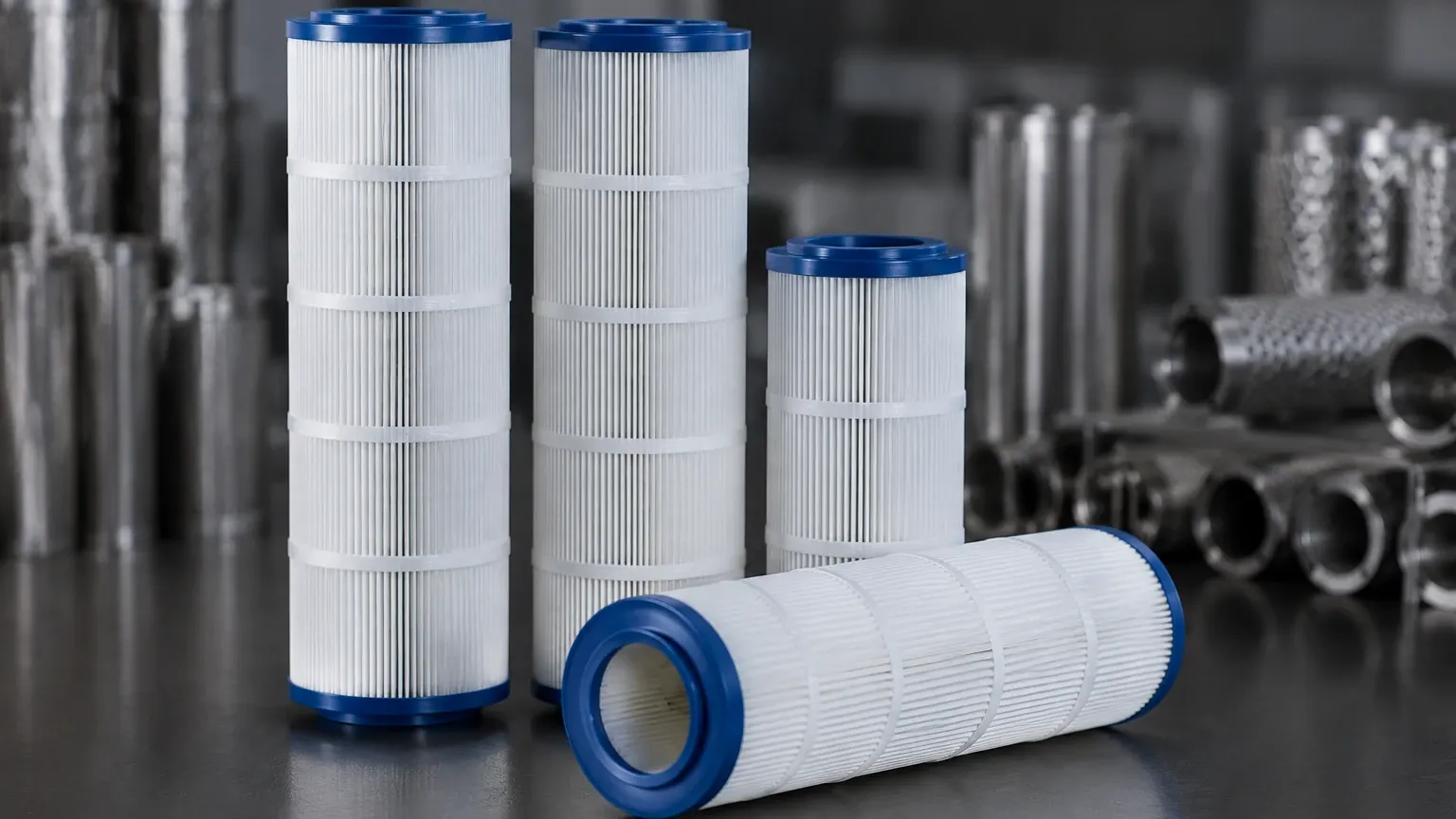
Standard jandy cv460 filter cartridges typically measure approximately 27 inches in length with an outside diameter of 7 inches. The internal core diameter is usually 3 inches, designed to fit securely over the manifold assembly. Precision in these dimensions is critical; even a few millimeters of deviation can lead to bypass—where unfiltered water escapes around the end caps—effectively compromising the entire filtration cycle.
Flow Dynamics and Pressure Drop
The CV460 tank is rated for a maximum flow rate of approximately 150 GPM (Gallons Per Minute). However, as a professional manufacturer like Kaifil understands, operating at the upper limit of flow capacity increases the pressure drop (Delta P) across the media. Engineers must calculate the turnover rate of the system against the clean-filter pressure to ensure the pump is operating within its efficient range. High differential pressure not only stresses the pump but can also cause "pleat bunching," where the media collapses under the force of the water, reducing the effective filtration area.
Material Science and Media Selection
The performance of jandy cv460 filter cartridges is primarily dictated by the media used in their construction. In standard applications, this is typically a point-bonded or spun-bond polyester fabric. However, in industrial or demanding commercial environments, the limitations of synthetic fibers become apparent.
Synthetic Media vs. Industrial Requirements
Polyester media is favored for its cost-effectiveness and its ability to capture particles down to the 10-20 micron range. The "trilobal" fiber structure often found in high-end aftermarket cartridges increases the surface area of the fibers themselves, allowing for better dirt-holding capacity. However, synthetic media is susceptible to degradation from high temperatures, extreme pH levels, and certain chemical additives.
For industrial applications where the CV460 housing might be repurposed for process water or chemical filtration, standard polyester may fail prematurely. In such cases, technical professionals often look toward more robust Filter Cartridges that utilize advanced materials. While Kaifil specializes in custom stainless steel filtration solutions, the principles of durability and chemical resistance remain the same: the media must withstand the environment without shedding fibers or losing pore structural integrity.
Micron Ratings and Filtration Efficiency
It is important to distinguish between nominal and absolute micron ratings. Most jandy cv460 filter cartridges provide nominal filtration, meaning they capture a high percentage of particles at their rated micron level but are not 100% efficient. For critical industrial processes, verifying the Beta Ratio of the filter media is necessary to ensure that the required water clarity is consistently met.
Structural Integrity: Cores, End Caps, and Bands
A filter cartridge is only as strong as its weakest component. The structural design of jandy cv460 filter cartridges must resist the compressive forces exerted by the pump and the chemical environment of the water.
Center Core Design
The internal core provides the skeletal support for the pleated media. In lower-quality replacements, these cores are often made of thin, brittle plastic that can crack under high pressure. Professional-grade cartridges utilize reinforced, high-impact cores with a high open-area percentage to minimize flow restriction. In high-pressure industrial scenarios, some engineers opt for metal-reinforced cores to prevent total element collapse.
End Cap Durability
The end caps serve two purposes: they seal the ends of the pleats to prevent bypass and provide a seat for the manifold gaskets. These are typically molded from polyurethane or plastisol. Over time, exposure to high levels of chlorine, bromine, or industrial solvents can cause these materials to soften or become brittle. When evaluating replacement cartridges, it is vital to confirm that the end cap material is compatible with the specific chemical profile of the fluid being filtered.
Pleat Stabilization Bands
To prevent the pleats from fluttering or collapsing against one another during high-flow operation, jandy cv460 filter cartridges are equipped with break-resistant bands. These bands maintain uniform spacing, ensuring that the entire surface area of the media is accessible to the water. If these bands snap, the pleats will cluster together, leading to "dead zones" where no filtration occurs and significantly shortening the life of the cartridge.
Maintenance Protocols and Performance Monitoring
For facility managers, the goal is to maximize the service life of the cartridges while maintaining water quality. This requires a disciplined approach to monitoring and cleaning.
Pressure Differential Monitoring
The most accurate indicator of filter health is the pressure gauge on the CV460 tank. A baseline "clean pressure" should be recorded immediately after installing new or cleaned cartridges. Once the pressure rises 8 to 10 PSI above this baseline, the cartridges must be removed and cleaned. Delaying this maintenance leads to deep-seated fouling, where contaminants are forced so deep into the media that they cannot be removed, necessitating premature replacement.
Cleaning Procedures for Industrial Longevity
Cleaning jandy cv460 filter cartridges involves more than a simple rinse.
1. Degreasing: Oils and organic compounds (such as body oils in pools or lubricants in industrial loops) must be removed using a specialized degreaser.
2. Acid Washing: Only after degreasing should the cartridges be treated with a mild muriatic acid solution to remove mineral scale and calcium deposits. Applying acid before degreasing can permanently set the oils into the fabric, ruining the cartridge.
3. Drying and Inspection: After cleaning, the cartridges should be allowed to dry and then inspected for "pinholing" or thinning of the media. If light can be seen clearly through the fabric in specific spots, the media has lost its integrity.
Custom Industrial Upgrades and Alternatives
In many industrial settings, standard equipment like the Jandy CV460 is adapted for use in cooling towers, pre-filtration for Reverse Osmosis (RO) systems, or wastewater recovery. In these demanding environments, standard polyester cartridges may require replacement every few months, leading to high operational costs and significant downtime.
The Move Toward Stainless Steel and Custom Solutions
As a manufacturer of custom stainless steel filtration solutions, Kaifil often works with clients who find that synthetic Filter Cartridges are insufficient for their needs. Stainless steel wire mesh filters offer several advantages in industrial contexts:
* Permanent Service Life: Unlike polyester, stainless steel elements can be cleaned ultrasonically or through backwashing and reused for years.
* Temperature Resistance: Metal filters can operate in environments exceeding 200°F, where synthetic cartridges would melt or deform.
* Absolute Filtration: Wire mesh can be manufactured to provide absolute micron ratings, offering more predictable performance for sensitive downstream equipment.
While the Jandy CV460 housing is designed for specific synthetic cartridges, custom-engineered metal inserts can sometimes be developed for industrial housings of similar dimensions to provide a more permanent filtration solution. This transition from disposable to cleanable media is a key consideration for companies looking to reduce their environmental footprint and long-term O&M (Operations and Maintenance) costs.
Evaluating Total Cost of Ownership (TCO)
When purchasing jandy cv460 filter cartridges, the initial price is often the least important factor. Purchasing teams should evaluate the Total Cost of Ownership, which includes:
* Frequency of Replacement: A cheaper cartridge that lasts six months is more expensive than a premium cartridge that lasts two years.
* Energy Consumption: Cartridges with poor flow characteristics force the pump to work harder, increasing electricity costs.
* Labor Costs: The time required for frequent cleanings or replacements in a commercial or industrial setting can be significant.
* Chemical Usage: Efficient filtration reduces the demand on chemical sanitizers or treatment additives.
By selecting high-quality cartridges with robust cores and high-density media, facilities can achieve a lower TCO and more consistent water quality.
Conclusion: Selecting the Right Filtration Partner
Whether you are maintaining a commercial aquatic facility or managing an industrial water loop using Jandy CV460 housings, the choice of filter cartridge is a technical decision that impacts the entire system's efficiency. It is essential to verify the specific requirements of your application—considering flow rates, chemical exposure, and particle load—before selecting a replacement.
For those operating in standard environments, high-quality polyester jandy cv460 filter cartridges remain the industry standard. However, for those facing extreme conditions or seeking to optimize their filtration processes through customization, exploring industrial-grade Filter Cartridges and metal filtration components is a prudent step.
At Kaifil, we understand that filtration is not a one-size-fits-all solution. Our expertise in manufacturing precision metal filter components allows us to support engineers in finding the most durable and efficient solutions for their specific challenges. When performance and reliability are non-negotiable, choosing a partner with deep manufacturing and engineering knowledge is the most effective way to ensure your filtration systems perform as intended.
