


Keurig Filter Cartridges
In the commercial beverage and hospitality sectors, the quality of water used in brewing systems is a critical variable that directly impacts both the flavor profile of the end product and the operational longevity of the equipment. While many users associate keurig filter cartridges with residential use, the engineering principles governing these components are highly relevant to industrial liquid filtration and OEM equipment design. For engineers and procurement specialists, understanding the technical specifications, material compositions, and performance metrics of these filtration units is essential for maintaining consistent output in high-volume environments.
Industrial filtration often requires a transition from disposable, consumer-grade solutions to more robust, high-performance components. As beverage systems evolve to handle higher pressures and continuous duty cycles, the selection of Filter Cartridges becomes a matter of balancing filtration efficiency with mechanical durability. This guide examines the technical aspects of small-format beverage filtration, focusing on the materials and design considerations that define modern cartridge performance.
Technical Architecture of Beverage Filtration Cartridges
The fundamental goal of keurig filter cartridges is the removal of impurities that affect taste and machine health—specifically chlorine, organic compounds, and mineral scale. From an engineering perspective, these cartridges function as multi-stage depth or surface filters, depending on their internal media.
Media Composition
In standard commercial applications, the primary medium is activated carbon. This material is selected for its high surface area and porous structure, which allows for the adsorption of chlorine and volatile organic compounds (VOCs). However, in high-performance or specialized industrial beverage systems, the carbon is often supplemented or replaced by precision-engineered components:
* Ion Exchange Resins: Used to mitigate water hardness by swapping calcium and magnesium ions with sodium or potassium, thereby preventing scale buildup in heating elements.
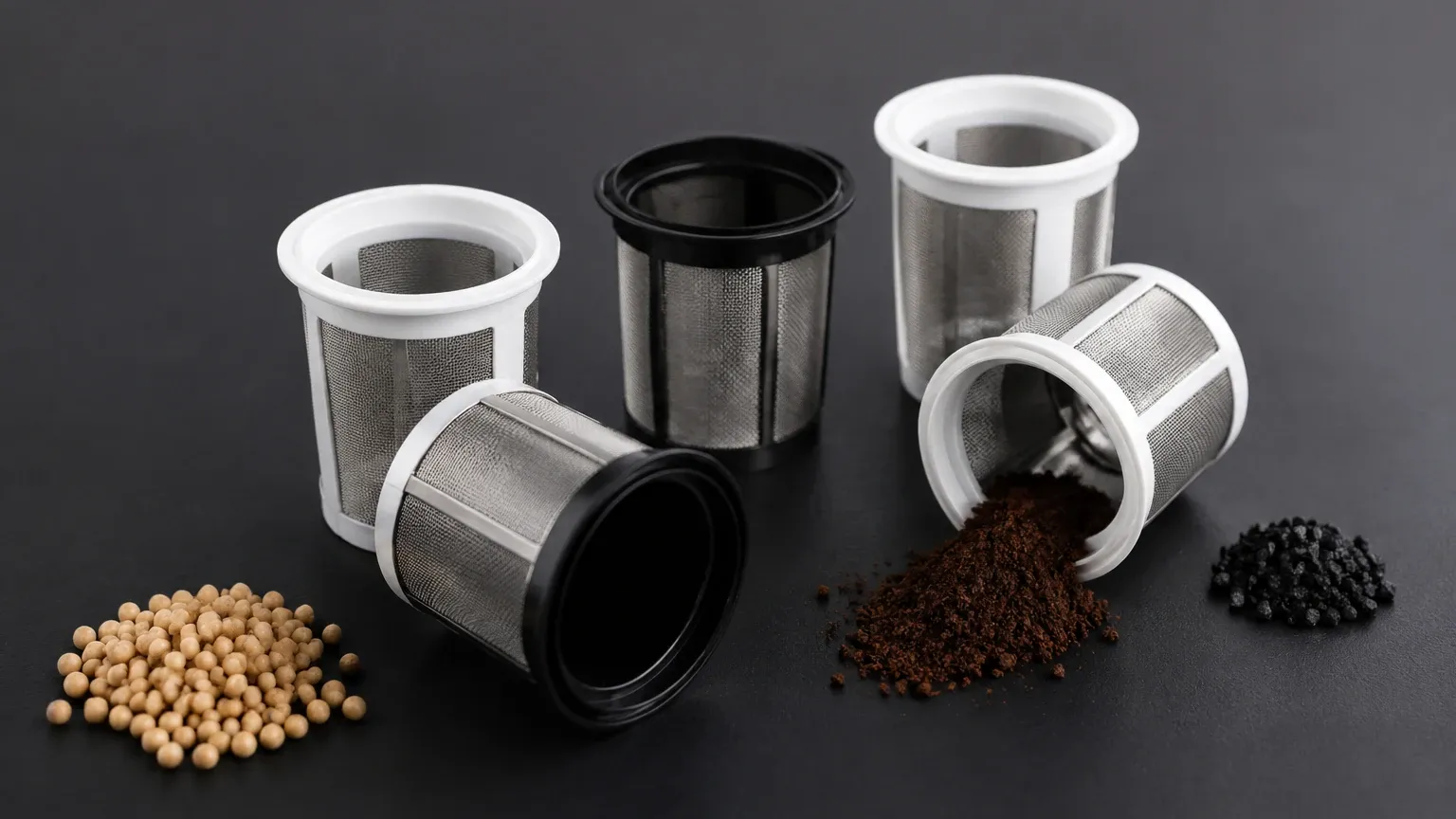
* Stainless Steel Wire Mesh: In custom OEM designs, a stainless steel mesh pre-filter or post-filter is often integrated to prevent media migration and to capture fine particulates that could clog precision nozzles.
* Non-Woven Polypropylene: Provides structural support and initial sediment filtration.
Housing and Form Factor
The physical interface of the cartridge must ensure a leak-proof seal under varying line pressures. For industrial-scale beverage equipment, the housing is typically constructed from food-grade polymers or, in demanding environments, stainless steel. The geometry of the cartridge is designed to maximize contact time between the water and the filtration media while maintaining a low pressure drop across the system.
Material Selection: Comparing Disposable and Reusable Solutions
When evaluating keurig filter cartridges for commercial or OEM applications, material selection is the primary driver of both performance and total cost of ownership (TCO). While disposable plastic cartridges are the industry standard for low-to-medium volume machines, industrial designers often look toward more sustainable and durable alternatives.
The Role of Stainless Steel in Beverage Filtration
At Kaifil, the focus is on providing high-durability filtration solutions. In the context of beverage systems, stainless steel components offer several advantages over traditional plastic and paper-based filters:
1. Thermal Stability: Stainless steel maintains its structural integrity at high temperatures, which is critical for systems where filtration occurs near the heating block.
2. Chemical Resistance: Unlike some plastics, 304 or 316L stainless steel does not leach chemicals into the water, ensuring a pure flavor profile and compliance with strict food safety standards.
3. Cleanability: For commercial systems designed for long-term use, stainless steel filter elements can be cleaned and reused, significantly reducing the waste stream associated with disposable cartridges.
Activated Carbon Performance
For the removal of chemical contaminants, activated carbon remains the gold standard. In high-quality keurig filter cartridges, the carbon is often silver-impregnated to provide bacteriostatic properties, preventing the growth of biofilm within the filter housing during periods of inactivity. Engineers must specify the iodine number of the carbon used, as this indicates the porosity and, consequently, the adsorption capacity of the cartridge.
Performance Metrics: Micron Ratings and Flow Rates
Selecting the correct Filter Cartridges requires a deep dive into performance data. For beverage applications, two metrics are paramount: filtration accuracy (micron rating) and flow rate.
Understanding Micron Ratings
Micron ratings determine the size of particles the filter can successfully intercept.
* Nominal Rating: Indicates that the filter can trap a percentage of particles of a given size (e.g., 5 microns at 85% efficiency).
* Absolute Rating: Indicates that the filter will trap 99.9% or more of particles of that size.
In keurig filter cartridges, the filtration is typically geared toward sediment and taste-altering chemicals. A 5-to-10-micron nominal rating is usually sufficient for residential use, but commercial systems may require finer filtration (1-2 microns) to protect sensitive solenoid valves and high-pressure pumps from abrasive particulates.
Flow Rate and Pressure Drop
In a commercial brewing environment, speed is essential. However, finer filtration media naturally increase the resistance to flow, resulting in a higher pressure drop (ΔP). Engineers must calculate the required flow rate (usually measured in gallons per minute or liters per minute) and ensure the pump system can overcome the resistance provided by the cartridge as it becomes loaded with contaminants. Over-specifying a filter (choosing a micron rating that is too fine) can lead to premature clogging and unnecessary strain on the equipment.
Customization and OEM Considerations
For manufacturers of commercial beverage equipment, off-the-shelf keurig filter cartridges may not meet the specific requirements of a proprietary system. Customization allows for the optimization of filtration performance based on the specific water chemistry of a target region or the unique mechanical constraints of a machine.
Custom Filter Design
Customization options for industrial-grade beverage filters include:
* Variable Layering: Combining different mesh sizes or media types within a single cartridge to target specific contaminants.
* End Cap Configurations: Designing proprietary fittings to ensure that only authorized replacement cartridges can be used, protecting the after-market revenue stream for the OEM.
* Reinforced Structures: Adding internal support cores to prevent cartridge collapse in high-pressure hydraulic circuits.
Kaifil specializes in the development of these customized components, utilizing advanced manufacturing techniques to produce stainless steel wire mesh filters that provide precise filtration in a compact footprint. By integrating these high-performance elements into a cartridge design, OEMs can offer a superior product that requires less frequent maintenance than standard consumer-grade options.
Maintenance, Replacement Cycles, and TCO
The total cost of ownership for filtration systems is often misunderstood. While the initial purchase price of keurig filter cartridges is low, the cumulative cost of frequent replacements and the potential for equipment downtime must be factored into the B2B purchasing decision.
Determining Replacement Intervals
In a commercial setting, replacement cycles should be based on volume rather than time. Most standard cartridges are rated for a specific number of gallons (e.g., 2,000 to 5,000 gallons) or a maximum time frame (usually 6 months) to prevent microbial growth.
Signs that a cartridge requires immediate replacement include:
* Visible decrease in flow rate: Indicates the media is saturated with sediment.
* Changes in taste or odor: Suggests the activated carbon has reached its adsorption limit.
* Scale accumulation: In systems with ion-exchange media, the appearance of white mineral deposits indicates the resin is exhausted.
Reducing TCO with Industrial Solutions
Switching to high-quality, industrial-grade Filter Cartridges can lower TCO by extending the intervals between service calls. For example, a stainless steel mesh pre-filter can protect the more expensive carbon block from premature clogging, effectively doubling the life of the primary filter. Furthermore, in large-scale hospitality operations, moving from individual machine filters to a centralized water filtration system using industrial stainless steel housings can provide significant economies of scale.
Engineering the Future of Beverage Filtration
As the demand for high-quality, consistent beverages grows in the global market, the technology behind keurig filter cartridges and similar filtration components continues to advance. For the technical professional, the focus remains on selecting materials and designs that provide reliable performance under pressure. Whether it is through the use of precision-woven stainless steel mesh or high-capacity carbon blocks, the goal is to create a controlled environment where water quality is a constant, not a variable.
By understanding the intersection of material science and fluid dynamics, engineers can specify filtration solutions that not only improve the sensory quality of the beverage but also safeguard the mechanical integrity of the brewing system. For those seeking specialized, durable filtration components, exploring the capabilities of industrial manufacturers like Kaifil provides a pathway to more robust and efficient equipment design.
