


Lowes Pool Filter Cartridges
In the realm of water maintenance, the efficiency of a filtration system is fundamentally tied to the quality and specification of its internal media. For residential users, searching for lowes pool filter cartridges is a common starting point for routine maintenance. However, for engineers, facility managers, and industrial procurement professionals, the requirements for filtration often exceed the standard retail offerings. Understanding the technical distinctions between consumer-grade pool filters and industrial-grade Filter Cartridges is essential for optimizing system performance, reducing energy consumption, and ensuring long-term durability in demanding environments.
This guide examines the engineering principles behind cartridge filtration, the material science that differentiates various grades of filter media, and the critical selection criteria that professional operators must consider when moving beyond basic retail solutions to high-performance industrial components.
Understanding the Mechanics of Cartridge Filtration
Cartridge filtration is a mechanical process designed to remove suspended solids from a liquid stream. Unlike sand filters, which utilize a deep bed of media, cartridges rely on a high surface area provided by pleated filter media. This design allows for a higher flow rate within a relatively small footprint, making them highly efficient for both residential pools and complex industrial water treatment systems.
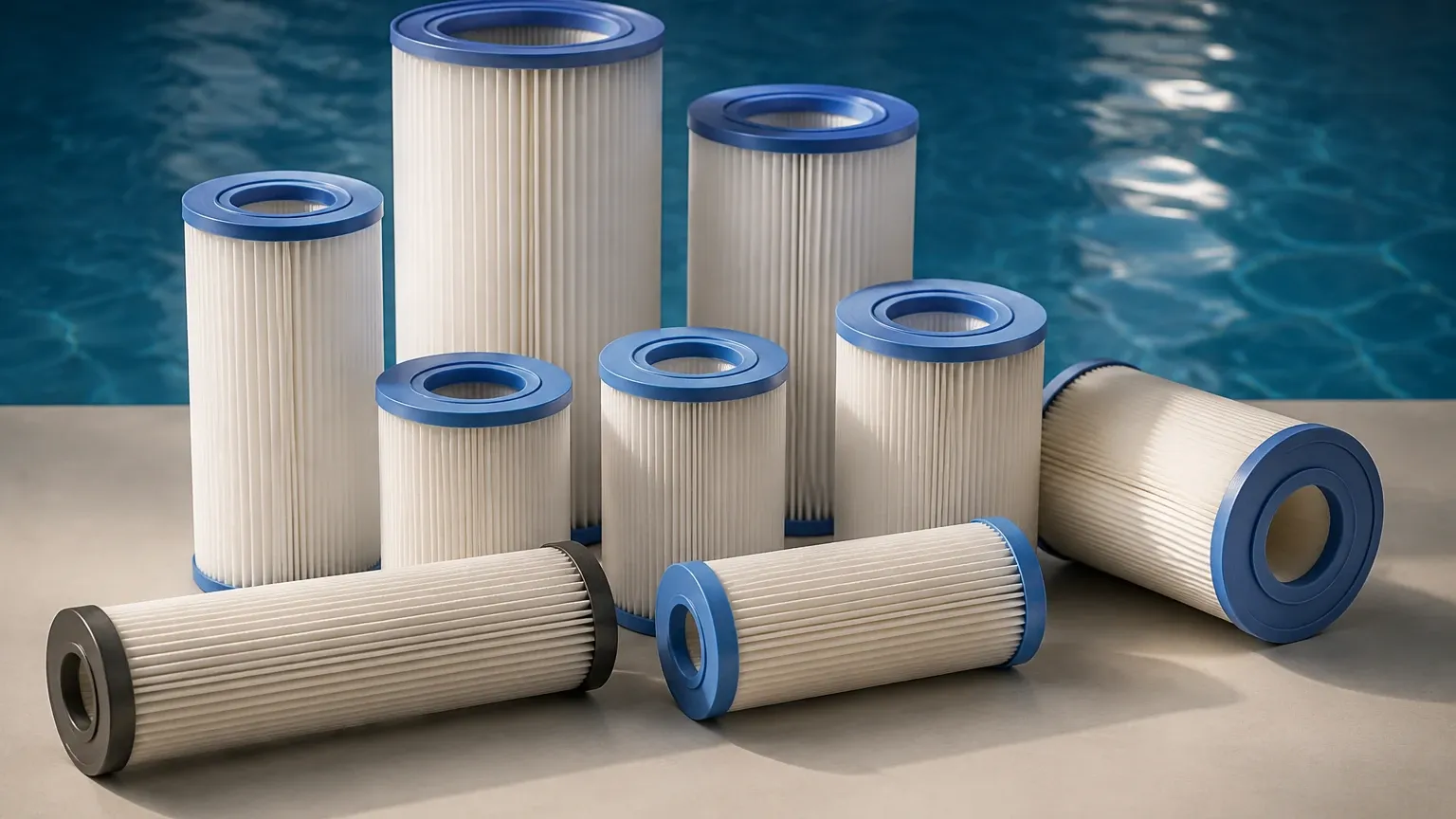
When evaluating lowes pool filter cartridges for basic applications, the primary mechanism is surface filtration. As water passes through the pleated material—typically a non-woven polyester fabric—particles larger than the pore size are trapped on the surface. For industrial applications, the complexity increases. Industrial systems often require a combination of surface and depth filtration, where the structure of the media allows for particle capture throughout the thickness of the material, significantly extending the time between cleaning or replacement cycles.
The Importance of Surface Area
The efficacy of any filter cartridge is directly proportional to its effective filtration area. Pleating the media allows manufacturers to pack a vast amount of surface area into a cylindrical housing. This reduces the "flux" or the flow rate per unit of area. Lower flux rates generally lead to better filtration efficiency and lower pressure drops across the media, which in turn reduces the strain on circulation pumps.
Retail vs. Industrial Grade: Material Science and Durability
While lowes pool filter cartridges are suitable for standard backyard pools with low chemical complexity and moderate flow rates, industrial and commercial aquatic environments demand more robust materials. The choice of material impacts not only the filtration accuracy but also the cartridge's resistance to chemical degradation and physical deformation.
Polyester and Synthetic Media
Most retail pool cartridges utilize spun-bond polyester. While cost-effective and capable of filtering down to approximately 10 to 20 microns, these materials have limitations. In commercial settings where chlorine levels are higher, or where the water temperature is elevated (such as in industrial cooling or large-scale spas), synthetic fibers can eventually break down, leading to "media migration" where filter fibers enter the clean water stream.
Stainless Steel and Precision Metal Media
For high-demand scenarios, engineers often transition from synthetic options to stainless steel Filter Cartridges. Manufactured from 304 or 316L stainless steel wire mesh or sintered metal, these components offer several technical advantages:
1. Chemical Compatibility: Stainless steel is impervious to the high concentrations of sanitizers and pH adjusters that can degrade synthetic fibers.
2. Thermal Stability: Metal cartridges maintain structural integrity at temperatures that would cause polyester to soften or fail.
3. Pressure Resistance: In industrial systems with high differential pressures, metal mesh prevents the "pleat pinch" that restricts flow in retail-grade cartridges.
4. Cleanability: Unlike disposable synthetic cartridges, stainless steel filters can be backwashed, ultrasonically cleaned, or chemically cleaned and reused, providing a lower total cost of ownership over time.
Technical Specifications: Micron Ratings and Flow Dynamics
When selecting a replacement for lowes pool filter cartridges in a professional capacity, understanding technical specifications is paramount. One must look beyond the brand name and focus on the engineering data.
Nominal vs. Absolute Micron Ratings
Most retail pool filters are rated "nominally," meaning they can trap a certain percentage of particles at a specific size (e.g., 80% of 20-micron particles). In contrast, industrial filtration often requires "absolute" ratings, ensuring that 99.9% of particles above a specific size are removed. For critical processes in the food and beverage or pharmaceutical sectors, the precision offered by industrial-grade cartridges is a non-negotiable requirement.
Differential Pressure (ΔP)
The pressure drop across a filter is a key indicator of its performance. A high initial pressure drop suggests that the filter media is either too restrictive for the pump's capacity or that the surface area is insufficient. Industrial-grade cartridges are engineered to maintain a low ΔP for as long as possible. When the pressure differential reaches a certain threshold (typically 10-15 PSI above the start-up pressure), it indicates that the cartridge requires cleaning or replacement. High-quality metal cartridges are designed to withstand much higher differential pressures before structural failure compared to standard retail versions.
Engineering Considerations for High-Capacity Systems
In large-scale aquatic centers, water parks, or industrial cooling towers, the filtration system must handle thousands of gallons per minute. In these environments, the limitations of standard lowes pool filter cartridges become apparent. Engineering a high-capacity system requires a focus on the following factors:
Structural Integrity and Core Design
The internal core of a filter cartridge provides the necessary support to prevent the media from collapsing under the pressure of the water flow. While retail cartridges may use plastic cores, industrial versions often utilize perforated stainless steel cores. This ensures that even during high-flow surges or when the filter is heavily loaded with debris, the cartridge maintains its shape and filtration path.
Gasket and Seal Selection
Bypass is the enemy of efficient filtration. If water can leak around the ends of the cartridge, the filtration media becomes irrelevant. Industrial cartridges utilize high-grade gaskets made of EPDM, Viton, or Silicone to ensure a perfect seal within the housing. When replacing retail-grade filters, professionals must ensure that the end-cap configuration (e.g., Double Open End, Code 7, or Threaded) matches the housing specifications exactly to prevent untreated water from bypassing the system.
Long-Term ROI and Replacement Cycles
While the initial purchase price of lowes pool filter cartridges is lower than that of custom-engineered industrial filters, the total cost of ownership (TCO) often favors the latter in commercial and industrial contexts.
Lifecycle Analysis
A standard synthetic cartridge may last one to two seasons in a residential pool before the fibers become clogged with oils and minerals that cannot be removed. In a commercial setting, this lifespan may be reduced to weeks. Conversely, a stainless steel Filter Cartridges solution, while requiring a higher initial investment, can last for years. The ability to perform deep cleaning cycles means the media's permeability can be restored repeatedly, significantly reducing the frequency of procurement and the environmental impact of disposable waste.
Energy Efficiency
Clogged or inefficient filters force pumps to work harder to maintain the required flow rate. By utilizing high-surface-area industrial cartridges with optimized pleat geometry, facilities can reduce the electrical load on their circulation systems. Over the course of a year, the energy savings from a lower average differential pressure can offset the cost of a premium filtration component.
Selecting the Right Filter for Commercial Applications
For those currently utilizing lowes pool filter cartridges in a setting that demands higher performance, the transition to professional-grade filtration involves several steps of verification:
1. Fluid Analysis: Determine the chemical composition of the water, including pH levels, sanitizer types, and the presence of oils or minerals.
2. Particulate Load: Identify the type and size of debris being filtered. Is it organic matter, fine sand, or chemical precipitates?
3. Flow Requirements: Calculate the required gallons per minute (GPM) and ensure the cartridge surface area can support that flow without excessive velocity.
4. Housing Compatibility: Verify the physical dimensions (length, outer diameter, and inner diameter) and the sealing mechanism required for the existing filter vessel.
Customization Options
One of the primary advantages of working with professional manufacturers like Kaifil is the ability to customize filtration solutions. Unlike the fixed sizes found in retail outlets, industrial cartridges can be engineered with specific mesh counts, reinforcement layers, and custom end-fittings to solve unique filtration challenges. This is particularly relevant for OEM applications where the filtration component must fit into a proprietary machine or system design.
Conclusion: The Professional Path to Water Quality
While lowes pool filter cartridges serve the residential market effectively, they are often insufficient for the rigorous demands of industrial and commercial water treatment. For engineers and technical professionals, the focus must remain on material integrity, precise micron control, and long-term operational efficiency. By selecting high-quality Filter Cartridges designed for durability and performance, facilities can ensure superior water clarity, protect downstream equipment, and achieve a more sustainable and cost-effective filtration process. Whether upgrading an existing aquatic facility or designing a new industrial cooling system, the move toward engineered filtration components is a critical step in professional water management.
