


Nano Filter Cartridges
In the landscape of industrial separation technology, nanofiltration represents a critical bridge between ultrafiltration and reverse osmosis. Nano filter cartridges are engineered to provide precise separation at the molecular level, typically targeting particles and solutes in the range of 1 to 10 nanometers. For engineers and procurement specialists in the chemical, pharmaceutical, and water treatment sectors, selecting the correct Filter Cartridges is essential for maintaining process integrity, meeting regulatory standards, and optimizing the total cost of ownership.
Unlike standard mechanical filtration, which relies almost exclusively on physical sieving, nanofiltration operates through a combination of size exclusion and electrostatic interaction. This dual mechanism allows for the selective removal of multivalent ions, organic molecules, and microscopic contaminants that would bypass coarser filtration stages. Understanding the technical nuances of these components is vital for integrating them into high-performance industrial systems.
Understanding the Mechanics of Nanofiltration
Nano filter cartridges are characterized by their ability to reject substances based on molecular weight and charge. The typical Molecular Weight Cut-Off (MWCO) for these cartridges ranges from 200 to 1,000 Daltons. This precision makes them highly effective in applications where the goal is to concentrate valuable solutes or remove specific contaminants without stripping the fluid of all its mineral content, as often happens with reverse osmosis.
Size Exclusion vs. Charge-Based Rejection
At the nano scale, the physical pore size is only part of the equation. Many nano filter cartridges utilize a thin-film composite (TFC) structure or specialized coatings that carry a surface charge (often negative). This charge-based rejection, known as the Donnan effect, allows the cartridge to repel multivalent ions like calcium, magnesium, and sulfate more effectively than monovalent ions like sodium or chloride. This selectivity is a primary reason why nanofiltration is preferred for water softening and specific chemical recovery processes.
Flux and Permeability
From an engineering perspective, the "flux"—the rate at which permeate passes through the filter surface area—is a defining performance metric. Nano filter cartridges must balance high rejection rates with sustainable flux levels. Factors such as feed concentration, temperature, and transmembrane pressure (TMP) directly impact this balance. High-quality cartridges are designed to maintain stable flux over extended periods, reducing the frequency of system adjustments.
Material Science and Structural Integrity
The performance of nano filter cartridges is heavily dependent on their material composition and the structural support provided by the cartridge housing and internal core. In demanding industrial environments, the durability of the filtration media is as important as its precision.
Membrane Materials
Most nano-scale filtration media are composed of polymers such as polyamide, polyethersulfone (PES), or cellulose acetate. However, in applications involving aggressive solvents, extreme pH levels, or high temperatures, standard polymer membranes may degrade. This has led to the development of ceramic nano-membranes and specialized composite structures that offer greater chemical resistance.
The Role of Stainless Steel Support
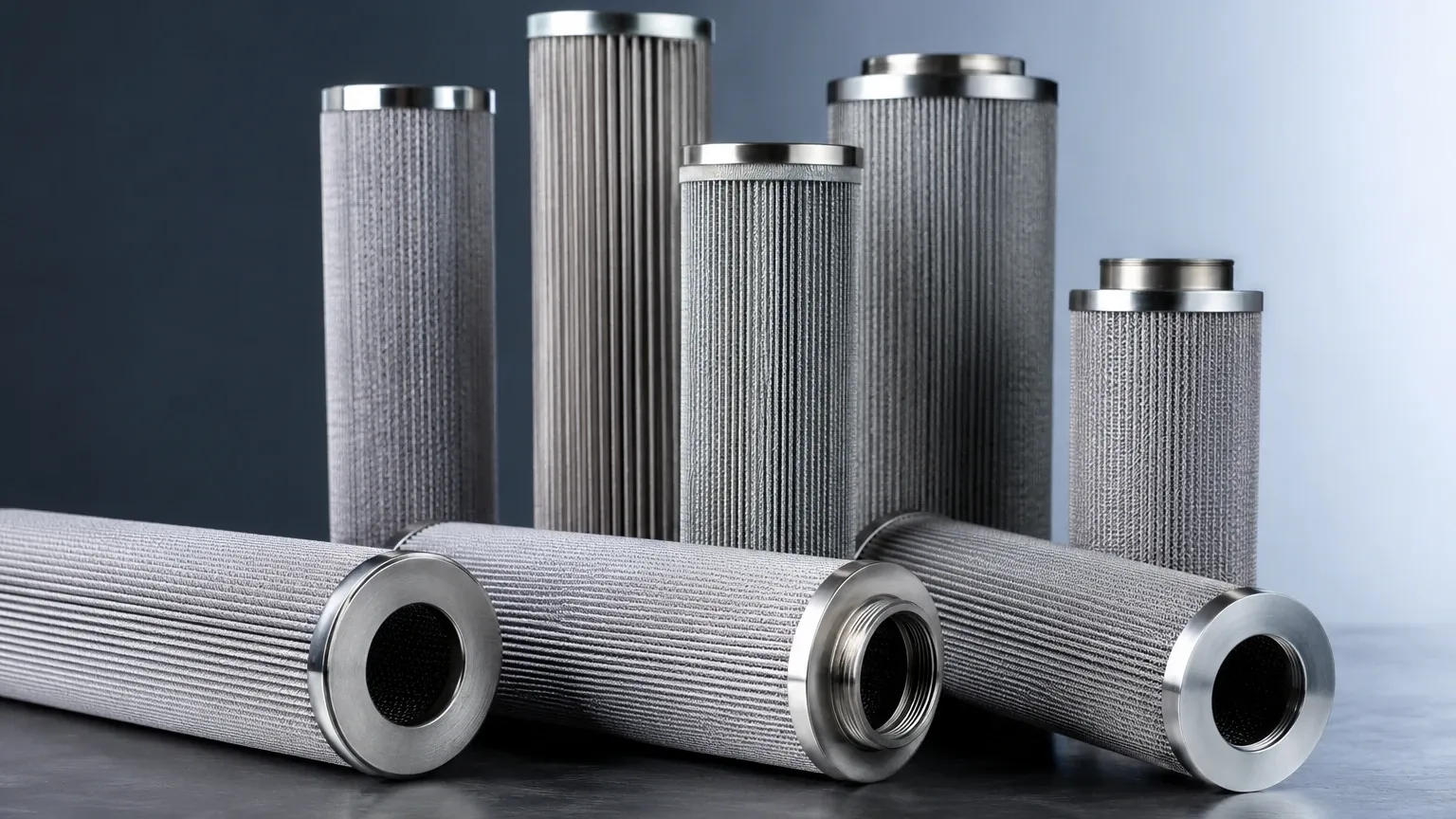
While the active filtration layer may be a delicate membrane, the industrial application of nano filter cartridges requires robust physical support. Stainless steel components, such as perforated cores or outer cages, provide the necessary rigidity to withstand high differential pressures. Manufacturers like Kaifil specialize in these precision metal components, ensuring that the cartridge does not collapse or bypass under the stresses of industrial flow rates. The integration of high-grade stainless steel (304 or 316L) ensures that the cartridge assembly is compatible with stringent hygiene standards in food and pharmaceutical processing.
Key Performance Metrics for Evaluation
When evaluating nano filter cartridges for a specific project, engineers must look beyond the nominal micron rating. Several specific metrics determine the suitability of a cartridge for a given process.
1. Rejection Rate: This is the percentage of a specific solute that the filter prevents from passing through. For nano-scale applications, rejection rates are often specified for divalent ions (e.g., >95% for MgSO4) and monovalent ions (e.g., 20-50% for NaCl).
2. Transmembrane Pressure (TMP): This is the pressure gradient required to force the liquid through the membrane. A lower TMP for a given flux indicates a more efficient cartridge design, leading to lower energy consumption for the pump systems.
3. Chemical Compatibility: The pH range (typically 2 to 11 for standard TFC membranes) and resistance to oxidants like chlorine are critical. Exceeding these limits can cause irreversible damage to the nano-pores.
4. Temperature Limits: Standard cartridges often operate up to 45°C, but specialized industrial versions can handle significantly higher temperatures if the support structure and bonding materials are engineered for thermal stability.
Industrial Applications for Nano Filter Cartridges
The unique selective properties of nano filter cartridges make them indispensable across several high-tech industries. By targeting specific molecular sizes, these filters enable processes that were previously difficult or energy-intensive.
Pharmaceutical and Biotechnology
In pharmaceutical manufacturing, nano filter cartridges are used for the concentration and purification of active pharmaceutical ingredients (APIs). They are particularly effective at removing viruses, bacteria, and pyrogens from process water or product streams. The ability to operate at low temperatures makes them ideal for heat-sensitive biological molecules that might denature during distillation or other thermal separation methods.
Food and Beverage Processing
Nanofiltration is widely used for the demineralization of whey in dairy processing and the concentration of fruit juices. In these applications, the goal is to remove salts (monovalent ions) while retaining larger organic molecules like proteins and sugars. The use of stainless steel-supported Filter Cartridges ensures that the system can be cleaned-in-place (CIP) using caustic or acidic agents without compromising the structural integrity of the filter assembly.
Chemical and Wastewater Treatment
Nano filter cartridges play a vital role in "Zero Liquid Discharge" (ZLD) strategies. They are used to recover valuable metals from plating baths, treat textile dye wastewater, and remove pesticides or herbicides from groundwater. By selectively concentrating contaminants, they reduce the volume of waste that requires expensive off-site disposal.
Engineering Selection and System Integration
Selecting the right nano filter cartridge requires a holistic view of the filtration system. It is rarely a matter of simple "plug-and-play" replacement. Engineers should confirm several technical factors before finalizing a purchase.
Feed Water Characterization
The composition of the feed fluid is the most critical variable. High concentrations of suspended solids or oils can quickly lead to surface fouling, rendering a nano filter ineffective. Pre-filtration is almost always required. Typically, a multi-stage approach is used, starting with coarse stainless steel mesh filters, followed by microfiltration or ultrafiltration, before the fluid reaches the nano filter cartridges.
Housing and Sealing Mechanisms
Because nanofiltration operates at higher pressures than standard sediment filtration, the seal between the cartridge and the housing must be absolute. Any bypass—even a fraction of a percent—can result in the failure of the entire process. Selection of the correct O-ring material (EPDM, Viton, or Silicone) and the use of precision-machined stainless steel filter housings are mandatory for maintaining a leak-proof system.
Customization and OEM Requirements
Many industrial applications require non-standard cartridge lengths, diameters, or end-cap configurations (such as Code 7, DOE, or 222/226). Working with a manufacturer that offers OEM and customized filtration solutions allows engineers to design systems that fit specific spatial constraints or unique flow requirements. Customization often extends to the support structure, where the thickness and perforation pattern of the stainless steel core are optimized for the specific viscosity and pressure of the process fluid.
Maintenance, Fouling, and Service Life
The total cost of ownership for nano filter cartridges is heavily influenced by their service life and the ease of maintenance. Fouling is the primary challenge in nanofiltration, occurring when solutes accumulate on the membrane surface or within the pores.
Types of Fouling
* Scaling: The precipitation of mineral salts (like calcium carbonate) on the membrane.
* Biofouling: The growth of microbial colonies, which can be mitigated through the use of antimicrobial materials or regular sanitization.
* Organic Fouling: The adsorption of organic matter, such as humic acids or oils, onto the filter surface.
Cleaning Protocols
Effective maintenance involves regular Clean-in-Place (CIP) cycles. The choice of cleaning chemicals depends on the type of fouling and the chemical resistance of the cartridge materials. High-quality industrial cartridges are designed to withstand repeated cleaning cycles without a significant loss in rejection performance. Monitoring the differential pressure across the cartridge is the most reliable way to determine when a cleaning cycle or a replacement is necessary.
Replacement Cycles
While the initial cost of nano filter cartridges is higher than that of standard sediment filters, their ability to perform complex separations often justifies the investment. In a well-maintained system with proper pre-filtration, a nano filter cartridge can last anywhere from 12 to 36 months, depending on the application and the aggressiveness of the process fluid.
Conclusion
Nano filter cartridges are a sophisticated tool in the industrial engineer’s arsenal, offering molecular-level precision for a wide range of separation tasks. By understanding the interplay between membrane chemistry, structural support, and fluid dynamics, organizations can achieve higher product purity and more efficient resource recovery. When sourcing these components, it is essential to partner with manufacturers who understand the rigors of industrial environments and can provide the necessary technical support for material selection and system integration. For those seeking reliable, high-performance filtration components, exploring the range of Filter Cartridges and custom metal solutions is the first step toward optimizing industrial filtration performance.
