


Oil Absorbing Filter Cartridges
In industrial fluid management, the removal of hydrocarbons and trace oils from aqueous streams is a critical requirement for both environmental compliance and process integrity. Oil absorbing filter cartridges represent a specialized category of depth filtration designed to intercept and retain dispersed oils, grease, and other hydrocarbons. Unlike standard sediment filters that rely on mechanical sieving, these components utilize oleophilic (oil-attracting) media to chemically and physically bind contaminants.
For engineers and procurement teams, selecting the correct oil-absorbing solution requires a deep understanding of the fluid chemistry, the nature of the oil present, and the integration of these cartridges into a broader filtration sequence. This guide examines the technical parameters, engineering considerations, and operational strategies for implementing oil absorbing filter cartridges in demanding industrial environments.
Understanding the Mechanism of Oil Absorption in Industrial Filtration
The performance of oil absorbing filter cartridges is rooted in the material science of the filter media. Most high-efficiency cartridges utilize proprietary blends of polypropylene or modified synthetic fibers that exhibit a high affinity for hydrocarbons while remaining hydrophobic (water-repelling).
Adsorption vs. Absorption
In the context of these Filter Cartridges, two primary mechanisms are at work:
1. Adsorption: This is a surface phenomenon where oil molecules adhere to the surface of the fiber. High-surface-area microfibers are essential for maximizing adsorption capacity.
2. Absorption: This involves the oil being drawn into the interstitial spaces of the fiber structure. As the oil is absorbed, the media may swell, which can affect the pressure drop across the cartridge.
Industrial-grade oil absorbing filter cartridges are often constructed as depth filters. This means the media density increases from the outer layers to the inner core, allowing for the capture of larger droplets on the surface while finer, dispersed oils are trapped deeper within the matrix. This graduated structure prevents premature surface blinding and extends the service life of the cartridge.
Key Engineering Considerations for Selection
When specifying oil absorbing filter cartridges, engineers must move beyond simple micron ratings. The efficiency of oil removal is influenced by several variables that dictate the total cost of ownership and the quality of the effluent.
Oil Type and Concentration
The state of the oil in the fluid stream is the first factor to consider. Oil typically exists in three states:
* Free Oil: Large droplets that rise to the surface quickly. These are best handled by oil-water separators or skimmers before reaching a filter cartridge.
* Dispersed/Mechanical Emulsions: Smaller droplets (typically 20–100 microns) that stay suspended due to flow turbulence. Oil absorbing cartridges are highly effective here.
* Chemically Emulsified Oil: Microscopic droplets stabilized by surfactants. These often require specialized media or chemical pre-treatment, as standard oleophilic fibers may not be able to break the chemical bond of the emulsion.
Contact Time and Flux Rates
Unlike particulate filtration, where higher velocities can sometimes improve mechanical trapping, oil absorption is highly dependent on contact time. If the flux rate (flow per unit of surface area) is too high, the oil molecules may not have sufficient time to adhere to the media, leading to "breakthrough." Engineers should typically design systems with lower flow velocities than those used for standard sediment filtration to maximize the residence time within the absorbent media.
Temperature and Chemical Compatibility
Temperature significantly affects the viscosity of the oil and the structural integrity of the polymer media. Most polypropylene-based oil absorbing filter cartridges are rated for temperatures up to 140°F (60°C). At higher temperatures, the oil may become too fluid to be effectively trapped, or the media may begin to soften. Additionally, the presence of solvents or high-pH cleaning agents must be cross-referenced with the media's chemical resistance chart to prevent material degradation.
Applications Across Industrial Sectors
Oil absorbing filter cartridges are deployed in diverse sectors where hydrocarbon contamination can compromise product quality or lead to regulatory fines.
Chemical and Petrochemical Processing
In these environments, cartridges are used to clean quench water, protect heat exchangers from fouling, and treat condensate before it is returned to the boiler. The ability to remove trace oils ensures that downstream equipment remains efficient and reduces the frequency of intensive chemical cleaning.
Food and Beverage Industry
While oil absorption is less common in direct food contact, it is vital in utility water systems. For example, compressed air systems used in packaging often contain trace compressor oils. Oil absorbing filters in the air-line or in the wash-water recovery systems ensure that no hydrocarbon residues contaminate the production environment.
Hydraulic and Machine Tooling
Coolants and hydraulic fluids often become contaminated with "tramp oil"—leaked lubricants from the machinery. Using oil absorbing filter cartridges in a bypass loop can continuously remove these contaminants, extending the life of the primary coolant and reducing the biological growth that often occurs in oil-rich environments.
Wastewater Treatment and Environmental Compliance
Discharge permits often limit Total Oil and Grease (TOG) to very low levels (e.g., <15 ppm). Oil absorbing cartridges serve as a final polishing stage after primary treatment (like DAF or API separators) to ensure the effluent meets stringent environmental standards before discharge into municipal sewers or open water bodies.
Integrating Oil Absorption into Multi-Stage Filtration Systems
An oil absorbing filter cartridge is rarely the first line of defense. To optimize performance, it must be integrated into a well-engineered multi-stage system. This is where the synergy between different types of Filter Cartridges becomes apparent.
The Role of Pre-Filtration
One of the most common causes of failure for oil absorbing media is "blinding" by suspended solids. If a fluid contains both sand/silt and oil, the solids will coat the oleophilic fibers, preventing the oil from ever making contact with the absorbent material.
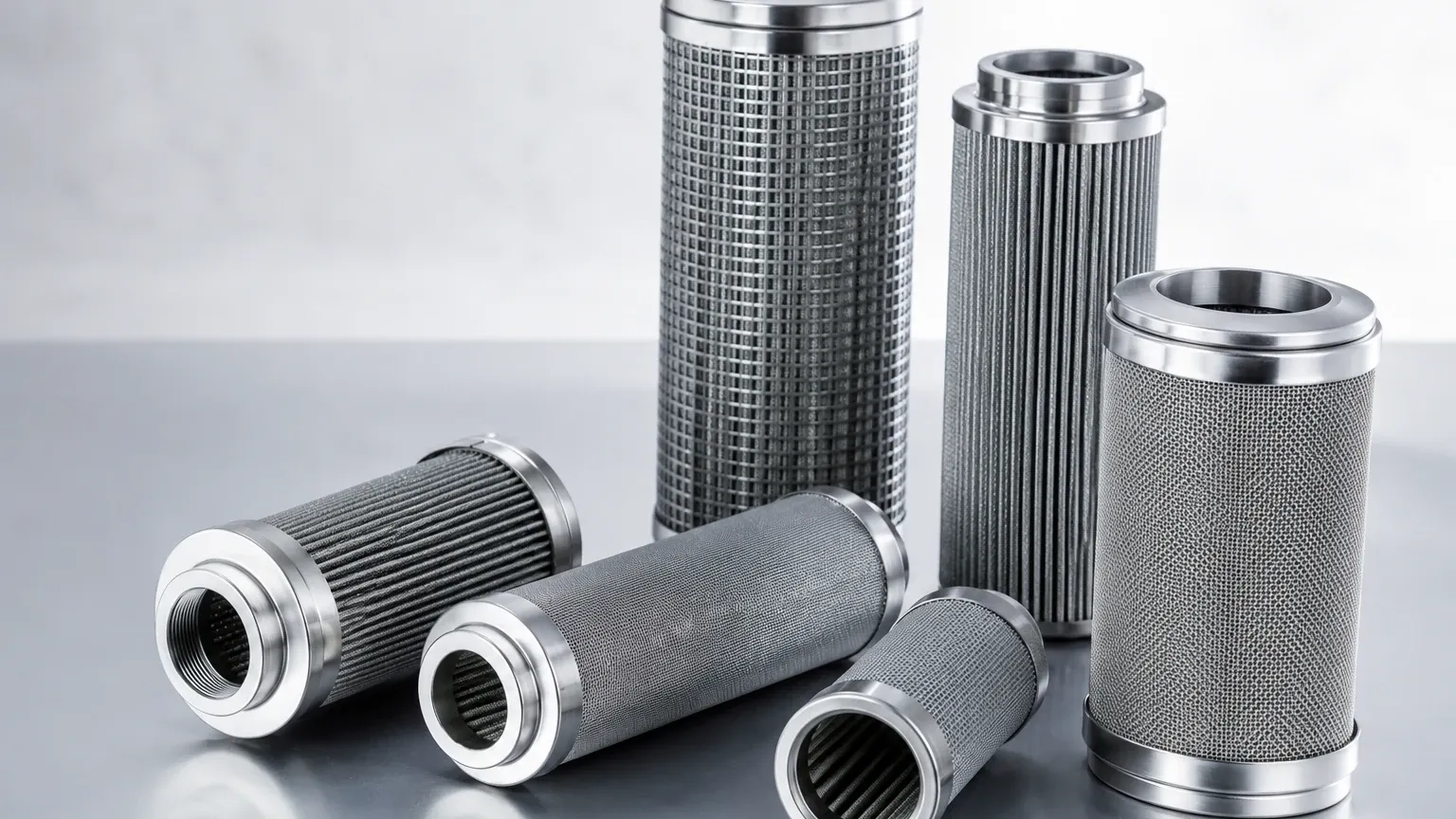
To prevent this, engineers often install a permanent or cleanable pre-filter. For instance, a stainless steel wire mesh filter or a pleated stainless steel cartridge can remove the bulk of the particulate matter. These metal filters are durable and can be backwashed or ultrasonically cleaned, protecting the consumable oil-absorbing cartridge downstream. By removing solids first, the capacity of the oil-absorbing media is reserved strictly for hydrocarbons, significantly lowering the frequency of cartridge replacements.
Protecting Downstream Components
In many high-purity water systems, oil absorbing cartridges are used specifically to protect sensitive downstream components like Reverse Osmosis (RO) membranes or Ion Exchange (IX) resins. Even minute amounts of oil can "foul" an RO membrane, creating a thin film that blocks water passage and is nearly impossible to clean. In these configurations, the oil absorbing cartridge acts as a sacrificial barrier, ensuring the longevity of the more expensive membrane assets.
Performance Evaluation and Maintenance
Monitoring the health of oil absorbing filter cartridges requires a different approach than standard particulate filters.
Pressure Differential (ΔP)
While an increase in pressure drop is a standard indicator that a filter is full, it can be misleading with oil absorption. Some oils may saturate the media without significantly increasing the ΔP, especially if the oil is very thin. Conversely, some media swell significantly when they absorb oil, causing a rapid pressure spike. Engineers should establish a baseline ΔP and combine it with regular effluent sampling to determine the true saturation point.
Saturation and Breakthrough
The "breakthrough point" occurs when the media can no longer hold additional oil, and the concentration in the effluent begins to rise. In critical applications, redundant sensors or a lead-lag (series) housing configuration is recommended. In a lead-lag setup, two housings are placed in series; when the first (lead) cartridge reaches saturation, the second (lag) cartridge catches any breakthrough, providing a safety margin while the lead cartridge is replaced.
Replacement Cycles
The replacement cycle is determined by the "oil loading capacity" of the cartridge, usually expressed in grams or liters of oil per cartridge. For example, a high-capacity 20-inch cartridge might be rated to hold 500 grams of oil. If the incoming fluid has 10 ppm of oil and flows at 10 GPM, an engineer can calculate the theoretical lifespan of the cartridge. However, actual field performance often varies, making pilot testing valuable for large-scale installations.
Common Risks and Mitigation Strategies
Implementing oil absorbing filter cartridges involves navigating several technical risks that can impact system reliability.
1. Bypass: If the cartridge is not seated correctly in the housing, oily water will take the path of least resistance around the seals. Using cartridges with high-quality gaskets (EPDM or Viton) and ensuring proper spring-loaded tension in the housing is essential.
2. Surfactant Interference: As mentioned previously, surfactants lower the surface tension of the oil, making it less likely to stick to the filter media. If the process fluid contains soaps or detergents, the efficiency of the oil absorbing cartridge will drop significantly.
3. Disposal Issues: Once saturated, the cartridges contain concentrated hydrocarbons. Depending on the type of oil and local regulations, these may need to be treated as hazardous waste. Some facilities utilize the high BTU value of the oil-soaked polypropylene for waste-to-energy incineration, which can be a more sustainable disposal route than landfilling.
Conclusion: Making Informed Purchasing Decisions
Selecting the right oil absorbing filter cartridges is a balance of material science, flow dynamics, and system design. For engineers, the goal is to achieve the required effluent quality with the lowest possible operational interruption.
Before finalizing a filtration design, it is vital to confirm the specific hydrocarbon profile of the fluid, the expected solid loading, and the desired discharge limits. By integrating robust pre-filtration—such as the stainless steel solutions provided by manufacturers like Kaifil—with high-efficiency absorbent cartridges, industrial facilities can maintain high performance and regulatory compliance.
For those evaluating their current filtration setup or designing a new process, reviewing the full range of available Filter Cartridges and consulting with filtration specialists can provide the technical clarity needed to optimize both filtration accuracy and total cost considerations.
