


Pentair Clean and Clear 520 Filter Cartridges
In the realm of high-capacity water filtration, the Pentair Clean and Clear 520 system represents a significant benchmark for surface-area-driven particulate removal. Designed for applications requiring high flow rates and extended service intervals, this system utilizes a specific configuration of four large-scale pleated elements. For engineers and facility managers, understanding the technical nuances of pentair clean and clear 520 filter cartridges is essential for maintaining system integrity, optimizing energy consumption, and ensuring consistent water quality in commercial and high-demand environments.
Industrial filtration relies on the balance between effective filtration area (EFA) and the structural stability of the filter media. The 520-square-foot rating of this system is achieved through dense pleating, which maximizes the available surface for contaminant entrapment without increasing the physical footprint of the filter tank. This guide examines the engineering specifications, maintenance requirements, and material considerations relevant to these high-performance Filter Cartridges.
Technical Specifications and Design Architecture
The Pentair Clean and Clear 520 system is engineered around a fiberglass-reinforced polypropylene tank that houses four individual cartridge elements. Each element provides 130 square feet of filtration media, totaling the 520 square feet designated in the model name. This multi-cartridge design is a deliberate engineering choice to distribute the hydraulic load across a larger surface area, thereby reducing the velocity of the fluid as it passes through the media.
From a fluid dynamics perspective, lower face velocity—the speed at which the liquid hits the filter surface—is critical for deep-bed filtration efficiency. When velocity is minimized, smaller particles are more likely to be trapped within the fibrous matrix of the media rather than being forced through by hydraulic pressure. The 520 system typically supports flow rates up to 150 gallons per minute (GPM) for commercial applications, though optimal efficiency is often found at lower operating speeds.
Internal components of the 520 series include a high-flow manual air relief valve and a continuous internal air bleed. These features are vital for preventing air pocket accumulation, which can cause uneven loading on the cartridges and lead to premature structural failure. The use of a tension control clamp for the tank lid ensures a consistent seal, which is a prerequisite for maintaining the pressure differentials required for effective filtration.
The Mechanics of Pleated Filter Media
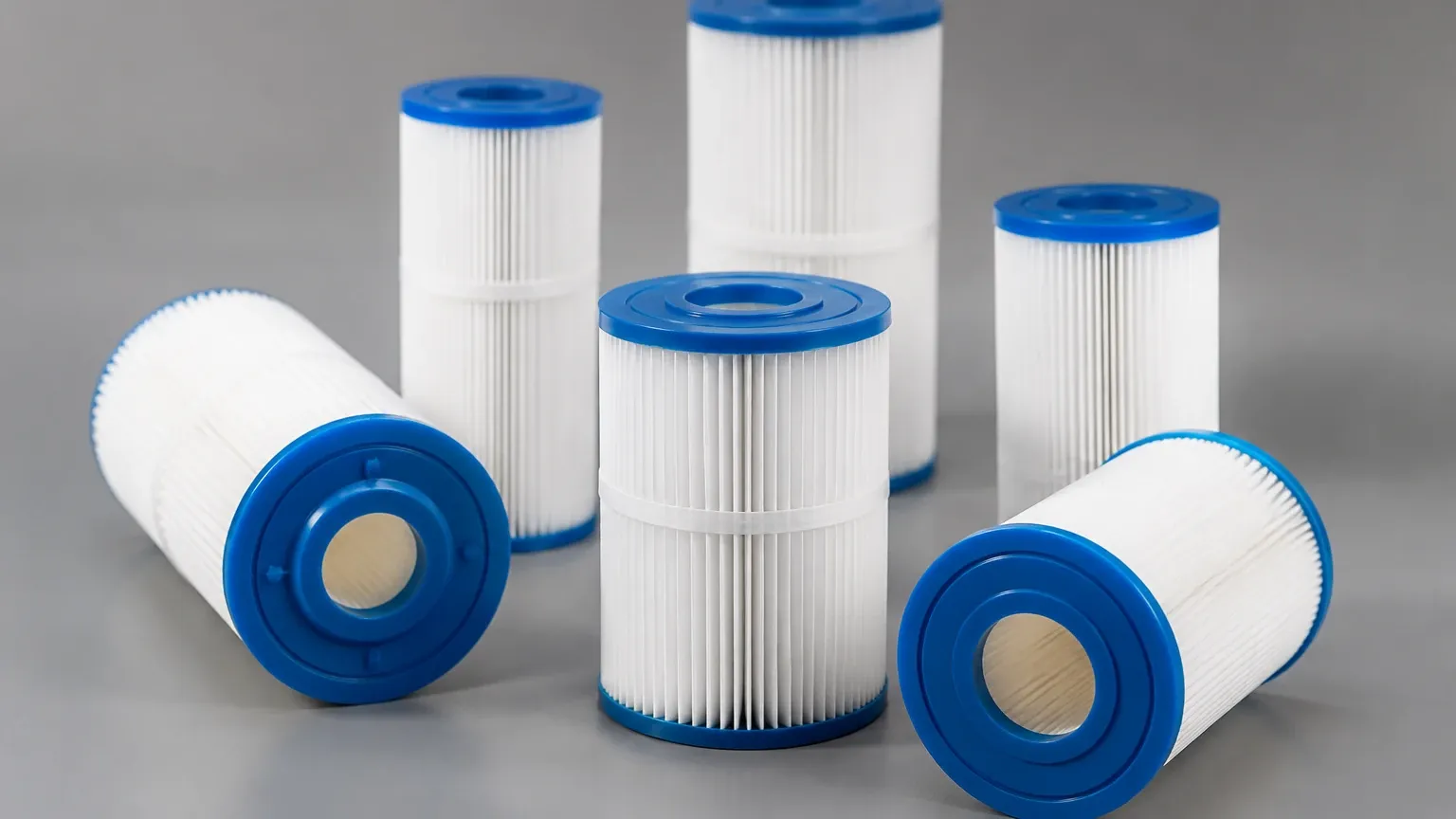
The performance of pentair clean and clear 520 filter cartridges is primarily dictated by the geometry and composition of the pleated media. Most standard replacements for this system utilize a non-woven polyester fabric. Unlike depth filters that rely on a thick matrix to trap particles, pleated cartridges function primarily through surface filtration and cake filtration.
As water passes through the polyester fibers, particles are intercepted. Over time, a layer of debris—known as a filter cake—builds up on the surface of the pleats. In many industrial and commercial scenarios, this cake actually improves the filtration fineness, as it acts as an additional barrier for smaller particulates. However, this comes at the cost of increased flow resistance.
Engineers must consider the "pleat pack" density. If pleats are packed too tightly, a phenomenon known as "pleat pinching" occurs. This restricts the flow to only the outer edges of the pleats, effectively reducing the EFA and causing a rapid spike in differential pressure. High-quality Filter Cartridges utilize specialized banding or support cores to maintain uniform pleat spacing even under high-pressure conditions.
Evaluating Performance: Flow Rate vs. Pressure Drop
One of the most critical metrics in industrial filtration is the clean pressure drop (ΔP). For the Pentair 520 system, a clean set of cartridges should ideally exhibit a very low initial pressure drop, typically between 1 and 3 PSI, depending on the pump's flow rate.
As the cartridges accumulate debris, the resistance to flow increases. In B2B and commercial operations, monitoring this pressure differential is the primary method for determining the maintenance cycle. A common industry standard is to perform a cleaning or replacement when the pressure gauge indicates an increase of 8 to 10 PSI over the initial clean starting pressure.
Operating beyond this threshold introduces several risks:
1. Media Migration: Excessive pressure can force trapped contaminants through the media and back into the effluent stream.
2. Structural Collapse: The central core of the cartridge, usually made of PVC or polypropylene, has a maximum collapse pressure. Exceeding this can lead to a catastrophic failure of the element.
3. Pump Strain: Higher resistance requires the pump to work harder, leading to increased electrical consumption and shortened motor life.
Maintenance Protocols and Replacement Cycles
Unlike sand filters that require backwashing, pentair clean and clear 520 filter cartridges are designed for manual cleaning. This process involves removing the cartridges and rinsing them with a high-pressure water source. From an operational efficiency standpoint, the lack of backwashing saves significant amounts of treated water, making it a preferred choice for facilities prioritizing water conservation.
However, manual cleaning has its limits. Over time, oils, minerals, and fine particulates become deeply embedded in the polyester fibers. Chemical soaking in specialized degreasers or acid solutions can extend the life of the cartridges, but eventually, the media will lose its permeability.
In a commercial or industrial setting, the typical lifespan of these cartridges ranges from 1 to 3 years, depending on the particulate load and water chemistry. Signs that replacement is necessary include:
* Rapid pressure increases shortly after cleaning.
* Visible fraying or tearing of the filter media.
* Cracking of the end caps or deformation of the internal core.
* Persistent turbidity in the filtered water despite proper chemical balance.
Material Science: Polyester vs. Industrial Metal Alternatives
While the standard pentair clean and clear 520 filter cartridges utilize polyester media, it is important for technical professionals to understand the limitations of synthetic polymers. Polyester is excellent for general water treatment due to its cost-effectiveness and broad chemical compatibility with standard pool chemicals. However, in more demanding industrial environments, synthetic media may fall short.
For applications involving high temperatures, aggressive solvents, or extremely high pressures, industrial facilities often turn to stainless steel filtration solutions. While the Pentair 520 housing is designed for polymer elements, the principles of high-surface-area filtration remain the same across materials. Stainless steel wire mesh or sintered metal cartridges offer several advantages over polyester:
* Temperature Resistance: Metal filters can operate in environments far exceeding the melting point of polypropylene and polyester.
* Cleanability: Stainless steel elements can be ultrasonically cleaned or backpulsed, allowing for a much longer service life in heavy-duty applications.
* Absolute Filtration: While many polymer cartridges are "nominal" (meaning they catch a percentage of particles at a certain micron rating), metal filters can be engineered for absolute filtration, ensuring 99.9% removal of specific particle sizes.
When evaluating Filter Cartridges for a specific project, engineers must weigh the initial capital expenditure against the long-term operational costs. While synthetic cartridges like those in the 520 system have lower upfront costs, the durability of metal alternatives can provide a lower total cost of ownership in harsh industrial cycles.
Engineering Considerations for System Integration
When integrating a Pentair Clean and Clear 520 system into a larger B2B water treatment process, several engineering factors must be confirmed:
1. Hydraulic Balancing: Ensure that the pump's GPM output does not exceed the maximum rated flow of the filter. Oversizing the pump leads to high-velocity flow that can bypass the media's effective filtration zone.
2. Chemical Compatibility: Verify that any additives or process chemicals are compatible with both the polyester media and the fiberglass-reinforced tank. High concentrations of certain solvents can weaken the polymer bonds over time.
3. Space and Clearance: The 520 system requires significant vertical clearance for cartridge removal. Maintenance teams must have at least 30 inches of clear space above the tank to lift the 32-inch-long cartridges out of the housing.
4. Redundancy: In critical industrial processes, a duplex configuration is recommended. This allows one filter to be serviced while the other remains online, preventing process downtime during the manual cleaning cycles required by cartridge systems.
Conclusion: Optimizing the Filtration Lifecycle
The Pentair Clean and Clear 520 system remains a robust solution for high-capacity particulate removal, provided that the cartridges are managed with technical precision. By focusing on the relationship between surface area, flow velocity, and pressure differential, operators can maintain high water clarity while protecting the longevity of their equipment.
Whether utilizing standard polyester pentair clean and clear 520 filter cartridges or exploring custom industrial Filter Cartridges for more demanding applications, the goal remains the same: achieving the highest possible filtration efficiency with the lowest possible energy and maintenance overhead. For engineers, the choice of filtration media is not merely a procurement decision but a fundamental component of system performance and reliability.
Download Pentair Clean and Clear 520 Filter Cartridges as a PDF
