


Pool Filter Cartridges Jandy
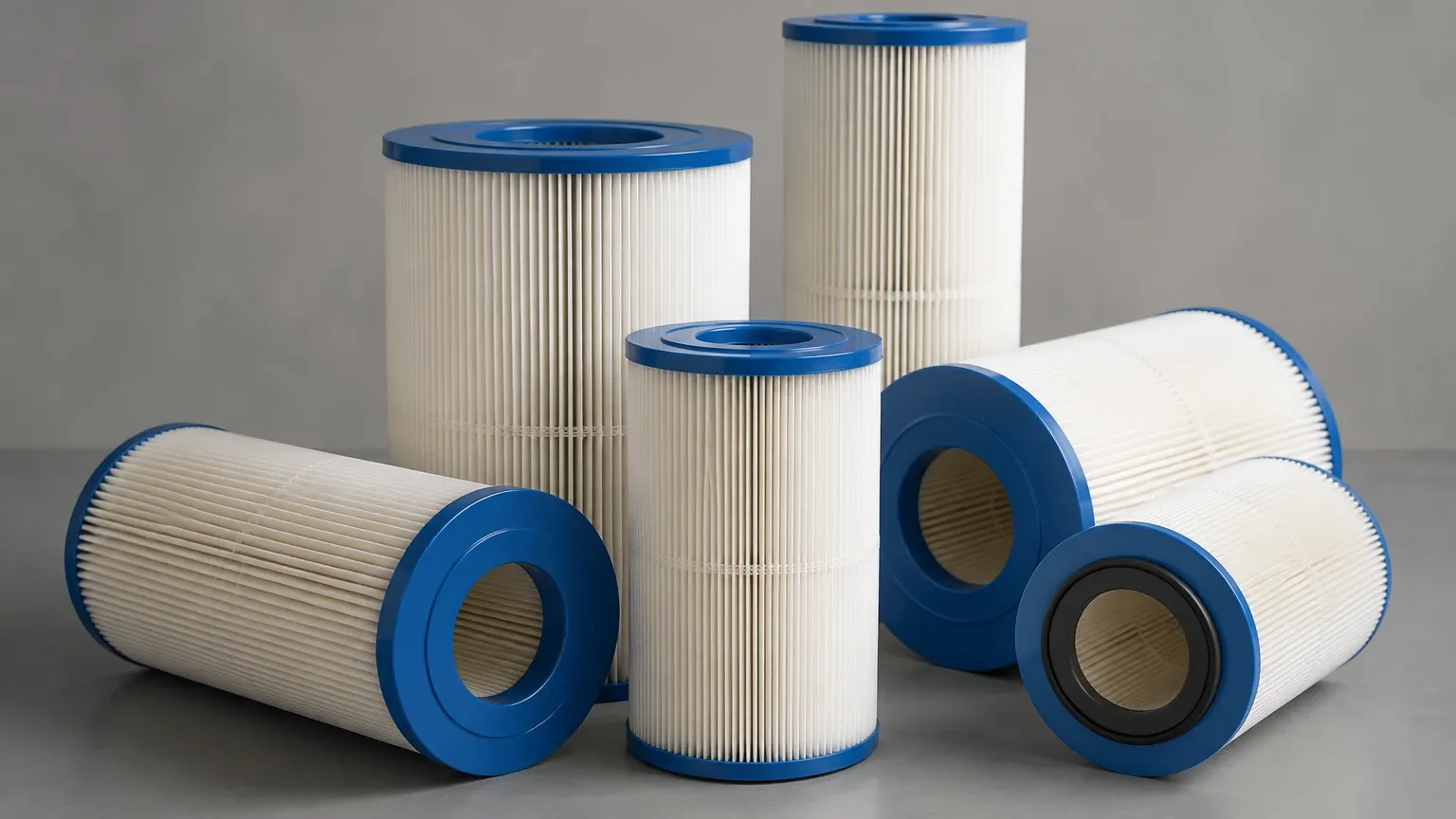
In industrial and commercial water treatment, the efficiency of a filtration system is largely determined by the quality and specifications of the internal media. For facilities utilizing Jandy-style filtration systems, selecting the appropriate pool filter cartridges jandy is a critical operational decision. These components are designed to manage high flow rates while maintaining specific water clarity standards by removing suspended solids, organic debris, and microscopic particulates.
As a professional manufacturer of high-performance filtration solutions, Kaifil understands that engineering considerations—such as material compatibility, surface area optimization, and structural integrity—are paramount when selecting Filter Cartridges for demanding environments. This article provides a technical overview of Jandy-compatible cartridges, their operational parameters, and how they compare to industrial-grade filtration components.
Engineering Principles of Cartridge Filtration
The primary function of a cartridge filter is to provide a physical barrier that intercepts contaminants as water passes through the media. Unlike sand or D.E. (diatomaceous earth) filters, cartridge systems rely on a pleated design to maximize the effective filtration area within a compact housing.
Pleat Density and Surface Area
For Jandy systems, such as the CL (Cartridge Large) or CV (Cartridge Versa-Plumb) series, the total square footage of the media is a defining specification. Common sizes include 340, 460, and 580 square feet. A higher pleat density increases the surface area, which directly correlates to a lower "face velocity" (the speed at which water passes through the media). Lower face velocity enhances filtration efficiency and extends the time between cleaning cycles by allowing more space for contaminant loading.
Core Support and Structural Integrity
Industrial-grade cartridges must withstand significant pressure differentials (ΔP). The internal core of a Jandy-compatible cartridge is typically constructed from high-strength PVC or reinforced polypropylene. This core prevents the pleats from collapsing under the force of the pump's flow. In more specialized industrial applications, where high temperatures or aggressive chemicals are present, engineers may opt for stainless steel cores or fully metallic Filter Cartridges to ensure long-term structural stability.
Material Specifications and Micron Ratings
Most pool filter cartridges jandy utilize a non-woven polyester fabric, often referred to as spunbond media. This material is chosen for its balance of permeability and particle retention.
Micron Performance
Standard polyester cartridges typically offer a nominal filtration rating of 10 to 20 microns. This is sufficient for removing most visible debris and many types of algae. However, in technical water treatment applications where finer clarity is required, the quality of the polyester fibers becomes critical. High-quality media features uniform pore distribution to prevent "channeling," where water finds the path of least resistance through larger pores, bypassing the filtration process.
Chemical Resistance
In commercial pool environments, the media is constantly exposed to chlorine, bromine, and various pH adjusters. Over time, inferior materials can degrade, leading to fiber shedding or a loss of structural tension. When evaluating replacements, it is essential to confirm that the end caps are made of durable polyurethane or plastisol that can resist chemical embrittlement and thermal expansion.
Compatibility and System Sizing
Selecting the correct pool filter cartridges jandy requires precise identification of the filter housing model. Jandy systems are categorized into several distinct series, each with specific dimensional requirements:
1. Jandy CL Series: These are multi-cartridge systems (usually requiring four elements). Dimensions typically involve a 27-inch or 33-inch length with a 7-inch outer diameter.
2. Jandy CV Series: Designed for the Versa-Plumb system, these often share dimensions with the CL series but are optimized for hydraulic efficiency within a specific plumbing footprint.
3. Jandy CS Series: These are single-element filters designed for smaller commercial applications or space-constrained equipment pads. They range from 100 to 250 square feet of media.
Engineers must ensure that the inner diameter (ID) of the cartridge matches the manifold or standpipe of the Jandy housing exactly. A poor fit allows "bypass," where unfiltered water returns to the system, compromising water quality and potentially damaging downstream components like heaters or salt chlorine generators.
Maintenance Protocols and Performance Monitoring
The lifecycle of a filter cartridge is determined by its maintenance history and the volume of contaminants it processes. In a B2B or commercial context, monitoring performance is essential for cost management.
Pressure Differential (ΔP)
The most reliable indicator of cartridge health is the pressure gauge on the filter tank. A "clean" starting pressure should be recorded upon installation. As the media traps debris, the resistance to flow increases, causing the pressure to rise. Manufacturers generally recommend cleaning the cartridges when the pressure rises 8 to 10 PSI above the clean baseline. Operating beyond this point reduces flow rates and increases the energy consumption of the circulation pumps.
Cleaning and Degreasing
Unlike industrial metal filters that may utilize backwashing or ultrasonic cleaning, polyester pool filter cartridges jandy are typically cleaned via manual rinsing. In commercial settings where oils (such as bather waste or sunscreens) are prevalent, a simple water rinse may be insufficient. A chemical soak in a degreasing agent or a mild acid solution (for calcium scale removal) is often necessary to restore the permeability of the fabric.
Replacement Indicators
Cartridges should be replaced when they no longer return to near-baseline pressure after a thorough cleaning, or if the fabric shows signs of "fuzzing" or tearing. In high-traffic commercial applications, the typical replacement cycle is 12 to 24 months, whereas lower-use systems may see 3 to 5 years of service.
Industrial Alternatives: When to Consider Metal Filters
While polyester cartridges are the standard for most pool applications, certain industrial water treatment scenarios require more robust solutions. Kaifil specializes in Filter Cartridges manufactured from stainless steel wire mesh and sintered metal.
Advantages of Stainless Steel Media
In environments where water temperatures exceed the limits of polyester (typically above 140°F) or where high-pressure steam cleaning is required, stainless steel filters are superior. They offer:
* Absolute Filtration Ratings: Unlike the nominal ratings of polyester, metal mesh can provide precise, absolute micron retention.
* Durability: Metal filters are resistant to high-pressure surges that might rupture a standard pool cartridge.
* Cleanability: Stainless steel elements can be cleaned and reused indefinitely in many applications, reducing the total cost of ownership compared to disposable polymer elements.
For facilities managing specialized aquatic features, industrial cooling towers, or process water, transitioning from standard pool filter cartridges jandy to custom-engineered metal components can provide significant improvements in reliability and filtration precision.
Procurement and OEM Considerations
For purchasing teams and facility managers, procurement of pool filter cartridges jandy involves balancing initial cost with long-term performance. While generic aftermarket cartridges are available, they often lack the pleat count or the reinforced end caps found in professional-grade replacements.
When sourcing filtration components, technical professionals should confirm:
* Media Weight: Often measured in ounces per square yard (e.g., 4 oz media is standard for heavy-duty applications).
* Banding Quality: The bands that wrap around the pleats should be securely thermally bonded to prevent pleat bunching, which reduces effective surface area.
* Manufacturer Support: Working with a manufacturer like Kaifil allows for the development of custom filtration solutions that meet specific OEM requirements, ensuring that the filter housing and the cartridge work in perfect hydraulic harmony.
Conclusion
Maintaining water quality in commercial and industrial systems requires a disciplined approach to filter selection and maintenance. Whether utilizing standard pool filter cartridges jandy for large-scale aquatic facilities or seeking specialized Filter Cartridges for high-demand industrial processes, understanding the underlying engineering specifications is key. By focusing on media quality, structural integrity, and proper sizing, engineers can optimize system performance, reduce energy costs, and ensure the longevity of their filtration infrastructure.
