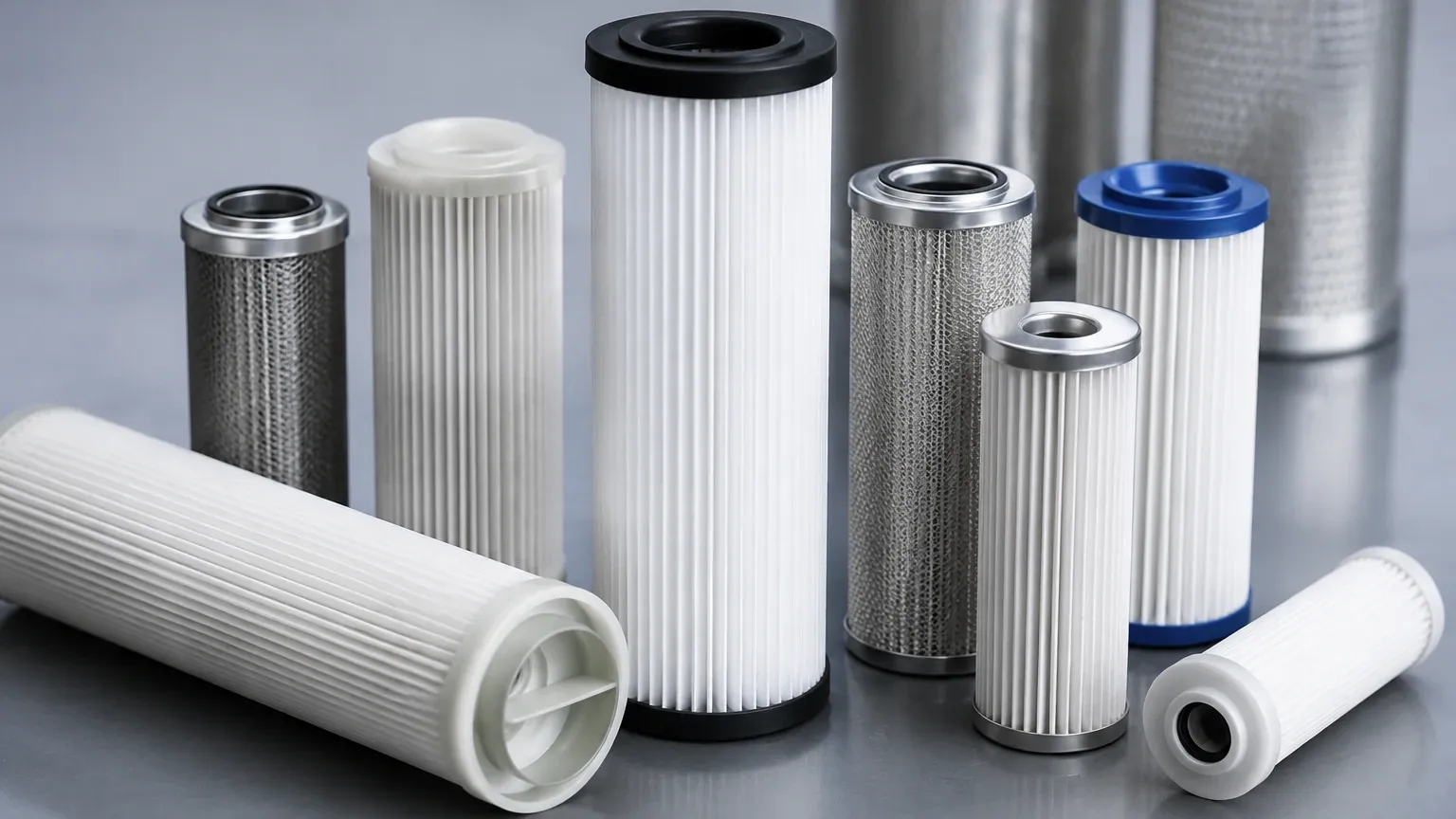
Pool Filter Cartridges
In the context of commercial aquatic facilities, industrial water treatment, and large-scale hospitality infrastructure, pool filter cartridges serve as the primary mechanical barrier against particulate contamination. Unlike sand or Diatomaceous Earth (DE) systems, cartridge-based filtration offers a high surface area-to-footprint ratio, making it a preferred choice for engineers seeking compact, high-efficiency water clarity solutions. Understanding the technical nuances of these components—from media permeability to structural integrity—is essential for procurement teams and facility engineers tasked with maintaining water quality while optimizing operational costs.
The Engineering Principles of Cartridge Filtration
At its core, a pool filter cartridge operates on the principle of surface filtration. The media, typically a non-woven pleated fabric, intercepts suspended solids as water is forced through the pleats by the system’s circulation pump. The effectiveness of this process is governed by several engineering variables:
1. Effective Filtration Area (EFA): The total surface area of the pleated media determines the dirt-holding capacity and the flow velocity through the material. A higher EFA reduces the flux (flow per unit area), which generally leads to higher filtration efficiency and longer intervals between cleaning cycles.
2. Micron Rating: Most commercial-grade pool filter cartridges are designed to capture particles in the 10 to 20-micron range. For specialized industrial applications or high-end aquatic centers, finer media may be employed, though this often necessitates a trade-off with increased hydraulic resistance.
3. Permeability and Porosity: These factors dictate the pressure drop across the clean filter. Engineering a cartridge with high porosity ensures that the initial energy consumption of the pump is minimized, while controlled permeability ensures that the target particle size is consistently captured.
Material Selection and Structural Components
For B2B buyers, the durability of pool filter cartridges is often a primary concern, as premature failure leads to system downtime and increased labor costs. The construction of a high-quality cartridge involves several critical components that must withstand chemical exposure and hydraulic stress.
Filter Media
Most standard cartridges utilize spun-bond polyester. In industrial-scale water treatment or environments with aggressive chemical profiles (such as high-salinity pools or systems using ozone/UV sterilization), the stability of the polyester fibers is paramount. The media must resist "blinding"—a condition where oils and fine particles become permanently embedded in the fibers—and must maintain its structural pleat definition under high flow rates.
Core Support
As the filter accumulates debris, the differential pressure (the difference between the inlet and outlet pressure) increases. The internal core of the cartridge must be rigid enough to prevent the media from collapsing inward. High-strength PVC or reinforced polypropylene cores with high open-area patterns are standard in quality engineering to ensure maximum flow with minimal structural deflection.
End Caps and Bonding
The end caps serve as the seal between the filter and the housing. They are typically molded from high-impact polyurethane or plastisol. The bond between the media and the end cap must be hermetic; any bypass at this junction allows unfiltered water to return to the pool, compromising the entire filtration strategy.
Critical Performance Metrics for Commercial Procurement
When evaluating Filter Cartridges for large-scale applications, engineers must look beyond the physical dimensions. The following metrics provide a factual basis for comparison:
* Dirt Holding Capacity (DHC): Measured in grams of standardized test dust, DHC indicates how much contaminant a cartridge can retain before reaching a terminal pressure drop (usually 10-15 PSI over clean start). High DHC reduces the frequency of manual intervention.
* Hydraulic Resistance (Clean Pressure Drop): A lower initial PSI at the rated flow rate indicates a more efficient pleat design and media selection, directly correlating to lower electricity consumption for the circulation pumps.
* Chemical Compatibility: In commercial settings, water chemistry is often more aggressive. Cartridges must be tested for resistance to high chlorine levels, bromine, and various sequestering agents used to prevent scale and staining.
Maintenance Protocols and Service Life Extension
The longevity of pool filter cartridges is heavily dependent on the maintenance regime. In a B2B environment, where labor is a significant cost factor, establishing a standardized cleaning protocol is essential.
1. Pressure Monitoring: Facilities should record the "clean" pressure at the start of a cycle. Once the gauge shows an increase of 8-10 PSI, the cartridges should be removed for cleaning. Allowing the pressure to climb too high can compress the pleats, permanently reducing the effective filtration area.
2. Chemical Degreasing: Since body oils, suntan lotions, and organic waste are common in commercial pools, a simple water rinse is often insufficient. Periodic soaking in a specialized degreasing solution is required to break down the organic film on the media fibers.
3. Acid Washing for Scale: In regions with hard water, calcium carbonate can accumulate on the filter media. An acid wash (typically a mild muriatic acid solution) can dissolve these deposits, but it must only be performed *after* degreasing, as acid can set oils into the fabric.
4. Drying and Inspection: After cleaning, cartridges should ideally be allowed to dry completely. This allows the fibers to "fluff" and makes it easier to shake off any remaining fine dust. During this phase, engineers should inspect the end caps for cracks and the media for any signs of fraying or bypass.
Custom OEM Solutions and Industrial Integration
For many industrial applications that overlap with aquatic filtration—such as pre-filtration for Reverse Osmosis (RO) systems or cooling tower side-stream filtration—standard off-the-shelf pool filter cartridges may not meet specific engineering tolerances. This is where custom manufacturing becomes vital.
Manufacturers like Kaifil specialize in providing tailored filtration solutions that address specific environmental challenges. Whether the requirement involves unique dimensions to fit legacy housings, specialized media for higher temperature resistance, or reinforced structural components for high-pressure systems, custom OEM capabilities ensure that the filtration component is optimized for the specific machinery it serves. By focusing on precision metal components and advanced synthetic assemblies, manufacturers can bridge the gap between standard commercial pool maintenance and high-stakes industrial water processing.
Evaluating Total Cost of Ownership (TCO)
In the procurement of pool filter cartridges, the initial purchase price is often a misleading indicator of value. A comprehensive TCO analysis should include:
* Replacement Frequency: A cheaper cartridge that lasts six months is more expensive than a premium cartridge that lasts two years when labor and shipping are factored in.
* Energy Consumption: Cartridges with poor pleat geometry or low-quality media increase the work required by the pump, leading to higher monthly utility bills.
* Water Consumption: High-capacity cartridges require fewer cleaning cycles. Since each cleaning cycle involves hosing down the elements, more durable filters can contribute to water conservation goals in drought-prone regions.
* Chemical Usage: Efficient filtration reduces the demand on chemical sanitizers by physically removing organic precursors before they can react with chlorine.
Conclusion
For the technical professional, the selection of pool filter cartridges is a balance of hydraulic efficiency, material science, and operational logistics. By prioritizing high-quality media, robust core construction, and precise fitment, facilities can ensure consistent water clarity and mechanical reliability. As water treatment requirements become more stringent, the role of engineered filtration components continues to expand, moving from simple maintenance items to critical assets in the broader water management strategy. Whether through standard replacements or custom-engineered OEM solutions, the focus remains on achieving the lowest possible cost per gallon of filtered water while maintaining the highest safety and clarity standards.