


Keurig Water Filter Cartridges
In the realm of commercial beverage preparation and small-scale office hospitality, water quality is the primary determinant of both flavor consistency and equipment longevity. While often discussed in consumer contexts, keurig water filter cartridges represent a fundamental application of point-of-use (POU) filtration technology. For engineers and procurement professionals managing office facilities or small-scale food service operations, understanding the technical specifications, material limitations, and maintenance requirements of these cartridges is essential for optimizing beverage programs and protecting hardware investments.
This guide examines the engineering principles behind small-format water filtration, evaluates the performance benchmarks of standard cartridges, and provides a technical bridge to the industrial-grade Filter Cartridges required for high-volume or specialized processing environments.
The Engineering Principles of Keurig Water Filter Cartridges
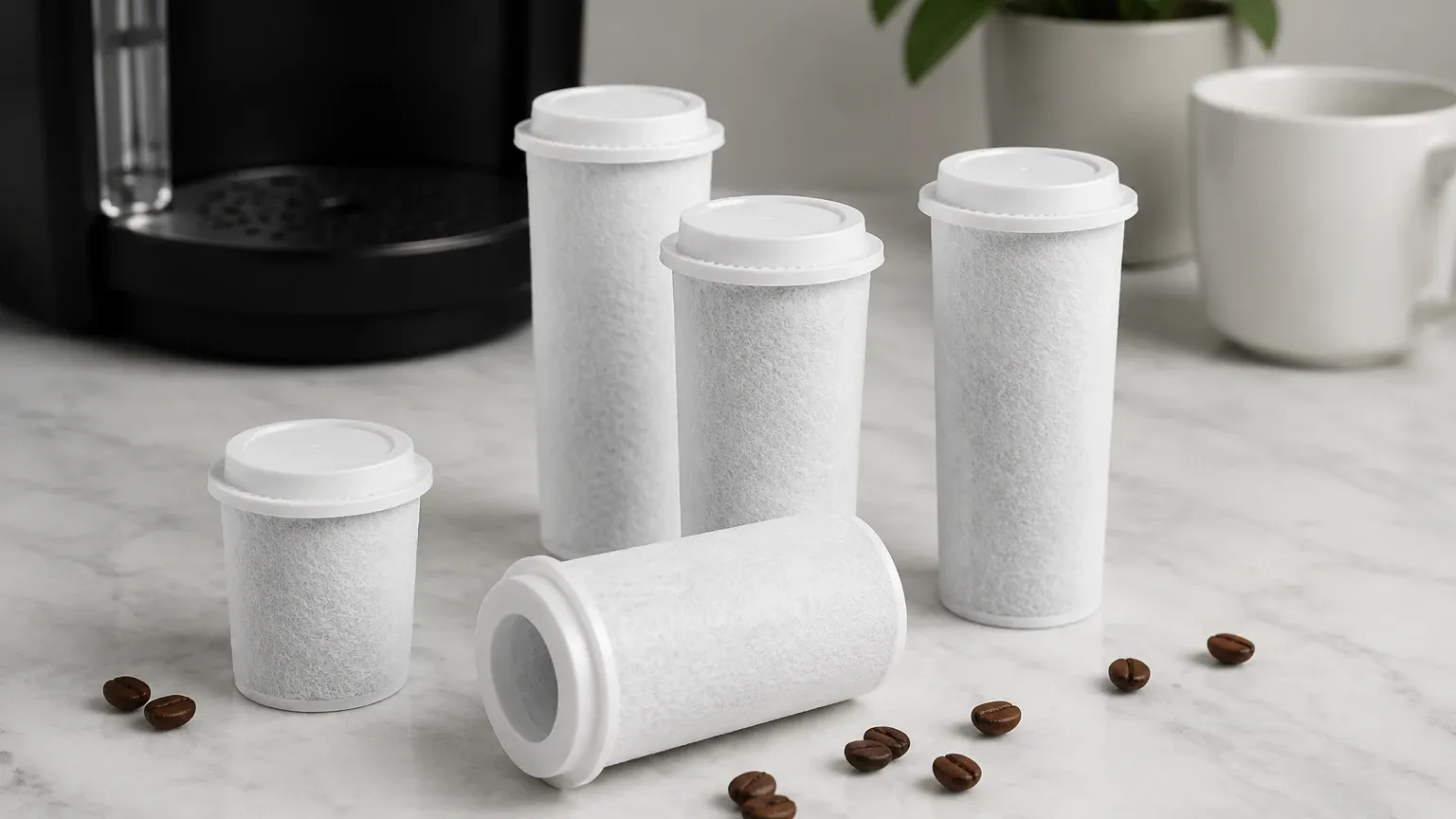
At its core, a water filter cartridge designed for a brewing system must address two distinct challenges: chemical purification and physical sediment removal. Most standard keurig water filter cartridges utilize a multi-stage filtration process housed within a compact, porous fabric or plastic casing.
Activated Carbon Media
The primary active component in these cartridges is granulated activated carbon (GAC). Carbon is selected for its high internal surface area and its ability to adsorb organic compounds. In a brewing context, the primary goal is the removal of chlorine and chloramines, which are commonly used in municipal water treatment but impart a distinct chemical odor and taste to coffee. The adsorption process occurs as water passes through the carbon bed, where impurities are trapped within the microscopic pores of the carbon granules.
Ion Exchange Resins
Some advanced versions of these cartridges incorporate ion-exchange resins. These resins are engineered to reduce mineral content, specifically calcium and magnesium ions, which contribute to "hard water." By mitigating mineral buildup, the cartridge helps prevent the calcification of the heating elements and internal tubing of the brewing machine—a critical factor in reducing maintenance downtime.
Mechanical Filtration Mesh
The outermost layer of the cartridge serves as a mechanical barrier. This fine mesh prevents carbon fines (small particles of charcoal) from escaping into the water reservoir and eventually the final beverage. From an engineering perspective, the micron rating of this mesh must be balanced to allow sufficient flow while retaining the internal media.
Technical Specifications and Performance Benchmarks
When evaluating filtration solutions for professional environments, it is necessary to look beyond marketing claims and focus on measurable performance data. For keurig water filter cartridges, the following technical factors are paramount:
* Flow Rate and Contact Time: Effective adsorption requires a specific "empty bed contact time" (EBCT). If the flow rate is too high, the water does not remain in contact with the carbon long enough to remove all contaminants. Small-format cartridges are calibrated for the specific pump pressures of the machines they serve.
* Micron Rating: While often not explicitly stated on consumer packaging, the mechanical mesh in these cartridges typically operates in the 20 to 50-micron range. This is sufficient for charcoal retention but may not address finer silt or microbiological contaminants found in certain water supplies.
* Replacement Cycles: The standard recommendation for replacing these cartridges is every two months or after 60 tank refills. From a technical standpoint, this is based on the saturation point of the carbon media and the risk of bacterial biofilm development within the moist environment of the filter housing.
Limitations of Consumer-Grade Filtration in B2B Environments
While keurig water filter cartridges are effective for light-duty office use, they possess inherent limitations that engineers must consider when scaling operations or dealing with challenging water chemistry.
Material Durability
Most small-format cartridges utilize plastic housings and synthetic fiber meshes. In industrial or high-pressure environments, these materials lack the structural integrity required to withstand hydraulic shock or high temperatures. For applications involving steam, hot water loops, or aggressive chemicals, stainless steel filtration components are mandatory.
Filtration Surface Area
The compact size of a standard water filter cartridge limits its total dirt-holding capacity. In a high-volume commercial kitchen or a laboratory setting, a small cartridge would reach its pressure drop limit ($\Delta P$) very quickly, leading to frequent maintenance interventions and increased total cost of ownership (TCO).
Lack of Customization
Standard cartridges are designed for a "broad-spectrum" approach to water quality. They are not optimized for specific regional water issues, such as high silica content or heavy metal contamination. In contrast, industrial Filter Cartridges can be customized with specific wire mesh weaves or sintered metal structures to target precise particle sizes.
Transitioning to Industrial-Grade Filter Cartridges
For facilities that have outgrown the capacity of standard POU filters, or for OEMs designing equipment that requires robust internal filtration, the transition to industrial-grade stainless steel cartridges is a logical step. These components offer several engineering advantages over disposable plastic alternatives.
Stainless Steel Construction
Industrial cartridges, such as those manufactured by Kaifil, utilize 304 or 316L stainless steel. This material provides exceptional corrosion resistance and can be cleaned and reused multiple times. In a B2B context, the ability to backwash or ultrasonically clean a filter cartridge significantly reduces waste and long-term procurement costs.
Precision Wire Mesh and Sintered Metal
Unlike the simple fabric mesh found in keurig water filter cartridges, industrial filters utilize precision-woven wire mesh or sintered metal powder. Sintering creates a rigid, porous structure that can achieve absolute filtration ratings as low as 0.5 microns. This level of precision is essential for protecting sensitive downstream components like high-pressure pumps and spray nozzles.
High-Pressure and Temperature Tolerance
Industrial filtration systems often operate under significant pressure. Stainless steel cartridges are engineered to maintain their structural shape under high differential pressure, ensuring that the filter media does not collapse or bypass—a common failure mode in plastic-housed filters.
Key Evaluation Criteria for Industrial Filtration Procurement
When moving from simple water filters to professional-grade filtration solutions, purchasing teams and engineers should confirm the following criteria with their supplier:
1. Chemical Compatibility: Ensure the filter media and seals (O-rings) are compatible with the process fluid and any cleaning agents used in the system.
2. Micron Rating (Absolute vs. Nominal): Understand the difference between a nominal rating (which captures a percentage of particles) and an absolute rating (which captures 99.9% of particles at a specific size).
3. Flow Capacity vs. Pressure Drop: Calculate the required flow rate and ensure the filter surface area is sufficient to keep the initial pressure drop within acceptable limits.
4. End-Cap Configurations: Industrial cartridges come in various styles, such as DOE (Double Open End), SOE (Single Open End) with 222 or 226 O-ring fittings, and threaded connections. Compatibility with existing filter housings is critical.
5. Cleanability and Maintenance: Determine if the application allows for manual cleaning or if a disposable high-efficiency cartridge is more cost-effective based on labor costs.
The Role of Customization in Filtration Efficiency
Every industrial environment presents unique challenges. A one-size-fits-all approach to filtration often leads to either inefficient purification or excessive maintenance. Customization allows for the optimization of the filtration media to match the specific contaminant profile of the source water or process fluid.
Kaifil specializes in developing customized Filter Cartridges that bridge the gap between standard requirements and specialized industrial needs. Whether it is adjusting the wire mesh weave to handle fibrous contaminants or designing a reinforced core for high-viscosity fluids, custom engineering ensures that the filtration system performs reliably under demanding conditions.
Total Cost of Ownership: Disposable vs. Permanent Filters
In the evaluation of keurig water filter cartridges, the low unit price is often the primary driver. However, in a B2B or industrial setting, the TCO must include the cost of frequent replacements, the labor required for those changes, and the environmental impact of plastic waste.
Investing in permanent, cleanable stainless steel filtration components may involve a higher initial capital expenditure, but it typically results in a lower TCO over the life of the equipment. For industries such as food and beverage processing, pharmaceuticals, and hydraulic systems, the durability and reliability of metal filtration are indispensable for maintaining operational uptime.
Conclusion
While keurig water filter cartridges serve as an effective solution for small-scale water improvement, they represent only the entry point of filtration technology. For professionals managing complex systems or high-volume production, the principles of material science, fluid dynamics, and mechanical durability must take precedence. By understanding the transition from consumer-grade media to industrial-grade stainless steel Filter Cartridges, engineers can implement filtration strategies that ensure purity, protect equipment, and optimize long-term costs.
