


Puretec Filter Cartridges
In the landscape of industrial fluid management, the selection of filtration components is a critical decision that directly impacts process efficiency, product purity, and equipment longevity. Puretec filter cartridges are widely recognized in the B2B sector for their reliability in water treatment and chemical processing applications. For engineers and procurement specialists, understanding the technical nuances of these cartridges—ranging from material science to hydraulic performance—is essential for optimizing filtration systems.
This guide examines the engineering principles behind puretec filter cartridges, evaluates their performance metrics, and provides a framework for selecting the appropriate filtration media for demanding industrial environments. We will also explore how these polymer-based solutions compare to specialized stainless steel Filter Cartridges in high-temperature or high-pressure scenarios.
The Role of Puretec Filter Cartridges in Industrial Filtration
Puretec filter cartridges are engineered to address specific contaminants in liquid streams. Their primary function is to remove suspended solids, organic compounds, or chemical additives that could compromise downstream processes. In industrial settings, these cartridges are typically deployed in multi-stage filtration systems, serving as either pre-filters to protect sensitive membranes (such as Reverse Osmosis) or as final polishing filters for high-purity water.
Depth vs. Surface Filtration
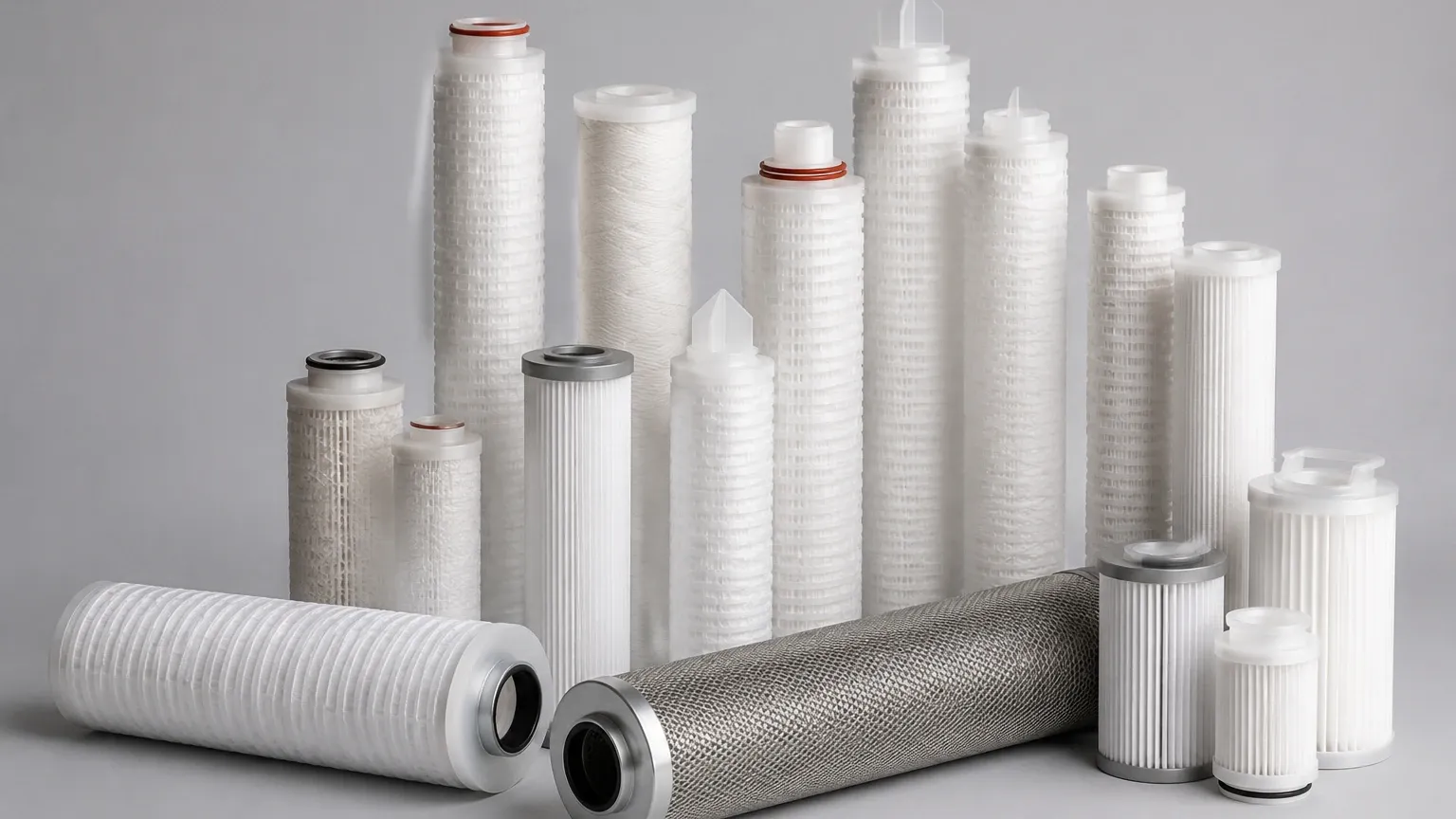
Most puretec filter cartridges utilize depth filtration technology. In this configuration, the filter media possesses a graded density structure. The outer layers trap larger particles, while the inner layers capture increasingly finer contaminants. This design maximizes the dirt-holding capacity of the cartridge, extending the interval between replacements. Conversely, pleated cartridges offer surface filtration, providing a much higher surface area which allows for higher flow rates and lower initial pressure drops.
Application Scopes
These cartridges are prevalent in several key sectors:
* Food and Beverage: Ensuring ingredient water meets stringent potability and clarity standards.
* Chemical Processing: Removing catalysts or impurities from process chemicals.
* Pharmaceuticals: Providing consistent pre-filtration for sterile water systems.
* Manufacturing: Protecting cooling towers and boiler feed systems from scale and sediment.
Engineering Specifications and Performance Metrics
When evaluating puretec filter cartridges, technical professionals must look beyond the brand name to the specific performance data provided in technical data sheets. The following metrics are the most critical for system design.
Micron Ratings: Nominal vs. Absolute
A common point of confusion in filtration procurement is the distinction between nominal and absolute micron ratings. A nominal rating indicates the cartridge's ability to retain a major percentage (usually 60% to 90%) of particles at a specific size. An absolute rating, often achieved by high-end pleated puretec filter cartridges, implies a 99.9% (Beta 5000) efficiency at the stated micron size. For critical applications where even trace contamination can cause failure, absolute-rated cartridges are the industry standard.
Flow Rate and Differential Pressure (ΔP)
The relationship between flow rate and differential pressure is a primary indicator of a filter’s efficiency. As a filter captures contaminants, the resistance to flow increases, leading to a rise in ΔP. Engineers must calculate the "Clean Pressure Drop" to ensure the pump system can maintain the required flow rate. Most industrial systems are designed to trigger a cartridge change-out when the differential pressure reaches 15–25 psi (1.0–1.7 bar), depending on the structural integrity of the cartridge core.
Dirt-Holding Capacity
This metric defines the total mass of contaminants a cartridge can retain before reaching its terminal pressure drop. High dirt-holding capacity is a hallmark of quality depth filters, as it directly translates to lower operational costs by reducing the frequency of maintenance cycles and disposal volume.
Material Compatibility and Environmental Factors
The chemical and thermal environment of the application dictates the material selection for the filter cartridge. While many puretec filter cartridges utilize polypropylene (PP) due to its broad chemical resistance and low cost, other materials are necessary for specialized environments.
Polymer-Based Media
* Polypropylene: Excellent for acids, bases, and most aqueous solutions. However, it has a limited temperature threshold, typically losing structural integrity above 60°C (140°F).
* Polyester: Often used where higher temperature resistance is required or when compatibility with specific hydrocarbons is necessary.
* Polyethersulfone (PES): Utilized in pleated formats for high-flow, high-purity applications, particularly in the microelectronics and pharmaceutical industries.
The Shift to Stainless Steel in Harsh Conditions
In applications involving extreme temperatures (above 100°C), high-viscosity fluids, or aggressive solvents that degrade polymers, standard puretec filter cartridges may not suffice. This is where stainless steel Filter Cartridges become the preferred engineering choice. Stainless steel mesh or sintered metal fibers offer permanent structural stability and can be cleaned and reused, providing a different economic model compared to the "use-and-toss" nature of polymer cartridges.
Selection Criteria for Industrial Applications
Selecting the right puretec filter cartridges requires a systematic approach to ensure the filtration system meets the desired output quality without excessive overhead. Engineers should confirm the following parameters before procurement.
1. Fluid Characteristics
Determine the viscosity, pH level, and temperature of the fluid. High-viscosity fluids require larger surface areas (pleated designs) to maintain flow, while extreme pH levels may require specialized O-ring materials like Viton or EPDM to prevent bypass leakage at the seals.
2. Contaminant Profile
Analyze the nature of the solids being removed. Are they deformable (organic matter) or hard (sand/scale)? Deformable particles often require depth filtration to prevent premature surface blinding, whereas hard particles are efficiently handled by pleated media.
3. End-Cap Configurations
To ensure a proper seal within the filter housing, the cartridge end-caps must be compatible. Common configurations include:
* DOE (Double Open End): Uses flat gaskets at both ends; common in standard commercial housings.
* Code 7 (226 O-rings/Fin): Features a locking tab and double O-rings for high-security applications where bypass is unacceptable.
* 222 O-rings: A push-fit style providing a better seal than DOE for industrial process water.
Maintenance, Replacement Cycles, and System Integrity
The total cost of ownership (TCO) for puretec filter cartridges is heavily influenced by maintenance practices. A cartridge that is left in service too long can undergo "unloading," where the high differential pressure forces captured contaminants through the media and back into the process stream.
Monitoring and Instrumentation
Industrial filtration skids should always be equipped with upstream and downstream pressure gauges. Automated systems often utilize differential pressure transmitters linked to a PLC (Programmable Logic Controller) to alert operators when a change-out is required. This data-driven approach prevents both premature replacement (which wastes money) and late replacement (which risks product quality).
Sanitization and Cleaning
In the food and pharmaceutical sectors, cartridges must be compatible with sanitization protocols, such as hot water flushes or chemical CIP (Clean-In-Place) cycles. It is vital to verify that the core and cage materials of the puretec filter cartridges can withstand these thermal shocks without warping or leaching extractables.
Customization and OEM Integration
While standard puretec filter cartridges meet the needs of many general-purpose applications, specialized industrial equipment often requires custom filtration solutions. OEM manufacturers like Kaifil provide the engineering expertise to bridge the gap between standard polymer cartridges and high-performance metal filtration components.
Tailored Filtration Solutions
For engineers designing new machinery, the ability to customize the length, diameter, and micron rating of a filter is invaluable. Customization allows for:
* Optimized Footprint: Designing housings and cartridges that fit within the spatial constraints of a compact machine skid.
* Enhanced Durability: Replacing standard polymer components with reinforced stainless steel mesh in high-vibration or high-pressure environments.
* Proprietary Fittings: Developing unique end-cap designs to ensure that only authorized replacement cartridges are used, protecting the integrity of the OEM equipment.
Total Cost of Ownership (TCO) Considerations
When purchasing puretec filter cartridges, the unit price is only one component of the TCO. Procurement teams should evaluate the following factors to determine the true cost:
1. Change-out Frequency: A cheaper cartridge that lasts only half as long as a premium version will double the annual material cost and labor requirements.
2. Disposal Costs: In some regions, disposing of used industrial filters (especially those saturated with oils or chemicals) can be expensive. Reusable stainless steel alternatives may offer a lower TCO over a 3-to-5-year horizon.
3. Downtime: The labor and production loss associated with stopping a line to change filters can far outweigh the cost of the filter itself. Selecting high-capacity pleated cartridges can significantly reduce these interruptions.
4. Energy Consumption: A filter that operates with a lower average differential pressure reduces the load on the system's pumps, leading to measurable energy savings in high-volume continuous operations.
Conclusion
Puretec filter cartridges represent a versatile and effective solution for a wide array of industrial filtration challenges. By focusing on technical specifications such as micron efficiency, material compatibility, and hydraulic performance, engineers can ensure their systems operate at peak efficiency.
However, the selection process must also account for the limits of polymer media. In scenarios where durability, reusability, and extreme resistance are paramount, transitioning to specialized stainless steel Filter Cartridges may provide the necessary performance edge. Whether utilizing standard puretec solutions or seeking customized metal filtration components, the goal remains the same: achieving precise, reliable, and cost-effective separation to protect the integrity of the industrial process.
