


Replacement Filter Range Hood
In industrial and commercial kitchen environments, the air management system is a critical component of operational safety and efficiency. The selection of a replacement filter range hood is not merely a maintenance task but an engineering decision that impacts grease extraction efficiency, fire safety, and the longevity of the ventilation infrastructure. For facilities managing high-volume food processing or large-scale commercial cooking, understanding the technical nuances of these filtration components is essential for maintaining compliance with health and safety standards while optimizing the total cost of ownership.
As a specialized manufacturer of stainless steel filtration solutions, Kaifil emphasizes that the performance of a range hood is only as effective as its filtration media. Whether utilizing baffle filters or multi-layer wire mesh designs, these components must withstand rigorous cleaning cycles, high temperatures, and constant exposure to corrosive fats and oils.
Understanding the Engineering Behind Replacement Filter Range Hood Components
The primary function of a range hood filter is to remove airborne grease, smoke, and steam from the exhaust stream before it enters the ductwork. In industrial settings, this is typically achieved through mechanical separation. The two most common designs for a replacement filter range hood are baffle filters and mesh filters, each serving distinct operational needs.
Baffle Filters
Baffle filters are engineered with a series of vertical "baffles" or interlocking vanes. As grease-laden air passes through the filter, it is forced to undergo rapid changes in direction. The inertia of the heavier grease particles causes them to collide with the metal surfaces, where they condense and drain into a collection trough. This design is favored in high-volume environments because it maintains a consistent airflow even as grease accumulates, and it acts as an effective fire barrier by preventing flames from entering the ductwork.
Mesh Filters
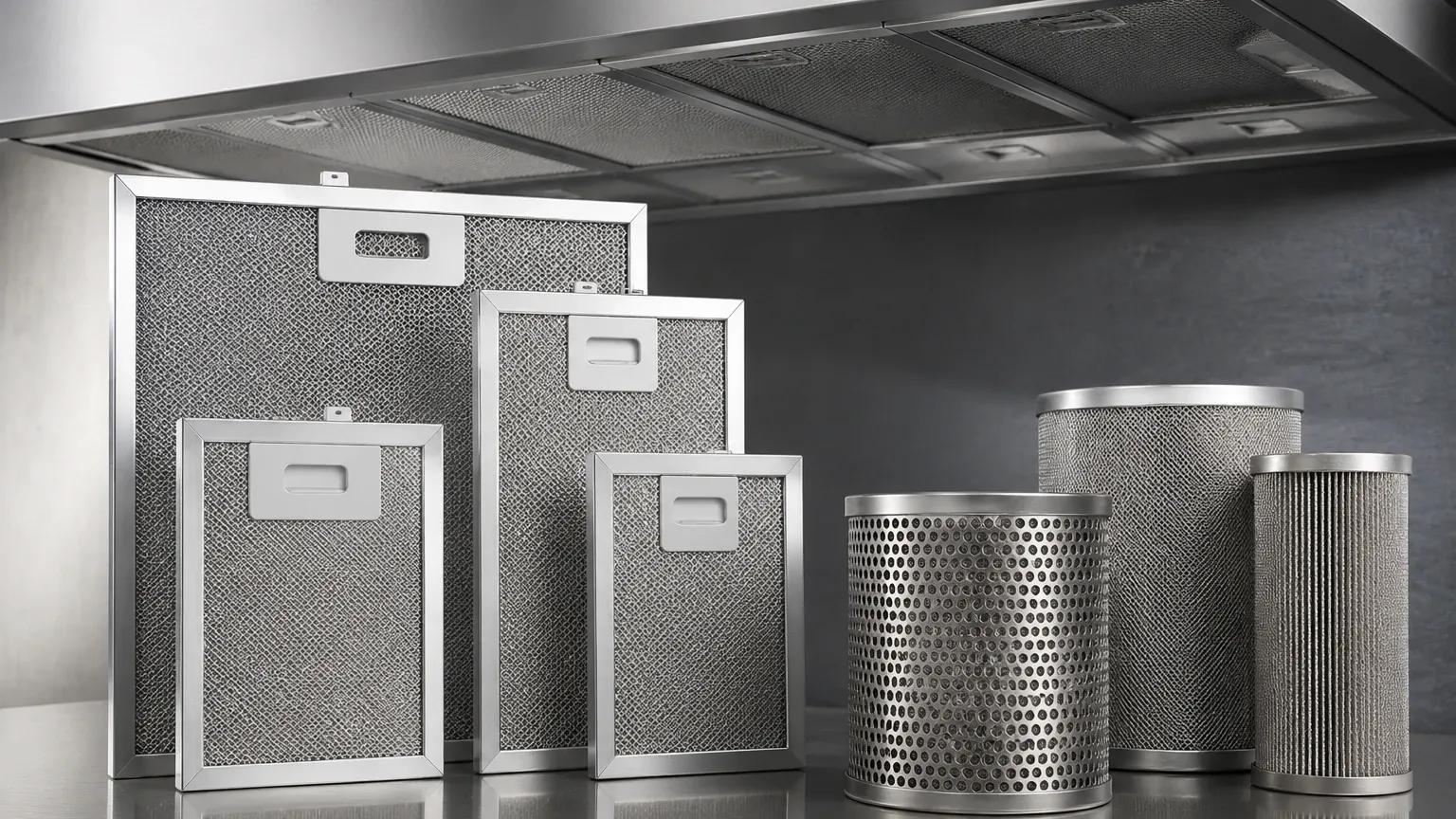
Mesh filters consist of multiple layers of knitted or woven wire mesh. These are often used in lighter-duty commercial applications or as secondary filtration stages. The high surface area of the mesh provides excellent particulate capture, but they require more frequent cleaning to prevent a significant increase in static pressure. When selecting a mesh-based replacement filter range hood, engineers must consider the density of the weave and the number of layers to balance filtration efficiency with airflow requirements.
In complex air purification systems, these primary filters are often integrated with secondary Filter Cartridges designed to capture finer aerosols or odors, ensuring that the exhausted air meets environmental regulations.
Material Selection: Why Stainless Steel Dominates Industrial Applications
When sourcing a replacement filter range hood, material choice is the most significant factor in determining durability and hygiene. While aluminum and galvanized steel are available, stainless steel remains the industry standard for professional environments.
1. Corrosion Resistance: Industrial kitchens are high-moisture environments. Stainless steel (typically Grade 304 or 316) offers superior resistance to rust and corrosion, even when exposed to acidic food particles and harsh chemical degreasers.
2. Structural Integrity: Range hood filters are subject to physical stress during removal and cleaning. Stainless steel maintains its shape and structural integrity under high heat and mechanical handling, ensuring a tight seal within the hood frame over years of service.
3. Thermal Stability: Stainless steel can withstand the extreme temperatures found in heavy-duty cooking lines without warping. This is critical for maintaining the precise spacing between baffles, which is essential for consistent aerodynamic performance.
4. Hygiene and Cleanability: The non-porous surface of stainless steel prevents the absorption of grease and bacteria. It is compatible with high-temperature dishwashers and ultrasonic cleaning systems, which are often required in pharmaceutical or food-grade processing facilities.
Performance Metrics: Airflow, Pressure Drop, and Extraction Efficiency
For engineers and facility managers, the selection of a replacement filter range hood must be guided by quantitative performance metrics. A filter that is too restrictive will strain the exhaust fan motor, while one that is too porous will allow grease to coat the internal ductwork, creating a significant fire hazard.
Static Pressure and Airflow
Every filter introduces a degree of resistance to the airflow, known as pressure drop. When replacing filters, it is vital to match the original equipment manufacturer (OEM) specifications for static pressure. If the replacement filter has a higher resistance, the system’s CFM (cubic feet per minute) will drop, leading to poor smoke capture and heat buildup in the workspace.
Grease Extraction Efficiency (GEE)
GEE measures the percentage of grease particles captured by the filter relative to the total grease produced. High-efficiency baffle filters are designed to capture a high percentage of particles larger than 5-10 microns. For applications requiring the capture of sub-micron particles, secondary filtration stages involving specialized metal filter components or electronic precipitators may be necessary.
Integration with Industrial Filter Cartridges Systems
In many modern industrial ventilation designs, the range hood is the first stage of a multi-stage filtration system. While the replacement filter range hood handles the bulk of the grease, secondary stages often utilize various Filter Cartridges to refine the air quality further.
These cartridges may include:
* HEPA Cartridges: For environments requiring sterile air discharge.
* Activated Carbon Cartridges: For the adsorption of Volatile Organic Compounds (VOCs) and odors, particularly in urban areas with strict emission codes.
* Fine Mesh Cartridges: Used to protect downstream heat recovery units from fine particulate fouling.
Understanding the compatibility between the primary hood filter and these secondary cartridges is essential for maintaining the overall balance of the HVAC system. Kaifil’s expertise in custom metal filtration allows for the design of integrated systems where the primary and secondary stages work in tandem to maximize service life and minimize maintenance frequency.
Maintenance Protocols and Replacement Indicators
A robust maintenance schedule is the only way to ensure the continued performance of a replacement filter range hood. Unlike disposable filters used in residential settings, industrial metal filters are designed to be cleaned and reused. However, they do have a finite lifespan.
Cleaning Frequency
In high-volume commercial kitchens, filters should be cleaned daily. In industrial processing plants, the frequency depends on the particulate load. Failure to clean filters leads to "face loading," where grease blocks the air passages, significantly increasing the fire risk and reducing air quality.
When to Replace
Despite their durability, stainless steel filters should be inspected regularly for the following signs of failure:
* Warping or Gapping: If the filter frame or baffles are bent, air will "bypass" the filter, carrying grease directly into the ducts.
* Persistent Clogging: If carbonized grease has built up in inaccessible areas of the mesh or baffle interior that cannot be removed by standard cleaning, the filter must be replaced.
* Corrosion Pit Marks: While rare in high-grade stainless steel, any signs of pitting or surface degradation can harbor bacteria and weaken the structure.
* Broken Welds: The structural integrity of a baffle filter relies on secure spot welds. If these fail, the filter may vibrate, creating noise and potentially shedding metal fragments.
Customization Options for OEM and Specialized Equipment
Not all industrial hoods follow standard dimensions. Many specialized processing lines require custom-sized replacement filter range hood units to fit unique housing geometries or to meet specific airflow velocities.
Kaifil provides comprehensive OEM and customization services for metal filtration components. Customization options include:
* Dimensional Adjustments: Precision-manufactured frames to fit non-standard hood tracks.
* Variable Mesh Density: Adjusting the number of mesh layers or the wire diameter to achieve specific filtration ratings.
* Integrated Handles and Locking Mechanisms: Enhancing the ease of installation and removal for maintenance teams.
* Material Upgrades: Utilizing 316L stainless steel for environments with high salt or chemical exposure.
By working directly with a manufacturer, purchasing teams can ensure that their replacement filters meet the exact engineering requirements of their specific application, rather than relying on "one-size-fits-all" aftermarket parts that may compromise system performance.
Total Cost of Ownership (TCO) in Filtration
When evaluating the procurement of a replacement filter range hood, it is important to look beyond the initial purchase price. The Total Cost of Ownership includes the purchase price, the cost of energy (impacted by pressure drop), the labor cost for cleaning, and the frequency of replacement.
Investing in high-quality stainless steel baffle filters typically results in a lower TCO compared to cheaper aluminum alternatives. Stainless steel filters last significantly longer, require less frequent replacement, and maintain their efficiency over thousands of cleaning cycles. Furthermore, by ensuring high grease extraction efficiency, these filters reduce the frequency of professional duct cleaning, which is a major operational expense and fire safety requirement.
Conclusion: Making Informed Procurement Decisions
Selecting the right replacement filter range hood is a technical requirement that directly impacts the safety and efficiency of industrial facilities. By focusing on material quality, aerodynamic performance, and compatibility with existing Filter Cartridges systems, engineers can ensure optimal air management.
Kaifil remains committed to providing the technical expertise and manufacturing precision required for these demanding applications. From standard stainless steel baffles to custom-engineered metal filtration components, our solutions are designed to meet the rigorous standards of the modern industrial landscape. For technical consultations or custom design requirements, facility managers and engineers should confirm their system’s airflow requirements and housing dimensions to ensure a perfect fit and peak performance.
