


Reverse Osmosis Water Filter Cartridges
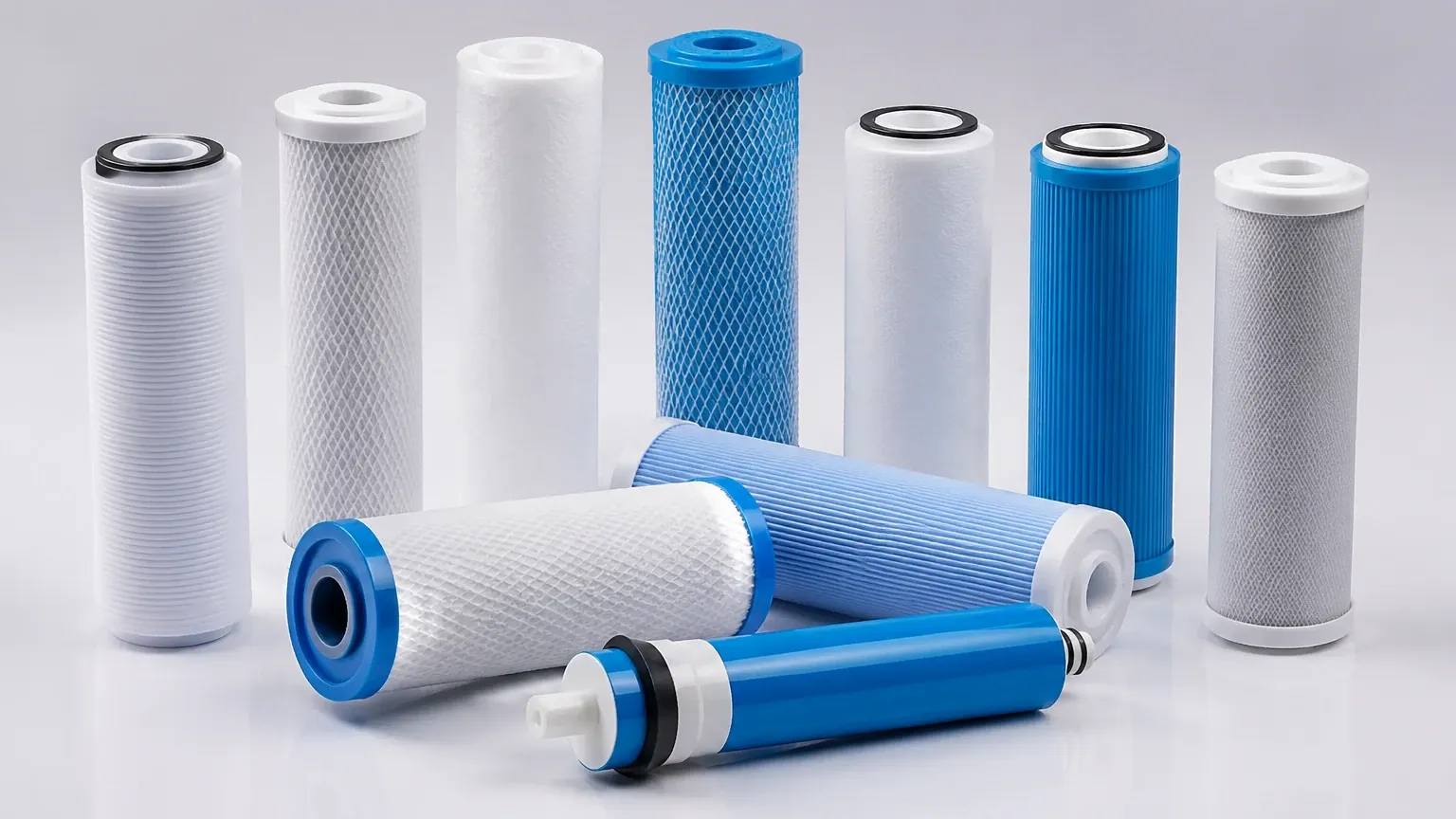
In industrial water treatment, reverse osmosis (RO) stands as one of the most effective methods for removing dissolved solids, organic contaminants, and microbial impurities. However, the efficiency and longevity of an RO system are fundamentally dependent on the quality and configuration of its filtration stages. Reverse osmosis water filter cartridges serve as the primary line of defense and the final polishing stage within these systems. For engineers and procurement specialists, selecting the correct Filter Cartridges is not merely a matter of maintenance but a critical engineering decision that impacts membrane life, energy consumption, and total system uptime.
Industrial RO systems are complex assemblies where pressure, flow velocity, and chemical compatibility must be balanced. The cartridges used in these systems are designed to handle specific particulate loads and chemical profiles. Understanding the technical nuances of these components—from micron ratings to material construction—is essential for optimizing filtration performance in demanding environments such as chemical processing, pharmaceutical manufacturing, and food and beverage production.
The Role of Filter Cartridges in Reverse Osmosis Systems
A standard industrial RO system typically utilizes a multi-stage filtration approach. Reverse osmosis water filter cartridges are deployed at various points to perform distinct functions. These stages are generally categorized into pre-filtration and post-filtration.
Pre-filtration: Protecting the Membrane
The RO membrane is the most expensive and sensitive component of the system. It is susceptible to fouling from suspended solids, scaling from minerals, and chemical degradation from oxidants like chlorine. Pre-filtration cartridges are engineered to remove these threats before they reach the membrane surface.
1. Sediment Removal: High-surface-area cartridges, often made from pleated media or depth-filtration materials, capture silt, sand, and rust. This reduces the Silt Density Index (SDI) of the feed water, which is a critical metric for preventing membrane fouling.
2. Chemical De-chlorination: Carbon-based cartridges are frequently used to adsorb chlorine and chloramines, which can irreversibly damage polyamide thin-film composite (TFC) membranes.
Post-filtration: Final Polishing
After the water passes through the RO membrane, it may require further treatment depending on the application. Post-filtration cartridges, often referred to as "polishing" filters, ensure that any residual gases or trace odors are removed, or they may add specific minerals back into the water for food and beverage applications.
Technical Specifications and Engineering Considerations
When evaluating reverse osmosis water filter cartridges for industrial use, several technical parameters must be scrutinized to ensure they meet the operational requirements of the facility.
Micron Ratings: Absolute vs. Nominal
In the context of RO pre-filtration, the distinction between nominal and absolute micron ratings is vital. A nominal rating refers to an approximate filtration efficiency (e.g., 90% of particles at a certain size), whereas an absolute rating indicates that 99.9% or more of particles at that size are retained. For high-purity applications, absolute-rated cartridges provide the necessary consistency to prevent membrane breakthrough.
Flow Rate and Pressure Drop
Every filter cartridge introduces a degree of resistance to the flow, known as pressure drop (delta P). As the cartridge loads with contaminants, the pressure drop increases. Engineers must select cartridges that offer a low initial pressure drop to minimize pump energy consumption. High-capacity pleated designs are often preferred in industrial settings because they offer a larger surface area, allowing for higher flow rates and longer service intervals compared to standard melt-blown cartridges.
Chemical and Thermal Compatibility
In industries like chemical processing or pharmaceutical manufacturing, the feed water may be at elevated temperatures or contain aggressive solvents. While polymer-based cartridges (such as Polypropylene or PES) are common, they have limitations. In environments involving high temperatures or high-pressure steam sterilization (SIP), stainless steel filter cartridges offer superior structural integrity and chemical resistance.
Material Selection for Industrial RO Cartridges
The material construction of the cartridge determines its suitability for specific industrial environments. While many reverse osmosis water filter cartridges utilize synthetic polymers, specialized applications often require metal media.
* Polypropylene (PP): The most common material for sediment pre-filtration due to its broad chemical compatibility and cost-effectiveness. It is ideal for general water treatment but has temperature limitations (typically up to 60-80°C).
* Polyethersulfone (PES): Often used for final polishing or sub-micron filtration where high flow rates and low protein binding are required.
* Stainless Steel (304 or 316L): For heavy-duty industrial RO systems, stainless steel wire mesh or sintered metal cartridges are used in pre-filtration stages where high temperatures, high pressures, or backwashing capabilities are required. These are particularly valuable in closed-loop industrial systems where durability is paramount.
Optimizing the Silt Density Index (SDI)
The Silt Density Index is a standard measurement used to determine the fouling potential of feed water in an RO system. Most membrane manufacturers require an SDI of less than 5, and preferably less than 3, to maintain warranty and performance standards.
Effective use of Filter Cartridges in the pre-filtration stage is the most direct way to control SDI. By utilizing a graduated filtration approach—starting with a 10-20 micron depth filter and following with a 1-5 micron pleated absolute filter—engineers can significantly extend the life of the RO membrane. This "staged" approach ensures that larger particles do not prematurely blind the finer filters, balancing the contaminant load across the entire system.
Common Risks in Industrial RO Filtration
Failure to properly specify or maintain reverse osmosis water filter cartridges can lead to several operational risks:
1. Membrane Fouling: If pre-filters bypass or fail, particulates accumulate on the membrane surface, leading to decreased permeate flow and increased feed pressure requirements.
2. Channeling: In low-quality cartridges, high differential pressure can cause the filter media to deform, creating "channels" that allow unfiltered water to pass through.
3. Biofouling: If cartridges are not replaced according to schedule, they can become breeding grounds for bacteria, which then migrate to the RO membrane and form biofilms that are extremely difficult to remove.
4. Media Migration: Poorly manufactured cartridges may shed fibers or particles into the effluent stream, potentially damaging the RO high-pressure pump or fouling the membrane.
Evaluation Criteria for Procurement Teams
When sourcing reverse osmosis water filter cartridges, purchasing teams should confirm the following details with their supplier to ensure long-term reliability:
* Seal Integrity: Ensure the cartridge end-caps (e.g., 222 or 226 O-rings) are compatible with the existing filter housings to prevent bypass.
* Certification Compliance: For food, beverage, or pharmaceutical use, cartridges should meet FDA or relevant international standards for food-contact materials.
* Total Cost of Ownership (TCO): A cheaper cartridge that requires frequent replacement or causes membrane fouling will ultimately cost more than a high-quality, high-capacity filter. Evaluate the "dirt-holding capacity" as a key metric for TCO.
* Customization Requirements: In many industrial retrofits, standard off-the-shelf cartridges may not fit unique housing geometries. Working with a manufacturer that offers custom sizing and material configurations can resolve integration issues.
Maintenance and Replacement Cycles
Monitoring the performance of reverse osmosis water filter cartridges is essential for proactive maintenance. The most reliable indicator for replacement is the differential pressure (ΔP). Most industrial systems are designed for a cartridge change-out when the ΔP reaches 1.0 to 1.5 bar (15-22 psi) above the clean pressure drop.
Waiting until the flow rate drops significantly is often too late, as the increased pressure can compress the filter media or force contaminants through the matrix. In critical applications, a time-based replacement schedule (e.g., every 3 to 6 months) is often implemented alongside ΔP monitoring to mitigate the risk of biofouling.
Conclusion
Reverse osmosis water filter cartridges are indispensable components that dictate the efficiency of the entire water purification process. By selecting the appropriate micron rating, material, and structural design, industrial operators can protect their RO membranes from premature failure and ensure consistent water quality. Whether utilizing standard polymer media or specialized stainless steel components for demanding environments, the focus must remain on precision engineering and application-specific compatibility. For those managing complex industrial filtration needs, investing in high-performance Filter Cartridges is a strategic step toward reducing operational costs and maintaining rigorous production standards.
