


Uf Filter Cartridge 8 Inch
In the landscape of industrial water treatment and process fluid management, the ultrafiltration (UF) process stands as a critical barrier against macromolecules, colloids, and microbiological contaminants. Among the various configurations available to process engineers, the uf filter cartridge 8 inch has emerged as a standard for high-capacity systems. This specific diameter is designed to balance high surface area with manageable footprint requirements, making it a staple in municipal water treatment, pharmaceutical processing, and large-scale industrial reuse projects.
Selecting the correct ultrafiltration components requires a deep understanding of membrane chemistry, hydraulic design, and the specific demands of the application environment. As a manufacturer specialized in precision filtration solutions, Kaifil recognizes that the performance of Filter Cartridges depends not only on the membrane itself but also on the structural integrity of the housing and the compatibility of the materials with the process fluid.
Understanding Ultrafiltration Technology in 8-Inch Form Factors
Ultrafiltration is a pressure-driven membrane separation process that typically operates in the range of 0.01 to 0.1 microns. Unlike microfiltration, which removes suspended solids and larger bacteria, UF is capable of rejecting viruses, proteins, and pyrogens. The 8-inch diameter format is particularly significant because it reflects the industry's shift toward modular, high-flow designs that simplify system scaling.
An 8-inch UF cartridge usually utilizes a hollow fiber or spiral-wound configuration. Hollow fiber membranes are the most common for industrial UF applications due to their high packing density and ability to be backwashed. These fibers are bundled together within a rigid outer shell, allowing for efficient flow distribution and consistent permeate quality. For engineers, the choice of an 8-inch module often comes down to the required flux (volume of filtrate per unit area per unit time) and the specific fouling characteristics of the feed water.
Key Material and Construction Engineering
The material composition of a uf filter cartridge 8 inch determines its chemical resistance, thermal stability, and mechanical strength. In industrial settings, two primary polymers dominate the market:
Polyethersulfone (PES)
PES is widely favored for its high hydrophilicity and excellent flux rates. It is naturally resistant to fouling and can withstand a broad range of pH levels (typically pH 2–12), making it suitable for standard water treatment and some chemical processing applications. However, PES may have limitations when exposed to high concentrations of strong oxidants over long periods.
Polyvinylidene Fluoride (PVDF)
PVDF is the material of choice for demanding environments where aggressive chemical cleaning or high chlorine tolerance is required. PVDF membranes are mechanically robust and offer superior resistance to oxidants, which is essential for applications involving wastewater with high organic loads that require frequent chemically enhanced backwashes (CEB).
Beyond the membrane material, the internal potting (the resin that holds the fibers in place) and the outer casing must be engineered to withstand the operational pressures and potential hydraulic shocks. High-quality 8-inch modules utilize medical-grade or high-strength industrial epoxies to ensure that there is no bypass between the feed and permeate sides.
Performance Metrics for Industrial Filter Cartridges
When evaluating a uf filter cartridge 8 inch, engineers must look beyond the nominal pore size. Several performance metrics dictate the long-term viability of the filtration system:
1. Molecular Weight Cut-Off (MWCO): This defines the lowest molecular weight of a solute that is 90% rejected by the membrane. For UF, this typically ranges from 10,000 to 150,000 Daltons. Selecting the right MWCO is vital for applications like protein concentration or the removal of specific organic precursors.
2. Transmembrane Pressure (TMP): This is the pressure gradient across the membrane. A lower operating TMP at a given flux indicates a more efficient membrane and lower energy consumption. Monitoring TMP trends is the primary method for determining when a cleaning cycle is necessary.
3. Flux Stability: The ability of the cartridge to maintain a consistent flow rate over time under varying feed conditions is a hallmark of a well-engineered UF module. High-quality membranes are designed to minimize irreversible fouling, ensuring that the flux can be restored through standard cleaning protocols.
Application Scenarios in Demanding Industrial Environments
The versatility of the 8-inch UF format allows it to be integrated into various stages of a treatment train. Understanding these applications helps in specifying the right cartridge features.
Pre-treatment for Reverse Osmosis (RO)
One of the most common uses for a uf filter cartridge 8 inch is as a pre-filter for RO systems. By removing colloidal silica, silt, and organic matter, UF significantly reduces the Silt Density Index (SDI) of the water entering the RO membranes. This protects the sensitive RO layers from fouling, extends their lifespan, and reduces the frequency of expensive RO cleanings.
Wastewater Reclamation and Reuse
In industries such as textile manufacturing or food processing, wastewater contains high levels of suspended solids and organics. 8-inch UF modules are used to treat secondary effluent, producing high-quality water suitable for cooling towers, irrigation, or even process re-entry. The robustness of PVDF membranes is particularly valuable here, as they can handle the rigorous cleaning required to manage biological fouling.
Pharmaceutical and Biotech Processing
In the life sciences, UF is used for the concentration and purification of biological products. The 8-inch format provides the necessary scale for commercial production. In these applications, the focus shifts toward low-protein-binding materials and the ability to validate the integrity of the membrane to meet regulatory standards.
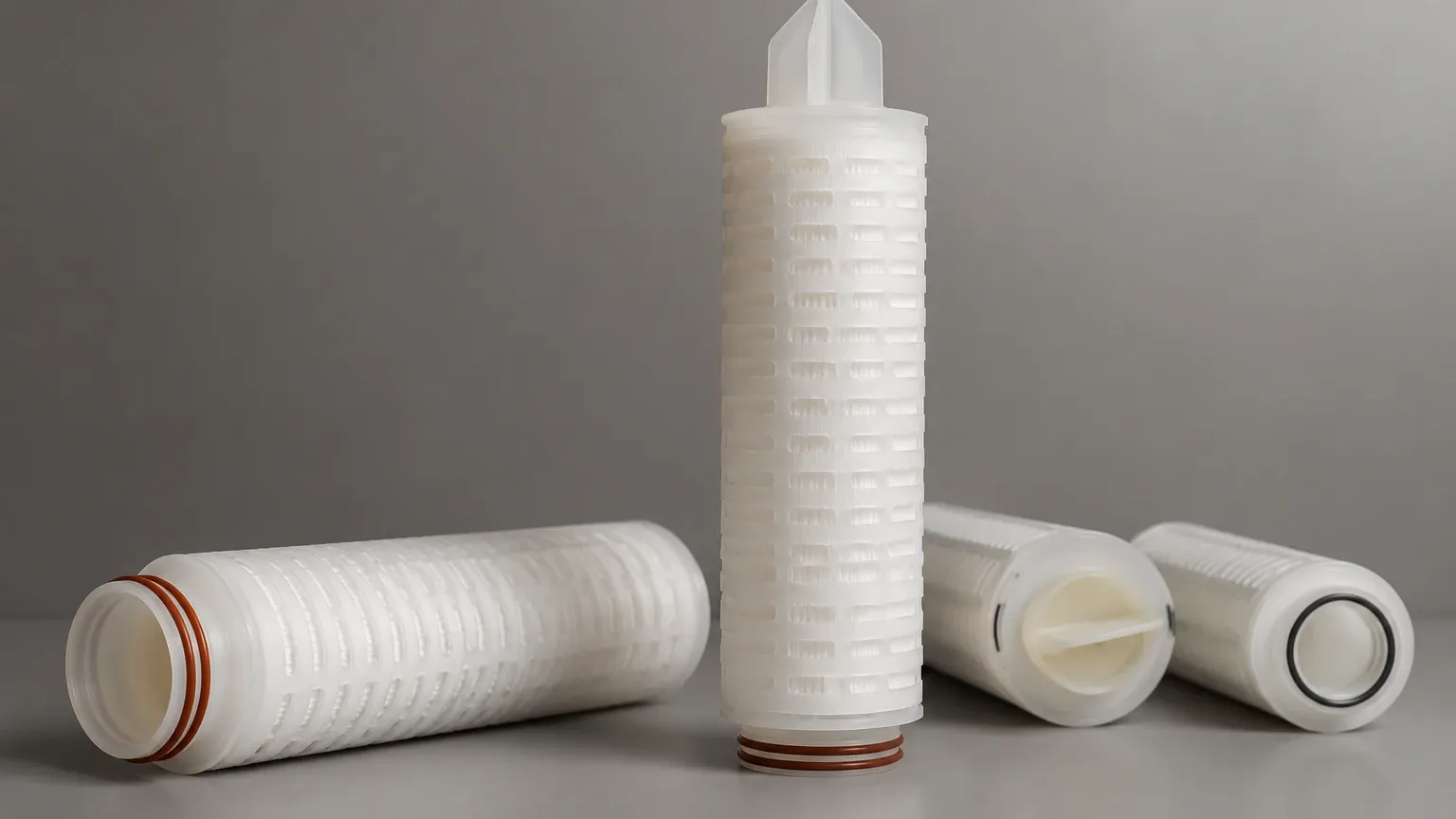
Selection Criteria: What Engineers Need to Confirm
Before purchasing or specifying an 8-inch UF cartridge, several technical parameters must be confirmed to ensure system compatibility and performance:
* Flow Configuration: Is the system designed for "Inside-Out" or "Outside-In" flow? Inside-out flow offers better control over hydraulics but is more susceptible to plugging if large particles are present. Outside-in flow can handle higher solids loads but requires careful management of the fiber bundle to prevent dead zones.
* Operating Mode: Will the system run in dead-end filtration or cross-flow mode? Dead-end is more energy-efficient for low-turbidity water, while cross-flow is necessary for high-solids applications to sweep the membrane surface and reduce cake layer buildup.
* Chemical Compatibility: Confirm that the membrane, seals (O-rings), and potting materials are compatible with any chemicals used in the process or for cleaning. For example, if ozone is used for disinfection, a specialized ozone-resistant membrane is required.
* Mechanical Limits: Verify the maximum allowable feed pressure, backwash pressure, and temperature. Exceeding these limits can lead to fiber breakage or structural failure of the cartridge.
Optimizing the Lifecycle of Industrial Filter Cartridges
The total cost of ownership (TCO) for a uf filter cartridge 8 inch is heavily influenced by how the system is operated and maintained. A proactive maintenance strategy is essential for maximizing the life of the Filter Cartridges.
Backwashing and Air Scouring
Regular backwashing—reversing the flow of filtrate through the membrane—is the first line of defense against fouling. In many 8-inch UF systems, air scouring is used in conjunction with backwashing. Air bubbles are introduced to the feed side to vibrate the fibers and loosen accumulated solids, which are then flushed away. The frequency and duration of these cycles must be optimized based on the feed water quality.
Clean-In-Place (CIP) Protocols
When backwashing is no longer sufficient to restore the TMP, a CIP is performed. This involves circulating chemical solutions (such as caustic soda for organics or citric acid for mineral scale) through the cartridge. Engineers should work with manufacturers to develop a CIP schedule that balances cleaning effectiveness with the long-term health of the membrane material.
Integrity Testing
To ensure that the UF system continues to provide a reliable barrier, regular integrity testing is required. The pressure decay test or the diffusive air flow test are common methods used to detect broken fibers or seal leaks. For 8-inch modules, these tests can often be automated within the system's control logic.
Conclusion: Selecting a Reliable Filtration Partner
The implementation of a uf filter cartridge 8 inch represents a significant investment in an industrial facility's infrastructure. Beyond the technical specifications of the cartridge itself, the success of a filtration project relies on the quality of the supporting components—such as the stainless steel housings, manifolds, and precision-engineered connectors provided by manufacturers like Kaifil.
By focusing on the engineering fundamentals of flux, TMP, and chemical resistance, and by ensuring that the selected cartridges are integrated into a well-designed hydraulic system, engineers can achieve reliable, long-term filtration performance. Whether the goal is protecting downstream RO membranes or ensuring the purity of a pharmaceutical product, the 8-inch UF cartridge remains a versatile and powerful tool in the industrial filtration toolkit.
